GPT-5.4 mini and nano: what ultrafast AI models concretely change for your business

OpenAI has just taken a major step in democratizing artificial intelligence in the enterprise. With the launch of GPT-5.4 mini and GPT-5.4 nano, two compact and ultra-optimized versions of its flagship GPT-5.4 model, Sam Altman's firm sends a powerful signal to the market: cutting-edge AI power is no longer reserved for large technology infrastructures. For French companies—SMEs, mid-market firms, or large corporations—seeking to integrate AI into their processes without exploding their budgets or slowing their systems, this announcement deserves serious attention.
Models designed for speed and volume: understanding GPT-5.4 mini and nano
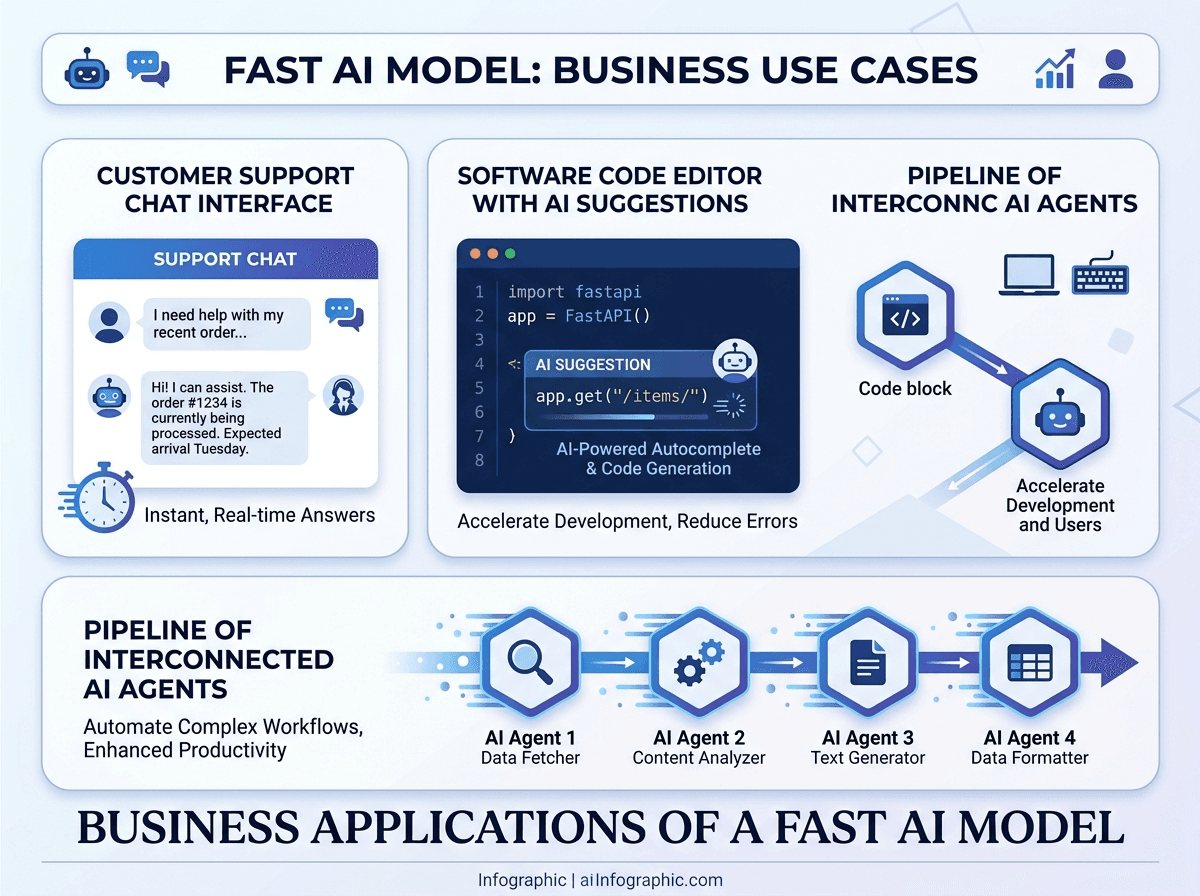
Contrary to what the term "mini" might suggest, GPT-5.4 mini and nano are not simply stripped-down versions of the full model. They have been specifically optimized to address four major use case families: assisted coding, tool use, multimodal reasoning (text, image, data), and high-volume workloads via API, particularly in multi-agent architectures.
In other words: while GPT-5.4 in its full version excels at complex and nuanced tasks requiring deep reasoning, its mini and nano variants are designed to run fast, run often, and run at minimal cost. This is exactly the profile sought for production integrations: high-traffic chatbots, automation pipelines, autonomous AI agents that chain together and coordinate.
For French CIOs and digital transformation directors, this architecture opens a new logic of hybrid deployment: use the full model for complex strategic analysis, and delegate recurring and large-volume tasks to lightweight versions—for an unprecedented performance-to-cost ratio.
Three concrete use cases for French enterprises
1. Large-scale customer support automation A retail chain or telecom operator handling thousands of daily requests can now deploy GPT-5.4 nano as a first level of automated response, capable of simultaneously processing textual and visual requests (photos of defective products, screenshots of errors). The model's speed ensures a smooth experience for the end user, while the low cost per request makes the model economically viable even at massive scale.
2. Software development assistance in digital service firms and software publishers French digital service firms (ESNs) and software publishers are directly impacted by the optimized coding capabilities of these new models. Integrated into development environments (IDE, CI/CD pipelines), GPT-5.4 mini can suggest code, identify bugs, generate technical documentation, or refactor codebases—all in real time, without perceptible latency for the developer.
3. Autonomous AI agents for business process management In sectors such as finance, insurance, or logistics, multi-agent architectures enable multiple specialized AI systems to collaborate on the same workflow: one agent collects data, another analyzes it, a third drafts a report, a fourth triggers an action in an ERP system. GPT-5.4 nano is tailor-made to play the role of sub-agent in these complex chains, reducing bottlenecks and infrastructure costs.
What this means for your AI strategy in 2025

The arrival of models like GPT-5.4 mini and nano confirms a fundamental trend: generative AI is entering its industrialization phase. It's no longer an experimentation topic reserved for R&D teams. It's an operational component that must be integrated into product roadmaps, IT budgets, and HR strategies.
For French companies, this raises several immediate strategic questions:
- Which AI architecture to adopt? Single model or hybrid mini/full approach depending on use cases?
- How to secure data? Using models via API requires reflection on data sovereignty, particularly in regulated sectors (healthcare, banking, defense).
- What ROI to expect and over what timeline? The reduction in cost per token opens up automation opportunities that were previously economically unviable.
- How to ensure output quality? Speed should not come at the expense of reliability, hence the importance of implementing appropriate human validation loops.
Companies that can quickly answer these questions will gain a significant competitive advantage in a context where AI adoption has become a differentiating factor in competitiveness.
Training your teams: the true lever for transformation
Technology, however powerful, only creates value if teams know how to use and intelligently integrate it into their practices. The arrival of GPT-5.4 mini and nano only accelerates an already urgent need: training employees in applied AI at all levels of the organization.
This is not simply about learning to "prompt" a chatbot. The issues run deeper: understanding how to architect an AI workflow, evaluating the reliability of an output, identifying the right use cases, managing automation risks, and keeping humans in the decision-making loop. Managers must be able to pilot AI projects; developers must be able to integrate intelligent APIs; business teams must redefine their processes in light of these new tools.
At Ikasia, we support French enterprises in building this expertise with customized training programs and operational consulting grounded in field realities. Whether it's training your technical teams in AI agent orchestration, raising awareness among your executives about strategic challenges, or co-building your AI roadmap, we bring concrete, directly applicable expertise.
Want to evaluate how GPT-5.4 mini or nano could integrate into your business processes? Contact Ikasia's experts at ikasia.ai for a personalized assessment and support tailored to your sector and ambitions. Because AI doesn't deploy by chance—it's driven strategically.
Tags
Related articles

GPT-5.4: What OpenAI's Most Powerful Model Means for Your Business
Read
GPT-5.3 Instant: What OpenAI's New High-Speed Model Means for Your Business Teams
Read
OpenAI Partner Network: $150 Million to Accelerate Enterprise AI Transformation — What Changes for You
ReadWant to go further?
Ikasia offers AI training designed for professionals. From strategy to hands-on technical workshops.