Master Your AI Costs in Enterprise: Amazon Bedrock Projects Changes the Game

Generative artificial intelligence is no longer a luxury reserved for tech giants. In France, SMEs, mid-market companies, and large enterprises are deploying new use cases every day: internal assistants, process automation, document analysis, content generation. But this acceleration raises a question that every CIO and CFO eventually asks: how much does all this really cost, and how can we attribute these expenses?
Amazon Web Services has provided a concrete answer with Amazon Bedrock Projects, a feature that allows you to attribute inference costs to specific projects and analyze them in detail via AWS Cost Explorer. A major breakthrough for French companies seeking to scale their AI usage without losing control of their budget.
The problem nobody dared to really name: the budgetary fog of AI
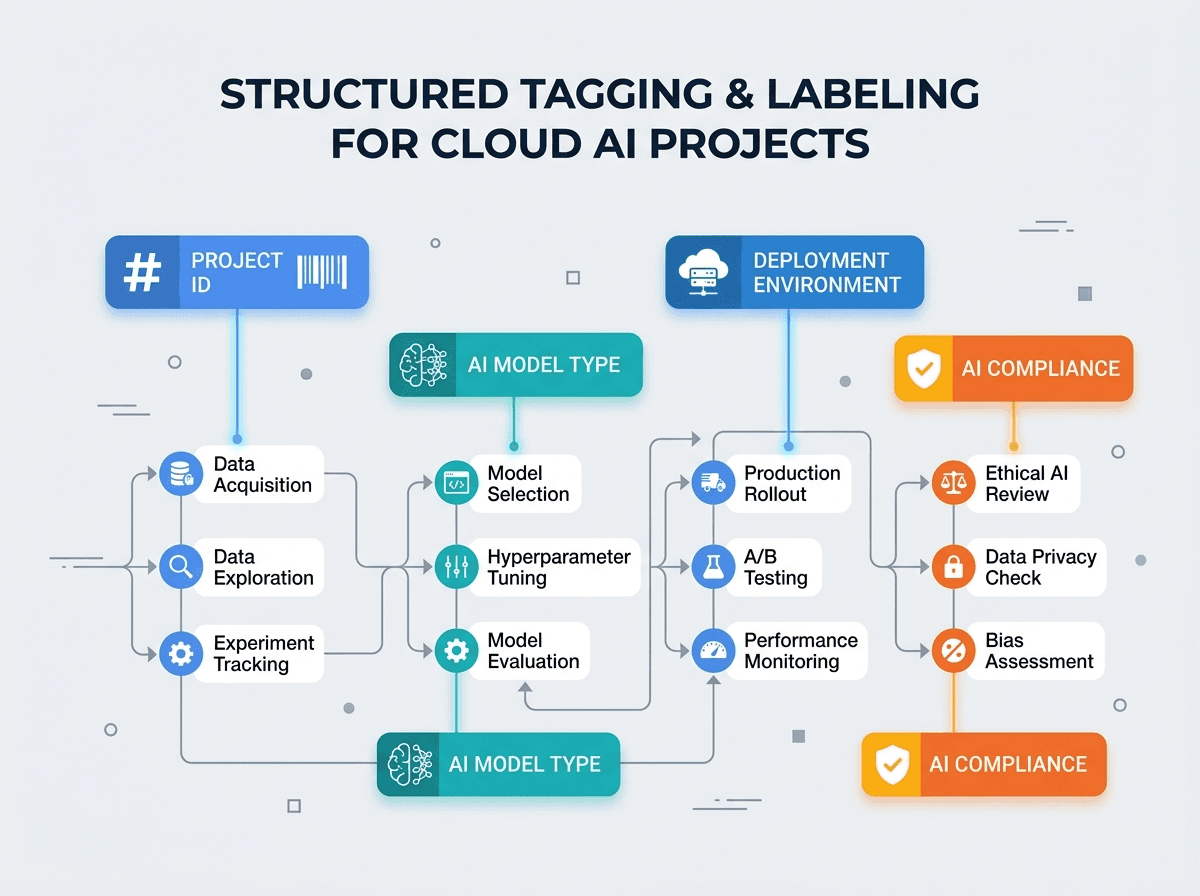
In most organizations, generative AI costs end up buried in a generic "cloud" or "IT infrastructure" budget line. The result: it's impossible to know whether it's the HR chatbot project, the sales assistant, or the legal summarization engine consuming the most. This lack of transparency creates several concrete problems:
- Inability to calculate ROI by project: without granular visibility, how can you justify the investment to the board of directors?
- Risk of budget drift: an experimental project can quickly generate disproportionate costs without anyone noticing until the bill arrives.
- Obstacle to scalability: teams hesitate to multiply initiatives because they cannot predict the financial impact.
- Complexity of internal cost allocation: in large organizations, each business unit should ideally bear its own AI costs.
This lack of traceability is one of the first obstacles we observe at Ikasia during our consulting missions. French companies have the ambition and use cases, but rarely the adapted financial governance tools.
Amazon Bedrock Projects: how it works in practice
Amazon Bedrock Projects introduces an intelligent tagging mechanism directly integrated into the inference call lifecycle. The principle is simple but powerful: each request sent to a foundation model via Bedrock can be associated with a defined project, with custom metadata.
Here's how a company can implement this end-to-end:
1. Define a coherent tagging strategy
Before any deployment, you must design a taxonomy adapted to your organization. For example: project:legal-assistant, team:sales-division, environment:production, phase:pilot. This design step is often underestimated, but it determines the relevance of all future analyses.
2. Associate projects with Bedrock resources Technical teams configure projects directly in the AWS console or via the API. Each agent, processing flow, and knowledge base can be assigned to an identified project.
3. Analyze costs in AWS Cost Explorer Once tags are in place, AWS Cost Explorer offers dashboards allowing you to filter spending by project, by period, by model used (Claude, Titan, Mistral, Llama…). Finance teams thus have as granular a view as desired.
4. Export data for advanced analysis Through AWS Data Exports, cost data can be fed into BI tools like QuickSight, Power BI, or Tableau for customized reporting and automatic alerts if thresholds are exceeded.
Let's take a concrete example: a French regional bank deploys three projects on Bedrock — a regulatory compliance assistant, an AI-assisted credit scoring tool, and a customer chatbot. Thanks to Bedrock Projects, the CIO can now present in the monthly board meeting the exact cost of each initiative, compare that cost to measured productivity gains, and decide with full knowledge whether to accelerate, optimize, or pivot on each one.
Concrete application cases for French companies
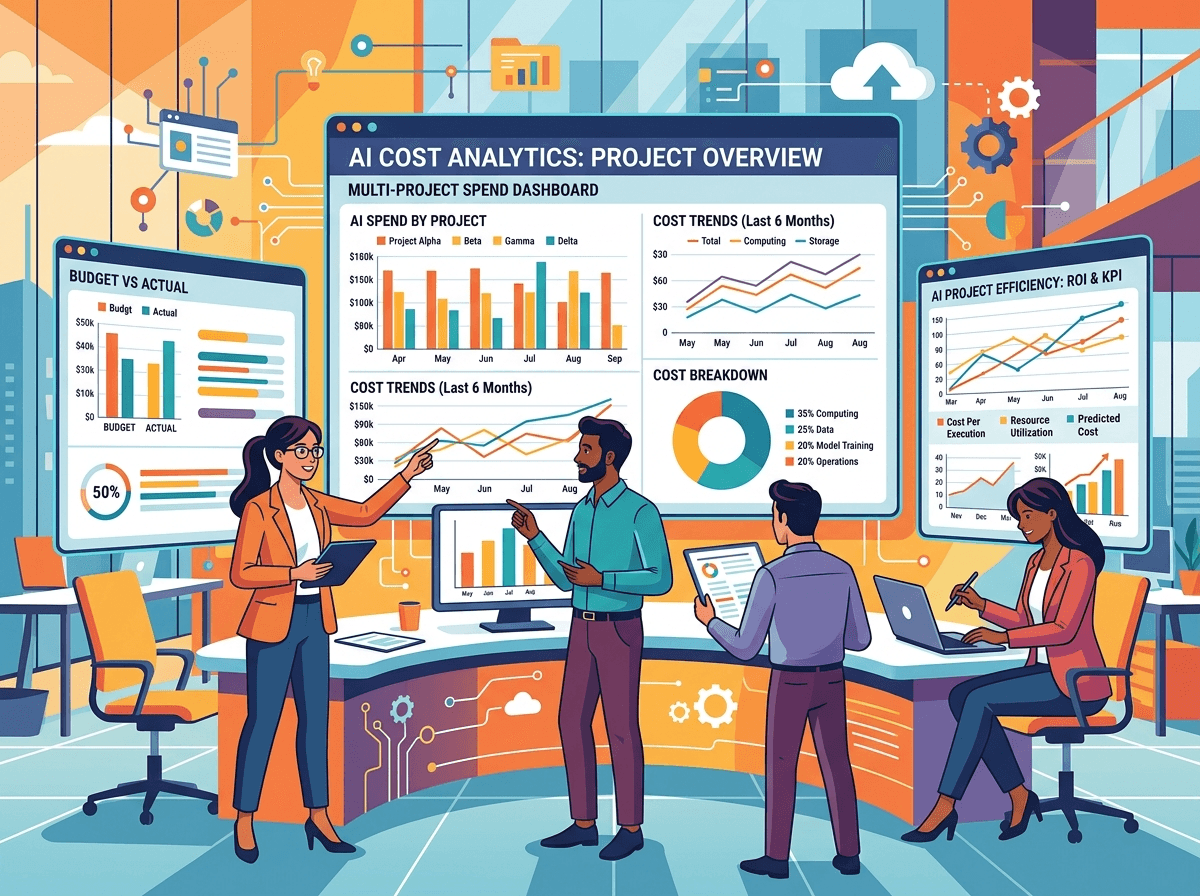
The benefits of Amazon Bedrock Projects vary depending on the size and sector of the company.
For mid-market industrial companies: a manufacturing company deploying a predictive maintenance assistant and a technical documentation generation tool can now calculate the cost per generated document and cost per intervention avoided. These metrics allow building a solid business case for senior management.
For consulting firms and systems integrators: AI cost pass-through to clients finally becomes possible and automated. Each client has their own tag, and monthly billing automatically includes inference costs consumed for their specific projects.
For multi-entity groups: a holding company with multiple subsidiaries can configure a tag per legal entity and ensure precise accounting allocation of AI expenses, in compliance with intragroup cost allocation rules.
For R&D and innovation teams: distinguishing the costs of experimentation phases (often higher as they are less optimized) from production costs provides an accurate picture of the real cost of industrializing a use case.
In all these scenarios, the key lies in anticipating your tagging strategy. Like any data governance, decisions made at the start durably structure the quality of future analyses.
Training your teams on AI financial governance: a strategic priority
Implementing Amazon Bedrock Projects is one thing. But to fully leverage it, companies must invest in upskilling their teams across a wider scope than just the technical aspect.
IT and data engineering teams must master tagging strategy design, Bedrock project configuration, and integration with AWS cost analysis tools. These are skills acquired quickly, but they require a structured training framework.
Finance and cost control teams must learn to read and interpret cloud cost dashboards, distinguish fixed costs from variable costs in an on-demand inference model, and build KPIs adapted to the economic reality of generative AI.
AI managers and product owners must integrate the cost dimension into the lifecycle of their projects from the design phase — what we call FinOps applied to AI, an emerging discipline but one that will become essential as AI budgets grow.
Finally, senior management and executive committees need awareness training to understand AI cost optimization levers (model choice, prompt optimization, caching, request batching) and to ask the right questions during budget arbitration.
At Ikasia, we support French companies across this entire spectrum: from technical AWS Bedrock training to AI governance workshops for executives, including consulting missions to define AI FinOps strategies adapted to your context.
Do you want to regain control of your AI costs and establish solid financial governance for your artificial intelligence projects?
The Ikasia team is at your disposal for a free assessment of your AI FinOps maturity and to co-build a roadmap adapted to your organization. Visit ikasia.ai to speak with our experts.
Tags
Related articles
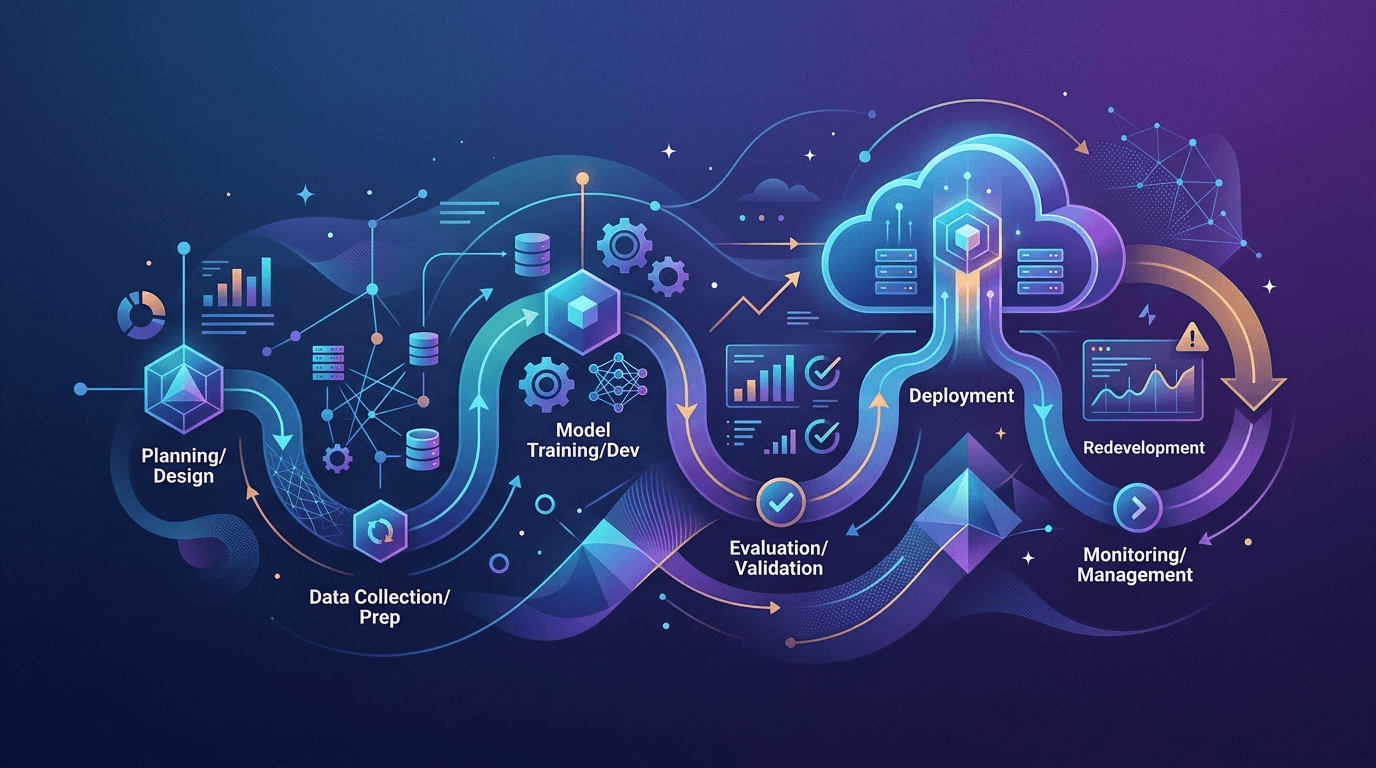
AI Model Lifecycle in Amazon Bedrock: How to Protect Business Application Continuity
Read
AI Code Generation in Enterprise: How Amazon Bedrock Guardrails Protect Your Workflows Without Compromising Productivity
Read
Autonomous AI in the Enterprise: What OpenAI's New Security Risks Reveal for Your Organization
ReadWant to go further?
Ikasia offers AI training designed for professionals. From strategy to hands-on technical workshops.