OpenAI Raises $122 Billion: What This Historic Turning Point Means for French Businesses
The news sent shockwaves through the global technology ecosystem: OpenAI has just raised $122 billion to accelerate the deployment of artificial intelligence on a planetary scale. Behind this staggering figure lies a very concrete reality for French businesses — whether they are SMEs, mid-market companies or large corporations. Generative AI is no longer a distant horizon: it is becoming the infrastructure of tomorrow, and players who fail to anticipate this shift risk finding themselves lagging behind a transformation without precedent. Let's break it down.
Firepower without equal: what this fundraising really changes
To understand the magnitude of this event, you need to put the $122 billion in context. This is not a simple speculative funding round: these capital flows are directed toward three major strategic priorities — expansion of computing infrastructure (the famous GPUs and data centers needed to train AI models), development of the next generation of AI models, and responding to explosive demand around ChatGPT, Codex and enterprise AI solutions.
In practical terms, this means that the power of tools available to enterprises will grow exponentially in the coming months. Response times will decrease, massive data processing capabilities will improve, and specialized models for sectors like finance, healthcare, law and industry will multiply. For a Lyon-based SME already using ChatGPT to write its tender proposals, or for a Paris accounting firm automating its reports, this is not an abstraction: it is the announcement that the tools they use today will become far more powerful tomorrow.
Enterprise use cases shifting into high gear
One of the strongest signals from this fundraising is the emphasis on AI solutions for enterprises. OpenAI is no longer playing only in the consumer arena: the ambition is clearly to equip organizations of all sizes with AI building blocks integrated into their daily workflows.
Here are some concrete examples of how this momentum accelerates for French businesses:
-
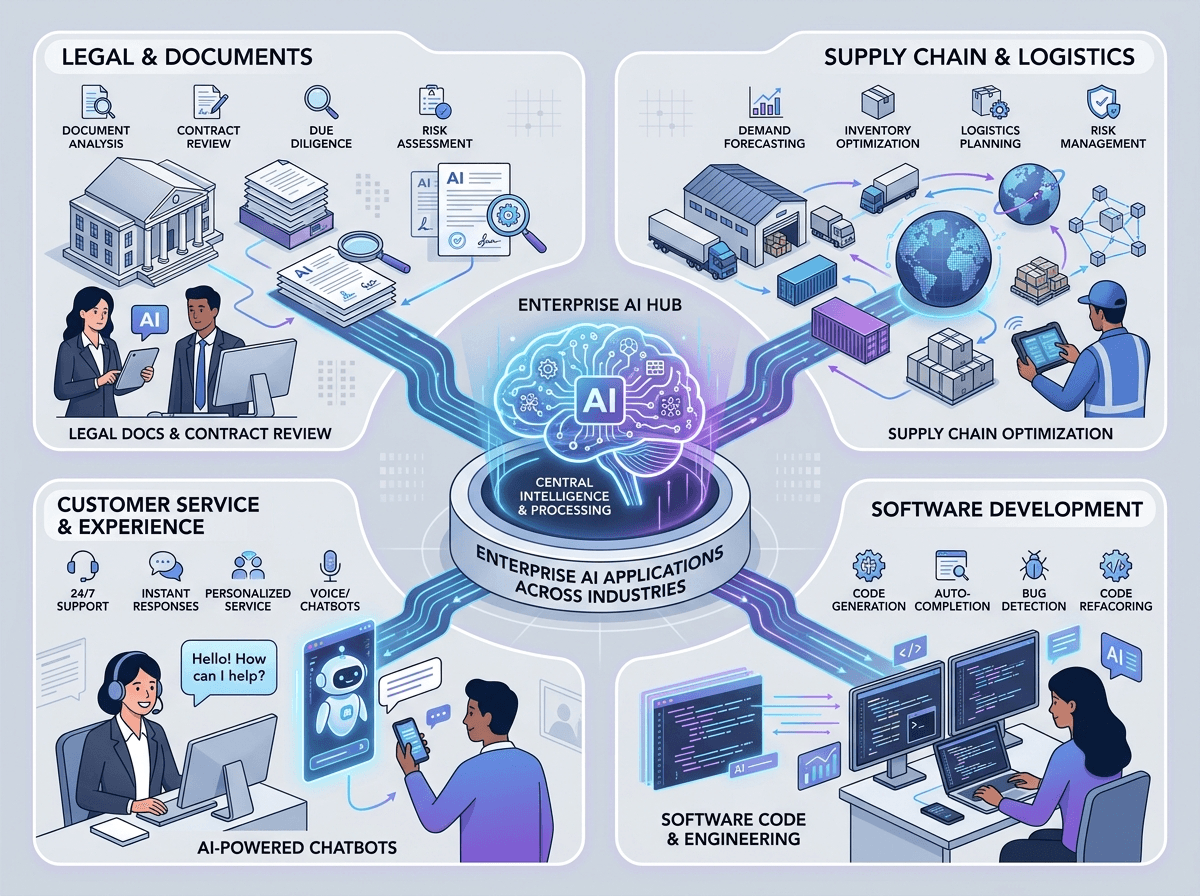
Codex and software development automation: IT directors and technical teams can now consider delegating an increasing share of repetitive coding tasks to AI assistants, freeing up their developers for higher value-added missions. A mid-sized IT consulting firm can thus absorb more projects without proportional hiring.
-
AI in customer relationships: sales and marketing departments can deploy conversational agents capable of handling complex natural language requests 24/7, with a consistency of tone and content impossible to achieve manually at scale.
-
Document analysis in regulated sectors: law firms, insurers, banking institutions — all can benefit from models trained to analyze contracts, identify risks or synthesize regulatory files in seconds.
-
Supply chain and predictive maintenance: in manufacturing, AI models fed with internal data allow anticipating breakdowns, optimizing inventory and reducing operational costs significantly.
The injection of $122 billion into the OpenAI ecosystem will accelerate the maturity and reliability of all these applications. Companies that have already started experiments will be able to industrialize. Those who haven't yet taken the leap are seeing their window of opportunity narrow.
Digital sovereignty and the challenge of dependence: a strategic issue for France
This titanic fundraising also raises questions that French leaders cannot sidestep. When an American company concentrates so many resources and AI capabilities, the question of technological dependence becomes strategic.
The European Union, through the AI Act that came into force in 2024, is seeking to regulate and govern the use of these technologies. France, with its initiatives around Mistral AI and the France 2030 plan, is attempting to maintain sovereign innovation space. For French businesses, this requires dual consideration:
- Leverage OpenAI's capabilities while remaining vigilant about data localization, GDPR compliance and contractual clauses related to enterprise solutions.
- Diversify your AI tools portfolio by also integrating European or open-source solutions, so as not to create excessive dependence on a single vendor.
This is not an anti-American stance: it is sound risk management at a time when AI is becoming a strategic asset on par with data or human capital.
Training your teams: the absolute urgency this news reveals
The final lesson — and certainly not the least — from this news: the AI skills gap within enterprises will accelerate. The more OpenAI invests in its capabilities, the more powerful and complex the tools become, and the wider the gulf between employees trained in these technologies and others grows.
Training teams is no longer an option reserved for technical profiles. An HR manager who can't prompt effectively, a CFO who hasn't integrated AI into his analytical processes, a project manager who is just discovering autonomous agents — these situations create organizational blind spots that cost dearly in lost productivity.
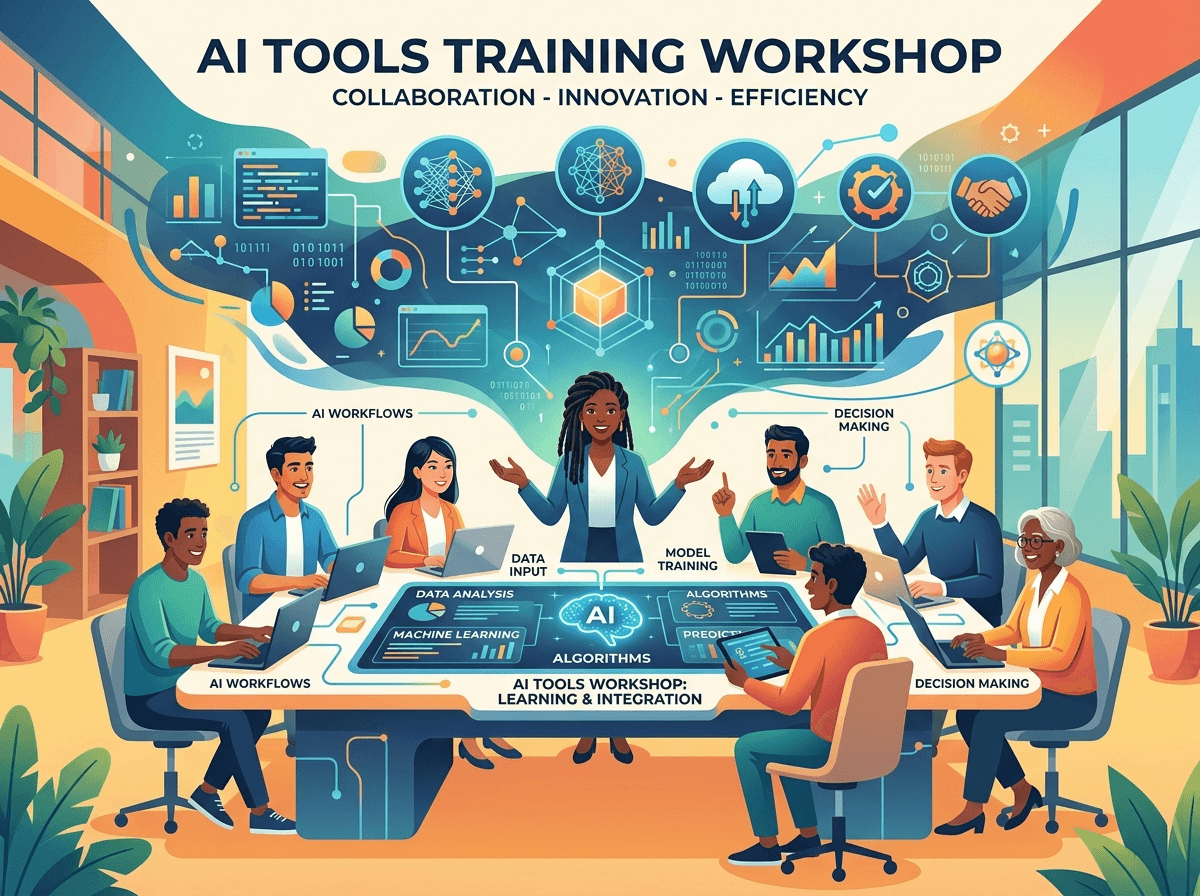
The most agile companies are those that have already implemented structured skills development programs: practical workshops on AI tools, data culture training, manager coaching to integrate AI into decision-making. This is not a luxury: it is an investment whose ROI becomes measurable within the first weeks.
This is not about transforming every employee into a data scientist. It is about giving each person the keys to understand what AI can do for their role, how to use it responsibly, and how to contribute to a transformation that benefits the entire organization.
Do you want to prepare your business for the era of enterprise generative AI? Ikasia supports leaders and their teams with customized training, strategic workshops and operational consulting missions. From exploration to industrialization, we help you transform this revolution into tangible competitive advantage.
👉 Discover our programs and get in touch with our experts at ikasia.ai
Tags
Related articles
OpenAI Partner Network: $150 Million to Accelerate Enterprise AI Transformation — What Changes for You
Read
GPT-5.5 Instant: What OpenAI's New Model Concretely Changes for Your Teams and Processes
Read
GPT-5.3 Instant: What OpenAI's New High-Speed Model Means for Your Business Teams
ReadWant to go further?
Ikasia offers AI training designed for professionals. From strategy to hands-on technical workshops.