OpenAI Codex: When AI Becomes the Universal Copilot for Your Development Teams
The pace of evolution in artificial intelligence applied to software development is accelerating further. OpenAI has just announced a major update to its Codex application — available on macOS and Windows — that fundamentally transforms what you can expect from an AI assistant for developers. Integrated web navigation, computer usage, image generation, persistent memory, plugins: Codex is becoming a complete work environment in itself. For French enterprises engaged in their digital transformation, this evolution deserves immediate strategic attention.
Codex is no longer just a code completion tool: it's an autonomous work agent
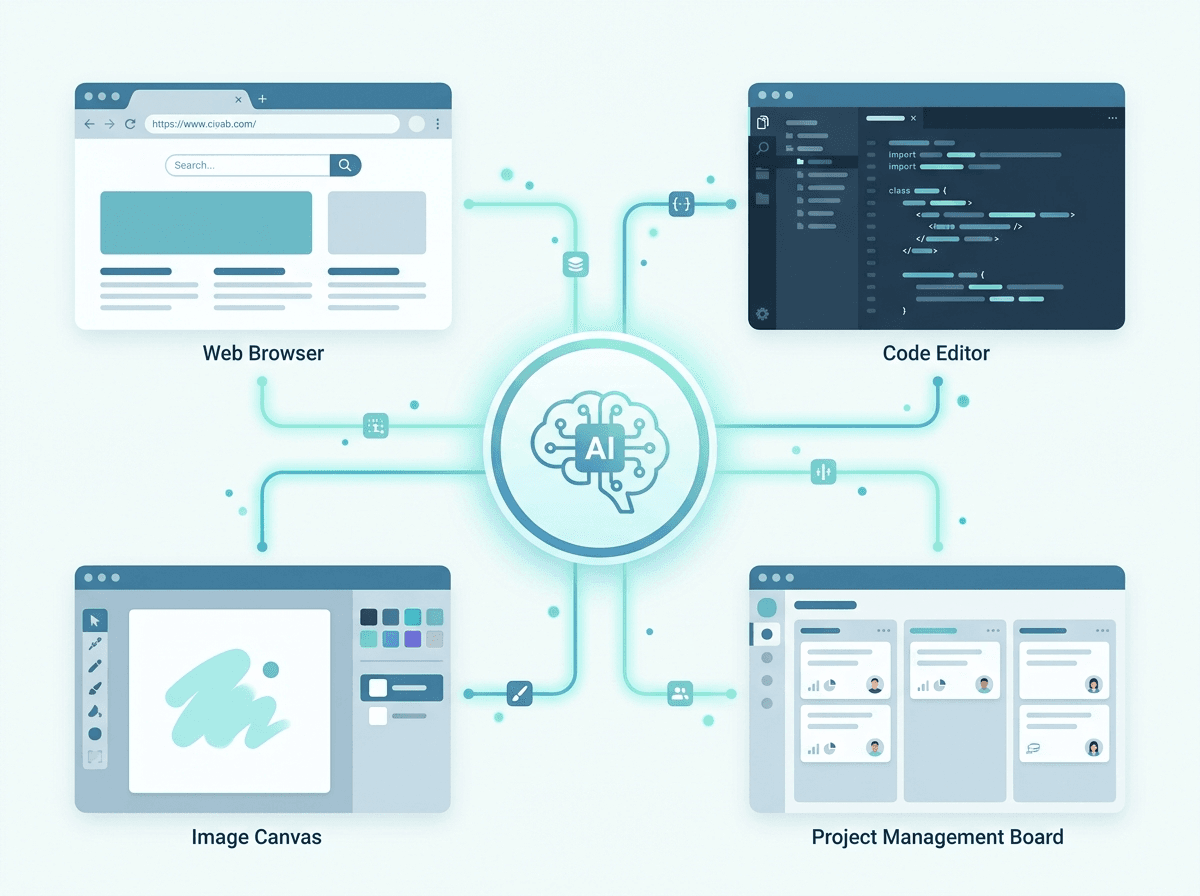
Long confined to suggesting lines of code, Codex is taking a decisive step with this update. The application can now interact with the computer itself — opening applications, browsing the web, reading and modifying files — while maintaining memory of user preferences and project context across sessions.
In concrete terms, a developer can entrust Codex with a complex task like: "Check our Confluence documentation, identify undocumented endpoints in our REST API, generate the missing specifications and create associated visuals." The tool executes the entire workflow semi-autonomously, without the developer having to juggle five different applications.
The integration of third-party plugins further expands the scope of action: connection to project management tools (Jira, Notion), deployment platforms (GitHub Actions, Vercel), or internal databases. This is the transition from copilot to full-fledged digital collaborator.
Concrete applications for French enterprises: from IT to product leadership
Use cases abound for organizations across France, regardless of size or sector:
In software development teams (systems integrators, publishers, IT departments) A team tasked with migrating a legacy application to a microservices architecture can entrust Codex with analyzing existing code, generating technical documentation, proposing a target architecture, and drafting initial backlog tickets — all in a few hours instead of several days.
In SMEs engaged in their digitalization A manufacturing SME seeking to connect its machines to an IoT dashboard can use Codex to generate integration scripts, navigate manufacturer API documentation available online, and produce initial data visualization prototypes — without necessarily having a large tech team.
In product and tech marketing leadership Integrated image generation enables product teams to create functional mockups and presentation visuals directly from their work environment, accelerating validation cycles with business stakeholders.
In consulting firms and innovation departments Codex can be used to automate technology monitoring, synthesize multiple web sources, and generate structured deliverables (benchmarks, comparative analyses, technical audit reports) with unprecedented speed.
What persistent memory really changes for team productivity
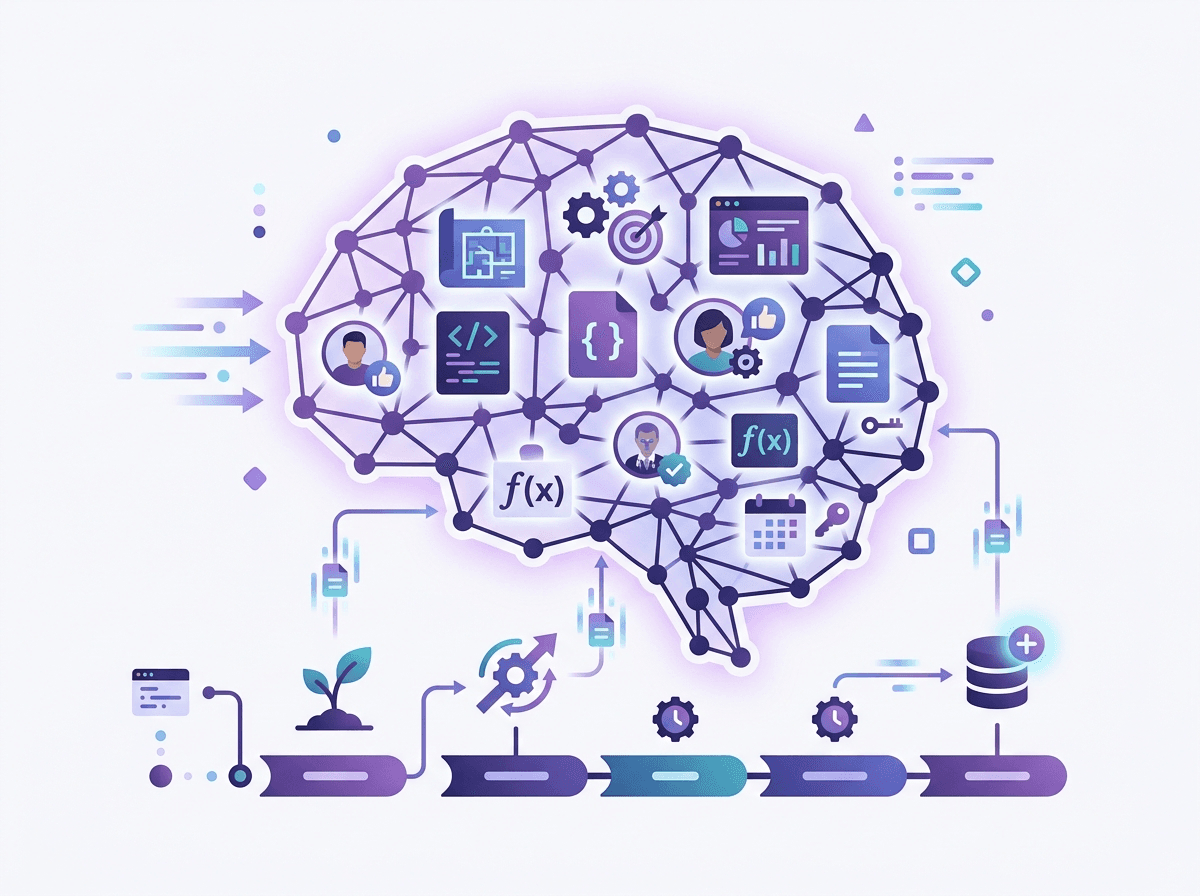
Among the new features, persistent memory is arguably the one that will have the most profound impact on daily productivity. Until now, each session with an AI assistant started from scratch: you had to re-contextualize the project, recall team coding conventions, business constraints, architecture choices...
With memory, Codex retains user preferences, team standards, and project context. A developer no longer needs to repeat "in our project, we use strict TypeScript with hexagonal architecture and our tests are written with Vitest" — Codex already knows this.
For French enterprises subject to GDPR requirements, this feature naturally raises legitimate questions about the location and management of memorized data. It will be essential to evaluate OpenAI's data retention policies and, if necessary, explore private environment deployment options or sovereign alternatives before large-scale rollout in sensitive contexts.
Team training: the real challenge of Codex-driven transformation
Deploying Codex — or any AI tool of this generation — without supporting teams is one of the most underestimated risks for IT leadership. Real-world experience shows that resistance to change doesn't stem from rejecting technology, but from a lack of understanding about what can be delegated to AI and what remains human responsibility.
Development teams need training across multiple levels:
- Prompt engineering applied to code: knowing how to formulate precise, iterative, and contextualized instructions to obtain production-ready results.
- Critical review of AI outputs: Codex can generate functional but non-optimal code, introduce unnecessary dependencies, or overlook security constraints — developers must maintain their audit capability.
- Integration into existing workflows: how does Codex fit into your CI/CD pipeline, code review processes, data governance?
- Ethical and legal considerations: intellectual property of generated code, confidentiality of data sent to the model, responsibility for bugs resulting from AI suggestions.
At Ikasia, we support French enterprises across all these dimensions, with concrete training rooted in your teams' real business contexts — not theoretical presentations disconnected from reality.
The Codex update is not an incremental evolution: it's a strong signal that AI tools for developers are entering a new era — that of autonomous and contextualized work agents. French enterprises that anticipate this transition — by training their teams, defining safeguards, and identifying the right use cases — will gain a decisive competitive advantage.
Want to assess your development teams' AI maturity or implement a training program suited to your context? The Ikasia team is here to help with a free assessment. Visit ikasia.ai to learn more and get in touch with our consultants.
Tags
Related articles
From Weeks to Hours: How Agentic AI Transforms Software Delivery at Endava (And What French CIOs Must Learn)
Read
HP and OpenAI Partner to Transform Tomorrow's Enterprise: What Changes for You
Read
GPT-5.5 Cyber: How AI Becomes the Digital Shield for French Enterprises
ReadWant to go further?
Ikasia offers AI training designed for professionals. From strategy to hands-on technical workshops.