When AI Solves Quantum Physics Equations: What It Actually Means for Your Business
AI Reaches a New Scientific Milestone — and It Concerns You Directly
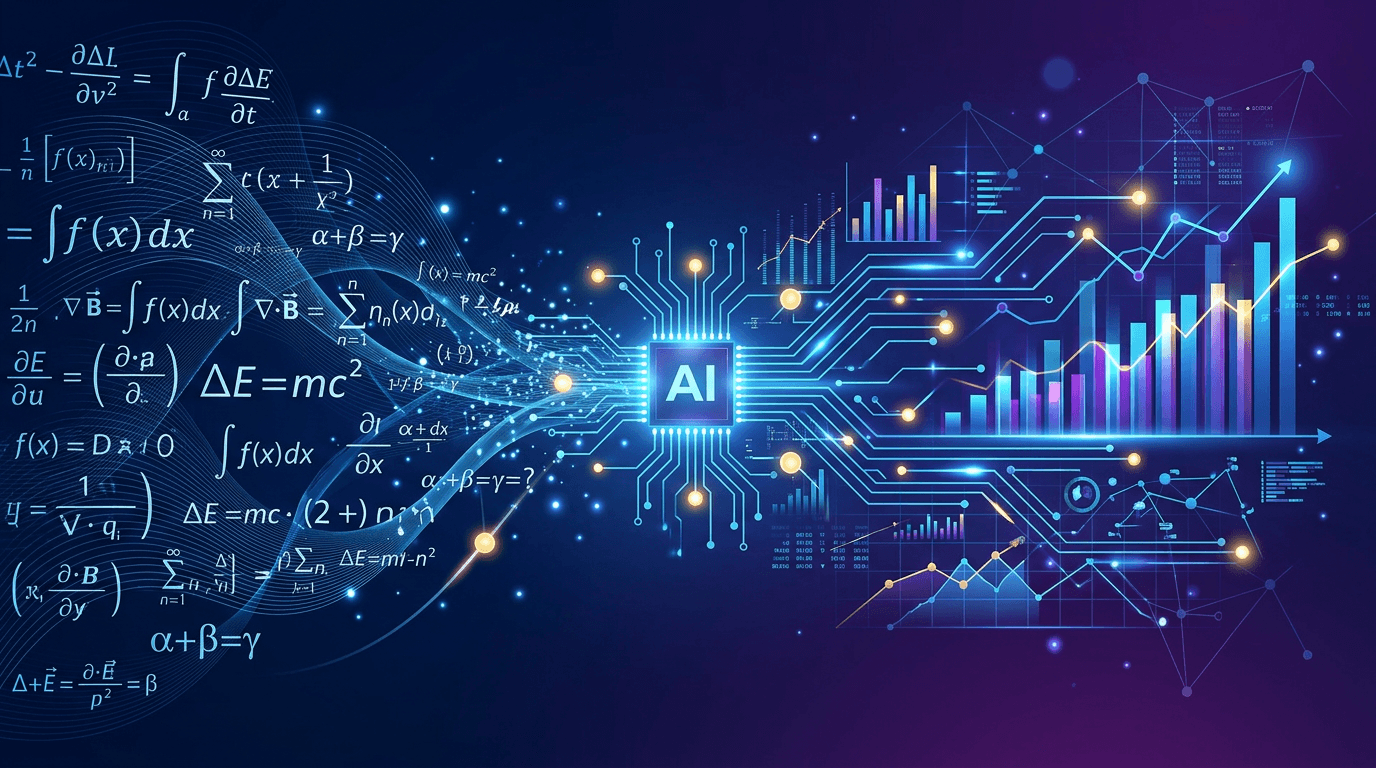
A recently published academic preprint has sent shockwaves through the international scientific community: researchers used GPT-5.2 Pro to derive and verify non-zero graviton tree amplitudes within the framework of quantum gravity. In plain terms, AI did not merely assist physicists — it actively contributed to solving mathematical problems of extreme complexity, in a field where even the world's leading human experts struggle to make rapid progress.
For a business leader or digital transformation executive, this news might seem far removed from day-to-day concerns. In reality, the opposite is true. What this breakthrough reveals is a deep, qualitative shift in the capabilities of large language models: we have moved from AI that answers questions to AI that produces new, verifiable knowledge. The frontier crossed in theoretical physics laboratories today will be crossed tomorrow in your R&D, legal, financial, and industrial departments.
From Quantum Physics to the Boardroom: Understanding the Technological Leap
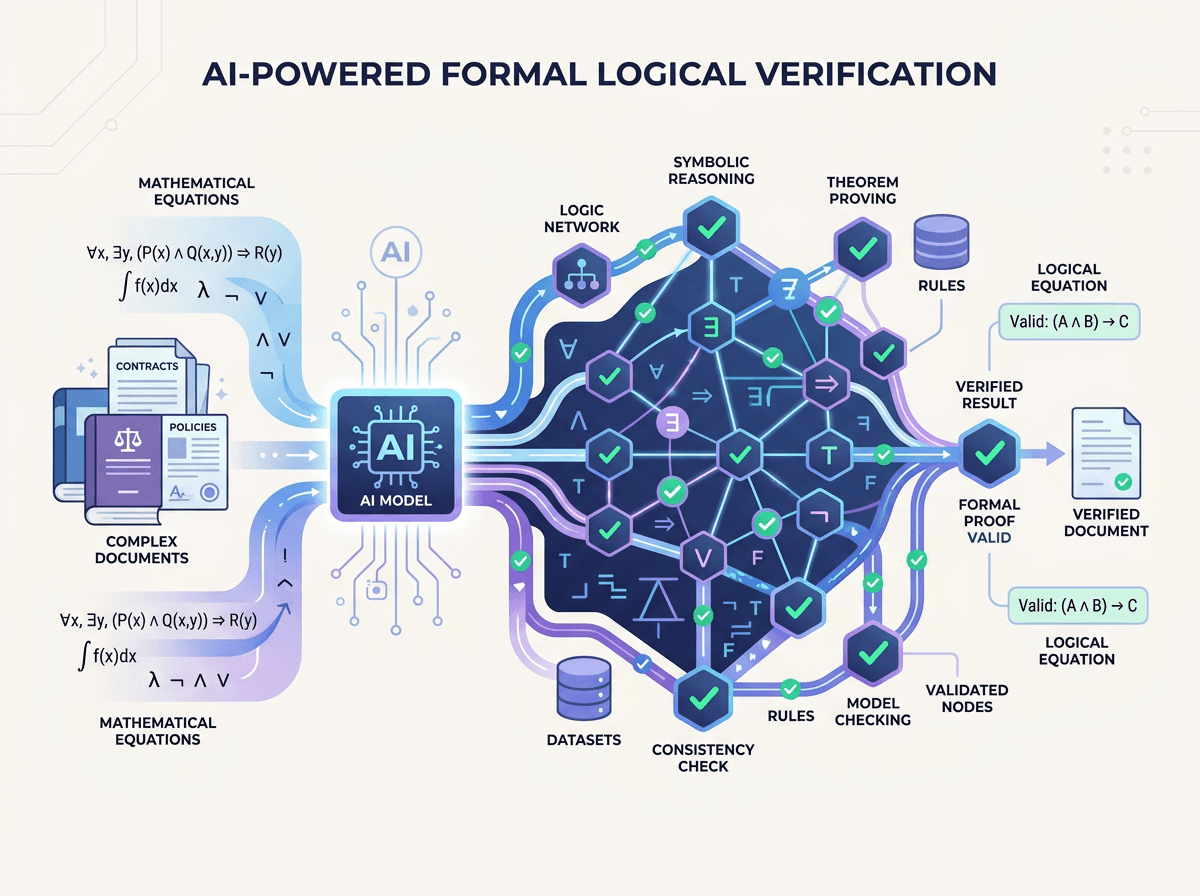
To grasp what is at stake, it is worth understanding what makes this advance so remarkable. Graviton amplitudes are mathematical objects of formidable complexity. Computing them manually requires years of specialised training and weeks of work for a human expert. GPT-5.2 Pro not only produced results — it also participated in their formal verification. In other words, it acted as a research assistant capable of detecting its own errors and validating the logical consistency of its calculations.
This capacity for formal reasoning and self-verification is precisely what businesses have been waiting for in critical domains:
- Audit and regulatory compliance: automated verification of consistency across thousands of contractual documents and continuously evolving legal frameworks (GDPR, NIS2, CSRD).
- Industrial engineering and R&D: simulation and validation of complex models in automotive, aerospace, or energy — sectors where a calculation error can cost millions.
- Quantitative finance: multi-variable risk modelling with integrated hypothesis verification, drastically reducing the validation time of quantitative teams.
- Pharmaceuticals and biotechnology: analysis of molecular screening data with automatic consistency checks on statistical results.
The message is clear: the reasoning power that GPT-5.2 Pro deploys on quantum physics equations is the same power that will audit your processes, optimise your models, and accelerate your innovation.
Three Concrete Transformations to Anticipate Right Now
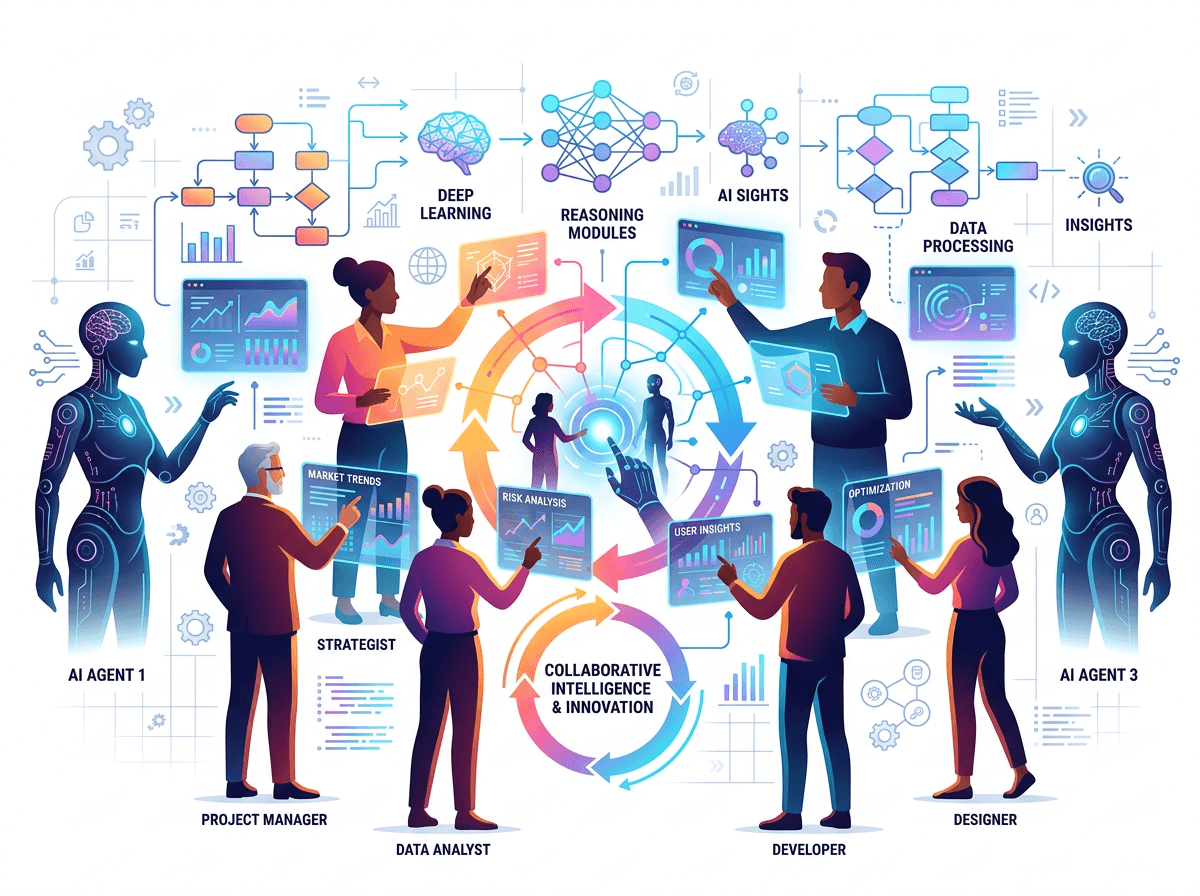
In the face of this evolution, organisations that act today will gain a decisive competitive edge. Here are the three priority workstreams to engage immediately.
1. Rethinking the Validation of Complex Deliverables Until now, validating an audit report, an actuarial study, or a regulatory submission relied exclusively on human expertise. With models capable of formal reasoning, it becomes possible to implement an automated verification layer that detects logical inconsistencies, missing references, or calculation errors before any human review. Corporate law firms, finance departments, and quality assurance teams are at the forefront of this shift.
2. Accelerating R&D Innovation Cycles In manufacturing industries — from food processing to defence — product development cycles remain lengthy and costly. Integrating AI agents capable of reasoning over complex technical models reduces the time spent on exploration and pre-validation phases. Companies in sectors such as renewable energy or green chemistry can test more hypotheses in less time, with enhanced quality control.
3. Creating New High-Value Roles The rise of reasoning AI does not eliminate experts — it redefines their role. The physicist does not disappear because AI helps compute graviton amplitudes; they redirect their time toward asking better questions, interpreting results, and exploring directions that only human intuition can identify. In your organisation, this means training your teams to become AI orchestrators: professionals capable of framing complex problems, evaluating output quality, and making decisions grounded in augmented analysis.
Preparing Your Teams: Training as a Competitive Advantage
The primary barrier to adopting these advanced capabilities is not technological — it is human. The majority of employees have yet to internalise the fact that AI can now reason, verify, and generate knowledge within their own domain of expertise. This lack of awareness creates two opposing pitfalls: under-utilisation (reluctance to delegate complex tasks to AI) and over-confidence (accepting outputs uncritically).
An effective training strategy must address three levels:
- The foundational level: understanding what the latest models can and cannot do, including their limitations and biases, in order to develop a critical perspective.
- The operational level: learning to frame complex, sector-specific problems as structured prompts, to validate outputs, and to integrate AI into existing workflows.
- The strategic level: for managers and executives, identifying high-ROI use cases, allocating investments wisely, and steering the associated cultural transformation.
At Ikasia, we have supported teams across sectors as diverse as manufacturing, financial services, consulting, and healthcare. Our conviction is that AI training is not a one-off event but a continuous acculturation process, grounded in the real operational realities of each organisation. The breakthrough represented by GPT-5.2 Pro in solving quantum physics problems is not an endpoint — it is a signal that the pace of progress will continue to accelerate. The organisations that have invested in upskilling their teams will be the only ones positioned to capture that value.
Take Action with Ikasia
Want to understand how the latest AI advances — including the formal reasoning capabilities of next-generation models — can translate into tangible gains for your organisation? Ikasia supports you every step of the way, from AI maturity audits to tailored training programmes and the identification of your highest-priority use cases.
Do not let your competitors gain ground while technology evolves at breakneck speed. Book a meeting with our experts at ikasia.ai and turn today's AI developments into tomorrow's competitive advantage.
Tags
Related articles

GPT-5: How Two Simple Settings Tripled AI Performance — What This Means for Your Business
Read
Project Camellia: When OpenAI Builds Data Centers, French Businesses Must Rethink Their AI Strategy
Read
GPT-5.6 Sol, Terra and Luna on Amazon Bedrock: What French Businesses Need to Know Now
ReadWant to go further?
Ikasia offers AI training designed for professionals. From strategy to hands-on technical workshops.