When AI Becomes an Autonomous Chemist: How the OpenAI-Molecule.one Revolution is Transforming Pharma and Beyond
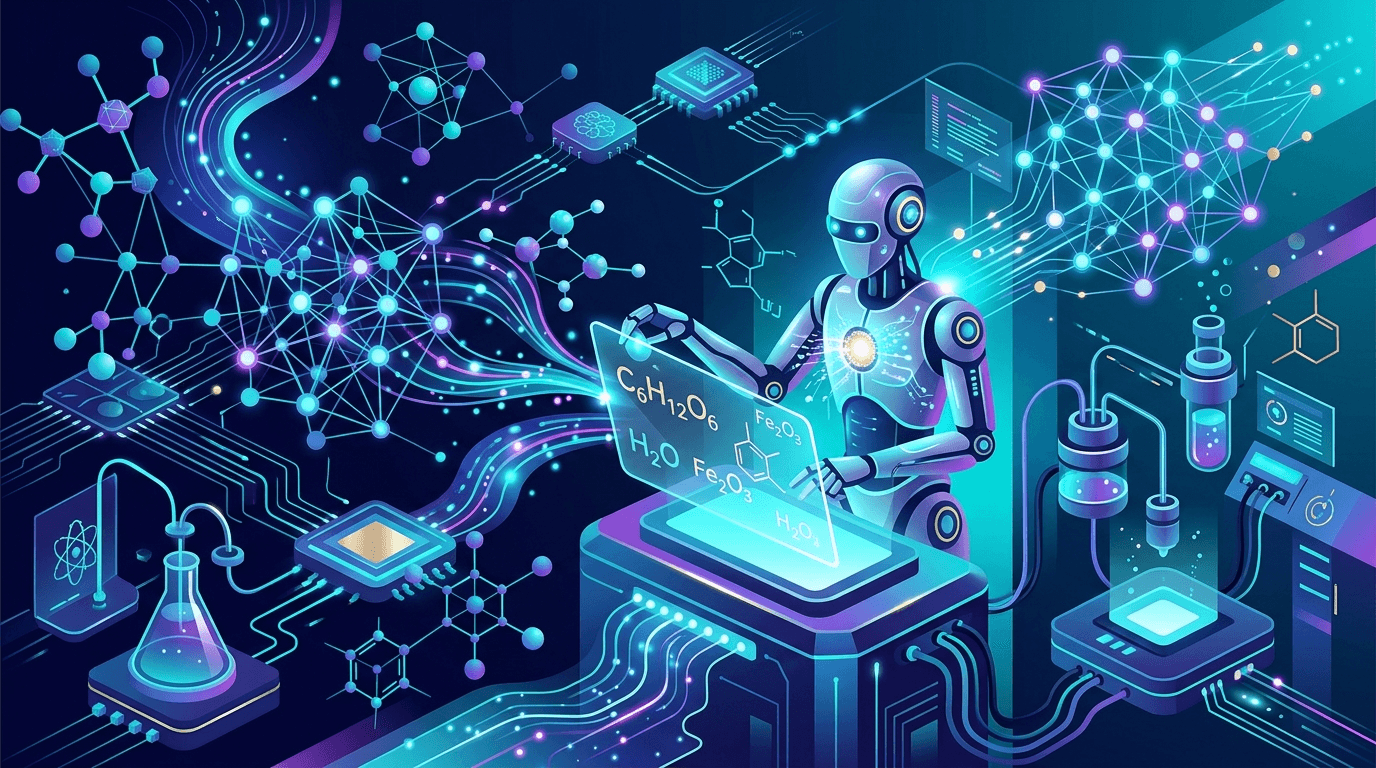
The announcement slipped through mainstream news feeds almost unnoticed, yet it represents a major turning point: OpenAI and start-up Molecule.one have unveiled a near-autonomous AI agent capable of independently improving complex chemical reactions in medicinal chemistry. Powered by GPT-5.4, this "artificial chemist" doesn't just assist human researchers — it plans, iterates, and optimizes with substantial independence. For French companies active in pharma, fine chemicals, materials, or industrial R&D, the signal is clear: agentic AI has just crossed a new threshold of operational maturity.
An AI Agent That Works Like a Senior Researcher — But at Supercomputer Speed
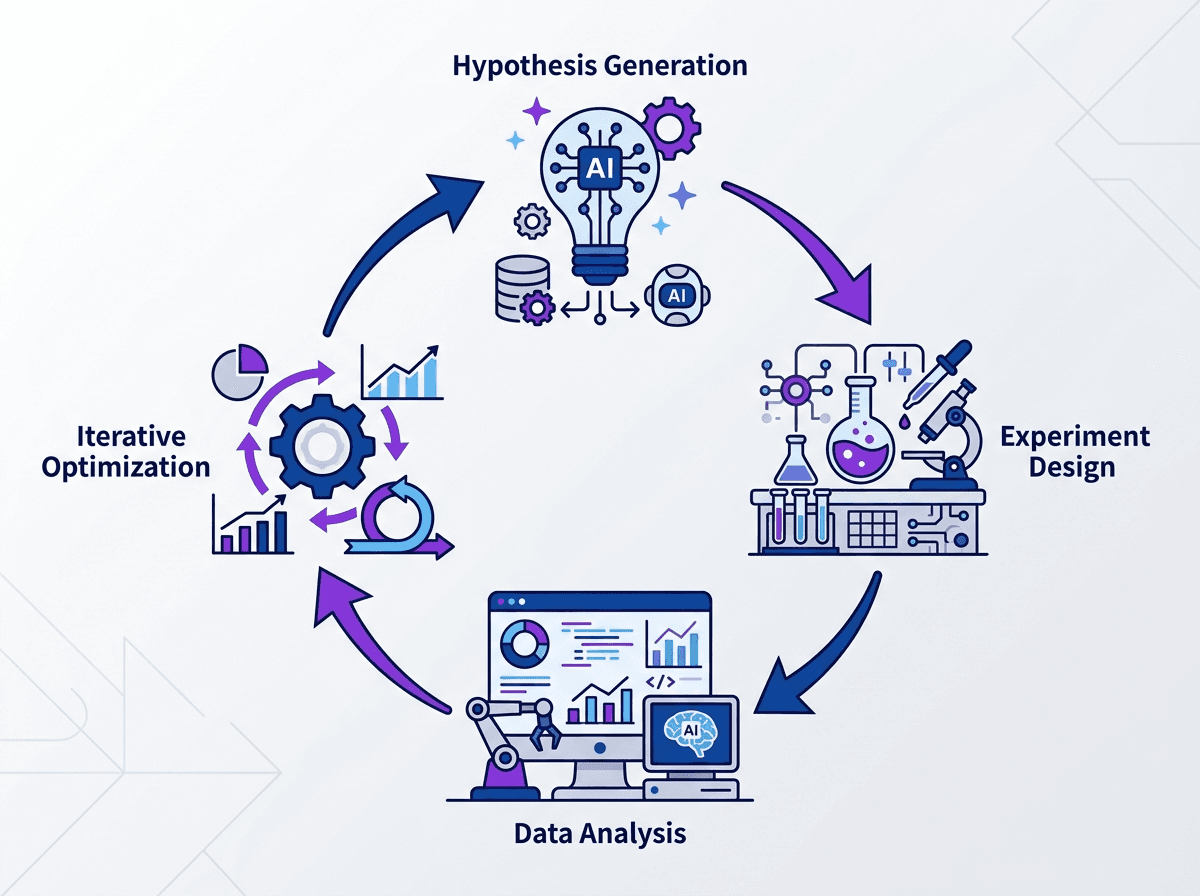
Concretely, what did this agent accomplish? Facing a C–N coupling reaction notorious for being difficult to master in drug synthesis, the AI autonomously managed the complete cycle: hypothesis formulation, experimental condition selection, intermediate result analysis, and strategy adjustment. Without constant human intervention. The human researcher remained in the loop to validate major directions, but cognitive load and systematic exploratory work were delegated to the agent.
This operating model — what specialists call "high-value-added human-in-the-loop" — perfectly illustrates the direction agentic AI is heading in 2025. We're no longer talking about a tool that answers questions, but about a digital collaborator that drives projects end-to-end, leverages scientific databases, generates experimental plans, and learns from each iteration.
To give a sense of scale: whereas a team of experienced chemists can test a dozen conditions over several weeks, an agent of this type can explore hundreds in a few hours, documenting each decision with full traceability. This is radical R&D time compression.
Concrete Applications Far Beyond Medicinal Chemistry
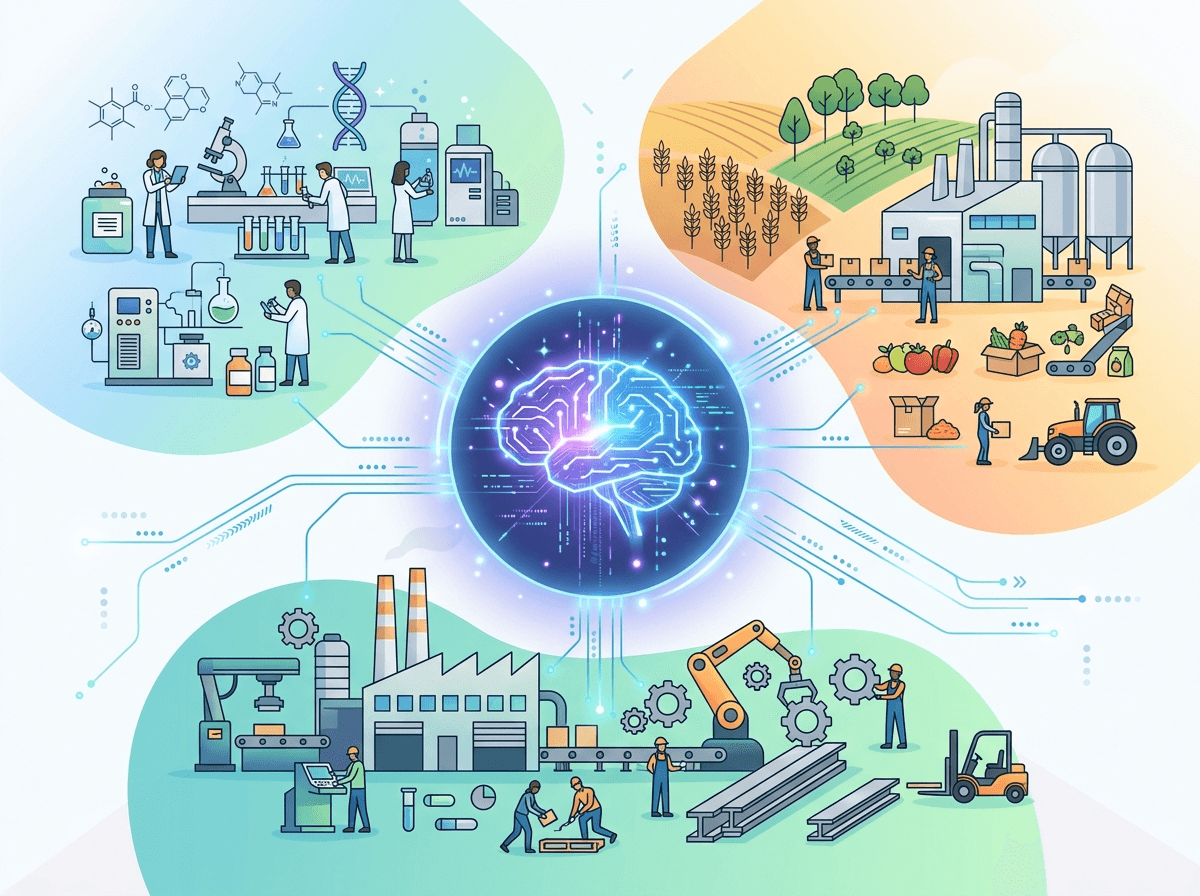
It would be reductive to confine this breakthrough to the pharmaceutical sector alone. The agentic logic demonstrated here — explore, test, optimize, document — is transferable across numerous sectors of the French economy.
In pharmaceutical and fine chemicals, groups like Sanofi, Servier, and the many French CDMO subcontractors can envision drastically reducing development cycles for new active pharmaceutical ingredients or synthesis process optimization. Reducing time-to-market on a generic drug or new formulation represents millions in savings.
In materials and energy, players like Saint-Gobain, Arkema, and deeptech start-ups in battery and green hydrogen can use similar agents to accelerate new material discovery, test cathode formulations, or optimize thin-film deposition processes.
In food and biotech, formulating new functional ingredients, optimizing fermentation processes, or developing biocontrol solutions directly benefit from this accelerated exploration capability.
In engineering firms and consulting, the logic is identical: an agent capable of testing design configurations, analyzing simulation results, and iterating without constant supervision represents a considerable productivity lever for French mid-market companies struggling to recruit senior technical talent.
The common denominator? Everywhere there are costly trial-and-error cycles consuming time and qualified human resources, agentic AI can become a force multiplier.
Three Strategic Challenges French Leaders Must Anticipate Now
Enthusiasm is justified, but clear thinking is essential. Deploying AI agents of this caliber in real industrial environments raises stakes that many French companies aren't yet prepared to address.
First challenge: data governance. An AI agent optimizing chemical reactions or industrial processes needs access to proprietary data that's often scattered, poorly structured, or jealously guarded in departmental silos. The question is no longer "do we have the data?" but "is our data exploitable by an agentic AI without risk of leakage or contamination?"
Second challenge: responsibility and regulatory traceability. In regulated sectors (pharma, food, medical devices), each experimental decision must be documented and defensible to authorities. AI agents must therefore be designed with rigorous audit and explainability mechanisms — what GPT-5.4 is beginning to offer, but which companies must configure and validate themselves.
Third challenge: integration into existing workflows. An AI chemist agent doesn't replace a laboratory overnight. You must design interfaces between the agent's digital world and the physical world of actual experiments — laboratory robots, LIMS systems, industrial ERPs. This technical orchestration is often underestimated in pilot projects.
Training Your Teams: Human Expertise Remains the Decisive Factor
Faced with this surge in agentic AI capability, a strategic mistake would be thinking that team training becomes secondary. It's exactly the opposite. The more capable AI agents become, the more human expertise in supervision, framing, and critical interpretation becomes differentiating.
Researchers, engineers, and managers who know how to ask the right questions of an AI agent, assess the relevance of its hypotheses, detect its blind spots, and integrate its results into a coherent innovation strategy will be the most valuable profiles on the market over the next three years. This isn't a skill acquired passively by watching AI work — it's built through structured training, real-world practice, and an assumed culture of experimentation.
This concretely means training R&D teams in agentic workflow design, managers in critical evaluation of AI outputs, and executive leadership in defining responsible adoption policies. Companies investing in this skills development now have a significant competitive lead over rivals.
Take Action with Ikasia
The autonomous AI chemist revolution isn't a futuristic promise — it's deploying now, in real laboratories, with measurable results. The question isn't whether agentic AI will transform your sector, but how quickly you'll position yourself to capture that value.
Ikasia supports French companies through this transition: AI maturity audits, training for technical and management teams, agentic use case design tailored to your sector, and responsible deployment support. Whether you're an industrial mid-market company, pharmaceutical lab, or deeptech start-up, we have the resources to transform this opportunity into concrete competitive advantage.
Discover our training programs and consulting offers at ikasia.ai — and let's take time for a conversation to evaluate together where your organization stands facing this agentic wave.
Tags
Related articles



Want to go further?
Ikasia offers AI training designed for professionals. From strategy to hands-on technical workshops.