Claude on NVIDIA Blackwell Ultra GPU: How GPU Computing Power Redefines AI Agents for Enterprise
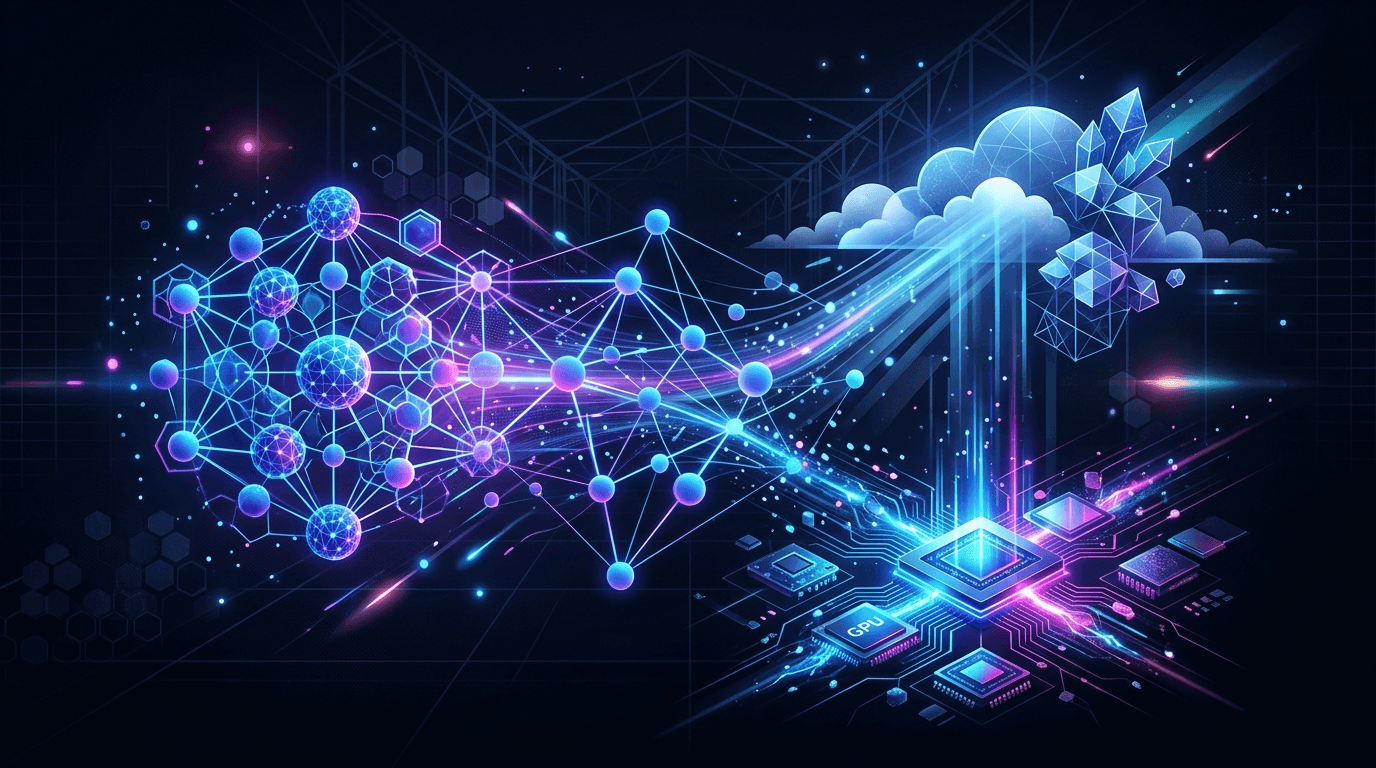
The race for AI computing power has reached a new milestone. Anthropic, one of the world's leading advanced language model developers, announces that its Claude models are now generally available on Microsoft Azure, powered by the brand-new NVIDIA GB300 Blackwell Ultra GPUs. This technological convergence is far from trivial for French IT departments and CIOs seeking to industrialize their AI initiatives.
For French enterprises engaged in their digital transformation, this announcement raises an essential strategic question: beyond the technology marketing, what does this really change in their day-to-day operations and their ability to deploy reliable, fast, and scalable AI agents?
A New-Generation GPU Infrastructure: What the GB300 Blackwell Ultra Really Delivers
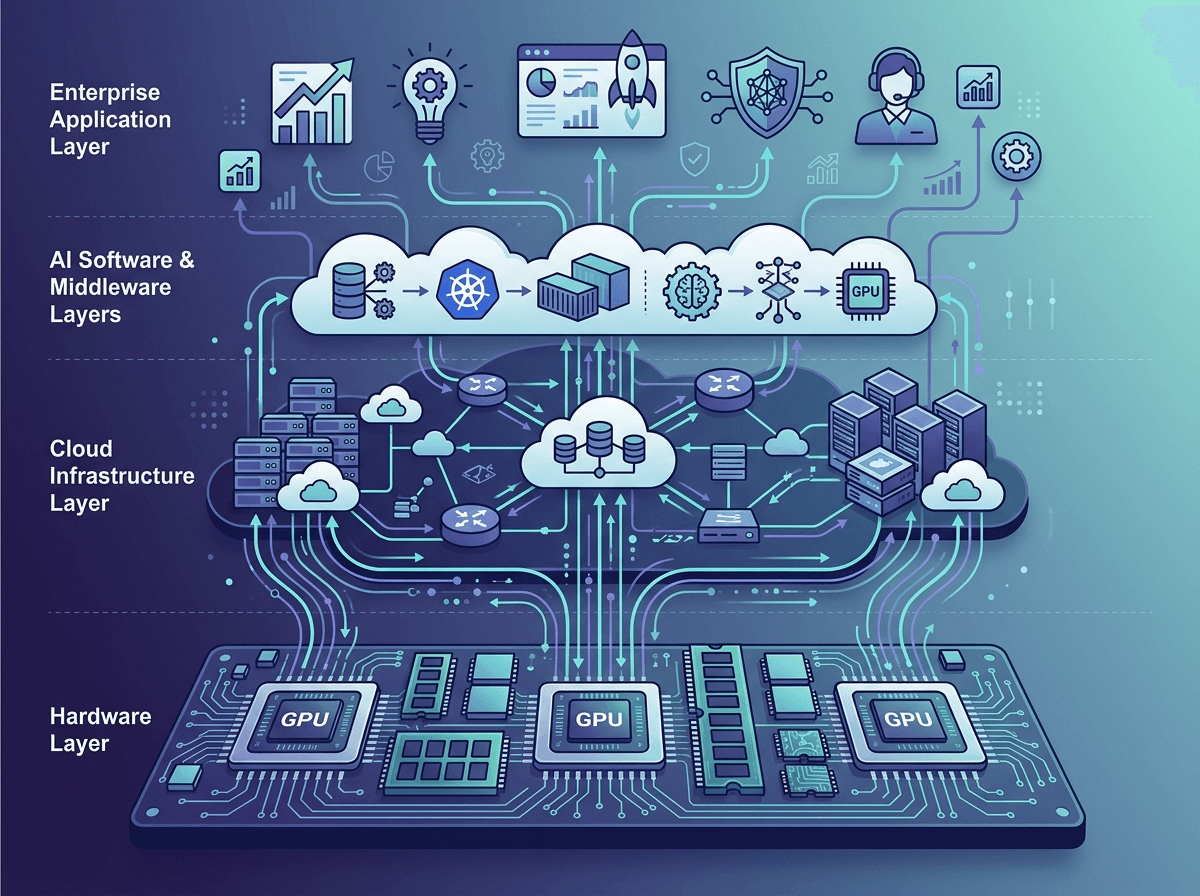
The NVIDIA GB300 Blackwell Ultra is not simply an incremental update. It represents a significant architectural breakthrough in how large language models (LLMs) are executed in production. Compared to previous generations, this chip offers significantly higher compute density and energy efficiency, enabling models like Claude 3.5 Sonnet or Claude 3 Opus to run with reduced latency and substantially increased token throughput.
Concretely, for a French banking enterprise using Claude to analyze contracts or generate regulatory summaries, this translates into shorter response times, better handling of traffic spikes, and the ability to process longer contexts — up to 200,000 tokens — without performance degradation. In a native Azure environment, this also means seamless integration with Microsoft tools already in place: Azure Active Directory, Microsoft Fabric, or Azure DevOps.
The stakes are particularly high for enterprises operating in sectors with strong compliance constraints (finance, healthcare, insurance, public sector), where model performance must be accompanied by guarantees on data localization and processing traceability.
The Rise of Autonomous AI Agents: Concrete Use Cases for French Enterprises
The announcement is not solely about raw power. More importantly, it marks an acceleration in the deployment of autonomous AI agents — systems capable of chaining complex tasks, consulting external tools, making intermediate decisions, and producing deliverables without constant human intervention.
Here are some application examples directly applicable to the French business landscape:
-
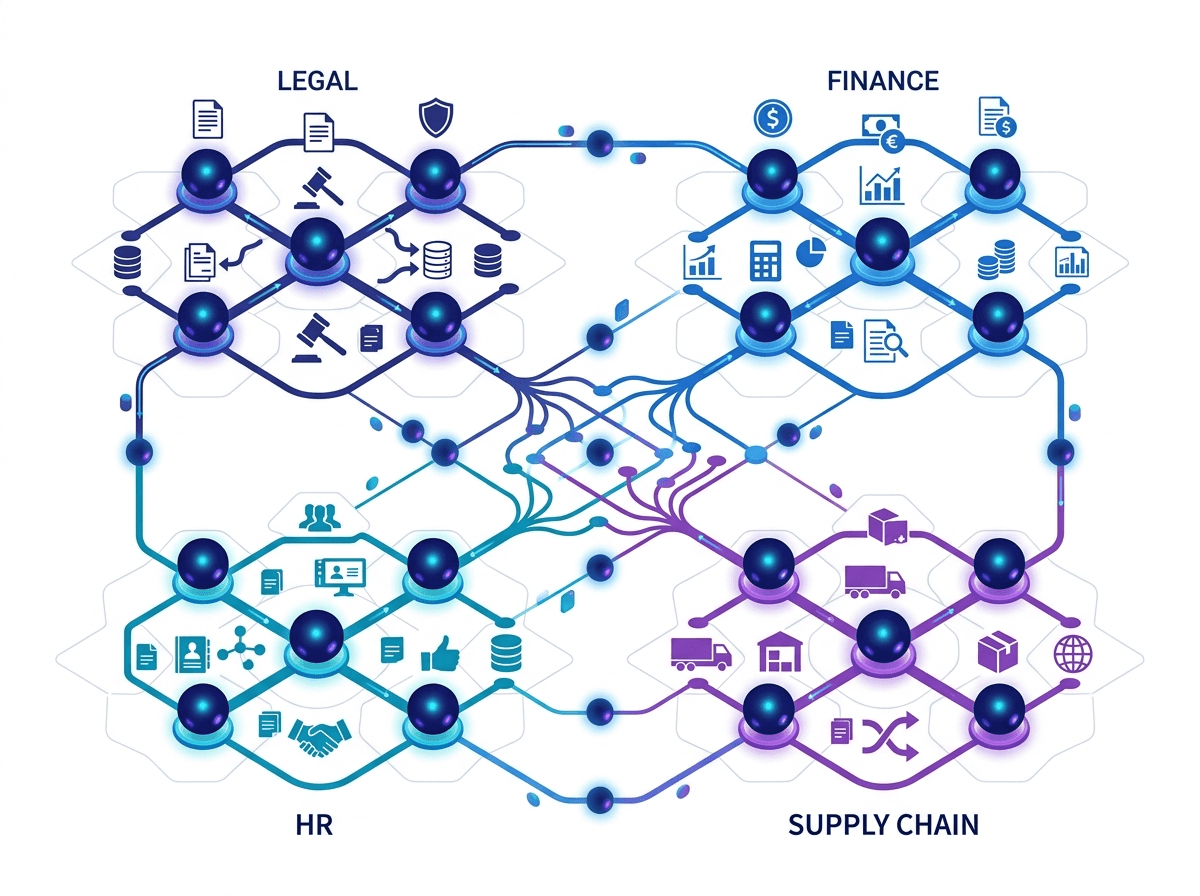
Law firms and legal departments: a Claude agent can automatically analyze stacks of contracts, identify risk clauses, generate comparative summaries, and alert lawyers only on critical points. The power of the GB300 enables processing multiple long documents in parallel, reducing analysis time from several hours to just minutes.
-
Manufacturing and supply chain: AI agents can monitor production data in real time, cross-reference ERP information with demand forecasts, and automatically generate procurement recommendations, or even trigger orders according to defined business rules.
-
Human resources and recruitment: agents can pre-qualify applications, draft structured interview reports, or assist managers in building personalized development plans — all while respecting GDPR obligations thanks to sovereign Azure infrastructure.
-
Customer service in retail and telecommunications: with response times near real-time enabled by Blackwell Ultra, conversational agents can handle complex, multi-turn requests while maintaining context across long conversations without loss of coherence.
Access to these capabilities via Microsoft Foundry on Azure presents a decisive advantage for enterprises already Microsoft customers: no infrastructure changes, no new cloud contract negotiations, unified billing, and known SLAs.
Security, Sovereignty, and Compliance: Questions Every French CIO Must Ask
Technological enthusiasm must always be tempered by rigorous governance considerations. For French enterprises, and particularly for entities subject to European regulations (DORA, AI Act, GDPR), several points deserve careful attention.
First, the question of data residency. Azure offers regions in France (France Central, France South) and Europe, which theoretically allows maintaining data within the European Union. However, it is essential to contractually verify that model execution via Microsoft Foundry respects these geographic constraints.
Second, the European AI Act, whose initial obligations have been progressively applied since 2024, imposes transparency and auditability requirements for AI systems used professionally. Autonomous agents, by nature, fall into categories requiring rigorous documentation of decision flows. Having certified cloud infrastructure is a necessary but insufficient condition.
Third, access and rights management in a multi-agent environment must be designed from the outset. Who can trigger an agent? What actions can it undertake autonomously? What level of human oversight is maintained? These questions concern security policy as much as technical architecture.
Training Your Teams in the Era of AI Agents: A Strategic Imperative
The availability of such powerful models on enterprise-grade infrastructure does not, by itself, solve the main challenge French enterprises face: upskilling their teams. Autonomous AI agents are not deployed with a single click. They require a fine understanding of advanced prompt engineering, multi-agent orchestration, error management and feedback loops, as well as a culture of continuous output evaluation.
At Ikasia, we observe that organizations getting the most value from these technologies are those who invested upfront in team training — not just technical teams, but also business teams: HR managers, controllers, lawyers, project managers. Understanding what an agent can and cannot do, knowing how to structure a complex task appropriately, and interpreting results with critical thinking: these are cross-functional skills that make the difference between an abandoned proof-of-concept and a deployment with real value.
Our training programs cover the entire spectrum: from executive awareness sessions on generative AI to technical workshops on building agents with Claude APIs and orchestration frameworks like LangChain or AutoGen. We also guide enterprises in defining their AI strategy, identifying priority use cases, and establishing appropriate governance.
The Claude + NVIDIA GB300 + Azure alliance is not just another technical announcement. It is a strong signal that agentic AI is entering its industrial maturity phase, and enterprises still hesitating to structure their approach are falling behind in a way that will be difficult to catch up.
Would you like to assess your organization's AI maturity and identify your next value levers? Contact Ikasia's experts at ikasia.ai for a personalized assessment or discover our custom training programs tailored to your sector and teams.
Tags
Related articles
Autonomous Networks and Agentic AI: What NVIDIA's Telecom Revolution Means for Your Business
Read
GPT-6 Astra Ultrafast on NVIDIA Blackwell GPU: How AI Speed Transforms Your Teams
Read
Agentic AI and Scientific Computing: What Laboratories Are Teaching French Companies
ReadWant to go further?
Ikasia offers AI training designed for professionals. From strategy to hands-on technical workshops.