Claude on Amazon Bedrock in Asia: What AI Data Sovereignty Really Means for French Enterprises Operating Globally
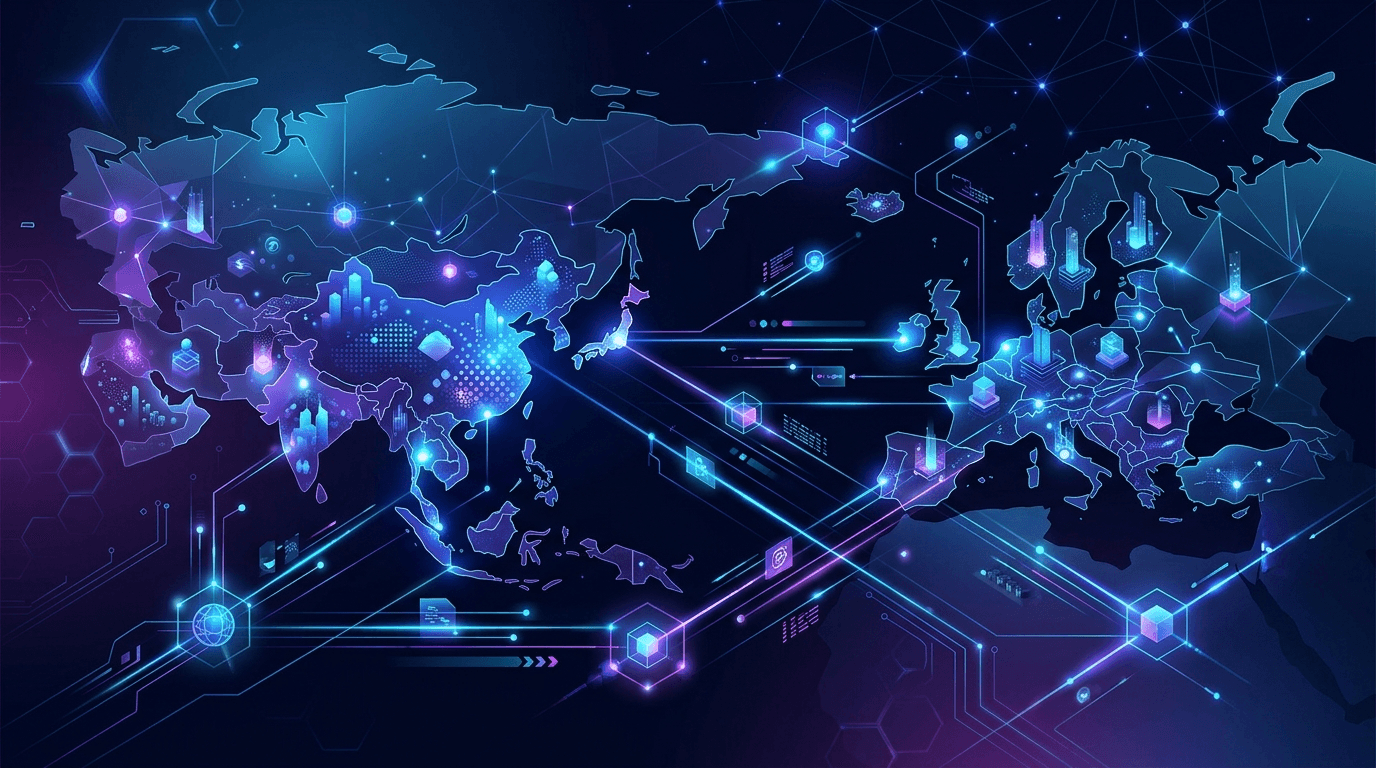
Amazon has just announced a major expansion of its Amazon Bedrock service: Anthropic's Claude Opus 5 and Claude Sonnet 5 models are now available with fully localized inference in Seoul (South Korea), and Claude Sonnet 5 in Singapore. Information that may seem distant to a Lyon-based SME or a major Paris-based group… until you measure its real implications for any French company with operations, subsidiaries, or customers in the Asia-Pacific region.
Because behind this technical announcement lies a central strategic question: where is your AI data really being processed, and what does that change for your compliance, competitiveness, and organization?
AI Data Sovereignty: An Issue That Goes Beyond European Borders
There has been much discussion in France and Europe about GDPR and the need to localize personal data on European soil. But French companies operating internationally face a more complex reality: each market has its own regulatory requirements for data processing.
South Korea, with its PIPA (Personal Information Protection Act), and Singapore, with its PDPA (Personal Data Protection Act), impose strict constraints on the localization and transfer of personal data. Until now, using cutting-edge AI models like Claude often meant that data transited or was processed outside these territories — creating a non-negligible legal and reputational risk.
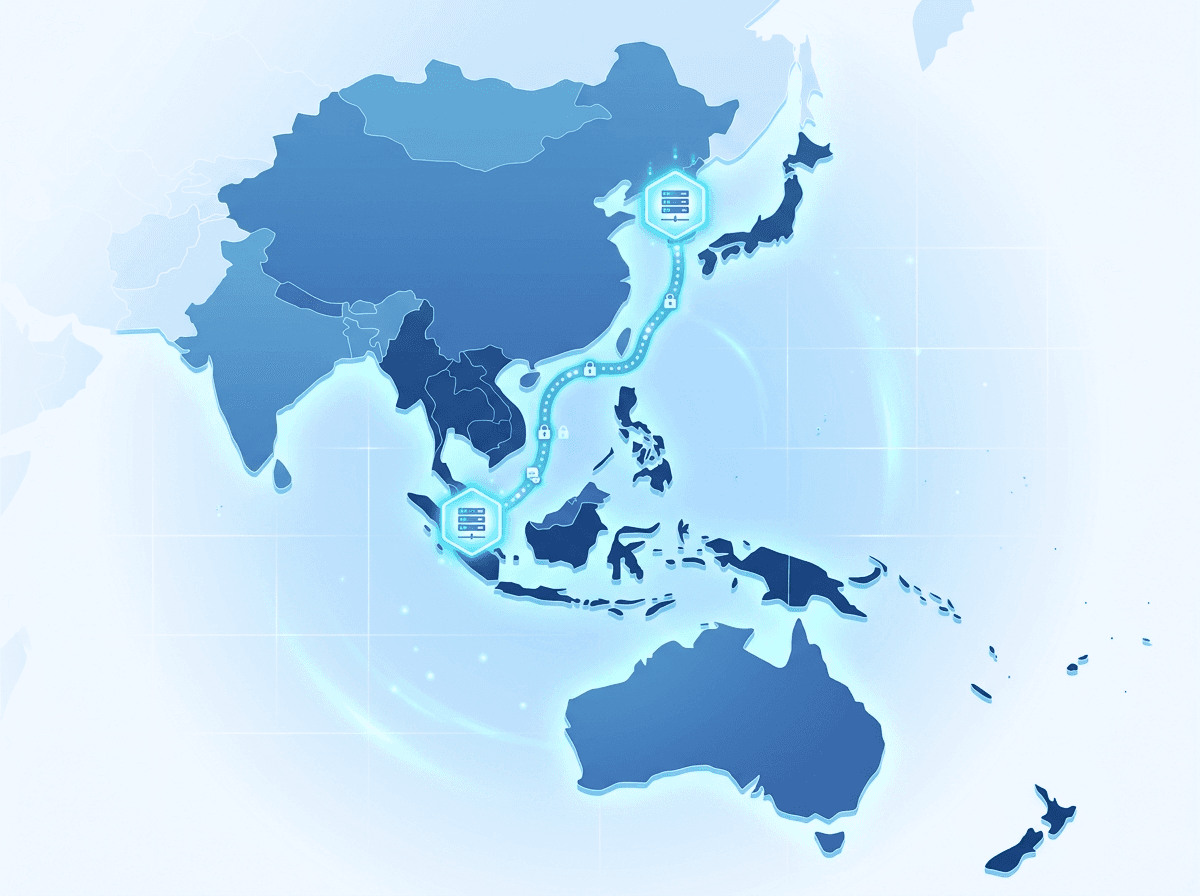
With this announcement, Amazon Bedrock now enables a company to run Claude inferences entirely within the relevant region, without data leaving the defined geographic boundary. For a Korean subsidiary of a French luxury, healthcare, or finance group, this is a concrete paradigm shift: you can finally deploy advanced AI agents on local customer data, in full compliance.
What Claude Opus 5 and Sonnet 5 Concretely Change for Your Asia Operations
Let's talk about actual capabilities. Claude Opus 5 represents the most powerful model in the Anthropic lineup to date: complex reasoning, long document analysis, nuanced content generation, multi-step task management. Claude Sonnet 5, positioned on an excellent performance/cost balance, is ideal for high-volume applications.
Concretely, here's what French companies can now consider deploying locally in Asia-Pacific:
-
Banking and Insurance: automated analysis of contracts and client files in Korean or Singapore English, with data that never leaves local territory. A group like AXA or Société Générale, present in Asia, can thus industrialize document review without regulatory compromise.
-
Retail and E-commerce: personalizing customer interactions via chatbots or AI agents trained on local purchase histories, in compliance with local data protection laws.
-
Manufacturing and Industry: analysis of production data, predictive maintenance, and generation of technical reports in the local language, on entirely regional cloud infrastructure.
-
Healthcare and Pharma: processing of medical data or clinical trials for teams based in Seoul or Singapore, without risks related to cross-border transfer of sensitive data.
Access to these capabilities via a unified Amazon Bedrock API also simplifies technical management: IT teams at a French headquarters don't need to manage different AI infrastructure for each region of the world.
The Strategic Lesson for French CIOs and Executive Leadership
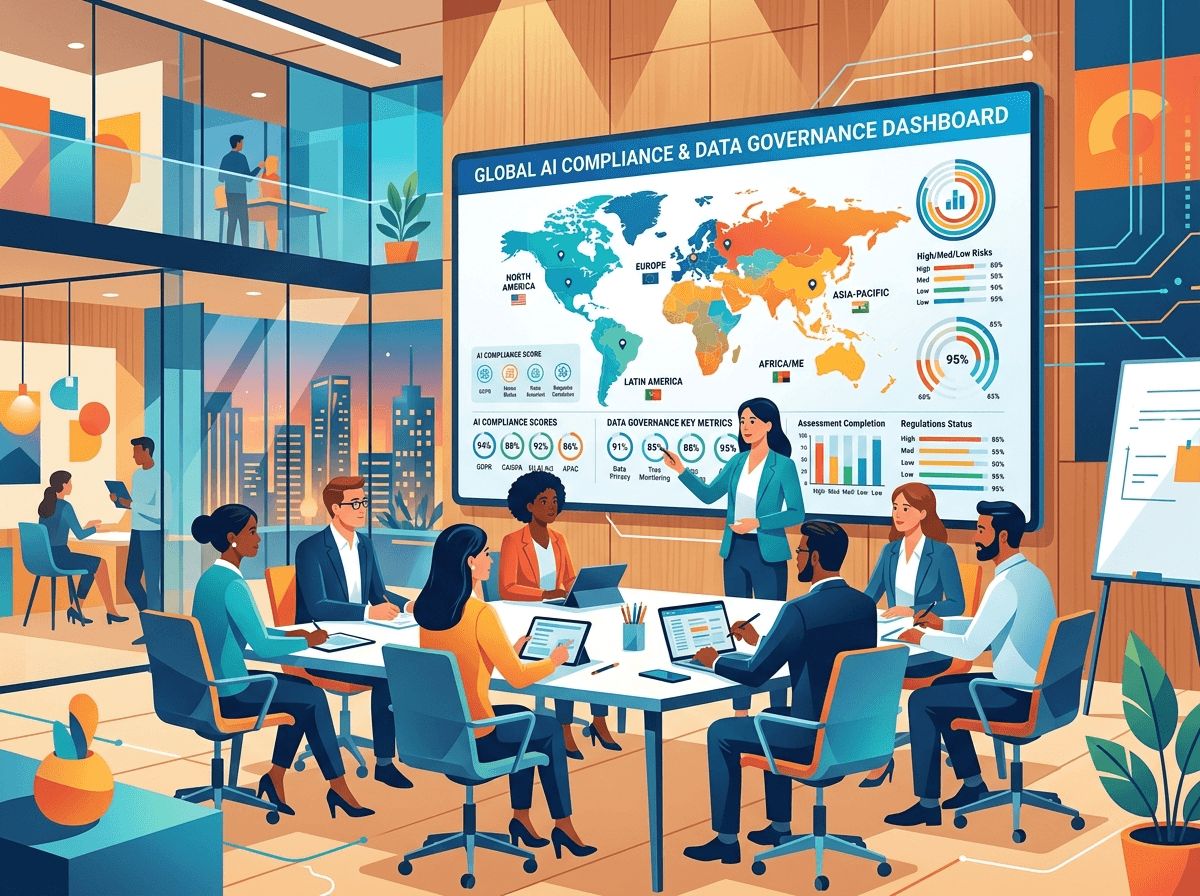
This announcement illustrates a fundamental trend that all French digital leaders must integrate into their AI roadmap: the geographic fragmentation of sovereign AI is underway, and it will accelerate.
Over the next 24 months, we can anticipate that major hyperscalers (AWS, Microsoft Azure, Google Cloud) will multiply regional deployments of frontier models to meet local regulatory requirements — in India, Japan, Brazil, the Middle East, and of course in Europe with reinforced dedicated zones.
For French CIOs, this implies several immediate strategic decisions:
- Map AI data flows by geographic region, to identify where data residency constraints already exist or are emerging.
- Evaluate the multi-region architecture of your AI deployments, ensuring that workflows can adapt to different data residency constraints.
- Anticipate costs related to this fragmentation: multiple regional deployments cost more than a centralized deployment, but non-compliance risk can cost far more.
- Choose flexible platforms like Amazon Bedrock that allow you to switch between regions and models without major application refactoring.
Those who still consider AI a purely "technical" or "experimental" project risk falling behind when competitors have industrialized these use cases at global scale.
Training Your Teams to Think in Terms of Sovereign and Responsible AI
The regulatory complexity of AI internationally is not just a concern for legal teams or CIOs. It concerns all teams that design, deploy, and use AI solutions daily: product managers, data engineers, business leaders, IT procurement teams.
Training your teams to understand where data is processed, why it matters, and how technical architecture responds to these constraints has become a critical skill. At Ikasia, we observe that the most advanced French companies in AI maturity are those that have invested in cross-functional capability building — not just technical, but also regulatory, ethical, and strategic.
Our training programs now systematically integrate this dimension: understanding AI cloud offerings (including Amazon Bedrock and Anthropic models), mastering data sovereignty issues, and knowing how to translate these constraints into concrete application design decisions. Whether you're an mid-market company with an Asian subsidiary or a large group with global operations, this responsible AI culture is what makes the difference between a successful deployment and a project blocked by an unexpected legal audit.
Would you like to assess your organization's AI maturity in terms of data sovereignty and international deployment challenges? Or train your teams to navigate this rapidly evolving ecosystem? The Ikasia team supports you, from strategic audits to operational training. Discover our programs at ikasia.ai and let's discuss your specific needs.
Tags
Related articles
OpenAI on Amazon Bedrock: What Asia-Pacific Availability Means for French Enterprises Going Global
Read
Claude Sonnet 5 on AWS: Next-Generation AI to Transform Your Team's Productivity
Read
How Jump Trading Revolutionizes Quantitative Research with AI: Lessons for French Businesses
ReadWant to go further?
Ikasia offers AI training designed for professionals. From strategy to hands-on technical workshops.