How Jump Trading Revolutionizes Quantitative Research with AI: Lessons for French Businesses
Quantitative research in the age of AI: a strategic turning point
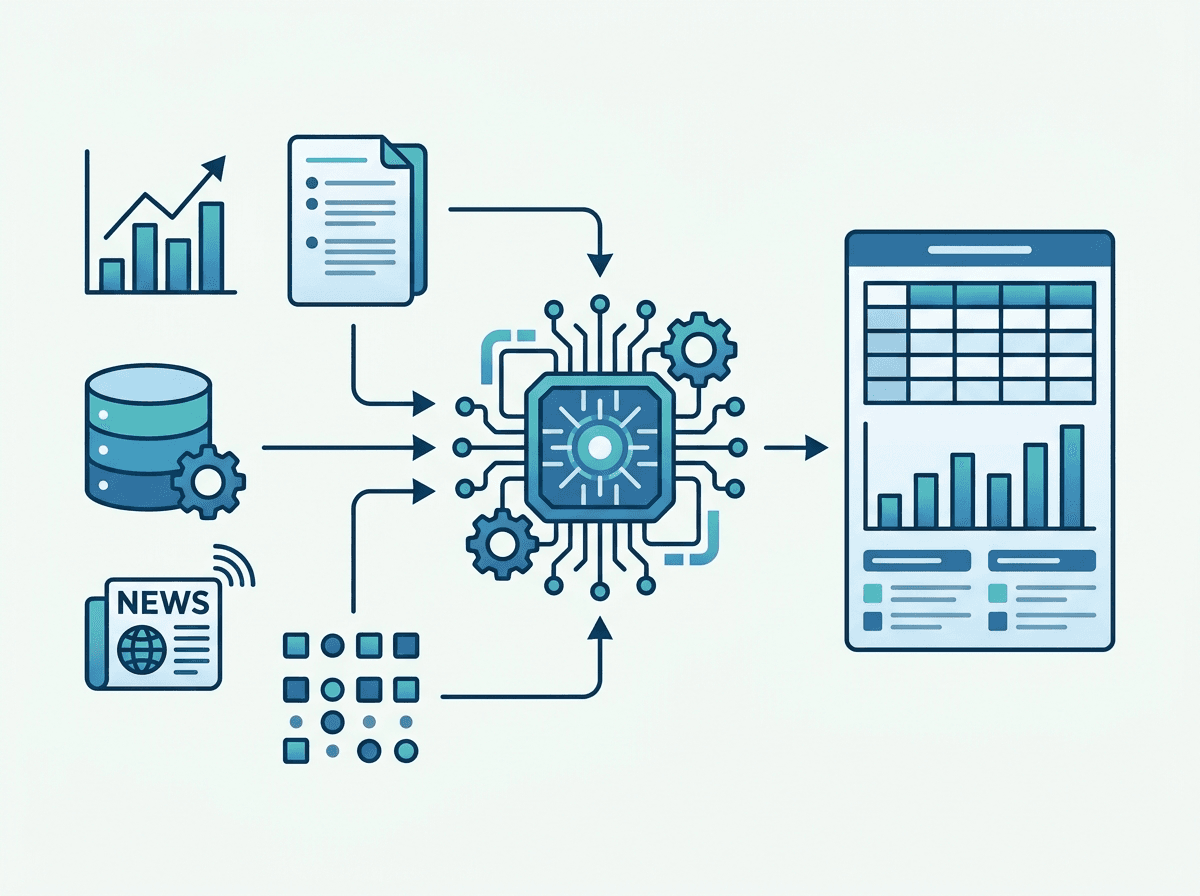
Jump Trading, one of the world's most influential quantitative funds, has recently unveiled its collaboration with OpenAI to industrialize its quantitative research. The verdict is clear: by combining long-running AI workflows, multiple data sources, and rigorous human oversight, the firm manages to multiply its teams' analytical capacity without sacrificing quality or rigor.
This development goes far beyond the financial sector alone. For chief executives, CIOs, and digital transformation leaders in France, the Jump Trading case illustrates an increasingly inescapable truth: generative AI is no longer an experimental gadget. It has become an operational competitiveness lever, capable of fundamentally reshaping how expert teams produce value.
In a context where French businesses — from consulting firms to industrial groups, banks, and insurers — are seeking to rationalize their analytical processes, Jump Trading's approach offers a concrete and reproducible model.
Long-running AI workflows: the key to tackling complex problems
One of the major innovations described in the Jump Trading case lies in the use of long-running AI workflows. Unlike ad-hoc ChatGPT use cases — one question, one answer — these workflows automatically chain together multiple stages of analysis, collection, and synthesis over extended periods, with strategic human checkpoints.
Concretely, here's how this principle can translate into a French business:
- An audit or consulting firm can automate the document collection and pre-analysis phase before each client engagement, letting AI consolidate sector reports, public financial data, and competitive benchmarks — then submit a structured summary to the senior analyst for validation.
- An industrial R&D department can entrust an AI agent with continuous technology monitoring across multiple patent databases, scientific publications, and public procurement calls, with contextualized alerts escalated weekly.
- A marketing department can orchestrate customer voice analysis workflows, automatically cross-referencing online reviews, CRM data, and qualitative study verbatims to produce monthly trend reports.
The common thread in these applications: AI handles repetitive, time-consuming cognitive work, freeing human experts for high-value-add tasks — interpretation, decision-making, client engagement.
Multi-source integration: breaking down data silos
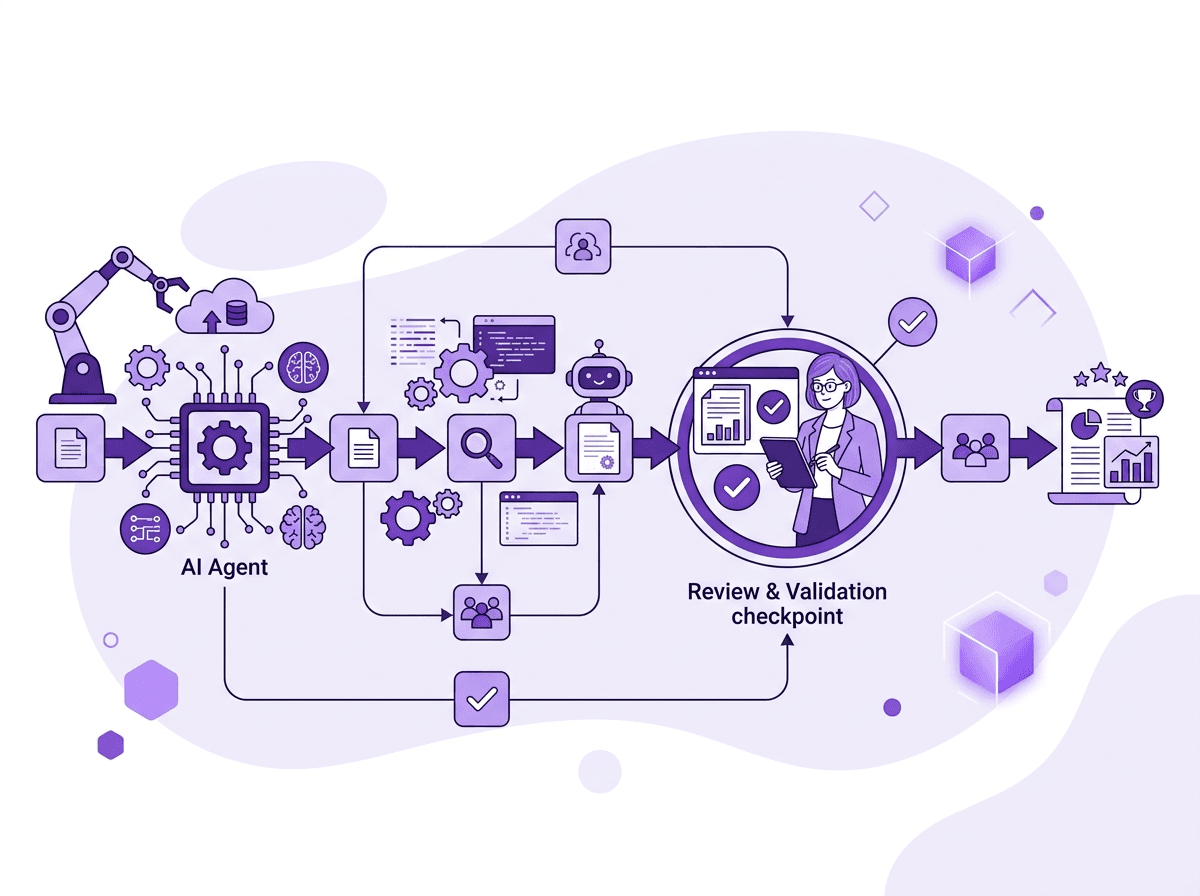
The second lesson from the Jump Trading case concerns the ability to aggregate and cross-reference heterogeneous data sources in near real-time. The fund's quantitative research teams are not limited to a single database: they combine market data, news feeds, alternative data, and macroeconomic indicators to build more robust models.
This logic of breaking down silos is precisely what many French businesses suffer from. Data exists, often in abundance, but it's scattered across disparate tools: ERP systems, CRM platforms, Excel spreadsheets, document repositories, BI tools. When properly integrated, AI becomes the orchestrator capable of bridging these silos.
A telling example: a French retail group could connect its real-time sales data, logistics flows, weather forecasts, and Google search trends to anticipate stockouts with unprecedented precision — all orchestrated by an AI workflow overseen by a lean analytical team.
The sine qua non condition remains the quality of upstream data governance. AI amplifies the value of well-structured data as much as it amplifies the biases of poorly qualified data.
Human oversight: the differentiating factor that reassures and secures
Facing the legitimate concerns that AI raises in businesses — reasoning errors, hallucinations, regulatory risks — the Jump Trading model offers a pragmatic answer: don't oppose AI and human expertise, but articulate them intelligently.
Jump Trading's quantitative researchers retain control over critical steps: hypothesis validation, anomaly interpretation, final investment decisions. AI accelerates and broadens the realm of possibilities; humans filter, contextualize, and assume responsibility.
This hybrid governance model is particularly suited to regulated sectors in France: finance, healthcare, insurance, pharmaceuticals. It enables organizations to benefit from AI's productivity gains while maintaining the rigor standards imposed by regulatory authorities (AMF, ANSM, ACPR...).
It also aligns with the growing requirements of the European AI Act, which mandates human oversight mechanisms for professional AI systems in high-risk contexts.
Training teams: the invisible but decisive challenge
No AI transformation succeeds without upskilling employees. The Jump Trading case implicitly reminds us: the quantitative researchers who get the most from ChatGPT are not those who blindly delegate to the tool, but those who have learned to formulate precise prompts, structure workflows, critique outputs, and integrate AI into their existing work methods.
For French businesses, this means investing in three levels of training:
- General AI literacy — enabling all employees to understand what AI can and cannot do, to demystify and democratize its use.
- Operational skills — training business teams to use AI tools concretely within their specific context (advanced prompting, critical reading of results, workflow integration).
- Orchestration skills — training analytical and technical profiles to design complex AI workflows, select the right tools, and ensure their governance.
At Ikasia, we support French businesses across all three dimensions, with customized training programs rooted in the real-world realities of each sector. Because AI only transforms an organization if the people who compose it are ready to harness its potential.
Want to explore how custom AI workflows could accelerate your team's performance? Contact Ikasia's experts at ikasia.ai for a free assessment of your automation and AI training opportunities.
Tags
Related articles
OpenAI Partner Network: $150 Million to Accelerate Enterprise AI Transformation — What Changes for You
Read
GPT-5.5 Instant: What OpenAI's New Model Concretely Changes for Your Teams and Processes
Read
Enterprise AI: OpenAI Accelerates Transformation and What It Means for Your Teams
ReadWant to go further?
Ikasia offers AI training designed for professionals. From strategy to hands-on technical workshops.