GPT-5.5 Cyber: How AI Becomes the Digital Shield for French Enterprises
Cybersecurity has become one of the most critical strategic challenges for French enterprises. With 385,000 cyberattacks recorded in France in 2023 according to ANSSI, and average costs exceeding 4 million euros per major incident, the pressure on security teams has never been greater. It is in this context that OpenAI's announcement regarding GPT-5.5 and GPT-5.5-Cyber takes on particular strategic significance for French organizations.
OpenAI has indeed taken a new step by expanding its Trusted Access for Cyber program to these two new models. The objective is clear: give verified defenders privileged access to advanced AI capabilities to accelerate vulnerability research and protect critical infrastructure. A silent but profound revolution that is reshaping the contours of modern cyber defense.
GPT-5.5-Cyber: A Model Designed for Security Professionals
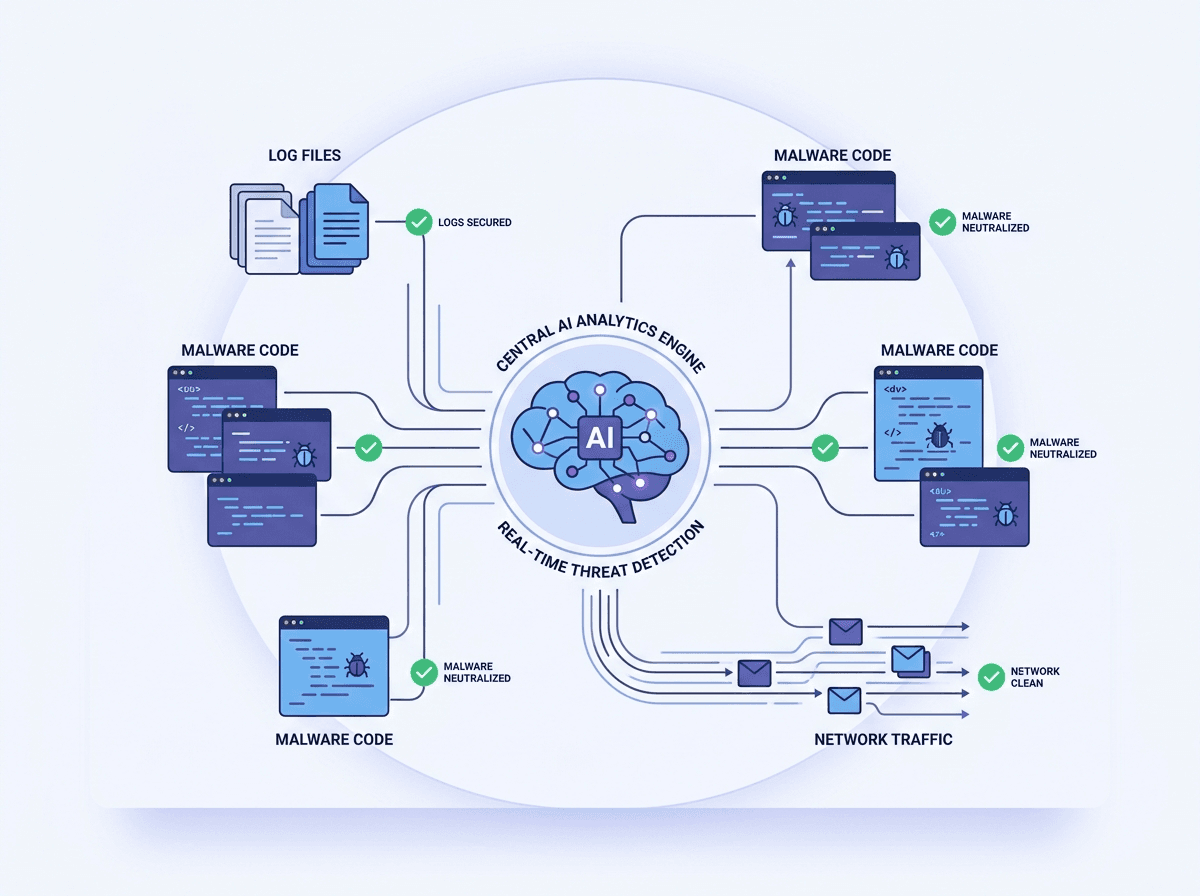
Unlike generalist models, GPT-5.5-Cyber is specifically optimized for defensive cybersecurity use cases. This is not simply an improved ChatGPT applied to security — it is an architecture designed to reason about complex technical problems: malware code analysis, attack vector identification, threat modeling, and acceleration of defensive penetration testing.
The Trusted Access program is particularly significant. OpenAI does not give access to these advanced capabilities to just anyone. Organizations must be verified, which involves a rigorous qualification process. This approach directly addresses legitimate concerns about dual-use AI in cybersecurity: the same tools that allow for vulnerability detection can theoretically be used to exploit them.
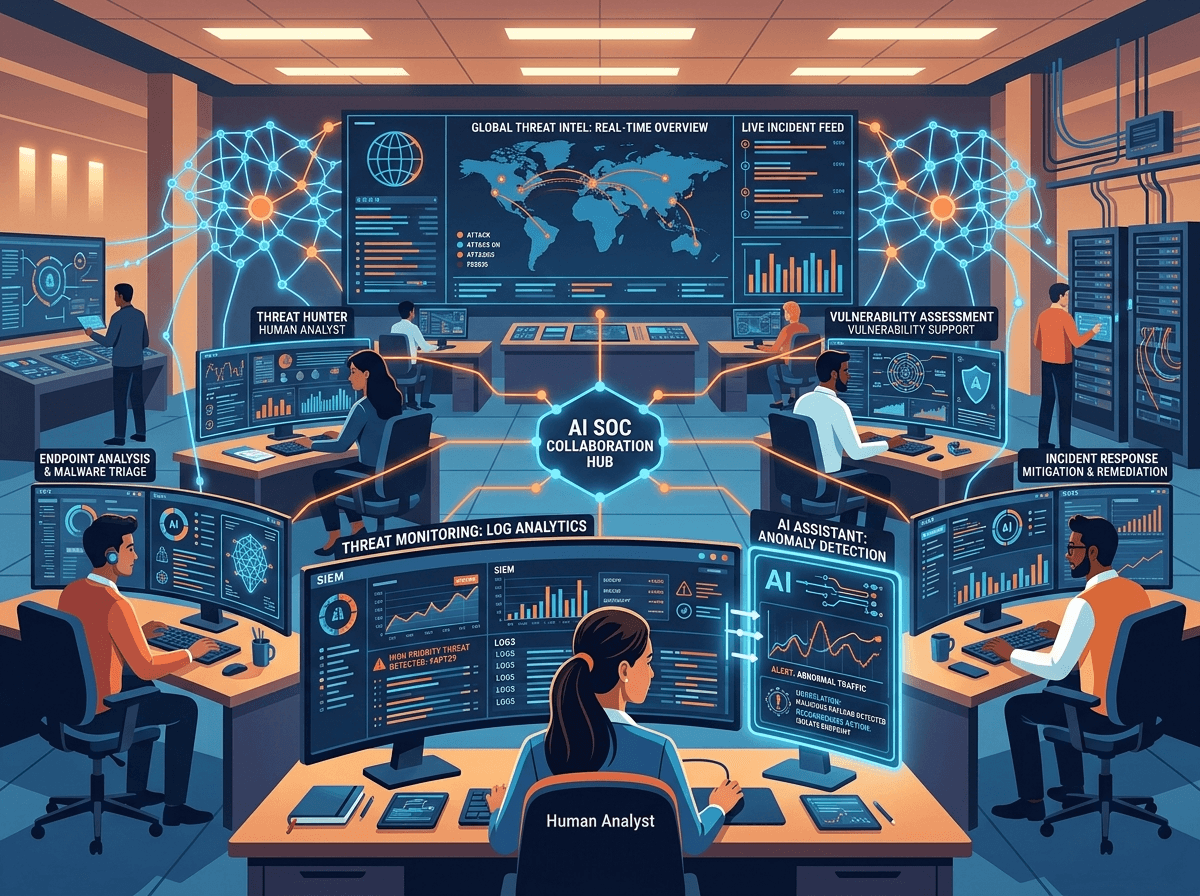
For French enterprises, this concretely means that SOC (Security Operations Center) teams, threat intelligence analysts, and penetration testing consultants can now benefit from an AI assistant capable of:
- Analyzing suspicious binaries and scripts in seconds rather than hours
- Correlating indicators of compromise from multiple sources with unprecedented precision
- Generating structured incident reports automatically, reducing the administrative burden on analysts
- Simulating attack scenarios to test the resilience of defense architectures
Concrete Applications for French Companies and Mid-Market Enterprises
Let us take tangible examples to illustrate how GPT-5.5-Cyber can transform the daily work of French security teams.
In the banking and financial sector, subject to DORA (Digital Operational Resilience Act) requirements which come into full application in 2025, security teams must document and test their operational resilience exhaustively. GPT-5.5-Cyber can automate the generation of TLPT (Threat-Led Penetration Testing) scenarios and accelerate the analysis of results, potentially reducing by 40 to 60% the time spent on these regulatory exercises.
For critical infrastructure operators (OIV) — whether energy operators, telecom operators, or healthcare actors — early detection of advanced threats (APT) is an absolute priority. The model can continuously analyze log streams to identify abnormal behavioral patterns that conventional SIEM rules would not detect before several hours, or even several days.
In SMEs and mid-market enterprises, often lacking dedicated security teams, GPT-5.5-Cyber can play the role of a virtual first-level analyst, automatically qualifying alerts and allowing a single expert to oversee a scope that would normally require three or four resources.
Cybersecurity audit and consulting firms can multiply their capacity to produce in-depth risk analyses, prioritized remediation plans, and clear executive reports for their clients, significantly compressing their delivery timelines.
GDPR Compliance and Digital Sovereignty: Questions to Ask
The adoption of GPT-5.5-Cyber by French enterprises cannot happen without thorough reflection on compliance and sovereignty issues. This is where the French and European regulatory context imposes a particularly rigorous approach.
First point of vigilance: the nature of data transmitted to the model. When analyzing logs or incident reports, personal data or sensitive information about the company's internal architecture may be included. Legal teams and DPOs must ensure that the conditions of use of the Trusted Access program are compatible with GDPR and, where applicable, with specific sector requirements (NIS2, DORA, HDS for healthcare).
Second point: the question of data residency. OpenAI operates primarily on American infrastructure. For OIV and organizations subject to enhanced sovereignty constraints, it will be necessary to assess whether hybrid solutions — combining OpenAI's AI for analysis of anonymized data and on-premise models for the most sensitive data — constitute an acceptable architecture.
Third point: traceability of decisions. In the context of incident response, it is imperative to document the reasoning that led to a decision. Teams must establish clear protocols for logging interactions with the model and validating its recommendations through human experts.
Training Teams: The Imperative for Skills Development
The arrival of GPT-5.5-Cyber in the arsenal of security teams will not happen without substantial effort in training and transforming practices. This reality is often underestimated in AI adoption roadmaps.
Training must be structured around three complementary axes. The first is mastering technical prompting in a cyber context: knowing how to formulate precise requests to obtain relevant analyses, understanding the model's limitations, and knowing how to detect its potential hallucinations in a context where an error can have serious consequences.
The second axis concerns integration into existing workflows: how does GPT-5.5-Cyber articulate with SIEM, SOAR, threat intelligence platforms, and ticketing tools? This organizational dimension is as important as the technical dimension.
The third axis is ethical and regulatory: understanding the usage limits imposed by the Trusted Access program, documentation obligations, and responsibilities in case of an incident related to a model recommendation.
At Ikasia, we support French enterprises in this transition with customized training programs, combining AI expertise and in-depth knowledge of French and European regulatory constraints. Our training combines theory, practical workshops, and real-world use cases to enable your teams to immediately leverage these new capabilities while managing associated risks.
The era of AI serving cyber defense is no longer a distant promise — it is here, operational, and French enterprises that can intelligently integrate it into their security strategy will have a decisive competitive and defensive advantage.
Ready to prepare your teams for AI in cybersecurity? Discover our training and support programs at ikasia.ai and let us discuss how we can accelerate your AI maturity securely.
Tags
Related articles
HP and OpenAI Partner to Transform Tomorrow's Enterprise: What Changes for You
Read
OpenAI Acquires TBPN: When the Battle for AI Narrative Becomes a Strategic Issue for Enterprises
Read
GPT-5.3 Instant: What OpenAI's New High-Speed Model Means for Your Business Teams
ReadWant to go further?
Ikasia offers AI training designed for professionals. From strategy to hands-on technical workshops.