HP and OpenAI Partner to Transform Tomorrow's Enterprise: What Changes for You

The strategic partnership announced between HP Inc. and OpenAI marks a decisive turning point in how major global enterprises envision the integration of artificial intelligence. Far from being a simple technology announcement, this agreement — dubbed Frontier — illustrates a fundamental trend now affecting all business sectors, including French companies: AI is no longer a pilot project, it's a strategic infrastructure. For executives, CIOs, and HR leaders in France, understanding what this type of alliance means has become urgent.
Frontier: Far More Than a Commercial Agreement Between Two Giants
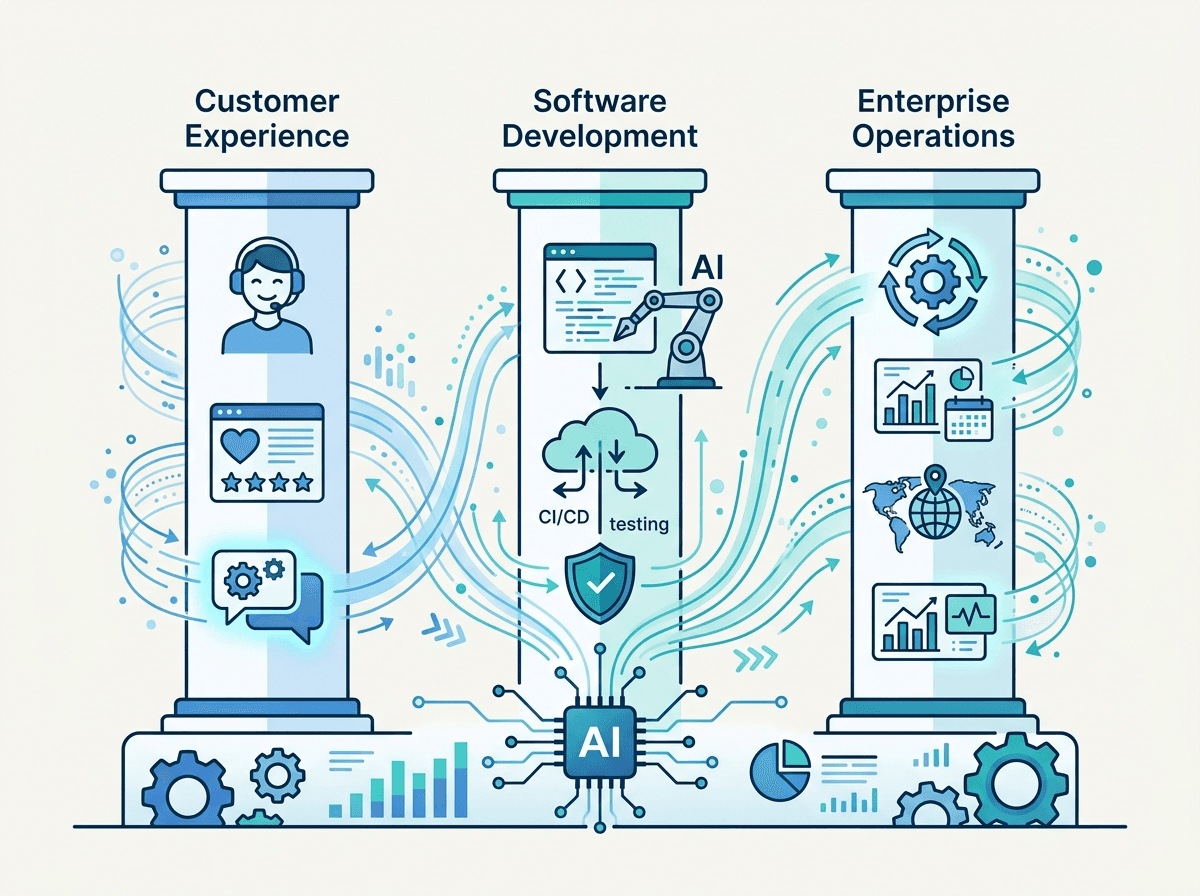
The Frontier partnership between HP Inc. and OpenAI goes beyond simply integrating ChatGPT into a few office tools. It's a large-scale deployment of generative AI across three major strategic axes: customer experience, software development, and business operations. In short, HP aims to reconfigure its entire value chain through OpenAI's models.
This positioning is revealing. HP, a company founded in 1939 and present in over 170 countries, isn't content with adopting AI to optimize a marginal process. It's restructuring its operational foundations around artificial intelligence. This sends a strong signal to the market: companies that don't begin this transformation today risk finding themselves in a position of competitive weakness within 18 to 36 months.
For French companies — whether an industrial SME in Auvergne, a Paris consulting firm, or a regional distributor — the question is no longer "should we adopt AI?" but rather "how do we structure this adoption so it generates real, lasting value?"
Three Concrete Application Levers for French Enterprises
The HP-OpenAI model offers a directly applicable framework. Here's how these three axes can translate into the French business context:
1. Enhanced Customer Experience A French retailer can deploy an intelligent conversational agent capable of handling customer service requests in natural language, personalizing product recommendations in real-time, or anticipating needs based on purchase history. A regional bank can automate loan application processing while maintaining high personalization. Generative AI allows companies to combine operational efficiency and customer satisfaction — two objectives often perceived as contradictory.
2. Accelerated Software Development French IT teams face chronic talent shortages. Integrating AI assistants into development environments (GitHub Copilot, as well as solutions based on OpenAI models) increases developer productivity by 30 to 50% according to recent studies. A systems integrator or internal digital department can thus deliver faster, reduce technical debt, and free up talent for higher value-added tasks.
3. Internal Operations Optimization From document management to financial analysis, HR planning, and supply chain, generative AI can automate repetitive, cognitively demanding tasks. A French manufacturing company can, for example, connect its ERP data to a language model to automatically generate performance reports, identify anomalies, or simulate supply chain scenarios.
What This Partnership Reveals About Organizational AI Maturity
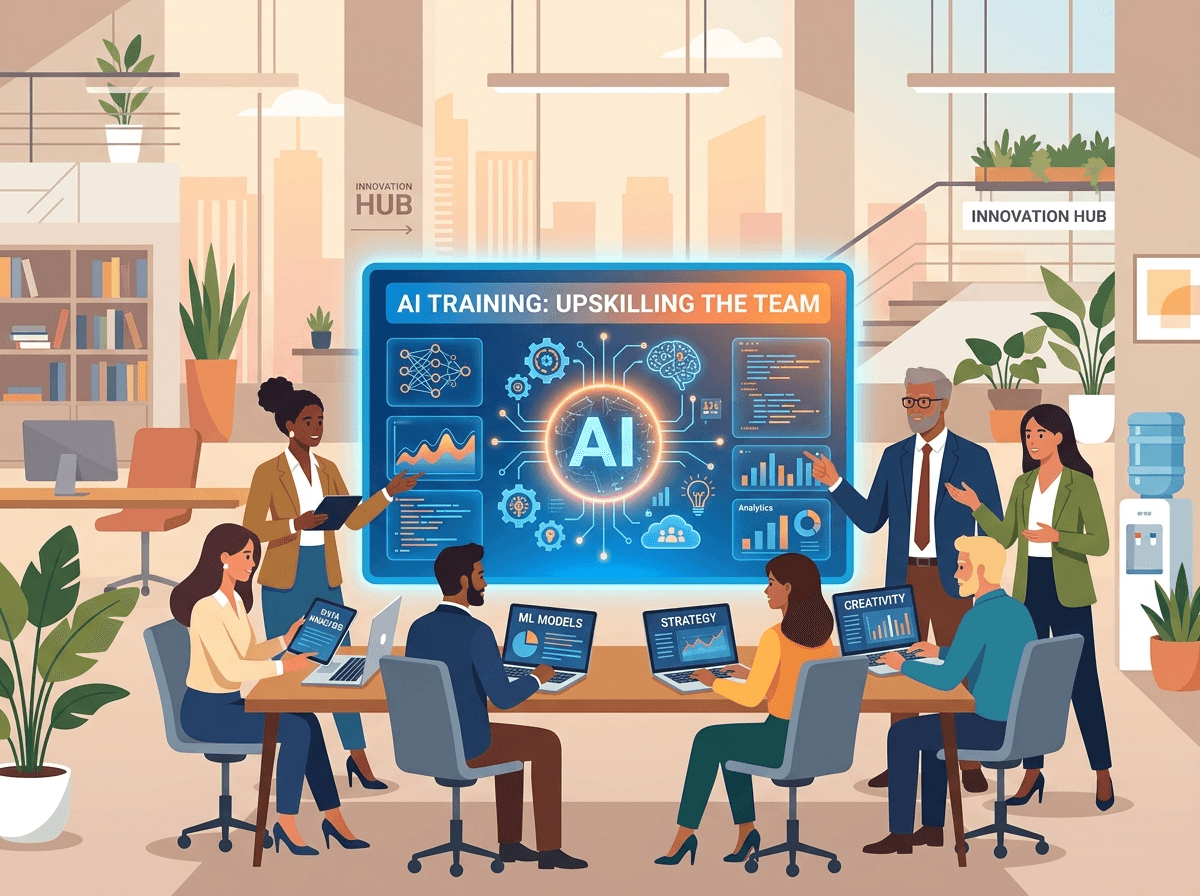
The HP-OpenAI agreement highlights a reality we observe daily in our consulting work: AI's value doesn't lie in the technology itself, but in an organization's capacity to absorb it. HP didn't simply sign a contract with OpenAI. The company likely spent months preparing its data, training its teams, defining priority use cases, and building appropriate governance.
This is precisely where many French companies stumble. According to a recent Bpifrance study, while 78% of SME leaders consider AI a priority, fewer than 20% have undertaken a structured adoption approach. The enthusiasm is real, but the methodology is often lacking.
Organizations that succeed in their AI transformation share three common characteristics: they've identified use cases with quick ROI to fund the transformation, they've involved their business teams from the design phase, and they've invested in continuous upskilling rather than one-off training.
Training Your Teams: The Real Competitive Advantage
The HP-OpenAI partnership reminds us of a fundamental truth: technology alone doesn't transform an organization. It's the people who bring it to life who determine its real impact. In this context, training teams in AI usage becomes a strategic investment on par with acquiring a tool or software license.
Training your teams in AI doesn't mean turning every employee into a data scientist. It means giving them the keys to understand what AI can do in their role, how to interact effectively with tools (prompt engineering, output validation, bias management), and how to contribute to a culture of responsible experimentation.
At Ikasia, we support French companies in this upskilling through customized training programs and operational consulting missions. Our training covers both generative AI fundamentals for non-technical teams and advanced applications for IT, marketing, or finance profiles. The goal is always the same: make AI a concrete performance lever, not a conference topic.
The HP-OpenAI alliance isn't an exception reserved for multinationals. It foreshadows what tomorrow's competitive enterprise will look like, regardless of size. The question is simple: do you want to be part of it?
Schedule a meeting with the Ikasia team at ikasia.ai today for a free assessment of your AI maturity and build your transformation roadmap together.
Tags
Related courses
Related articles
OpenAI Acquires TBPN: When the Battle for AI Narrative Becomes a Strategic Issue for Enterprises
Read
OpenAI Partner Network: $150 Million to Accelerate Enterprise AI Transformation — What Changes for You
Read
OpenAI's Singapore AI Partnership: Key Lessons for French Businesses
ReadWant to go further?
Ikasia offers AI training designed for professionals. From strategy to hands-on technical workshops.