Machine Learning Career 2026: Skills, Salaries, and Market Evolution
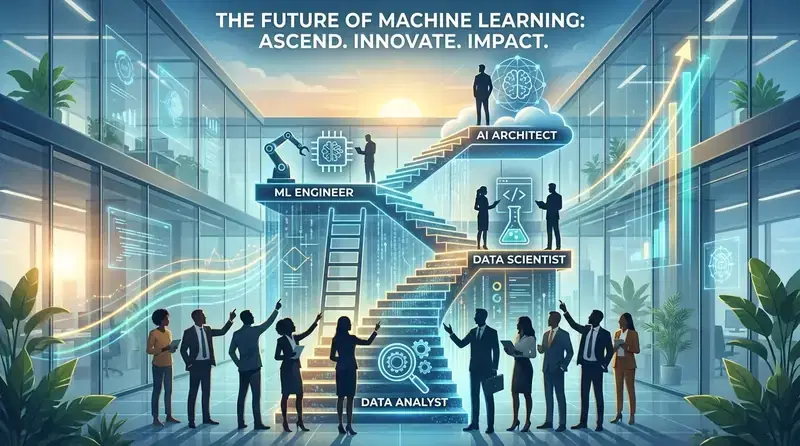
Key takeaways: The global machine learning market exceeds 100 billion dollars in 2025, projected to reach several hundred billion by 2030, driven by enterprise generative AI maturity, automation pressure, AI Act compliance needs, and persistent talent shortages. Four key roles dominate demand: Data Scientists evolving toward LLM collaboration, ML Engineers industrializing models with strong demand for LLM fine-tuning and serving, MLOps Engineers focused on ML observability and model governance, and AI Product Managers bridging technical and business teams. Python appears in 71% of job postings, with LLMs and GenAI skills surging 22 percentage points. The majority of positions target 2-to-6 years of experience, creating opportunity for senior profiles in short supply. US salaries for senior ML Engineers range from 140,000 to 220,000 dollars, with LLM specialists commanding a 20-to-30% premium. Differentiating specializations include explainable AI with 10-to-15% salary premium, AI agents and LangChain at 15-to-25% premium, and LLM fine-tuning using LoRA and QLoRA at 15-to-20% premium. Ikasia offers an 8-week Data Science bootcamp, 4-week ML Engineer training, and individual AI career coaching.
The Machine Learning market is experiencing explosive growth: estimated at over $100 billion in 2025 and projected to reach several hundred billion by 2030. This expansion creates unprecedented career opportunities. But what skills should you develop? What roles should you target? And what salaries can you expect?
The ML Market Explosion: Rapid Growth
The Macroeconomic Context
Artificial intelligence and machine learning are at the heart of digital transformation across all sectors:
The global machine learning market is estimated at over $100 billion in 2025 and is projected to reach several hundred billion by 2030, according to various analyst estimates (Statista, Gartner, McKinsey). Exact figures vary by source and scope definition, but the underlying trend is clear: significant acceleration driven by generative AI.
Why This Acceleration in 2025-2026?
1. Generative AI Reaches Enterprise Maturity LLMs move from POC to production, creating massive demand for ML Engineers and AI Engineers.
2. Automation Accelerates Companies under cost pressure deploy AI to automate processes.
3. The AI Act Creates New Needs Governance, ethics, explainability: emerging new roles.
4. Talent Shortage Persists Despite training programs, demand far exceeds qualified supply.
In-Demand Roles: Data Scientist, ML Engineer, AI PM
2026 AI Job Landscape
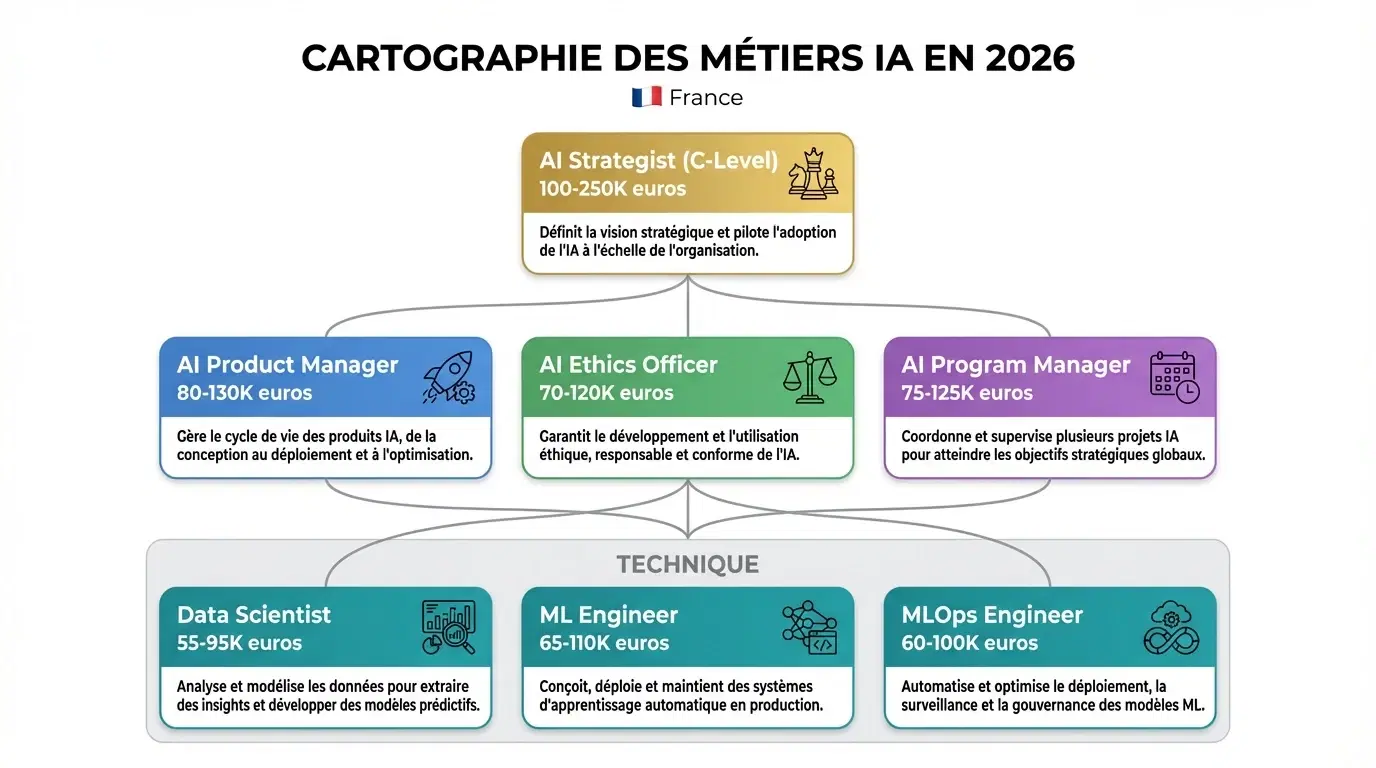
Data Scientist
Mission: Explore data, build models, extract business insights.
Key skills:
- Python, SQL, R
- Statistics and probability
- Machine Learning (scikit-learn, XGBoost)
- Visualization (Matplotlib, Plotly, Tableau)
- Business communication
2026 Evolution: The role is evolving toward more collaboration with LLMs: prompt engineering, RAG, light fine-tuning.
ML Engineer
Mission: Industrialize ML models, deploy to production, optimize performance.
Key skills:
- Python, ML frameworks (PyTorch, TensorFlow)
- MLOps (MLflow, Kubeflow, Weights & Biases)
- Cloud infrastructure (AWS SageMaker, GCP Vertex AI)
- CI/CD, containerization (Docker, Kubernetes)
- Optimization (pruning, quantization)
2026 Evolution: Strong demand for LLM integration: fine-tuning, serving, inference optimization.
MLOps Engineer
Mission: Build and maintain ML infrastructure, automate pipelines, ensure reliability.
Key skills:
- Infrastructure as Code (Terraform, Pulumi)
- Orchestration (Airflow, Prefect, Dagster)
- ML Monitoring (Evidently, WhyLabs)
- Feature stores (Feast, Tecton)
- Kubernetes and cloud-native
2026 Evolution: Critical role with the multiplication of models in production. Focus on ML observability and model governance.
AI Product Manager
Mission: Define product vision for AI applications, prioritize features, measure impact.
Key skills:
- Technical understanding of AI (without being an expert)
- Classic Product Management
- AI metrics (precision, recall, etc.)
- Model ethics and bias
- Stakeholder management
2026 Evolution: Role in strong growth with AI democratization. Companies need bridges between technical and business.
Required Skills: Python, Cloud, MLOps, AI Ethics
Technical Skills (Hard Skills)
Most Demanded Skills (based on job posting analysis):
| Skill | % of Jobs | Trend |
|---|---|---|
| Python | 71% | Stable |
| SQL | 58% | Stable |
| AWS/GCP/Azure | 52% | ↑ +8pts |
| PyTorch | 47% | ↑ +12pts |
| TensorFlow | 39% | ↓ -5pts |
| MLOps/MLflow | 34% | ↑ +15pts |
| LLMs/GenAI | 31% | ↑ +22pts |
| Kubernetes | 28% | ↑ +7pts |
| Spark | 24% | Stable |
Recommended 2026 Tech Stack
Junior Level (0-2 years):
Python + SQL + pandas + scikit-learn + Git
+ 1 cloud (AWS preferred)
+ Jupyter/VS Code
Mid-Level (3-5 years):
Junior stack +
PyTorch + MLflow + Docker
+ Advanced feature engineering
+ 1 specialization (NLP, CV, TimeSeries)
+ LLMs basics (prompting, RAG)
Senior Level (6+ years):
Mid-level stack +
Kubernetes + Terraform
+ Distributed ML architecture
+ LLM fine-tuning
+ Technical leadership
Soft Skills
Most Valued in 2026:
- Communication: Explaining AI to non-technical people
- Critical thinking: Questioning results
- Business acumen: Understanding business impact
- AI Ethics: Identifying and mitigating bias
- Collaboration: Working in cross-functional teams
Experience Levels Sought: 2-6 Years Majority
Typical Demand Distribution by Seniority
| Experience Level | % of ML Jobs (estimate) |
|---|---|
| Junior (0-2 years) | 18% |
| Mid-Level (2-4 years) | 42% |
| Senior (5-7 years) | 31% |
| Lead/Principal (8+) | 9% |
Analysis:
- Majority of jobs target 2-6 years of experience profiles
- Senior profile shortage (>5 years ML): career opportunity
- Juniors struggle to enter: importance of internships and personal projects
What Recruiters Look For by Level
Junior:
- Solid Python/SQL foundation
- Personal projects or Kaggle
- Internship or apprenticeship
- Curiosity and learning ability
Mid-Level:
- Models in production
- Basic MLOps experience
- Technical autonomy
- Clear communication
Senior:
- ML systems architecture
- Team mentorship
- Demonstrable business impact
- Strategic vision
2026 Salaries: Ranges by Role and Region
United States - Annual Salaries (base)
| Role | Junior (0-2) | Mid-Level (3-5) | Senior (6+) |
|---|---|---|---|
| Data Analyst | $55-70K | $70-90K | $90-120K |
| Data Scientist | $80-100K | $100-140K | $140-180K |
| ML Engineer | $90-120K | $120-160K | $160-220K |
| MLOps Engineer | $85-110K | $110-145K | $145-190K |
| AI Product Manager | $100-130K | $130-170K | $170-220K |
| AI Ethics Officer | $80-100K | $100-140K | $140-180K |
Source: Glassdoor, LinkedIn Salary, Levels.fyi 2025
Regional Differences (US)
| Region | Difference vs National Average |
|---|---|
| SF Bay Area | +20 to +35% |
| NYC | +15 to +25% |
| Seattle | +10 to +20% |
| Austin/Denver | +0 to +10% |
| Remote (FAANG company) | +10 to +25% |
International Comparison (Senior ML Engineer)
| Country | Median Salary | USD Equivalent* |
|---|---|---|
| USA (SF/NYC) | $180-250K | $180-250K |
| USA (other) | $140-190K | $140-190K |
| UK (London) | £90-130K | $115-165K |
| Germany | €85-120K | $90-130K |
| Switzerland | CHF 140-180K | $160-200K |
| Canada (Toronto) | CAD 130-170K | $95-125K |
Indicative rates
2026 Salary Trends
- LLM specialists: +20-30% premium vs classic ML
- MLOps: Strong demand, salaries up 10-15%
- AI Ethics: Emerging market, variable salaries
- Remote: Gaps narrowing, especially for seniors
Differentiating Skills: XAI, Prompt Engineering, Agents
Beyond basic skills, certain specializations will set you apart in 2026:
1. Explainable AI (XAI)
Why: The AI Act makes explainability mandatory for high-risk systems.
Skills:
- SHAP, LIME, Attention Maps
- Bias and fairness auditing
- Model documentation
Estimated salary premium: +10-15%
2. Advanced Prompt Engineering
Why: 30-40% of AI time is spent on prompts. Experts are rare.
Skills:
- Chain-of-Thought, RSIP, MPS
- Prompt evaluation
- Prompt testing frameworks
Estimated salary premium: +10-20%
3. AI Agents and LangChain
Why: A growing number of companies deploy AI agents. Skill in high demand.
Skills:
- LangChain, LangGraph, AutoGPT
- Multi-agent architecture
- Agent security
Estimated salary premium: +15-25%
4. LLM Fine-tuning
Why: Companies want models adapted to their domain.
Skills:
- LoRA, QLoRA, PEFT
- Dataset curation
- Fine-tuned model evaluation
Estimated salary premium: +15-20%
5. MLOps for LLMs (LLMOps)
Why: Deploying LLMs in production is complex (costs, latency, scalability).
Skills:
- vLLM, TGI, Triton Inference Server
- Caching and inference optimization
- LLM monitoring (hallucinations, drift)
Estimated salary premium: +10-20%
Training Paths: From Beginner to Expert
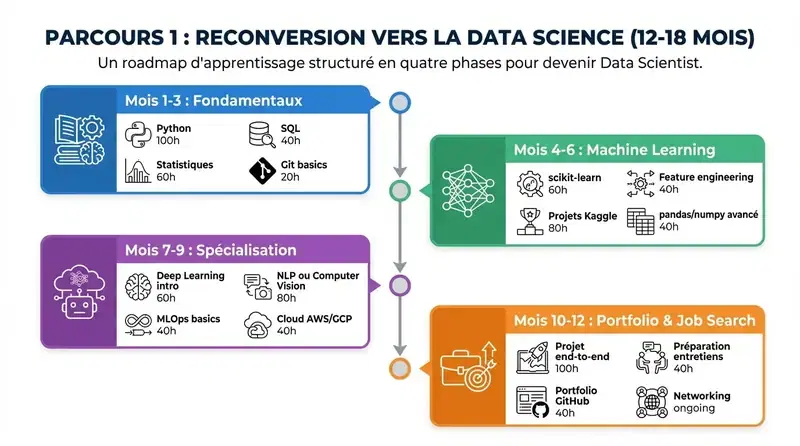
Path 1: Career Change to Data Science (12-18 months)
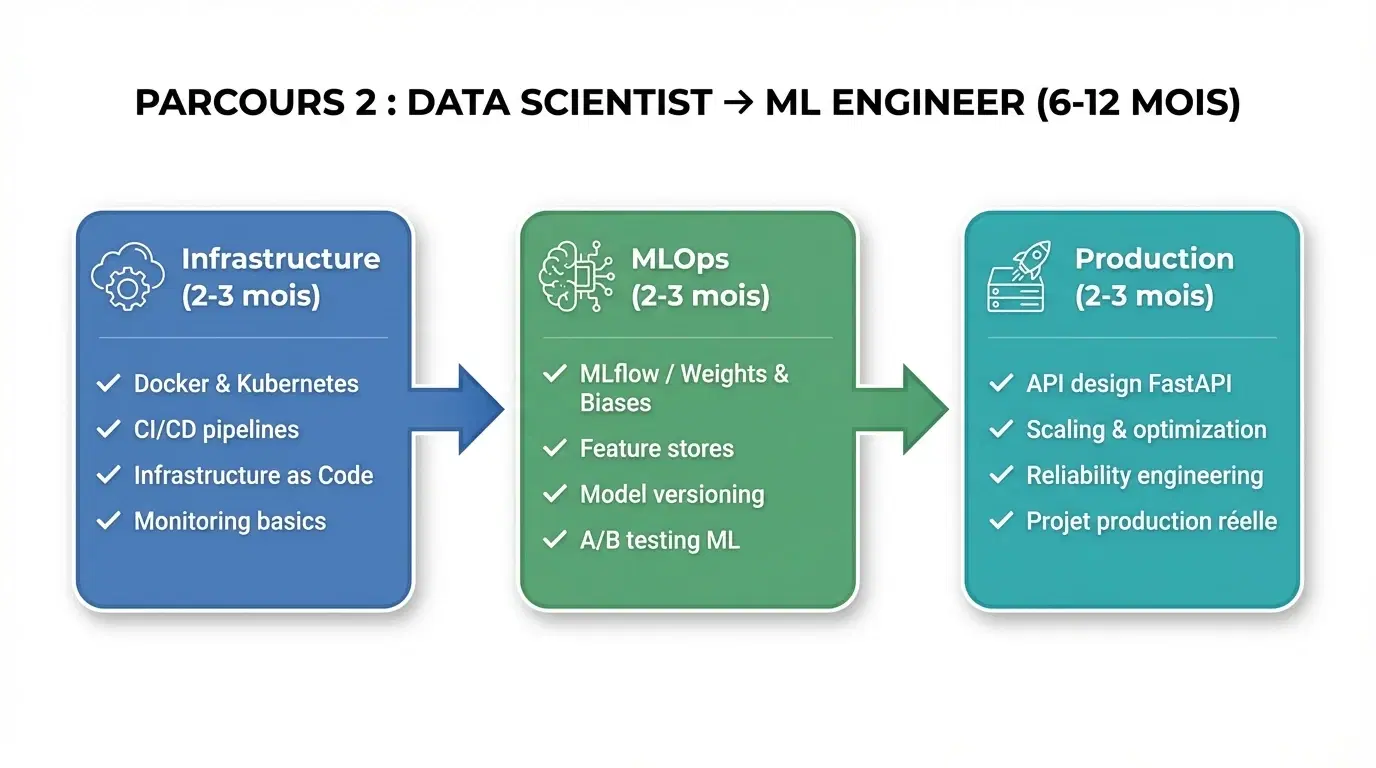
Path 2: Data Scientist → ML Engineer (6-12 months)
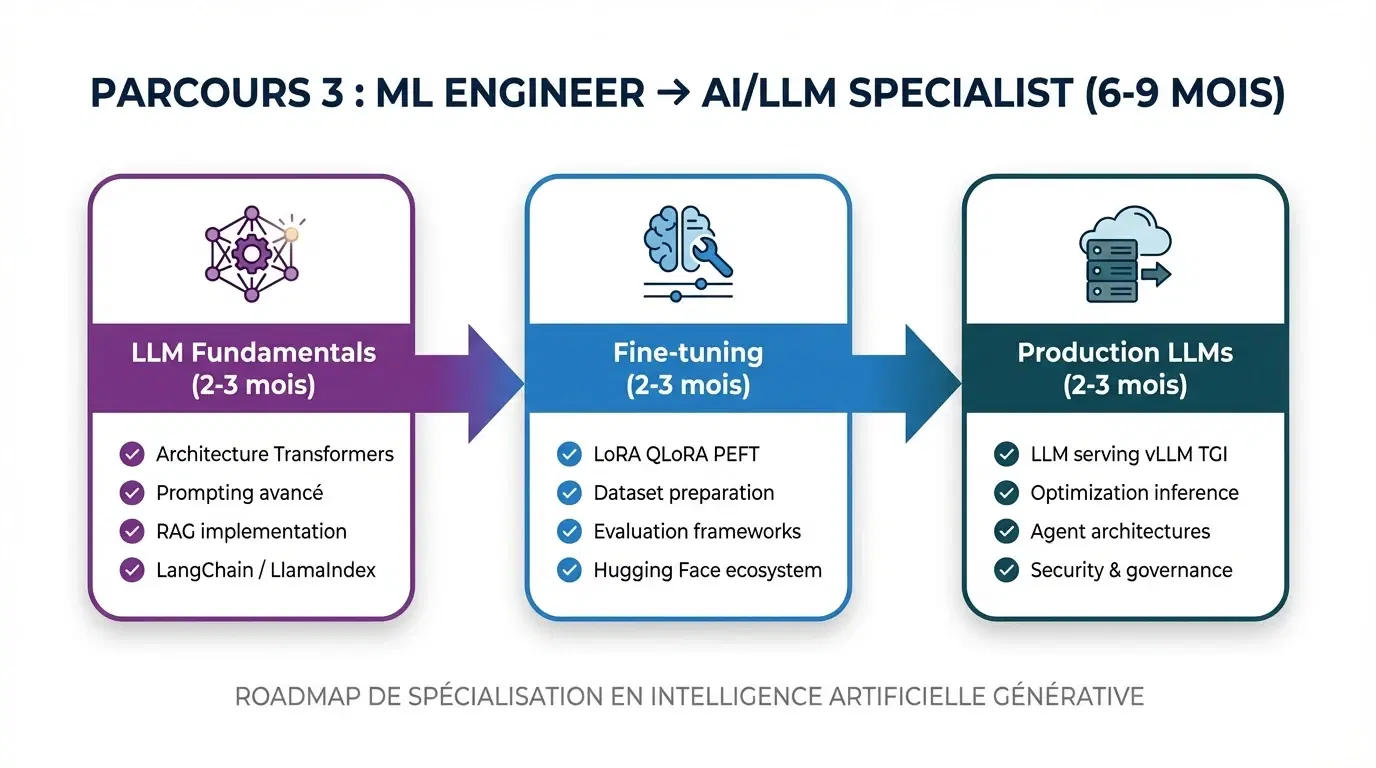
Path 3: ML Engineer → AI/LLM Specialist (6-9 months)
Tips to Accelerate Your Career
1. Build a Visible Portfolio
- GitHub: Well-documented projects, clear READMEs
- Technical blog: Articles about your learnings
- Kaggle: Competitions and public notebooks
- LinkedIn: Posts about your projects and monitoring
2. Specialize Strategically
Don't be a generalist. Choose one specialization that differentiates you:
- LLMs and GenAI (high potential 2026)
- MLOps and infrastructure
- NLP for a sector (legal, medical)
- Industrial Computer Vision
3. Develop Your Network
- AI meetups (local ML groups, PyData, etc.)
- Conferences (PyData, NeurIPS workshops)
- Online communities (Discord ML, Reddit r/MachineLearning)
- Mentorship (give and receive)
4. Valued Certifications
| Certification | Market Value | Effort |
|---|---|---|
| AWS ML Specialty | ★★★★★ | ~100h |
| GCP Professional ML | ★★★★☆ | ~80h |
| Databricks ML Associate | ★★★★☆ | ~60h |
| DeepLearning.AI Specialization | ★★★☆☆ | ~120h |
| Coursera/edX ML courses | ★★☆☆☆ | Variable |
Our AI Career Support
At Ikasia, we offer:
Data Science & ML Bootcamp (8 intensive weeks)
- From zero to job-ready
- Real projects with partner companies
- Placement support
ML Engineer Training (4 weeks)
- For Data Scientists looking to evolve
- MLOps and production focus
- Internal certification
AI Career Coaching (individual)
- Profile analysis and personalized roadmap
- Technical interview preparation
- Salary negotiation
Conclusion
The Machine Learning market in 2026 offers exceptional opportunities for those who develop the right skills. With rapid growth and a persistent talent shortage, AI careers are among the most promising.
Keys to success:
- Master the fundamentals: Python, ML, cloud
- Specialize: LLMs, MLOps, or vertical domain
- Build your visibility: Portfolio, blog, community
- Stay current: AI evolves fast, monitoring is critical
The best time to start an ML career was 5 years ago. The second best time is now.
Enjoyed this article? Check out our Data Science Bootcamp — 2 days to drive AI strategy across your organisation.
Tags
Related courses
Related articles



Want to go further?
Ikasia offers AI training designed for professionals. From strategy to hands-on technical workshops.