Digital Sovereignty and Cutting-Edge AI: What Nemotron and GPT Open-Source on AWS GovCloud Mean for Your Enterprise Projects
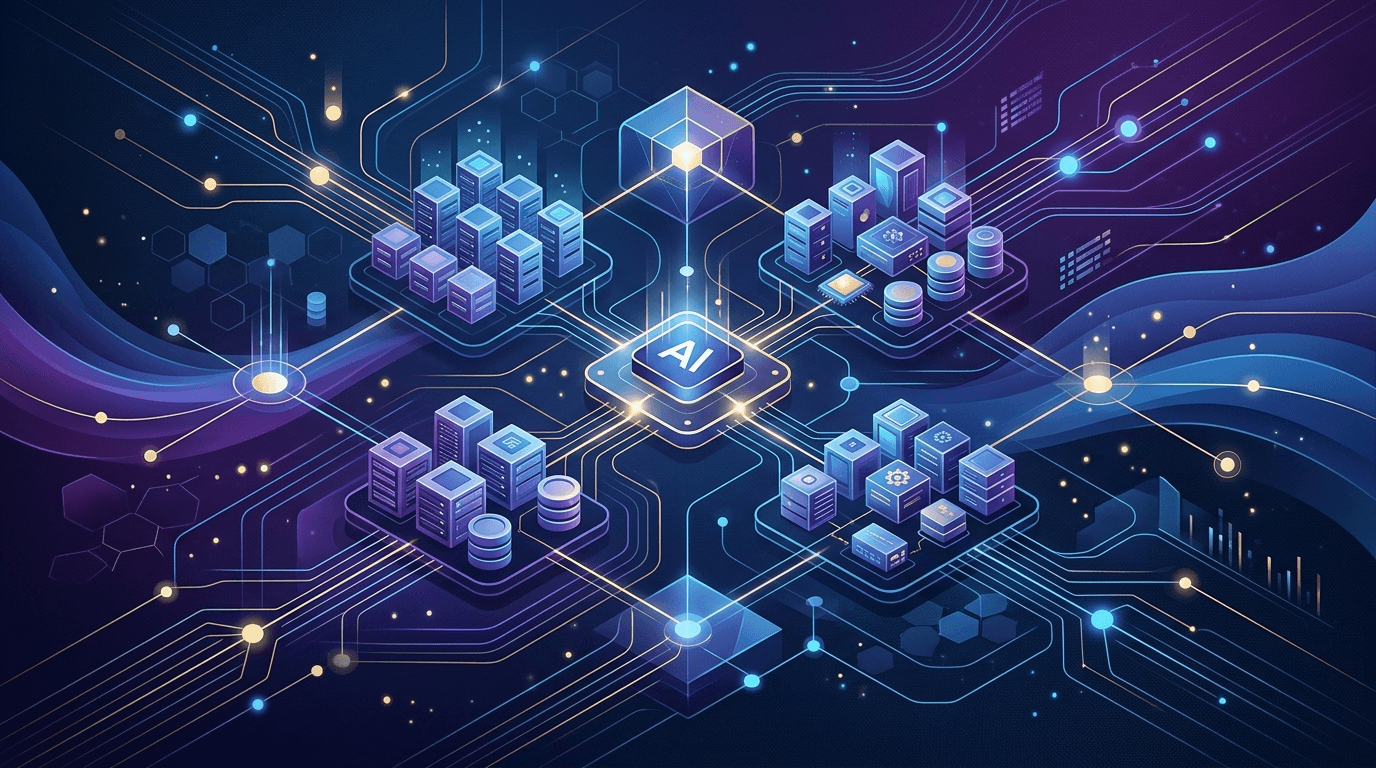
In a context where data sovereignty has become a major strategic issue for French organizations — from SMEs to large corporations and public sector actors — a recent announcement from Amazon Web Services deserves particular attention. AWS has integrated into its GovCloud (US) environment some of the most powerful AI models on the market: NVIDIA Nemotron and OpenAI GPT open-weight models. A development that redefines what can be accomplished with high-performance AI while maintaining strict control over your data.
For French enterprises still hesitant to embrace generative AI for fear of exposing sensitive data, this move sends a powerful signal. It confirms a fundamental trend: sovereign AI is no longer a utopia, and the infrastructure to deploy it at scale is now available.
Leading open-weight models: what you need to know
AWS's announcement covers two families of models that are both powerful and open:
- OpenAI GPT OSS: two variants, 20 billion and 120 billion parameters, stemming from OpenAI's open-weight strategy. These models offer reasoning, text generation, and analysis capabilities comparable to the best proprietary solutions.
- NVIDIA Nemotron: four versions (Nano 9B v2, Nano 12B v2, Nano 30B, Super 120B), designed by NVIDIA with advanced optimization for enterprise use cases. The Nemotron range is particularly recognized for its performance on specialized tasks such as technical document synthesis, code generation, and structured data analysis.
What distinguishes these models from purely proprietary solutions is their open-weight nature: the model weights are accessible, enabling fine-tuning, integration into RAG (Retrieval-Augmented Generation) architectures, and greater control over model behavior. For a French industrial enterprise wanting to train a domain-specific assistant on its own technical data, this is a fundamental difference.
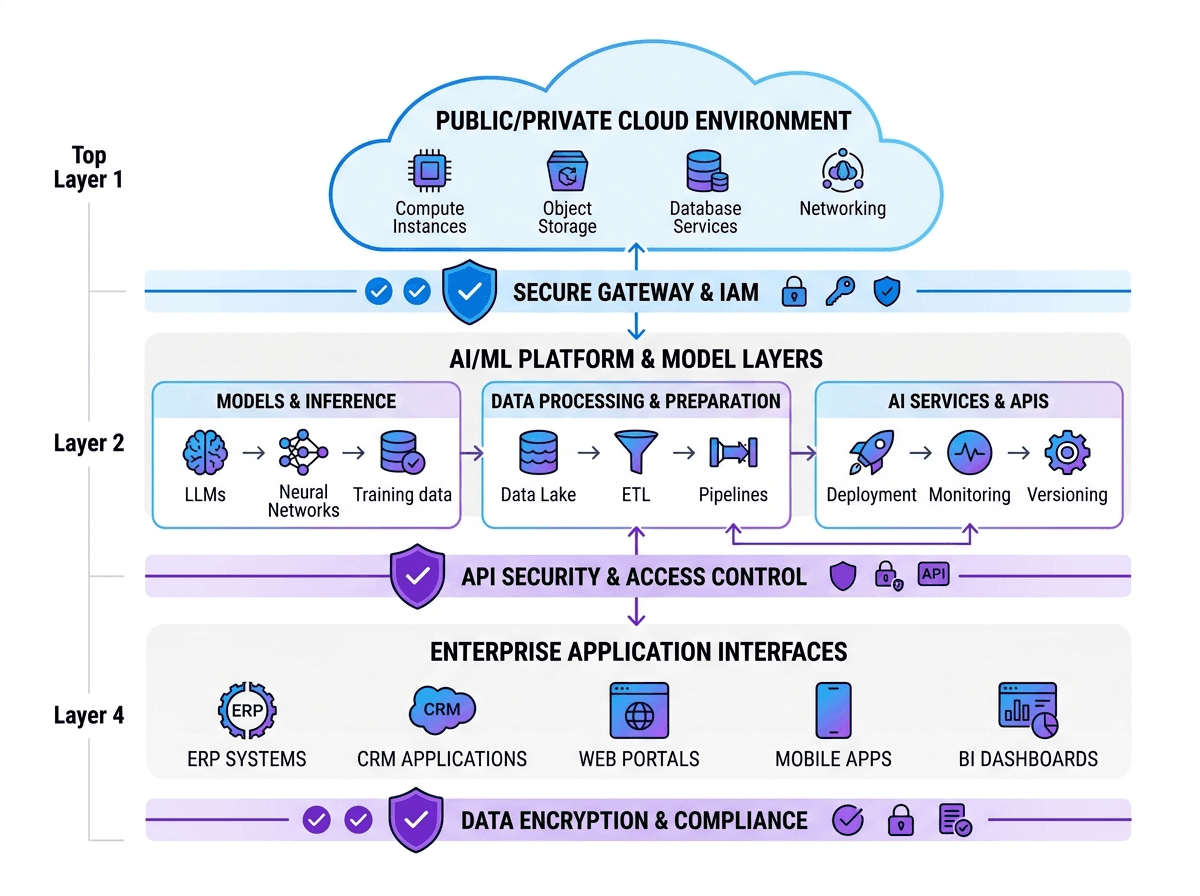
Available via Amazon Bedrock — AWS's managed platform for accessing foundation models — these models now benefit from the data residency guarantees specific to the GovCloud environment, originally designed for U.S. government agencies but whose security standards also interest the most demanding private enterprises.
Concrete applications for French enterprises: from theory to real use cases
The challenge is not technological; it is operational. Here's how these models can be deployed in contexts typical of the French business landscape:
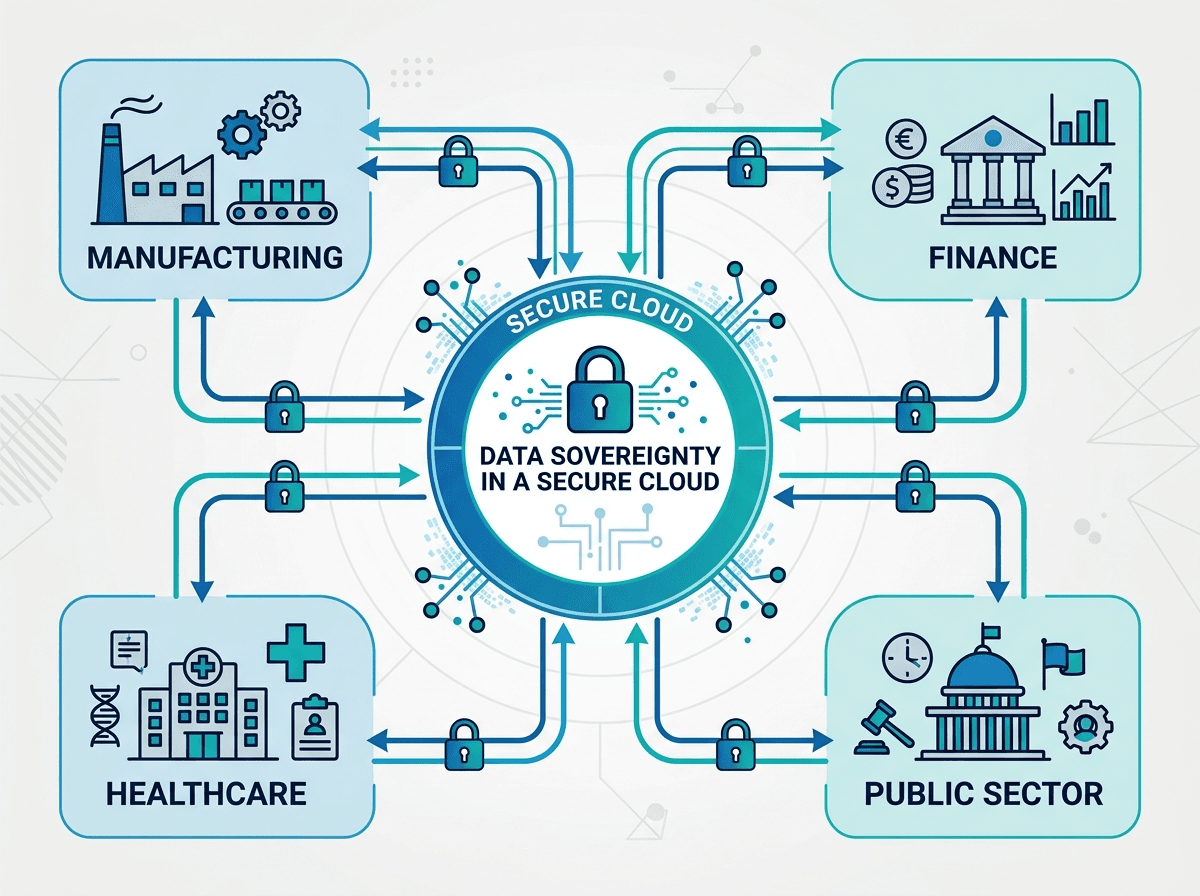
In manufacturing and engineering, the Nemotron Nano models are ideally sized for technical documentation assistants. An aerospace or automotive manufacturer can deploy a 12B model fine-tuned on internal repositories, enabling engineers to query thousands of pages of specifications in natural language, without ever having that data leave a controlled environment.
In financial services and insurance, the 120B models — both GPT OSS and Nemotron Super — offer analysis and synthesis capabilities advanced enough to automate contract review, anomaly detection in regulatory reports, or generation of audit summaries. Tasks that today consume significant time for legal and compliance teams.
In the public and semi-public sector, French local authorities and public institutions working with sensitive data (health data, social data, tax data) can rely on this type of sovereign cloud architecture to experiment with AI without compromising their regulatory obligations under GDPR or ANSSI security frameworks.
In consulting firms and systems integrators, the ability to offer clients AI solutions hosted in certified environments becomes a differentiating commercial argument. The combination of Bedrock + GovCloud + open-weight models opens the door to packaged and reproducible "sovereign AI" offerings.
Infrastructure and data residency: the technical guarantees that change everything
The question of data residency is central to any conversation about enterprise AI in France. The General Data Protection Regulation (GDPR), sector-specific requirements (HDS for healthcare, DSP2 for finance), and internal security policies impose strict constraints on data location and processing.
AWS GovCloud addresses these concerns with several technical guarantees:
- Physical isolation of infrastructure, with access restricted to verified entities
- Inference options with data residency: requests and responses do not transit outside the defined perimeter
- Service levels configurable according to processing sensitivity
- Complete auditability via AWS CloudTrail and native governance tools
For a French IT department, this concretely means it becomes possible to present to your legal leadership and DPO a complete and defensible file for deploying an AI assistant on sensitive business data. This is precisely the organizational barrier that has blocked many pilot projects over the past 18 months.
However, it's important to remain clear-eyed: GovCloud is an American infrastructure, subject to American law. For organizations requiring strict European sovereignty, solutions such as AWS Sovereign Cloud in Europe or SecNumCloud-qualified hosting offerings remain alternatives to evaluate. But for the vast majority of French private enterprises, the level of guarantee offered by GovCloud far exceeds the standards currently in place in their own data centers.
Training your teams to capitalize on this new landscape
Having powerful models in a secure infrastructure is only half the equation. The other half is upskilling your teams who will design, deploy, and maintain these solutions.
The relevant profiles are broader than often assumed: of course data scientists and developers, but also project managers, business leaders, legal teams, and executive leadership. Each needs an appropriate level of understanding to:
- Identify relevant use cases within their business domain
- Assess risks associated with using foundation models (hallucinations, bias, prompt security)
- Communicate effectively with technical providers and IT teams
- Drive AI projects with appropriate performance indicators
Training should not be limited to general awareness about "what ChatGPT is." It must be grounded in the operational realities of each organization, with exercises on concrete cases, simulations, and a progression that guides teams from discovery through operational deployment.
This is exactly the approach we champion at Ikasia: AI training that starts from the enterprise's real problems to build sustainable skills, not theoretical knowledge that evaporates after the closing coffee break.
The integration of Nemotron and GPT open-source on Amazon Bedrock GovCloud marks an important step in democratizing sovereign AI for enterprises. Technical barriers are lowering. Human and organizational barriers, however, remain — and that's where the real competition plays out.
Looking to assess your organization's AI maturity and identify high-impact use cases? The Ikasia team supports French enterprises in this process, from initial audit through deployment and team training. Discover our programs at ikasia.ai and let's discuss your projects.
Tags
Related articles

OpenAI on Amazon Bedrock: What Asia-Pacific Availability Means for French Enterprises Going Global
Read
Claude on Amazon Bedrock in Asia: What AI Data Sovereignty Really Means for French Enterprises Operating Globally
Read
GPT-5.6 Sol, Terra and Luna on Amazon Bedrock: What French Businesses Need to Know Now
ReadWant to go further?
Ikasia offers AI training designed for professionals. From strategy to hands-on technical workshops.