OpenAI x PwC: How AI Will Transform the CFO's Office — What French Companies Must Prepare for Now
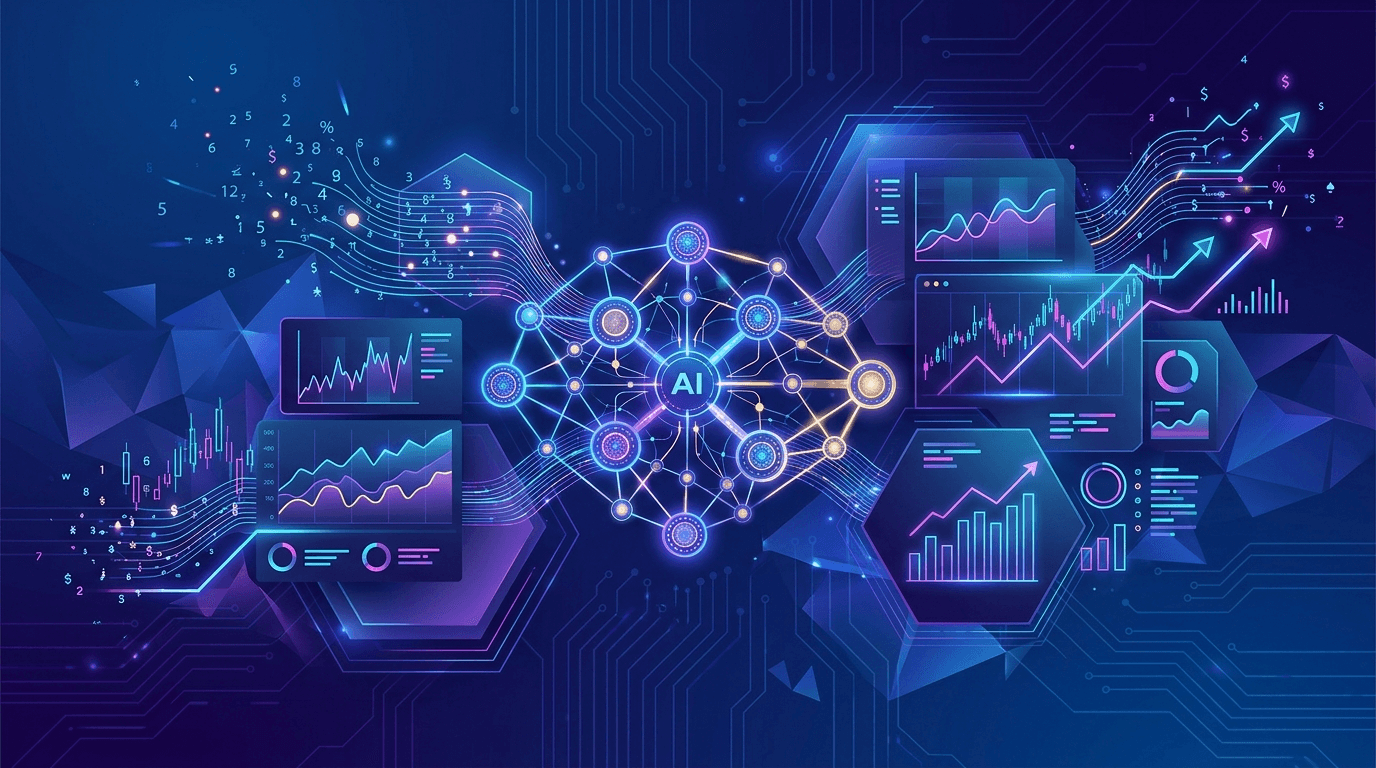
The collaboration announced between OpenAI and PwC is not simply another technology demonstration. It is a strong signal sent to the entire global financial sphere: the role of the Chief Financial Officer (CFO) is undergoing its most significant transformation since the advent of ERP systems in the 1990s. For French companies—ambitious SMEs, growing mid-market firms, or large listed groups—this development is not something to observe from a distance. It calls for rapid strategic positioning.
While finance teams still spend considerable time on consolidation, reconciliation, and manual reporting tasks, AI agents promise to free up this human potential for higher-value activities: analysis, decision-making, forecasting. Let's decode what this alliance truly means and how French organizations can capitalize on it.
What the OpenAI-PwC Partnership Really Changes for Corporate Finance
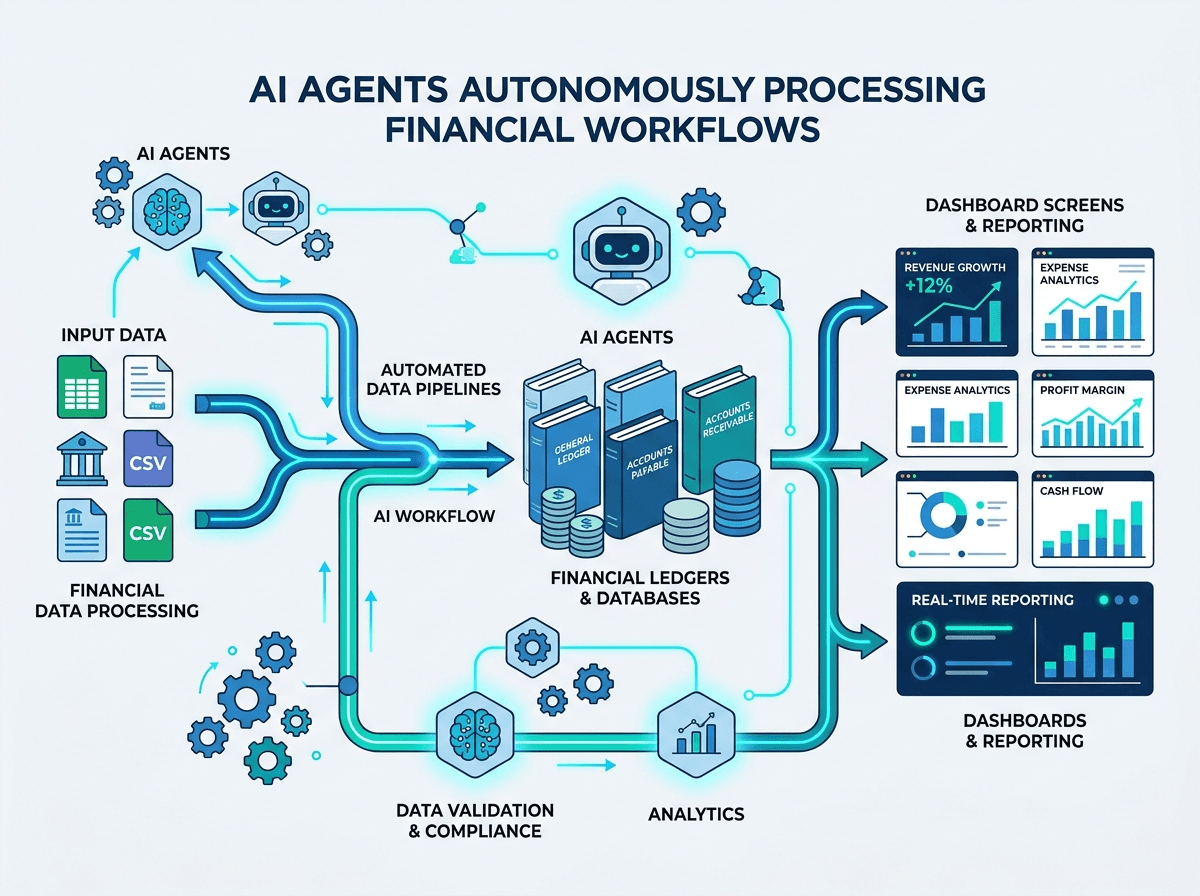
The alliance between OpenAI and PwC goes far beyond a simple commercial agreement. PwC, one of the four largest audit and consulting firms globally, will deploy OpenAI's models—notably GPT-4o and autonomous agent capabilities—within its solutions for its corporate clients' finance departments.
Concretely, the targeted use cases are as follows:
- Automation of repetitive financial workflows: account closings, bank reconciliations, expense report processing, inter-company reconciliations.
- Improved forecast quality: AI agents can ingest internal data (sales history, budgets) and external data (macroeconomic data, sector signals) to produce more accurate and real-time forecasts.
- Strengthened internal controls: anomaly detection, alerts on unusual transactions, automated transaction traceability—critical elements in a context of tightening regulatory requirements across Europe.
- Modernized reporting: automatic generation of management commentary, narrative summaries of financial results, dynamic dashboards accessible in natural language.
For a French CFO juggling DGFiP requirements, IFRS standards, the Sapin II law, and growing investor expectations around ESG transparency, these capabilities represent an opportunity for profound transformation.
Concrete Applications for French Companies: From SMEs to Large Corporations
It would be wrong to think that this revolution is reserved for Anglo-Saxon multinationals. French companies of all sizes have immediate and accessible use cases.
For an industrial SME (50-200 employees), an AI agent connected to accounting software can automate the entire monthly closing cycle—account reconciliation, generation of standard provisions, dashboard distribution to management—reducing closing time from several days to just a few hours. The CFO or finance manager can then dedicate energy to variance analysis and strategic recommendations.
For a growing mid-market firm (200-2,000 employees), forecasting is often a critical challenge. Traditional Excel-based forecast models quickly reach their limits. An AI agent trained on the company's historical data, combined with external sector data sources, can produce continuously updated forecast scenarios (optimistic, base case, pessimistic) with explanations in French accessible to all executive committee members.
For a large listed group, internal control and compliance stakes are paramount. AI agents can monitor thousands of transactions in real time to detect suspicious patterns, automatically generate documentation needed for audits, and produce regulatory reports (tax return, country-by-country reporting, non-financial performance statement) with increased reliability and traceability.
A particularly telling example: a large French retail chain could deploy an AI agent to automate the consolidation of financial data from its 300 store locations, currently done manually by a team of 8 people each month-end. The time and reliability gains are immediate and measurable.
Challenges to Anticipate: Governance, Data, and Model Trust

While the benefits are real, it would be imprudent to overlook the challenges this transformation imposes on French organizations.
Data quality remains the first prerequisite. AI agents are only as effective as the data they rely on. Many French companies still suffer from data silos, non-harmonized reference systems across different entities or platforms. Before deploying AI agents in finance, fundamental work on data governance is often necessary.
The question of GDPR compliance and data sovereignty is particularly sensitive for financial data, which may contain commercially strategic or personal information. French companies must ensure that deployed solutions comply with the European framework and that sensitive financial data does not transfer to unsecured environments.
Confidence in model outputs is a strong cultural issue, particularly in France where accounting rigor and signer responsibility are deeply anchored values. A CFO cannot sign accounts produced by AI without having established robust human validation processes. The notion of augmented AI—where humans retain final decision-making authority—is fundamental here.
The risk of technological dependency on a few major players (OpenAI, Microsoft, Google) must also be integrated into the strategic thinking of CIOs and CFOs, with logic toward diversification and resilience.
Training Finance Teams for the Age of AI Agents: A Non-Negotiable Strategic Investment
The transformation of finance functions through AI will not happen without the men and women who comprise it. This is arguably the most complex—and most often underestimated—challenge of this revolution.
Finance department staff—management accountants, accountants, treasurers, analysts—are not threatened with extinction, but their roles will evolve significantly. They must acquire new skills: understanding how AI agents work, knowing how to interpret and challenge their outputs, learning to formulate effective requests (prompt engineering applied to finance), and developing critical thinking toward automated recommendations.
Managers and CFOs, for their part, must understand priority use cases for their organization, know how to frame an AI project in finance (scope definition, success metrics, change management), and be able to assess associated risks.
This skills development cannot be improvised. It requires tailored training, grounded in real use cases, and delivered by experts who understand both corporate finance challenges and the nuances of AI technologies. This is precisely the mission Ikasia fulfills alongside French companies.
The AI transformation of your finance department should not be endured—it should be piloted. At Ikasia, we support finance teams and CFOs in understanding AI agents, identifying their priority use cases, and building their teams' capabilities. Whether you're in the exploration phase or already deploying, our training and consulting missions are designed for the realities of French enterprises.
👉 Discover our programs at ikasia.ai and let's schedule a first strategic conversation.
Tags
Related articles
How Endava Reinvents Software Delivery with AI Agents: Lessons for French Businesses
Read
AI Agents in the Enterprise: How to Monitor Their Behavior and Prevent Silent Drift
Read
Autonomous AI in the Enterprise: What OpenAI's New Security Risks Reveal for Your Organization
ReadWant to go further?
Ikasia offers AI training designed for professionals. From strategy to hands-on technical workshops.