OpenAI's Singapore AI Partnership: Key Lessons for French Businesses

On July 15, 2025, OpenAI announced the launch of OpenAI for Singapore, an ambitious multi-year partnership aimed at accelerating AI deployment across Singapore's public and private sectors, training local talent, and supporting businesses in their digital transformation. A powerful signal that extends far beyond Southeast Asia.
For French leaders and decision-makers, this agreement is far more than geopolitical news. It's a mirror held up to our own businesses: what happens when a state decides to structure, finance, and accelerate AI adoption at a national scale? And more importantly, how do we avoid falling behind in a race that is reshaping economic models across every sector?
Singapore: A Global Laboratory for Enterprise AI Transformation
Singapore is not an isolated case. The city-state consistently ranks in the top 5 globally for AI adoption, thanks to a coherent national strategy, massive infrastructure investments, and a business culture open to technological experimentation.
The partnership with OpenAI fits this logic: it's not simply about purchasing software licenses, but about building a complete ecosystem — training teams, deploying sector-specific use cases at scale, integrating into public services (healthcare, education, administration), and supporting local SMEs.
Concretely, this translates to:
- Skills development programs for thousands of Singapore professionals, from developers to non-technical managers
- Pilot deployments in public administrations, featuring decision-support tools, document processing, and citizen services
- Targeted support for local businesses to identify and implement high-ROI use cases
The lesson for France is clear: the countries advancing fastest aren't those waiting for technology to be "perfect", but those structuring human and organizational support around it.
Concrete Applications That Speak to Every Business Function
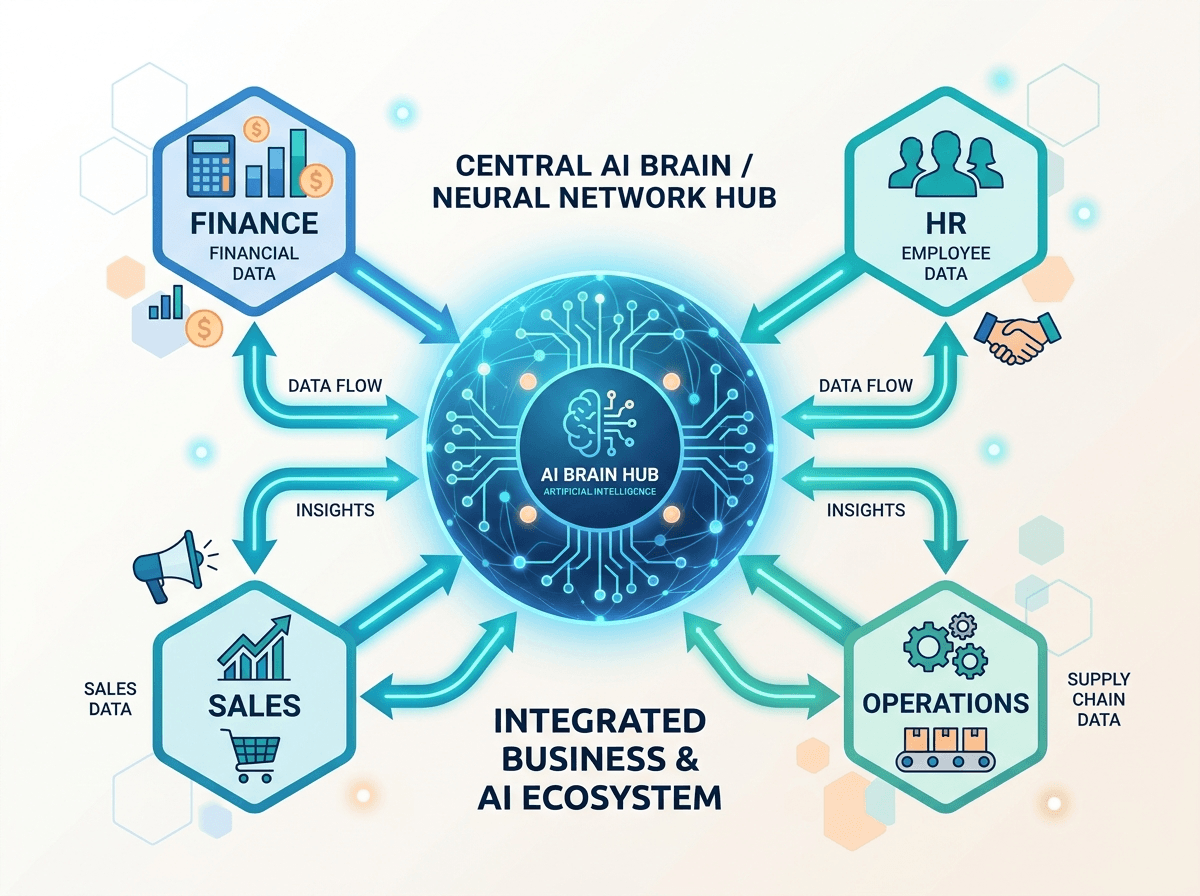
One of the strengths of the Singapore model lies in its sector-focused approach. Rather than promoting generic AI, the OpenAI partnership targets specific use cases with measurable impact. Here's what this directly inspires for French businesses:
Finance & Legal Departments Automation of contract review, regulatory compliance analysis (GDPR, French anti-corruption law), generation of enriched financial reporting. Singapore law firms are already using GPT-4o to reduce document review time by 60%.
Human Resources Departments Co-drafting job descriptions, predictive analysis of turnover risks, personalized internal training pathways. AI doesn't replace the HR director — it gives them back time for high-value human missions.
Sales & Marketing Departments Large-scale personalized content generation, analysis of weak customer signals, automated qualification of incoming leads. APAC companies report commercial productivity gains of 30-45% after six months of structured adoption.
Operations & Supply Chain Departments Demand forecasting, anomaly detection in logistics processes, automated drafting of operational procedures. AI becomes here an invisible copilot that strengthens the value chain.
In all these cases, the common denominator is the same: AI doesn't work alone. It requires trained teams, redesigned processes, and clear success metric management.
Team Training: The Real Competitive Advantage Most Companies Miss
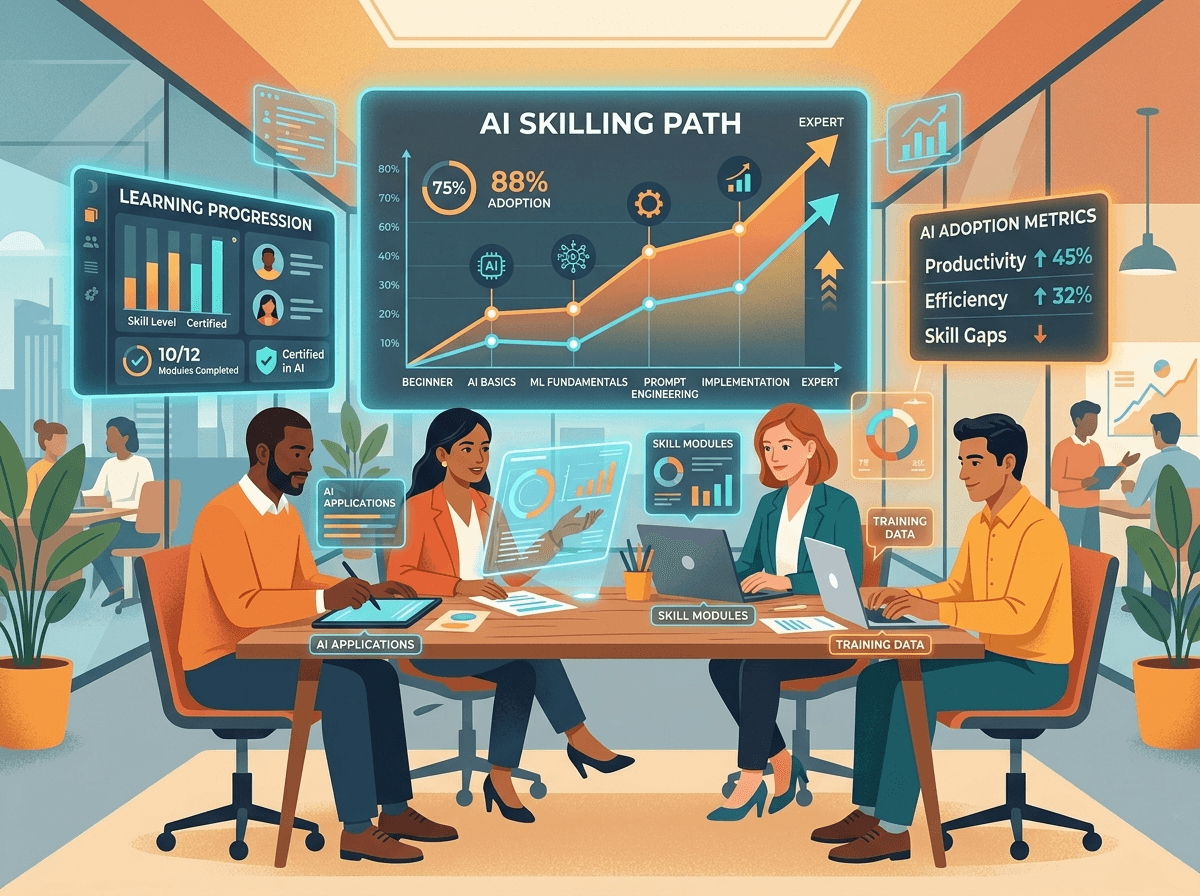
This may be the most valuable lesson from the Singapore model: invest heavily in human training before even deploying tools. OpenAI for Singapore explicitly includes skills development programs for diverse profiles — not just data scientists, but business managers, project managers, and support teams.
In France, reality is often the opposite: companies purchase Copilot or ChatGPT Enterprise licenses, distribute them to teams… and six months later observe disappointing adoption rates. Why? Because using an AI tool professionally and securely is a learned skill. It's not innate.
Training your teams in AI today means:
- Learning to write effective prompts tailored to your profession
- Understanding the limitations and biases of models to avoid making decisions on faulty grounds
- Mastering privacy considerations (not sending sensitive data to unsecured tools)
- Developing a critical eye for generated outputs
- Identifying priority use cases within your area of responsibility
Companies training their teams today are building an invisible but powerful barrier to entry. In 18 months, the productivity gap between a trained team and an untrained team will be as visible as the gap between a company that adopted Excel in 1995 and one that refused.
What France Can — and Must — Do Differently
France has real assets: a diverse industrial base, engineers among the world's best, a culture of operational excellence, and promising public initiatives (France 2030, national AI strategy). But transformation cannot be decreed from institutional spheres: it's built company by company, team by team.
The Singapore example reminds us that adoption speed doesn't depend solely on company size or sector. It depends on clarity of strategic vision, quality of support, and ability to experiment without waiting for perfection.
French companies that will stand out in the next 24 months will be those that have:
- Mapped their priority use cases with identified ROI potential
- Trained their teams — from C-suite to operations — in responsible AI culture
- Established clear governance to frame experiments and secure data
- Measured and iterated rapidly on initial deployments
Ready to move from observation to action? At Ikasia, we support French businesses in their AI transformation: from strategic audits to operational training of your teams, through identifying and deploying your first high-impact use cases. Contact us at ikasia.ai for an initial conversation with no obligation — and start building tomorrow's competitive advantage today.
Tags
Related articles
OpenAI Partner Network: $150 Million to Accelerate Enterprise AI Transformation — What Changes for You
Read
HP and OpenAI Partner to Transform Tomorrow's Enterprise: What Changes for You
Read
OpenAI Acquires TBPN: When the Battle for AI Narrative Becomes a Strategic Issue for Enterprises
ReadWant to go further?
Ikasia offers AI training designed for professionals. From strategy to hands-on technical workshops.