The Rise of Small Language Models (SLM): Embedded AI on Mobile
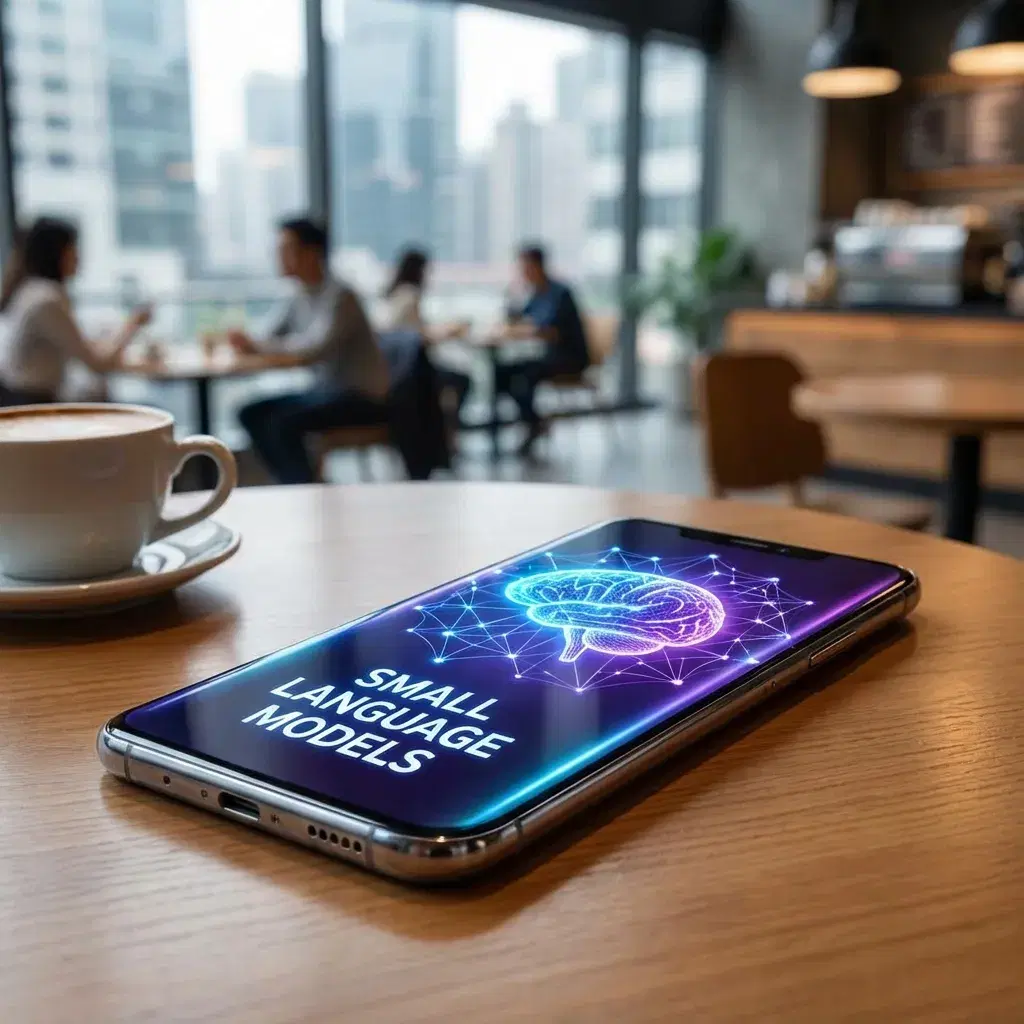
Key takeaways: Small Language Models (SLMs) like Microsoft Phi-3, Google Gemma, and Meta Llama 3 8B represent a strong counter-trend to the bigger-is-better paradigm, proving that impressive performance is achievable with fewer parameters. SLMs offer three decisive advantages: privacy through fully local execution on computers or smartphones with no data leaving the device, making them ideal for healthcare, defense, and finance; near-zero latency with immediate inference even in airplane mode for voice assistants and real-time translation; and dramatically reduced cost and energy consumption making AI ecologically sustainable and viable for low-margin applications. The limitations are clear: a 3-billion parameter model cannot match GPT-4 on complex generalist tasks, excelling instead at specific optimized tasks like summarization, classification, and basic chat. The future architecture will likely be hybrid, with a local SLM handling 80% of simple requests quickly, privately, and at no cost, while delegating the remaining 20% of complex tasks to cloud-based models requiring superior intelligence.
The Race to Miniaturization
For years, the trend was "always bigger" (GPT-3, GPT-4). But in 2024-2025, a strong counter-trend is emerging: Small Language Models (SLM). Models like Microsoft's Phi-3, Google's Gemma, or Meta's Llama 3 8B prove that you can have amazing performance with few parameters.
Why Go Small?
1. Privacy
An SLM can run entirely locally on your computer or smartphone. No data leaves for the cloud. This is a decisive argument for sensitive sectors (health, defense, finance) or for private messaging applications.
2. Latency and Availability
No need to wait for a server response. Inference is immediate, even in airplane mode. Ideal for voice assistants, real-time translation, or navigation aids.
3. Cost and Energy
Running a giant LLM is expensive in GPU and electricity. An SLM consumes a fraction of this energy, making AI more ecologically sustainable and economically viable for low-margin use cases.
The Limits
Obviously, a 3-billion parameter model will not replace GPT-4 for writing a complex novel or solving quantum physics problems. SLMs are less "generalist". They excel at specific tasks for which they have been optimized (summarization, classification, basic chat).
The Future is Hybrid
Tomorrow's architecture will likely be hybrid: a local SLM handles 80% of simple requests (fast, free, private), and delegates to the cloud (GPT-5) the 20% of complex tasks requiring superior intelligence.
Tags
Related articles

Want to go further?
Ikasia offers AI training designed for professionals. From strategy to hands-on technical workshops.