AI Impact on the Job Market in 2025: Replacement or Augmentation?
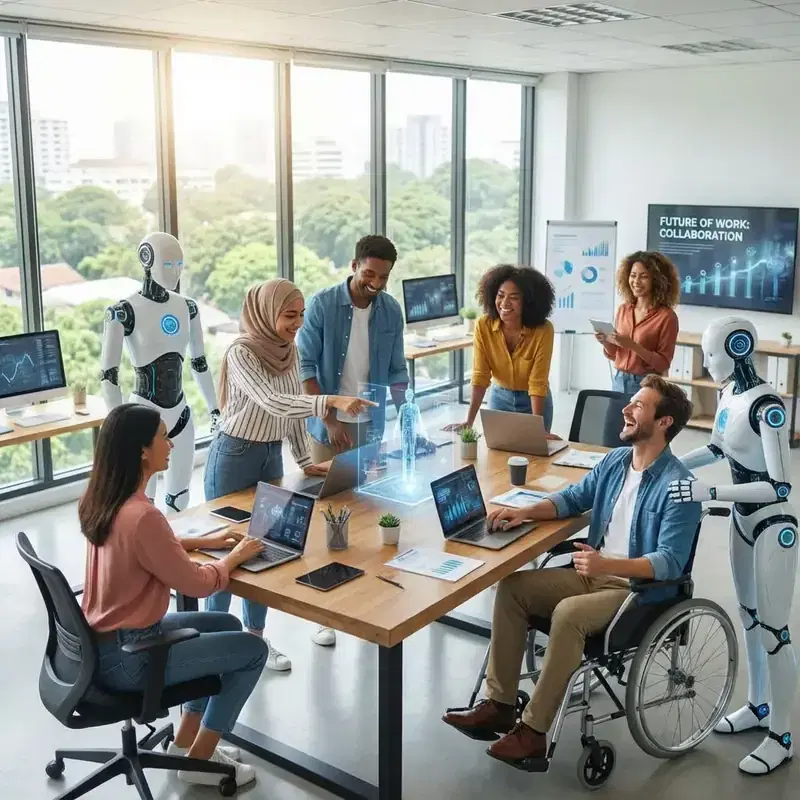
Key takeaways: The impact of AI on jobs in 2025 is more nuanced than simple replacement: while purely administrative tasks, data entry, and basic coding are heavily automated, AI primarily acts as a productivity catalyst enabling augmentation rather than substitution. The accountant shifts from manual entry to financial analysis, and the developer moves from boilerplate code to architecture and complex business logic. Three skills become crucial for leveraging AI augmentation: AI literacy to understand model capabilities and limitations, critical thinking to verify and validate AI outputs, and emotional intelligence covering empathy, negotiation, and leadership that AI cannot replicate. New roles are emerging including AI Ethics Officer, Prompt Engineer, and AI Product Manager. Ikasia, a Paris-based AI training and consulting firm, advises that continuous training and adaptability are the most effective strategies for navigating this transition, noting that humans who use AI will replace those who do not.
The Fear of Replacement
Since the advent of ChatGPT and advanced generative models, the question is on everyone's lips: will AI take my job? In 2025, the answer is becoming more nuanced. While some repetitive and codifiable tasks are indeed automated, the reality is more complex than a simple zero-sum game.
Purely administrative jobs, data entry, and even some levels of basic computer coding or writing are heavily impacted. However, AI acts less as a replacement than as a productivity catalyst.
The Era of Augmentation
What we observe with our clients is a transition towards augmentation. AI does not replace the accountant; it automates entry to allow them to focus on financial analysis and advice. It does not replace the developer; it generates "boilerplate" code so they can focus on architecture and complex business logic.
Key Skills for 2025
To leverage this augmentation, three skills are becoming crucial:
- AI Literacy: Understanding how models work, their limits, and how to steer them (advanced prompt engineering).
- Critical Thinking: Knowing how to verify, validate, and correct AI outputs. Humans remain the guarantors of quality and responsibility.
- Emotional Intelligence: Everything AI cannot do—empathy, negotiation, leadership, pure creativity—gains increased economic value.
Towards New Jobs
AI is also creating new roles. We are no longer just talking about Data Scientists, but about:
- AI Ethics Officer: Guarantor of system compliance and ethics.
- Prompt Engineer / AI Whisperer: Expert in interacting with models.
- AI Product Manager: Conductor of products integrating AI.
Conclusion
AI will not replace humans, but humans who use AI will replace those who do not. Continuous training and adaptability are your best weapons to navigate this major technological transition.
Enjoyed this article? Check out our AI Strategy Training for Leaders — 2 days to drive AI strategy across your organisation.
Tags
Related articles



Want to go further?
Ikasia offers AI training designed for professionals. From strategy to hands-on technical workshops.