When AI Accelerates Administrative Decisions: Lessons from the Google DeepMind – UK Government Partnership for French Businesses
The UK government has just announced a strategic partnership with Google DeepMind to develop an AI prototype capable of accelerating decisions on building permits. Behind this news, which may seem distant to French businesses, lies a fundamental trend that directly concerns them: AI is no longer just a tool for internal productivity, it is becoming a lever for transforming complex, lengthy and costly processes — whether public or private.
For business leaders, CIOs and digital transformation leaders in France, this strong signal deserves careful attention. Because what DeepMind is experimenting with today in UK urban planning, your competitors could apply tomorrow in your own sectors.
AI applied to complex decision-making processes: far more than an isolated use case
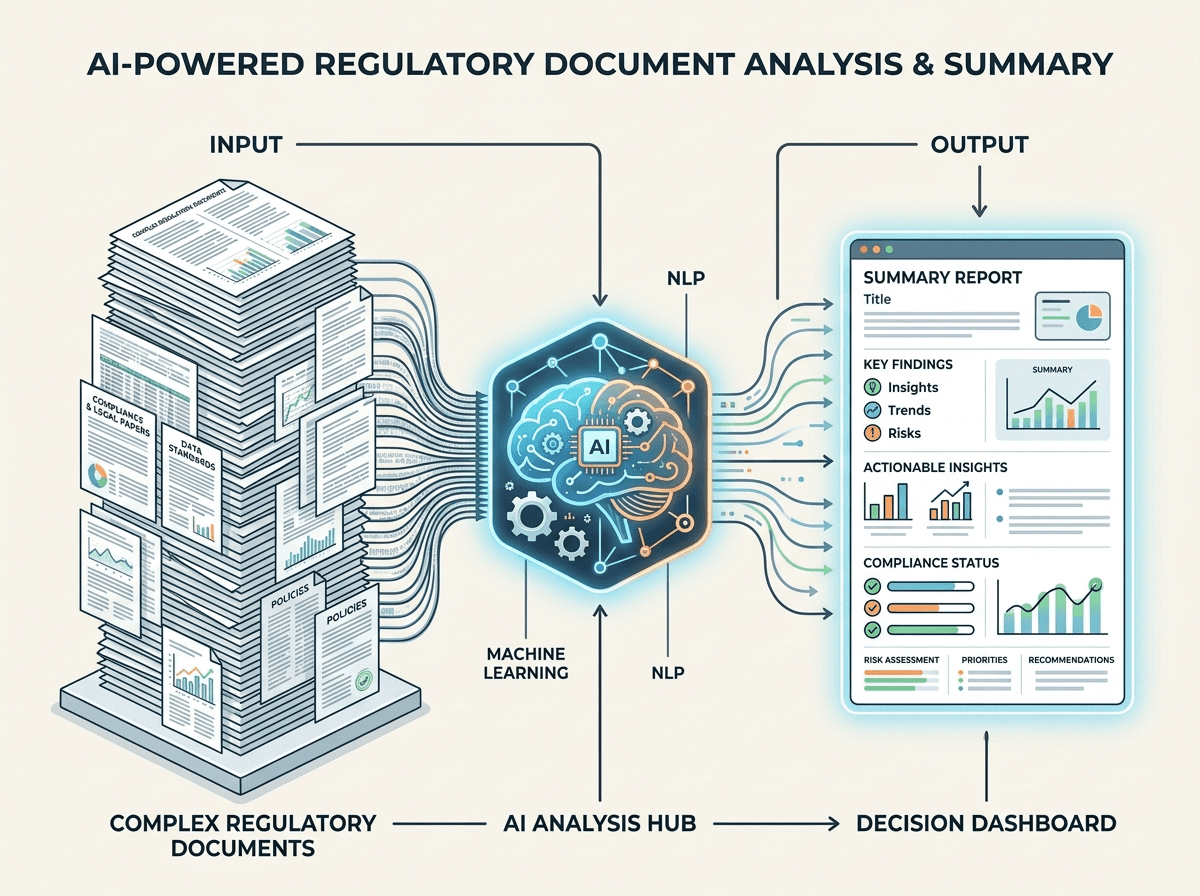
The British project is ambitious: create an AI system capable of analyzing building permit applications — often composed of hundreds of pages of technical, regulatory and environmental documents — to formulate fast and reliable recommendations to case officers. The goal is to reduce delays that currently extend over several months, or even years.
What makes this use case remarkable is not the technology itself, but the nature of the problem it solves: a decision-making bottleneck fueled by volume, regulatory complexity and a shortage of human skills. This trio is universal. It appears in French companies in many forms:
- Processing of tenders in construction, engineering or public services
- Processing of credit or insurance applications in the financial sector
- Regulatory validation in the pharmaceutical or agri-food industry
- Management of contract disputes in legal departments
In each of these contexts, AI can play the same role it plays for DeepMind: not to replace the human decision-maker, but to provide him with structured, fast and documented analysis so he can focus on the real added value of his judgment.
Three concrete applications for French businesses
1. Large-scale document analysis in legal and compliance departments
A large French industrial company receives hundreds of supplier contracts to analyze each year. Today, this task mobilizes expensive legal teams for weeks. An AI system trained on French and European contract law can pre-analyze these documents, flag risky clauses, compare terms to internal standards and generate a summary report in minutes. The lawyer validates, refines and decides — but in a fraction of the time.
2. Accelerating processing procedures in local authorities and public operators
Companies that work with public clients (public procurement, public service contracts, European subsidies) know how much processing delays can paralyze their business. The British example shows that AI can be integrated on the case officer side to reduce these delays. By anticipating this evolution, French companies can now structure their applications in formats compatible with AI processing — which will make them more competitive when these tools are deployed on the administration side.
3. Assisted decision-making in HR and recruitment functions
Processing a job application file at scale presents the same characteristics as processing a building permit: significant volume, multiple criteria, risk of human bias, time pressure. AI solutions applied to recruitment already make it possible to pre-qualify applications, detect atypical profiles with high potential and reduce time-to-hire by 40 to 60% in certain sectors.
What this partnership reveals about AI maturity in 2025
The UK government's choice to partner with Google DeepMind — rather than a simple software publisher — is in itself a strategic signal. It indicates that complex decision-making problems now require new-generation AI models, capable of reasoning on heterogeneous data, understanding regulatory context and justifying their recommendations in an auditable manner.
This requirement for explainable and responsible AI is particularly relevant for French companies, which operate in a demanding regulatory environment (GDPR, European AI Act, sector-specific obligations). The good news: Europe, and France in particular, has a regulatory culture that constitutes a competitive advantage in deploying trustworthy AI. Companies that invest now in governed and documented AI approaches will be better positioned to operate in this framework.
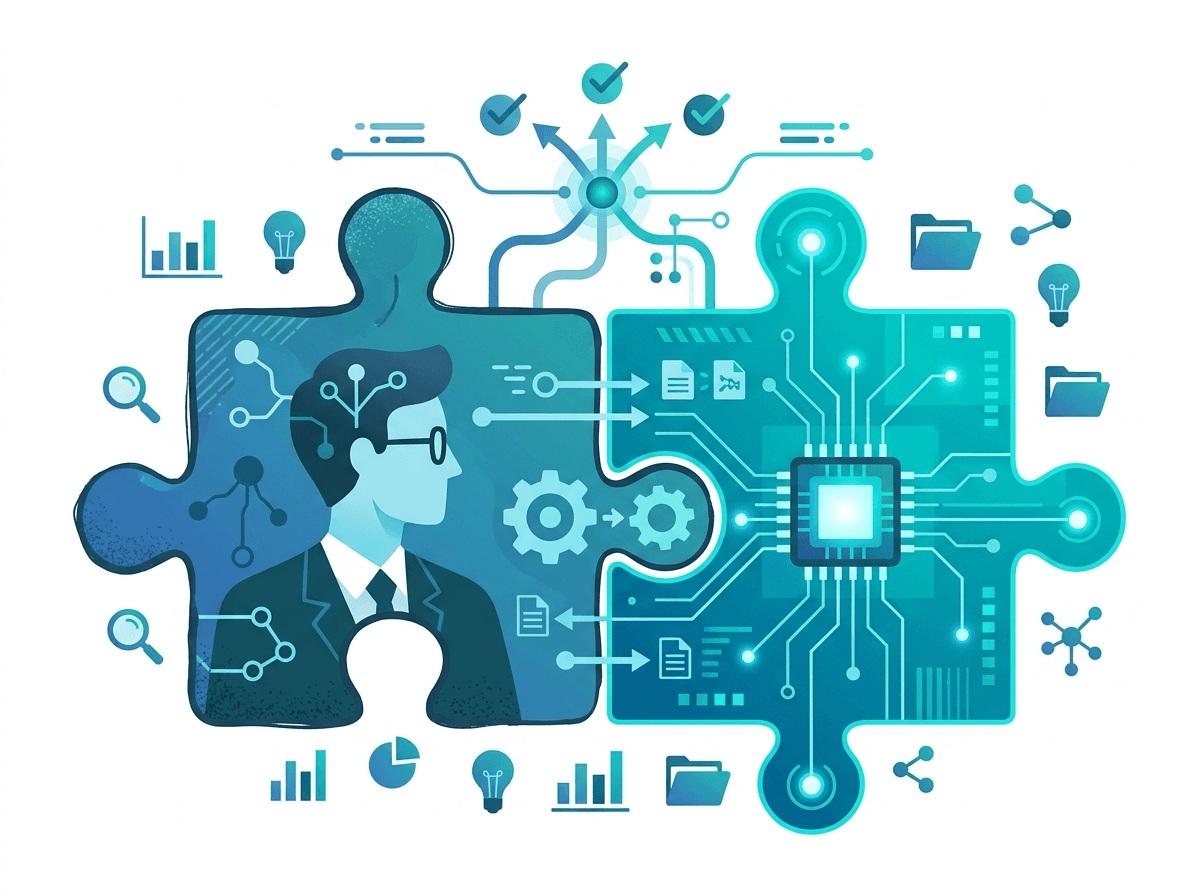
The other major lesson is the need for co-construction between business experts and AI teams. DeepMind's prototype was developed in close collaboration with experienced case officers. Without this human expertise encoded in the system, the AI would have produced technically correct but operationally unusable recommendations. This principle applies to any company wishing to deploy AI on its core business processes.
Training your teams: the invisible challenge behind every successful AI project
The DeepMind – UK government partnership is not limited to software. It necessarily comes with a skills development program for agents who will use the system: understanding what AI can and cannot do, knowing how to interpret its recommendations, identifying cases where human escalation is essential, and maintaining a critical eye on generated outputs.
This is precisely the challenge facing French companies today. AI is advancing faster than internal skills. Result: tools are purchased but under-utilized. Pilot projects stall. Teams resist due to lack of understanding — not lack of willingness.
Training is not just about learning to use a tool. It consists of developing a new culture of augmented decision-making: knowing when to delegate to AI, how to challenge its results, and how to articulate artificial intelligence and human intelligence in a fluid and responsible manner. It is this change in posture, as much as technical skills, that determines the success or failure of an AI project in a company.
The British example reminds us of a simple truth: AI does not transform organizations by magic. It transforms those who prepare to embrace it. Whether you are an industrial SME, a consulting firm, a healthcare player or a local authority, the question is no longer whether AI will impact your decision-making processes — but when, and whether you will be ready.
Ikasia supports French companies in this transition, from AI strategy to operational team training, through the identification of high-ROI use cases. Discover our programs on ikasia.ai and make AI a lasting competitive advantage for your organization.
Tags
Related articles
Long-form AI Video: How Higgsfield Is Transforming Content Production for Enterprises
Read
How NVIDIA Reinvents Chip Design with AI: Concrete Impact for French Businesses
Read
DeepMind's AI Co-Clinician: What the Medical Revolution Means for Every French Company
ReadWant to go further?
Ikasia offers AI training designed for professionals. From strategy to hands-on technical workshops.