Google Finance Exits Beta: What the AI-Powered Financial Analysis Revolution Means for French Businesses
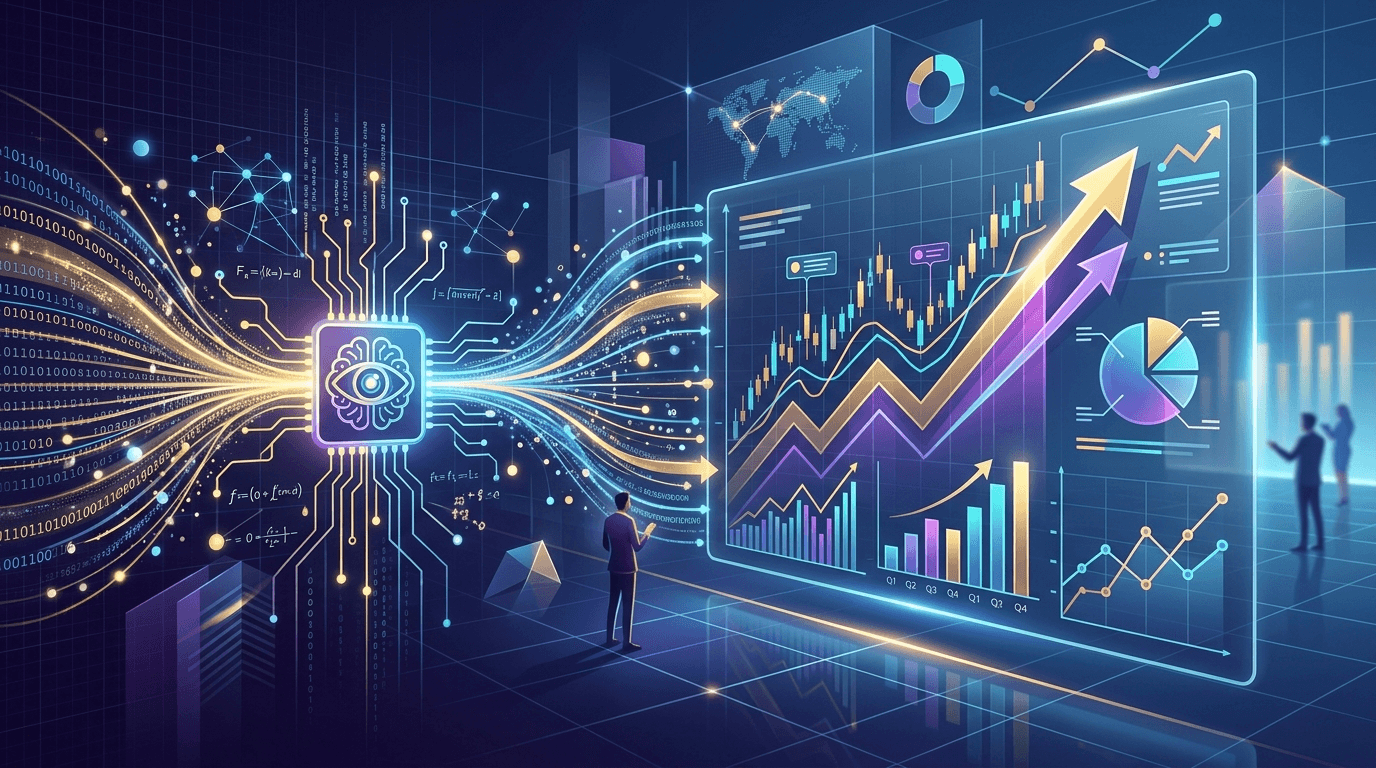
Google has officially launched the new version of Google Finance, now available out of beta, accompanied by a dedicated Android application. Behind this announcement, which might seem routine, lies a profound transformation in how professionals access financial information, analyze it, and make strategic decisions. For French businesses—SMEs, mid-market companies, and large corporations—this evolution marks a turning point in democratizing AI-enhanced financial intelligence tools.
As finance directors, management control teams, and strategic managers seek to gain agility in an uncertain economic landscape, Google Finance emerges as a powerful signal: AI is no longer confined to the trading floors of the City or Wall Street. It now enters the daily reality of any decision-maker with an Android smartphone.
Next-Generation Google Finance: Much More Than a Simple Quote Aggregator
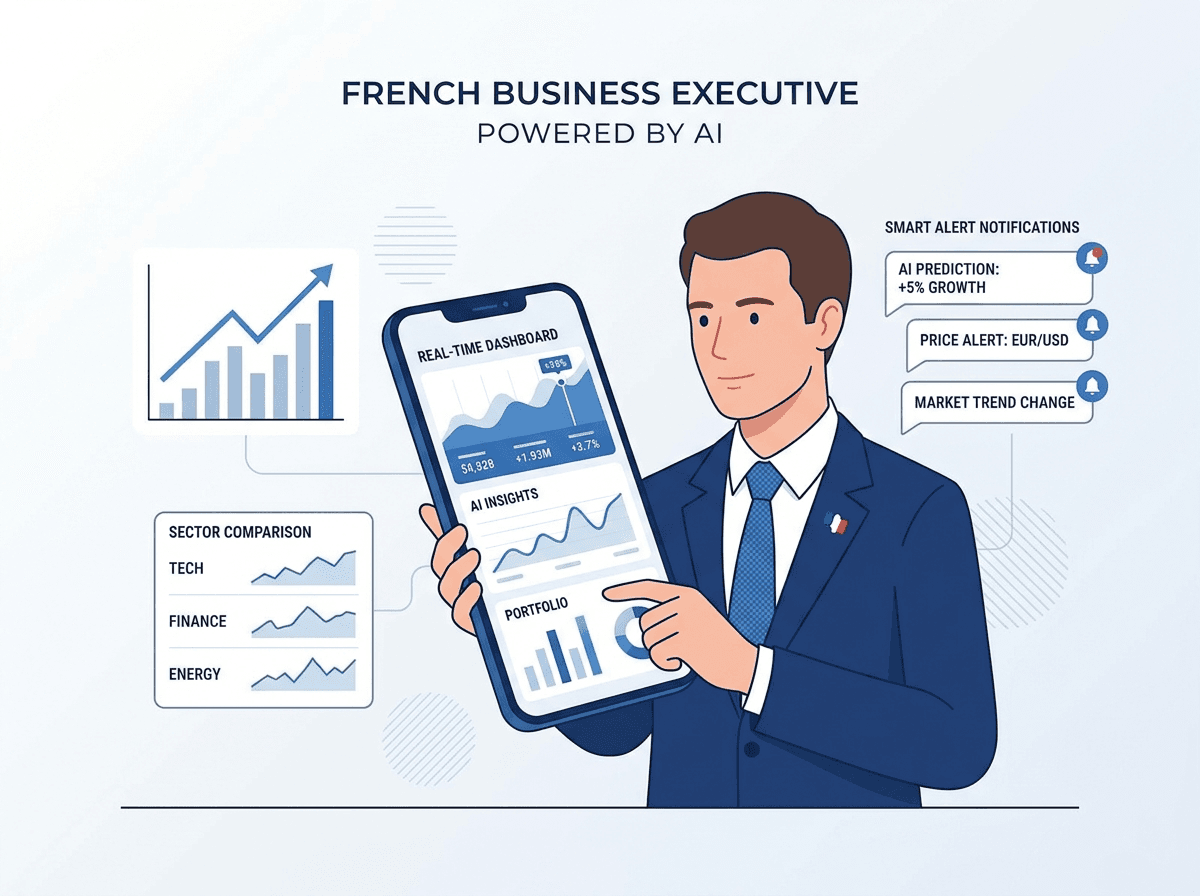
The previous version of Google Finance was already useful for tracking stock portfolios or consulting macroeconomic indicators. But the new iteration crosses a decisive threshold by integrating AI-enhanced analytical capabilities, a redesigned interface for rapid decision-making, and a native mobile application built for professionals on the go.
Concretely, improvements span several major areas:
- Intelligent information synthesis: Google's AI models aggregate and contextualize financial news, company reports, and real-time market data, offering structured insights rather than raw information streams.
- Personalized asset and sector tracking: users can configure precise thematic monitoring—an industrial sector, a competitor, a geographic region—and receive intelligent alerts.
- Enhanced data visualization: interactive charts and sector comparisons enable immediate analytical interpretation without requiring third-party tools.
- Native Android application: mobile availability fundamentally changes usage patterns, particularly for executives and sales teams on the move.
For a French SME wishing to monitor the evolution of its publicly traded suppliers or anticipate supply chain tensions, this is a lever of business intelligence now accessible free of charge.
Concrete Applications for French Businesses
It would be reductive to confine Google Finance to financial services alone. Use cases for French businesses are multiple and cross-functional.
For finance departments and CFOs, the tool enables contextualizing company performance against listed peers, anticipating interest rate or currency movements that impact margins, and preparing committee reviews with real-time updated data.
For procurement and supply chain teams, monitoring the financial health of strategic suppliers becomes a risk management reflex. An alert about rating degradation or disappointing results from a key supplier can trigger continuity plans before a crisis even occurs.
For sales and marketing departments, Google Finance becomes a competitive intelligence tool: tracking quarterly results of a listed competitor, identifying sectors where investment is accelerating, understanding consumption trends through distributor results—all information that feeds go-to-market strategy.
For French startups and scale-ups seeking fundraising, the tool offers valuable insights into sector valuation multiples, comparable company performance, and market appetite for specific technology themes.
Imagine a Lyon-based mid-market company specializing in construction materials configuring Google Finance to monitor commodity prices, results from Saint-Gobain or Lafarge, and European real estate sector indicators. In just a few minutes each morning, its CEO has access to a business intelligence dashboard that only large enterprises could afford yesterday.
AI as Decision-Making Infrastructure: A Paradigm Shift in Management
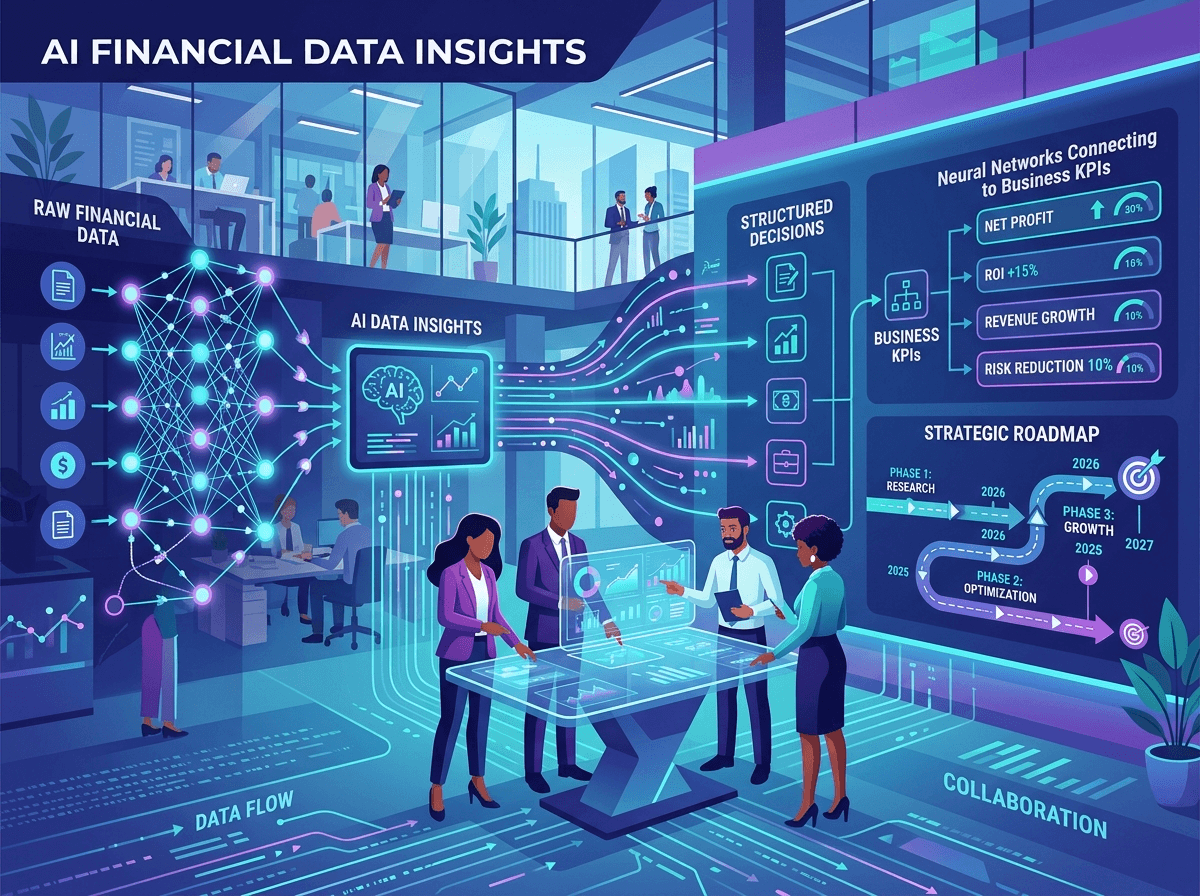
What Google Finance illustrates transcends a simple product update. It confirms a major trend: AI becomes invisible infrastructure that enhances decision quality and speed at all organizational levels.
This represents a paradigm shift. For decades, informational advantage was a matter of resources: large enterprises paid for Bloomberg terminals, premium database subscriptions, and dedicated analysts. AI democratizes this advantage. A well-trained micro-enterprise leader can now access analytical quality once reserved for large finance departments.
But this democratization has a sine qua non condition: teams' ability to exploit these tools with critical and strategic thinking. Real-time data access only has value if you know how to ask the right questions, interpret weak signals, and integrate insights into structured decision processes.
This is precisely where risk lies for many French businesses: adopting tools without transforming practices. Poorly used Google Finance can generate as much noise as signal, even leading to reactive decisions based on short-term fluctuations rather than underlying trends.
Training Your Teams: The Key to Leveraging AI-Enhanced Finance
Google Finance's exit from beta, combined with recent advances in Gemini and Google Workspace tools, raises an urgent HR and organizational question: are your teams ready to harness these capabilities?
Training must extend beyond technical application use. It must cover several dimensions:
- Data culture: understanding what key financial indicators mean, how to read them within sector and macroeconomic context.
- Strategic AI utilization: formulating relevant queries, cross-referencing sources, identifying potential biases in automated syntheses.
- Workflow integration: defining at which decision-process stage these tools intervene, who consults them, how insights are documented and shared.
- Information governance: in a context where competitive data confidentiality is sensitive, training teams in digital hygiene best practices.
At Ikasia, we support French businesses in building this competency. Our AI application training programs systematically integrate everyday tools—including Google solutions—so your teams don't undergo digital transformation but become its architects.
Want to assess your organization's AI maturity and train your teams in AI-enhanced financial intelligence tools? Discover our customized programs at ikasia.ai and gain a competitive advantage in your market. Our consultants specializing in AI applied to French enterprises are available for an initial strategic conversation without commitment.
Tags
Related articles

Project Camellia: When OpenAI Builds Data Centers, French Businesses Must Rethink Their AI Strategy
Read
Google Translate Turns 20: What This Reveals About AI Maturity for French Businesses
Read
When AI Solves Quantum Physics Equations: What It Actually Means for Your Business
ReadWant to go further?
Ikasia offers AI training designed for professionals. From strategy to hands-on technical workshops.