DeepMind's AI Co-Clinician: What the Medical Revolution Means for Every French Company
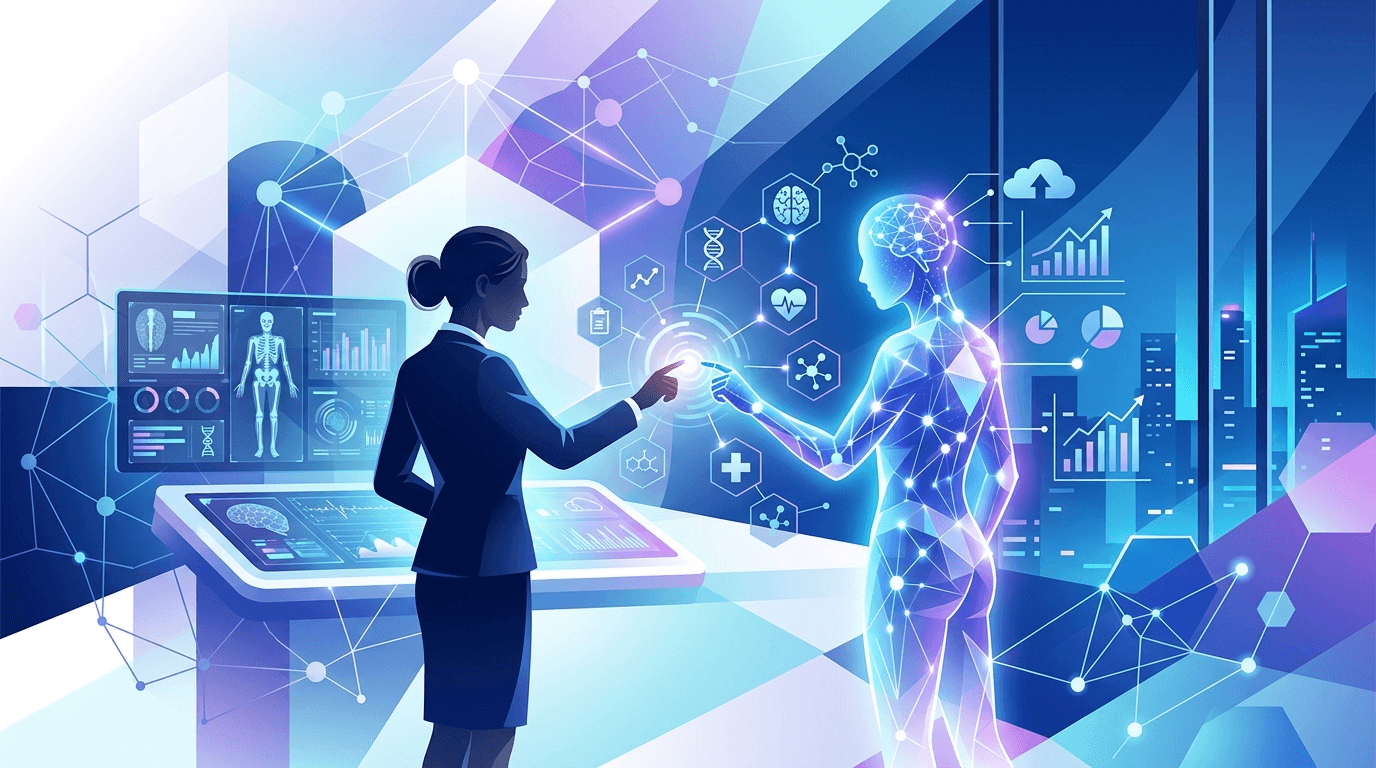
The healthcare sector just crossed a historic milestone. DeepMind, Google's artificial intelligence research division, has published its work on an AI co-clinician capable of assisting physicians in diagnostics, therapeutic decisions, and patient monitoring. While this announcement may seem reserved for the hospital world, it sends a powerful signal to every French CEO and CIO: the era of the AI-augmented collaborator is no longer a distant horizon. It's here, it's accelerating, and it's reshaping the contours of skilled work across all sectors.
From the clinic to the office: why this breakthrough concerns you directly
The principle behind the AI co-clinician is straightforward: instead of replacing the doctor, the AI works alongside them, analyzing patient data in real time, proposing diagnostic pathways, flagging drug interaction risks, and automatically documenting exchanges. The physician remains the decision-maker. The AI absorbs the heaviest cognitive load.
Transpose this model to your company. Imagine an AI co-analyst for your finance teams, capable of monitoring anomalies in your cash flows while a controller focuses on strategy. Or an AI co-lawyer that pre-analyzes hundreds of contracts before an attorney intervenes on sensitive points. Or an AI co-advisor in a customer service center, suggesting in real time the best response to a human advisor managing a complex case.
DeepMind's lesson is not technological. It's organizational: the organizations that will win tomorrow are those that have learned to structure collaboration between humans and AI, by clearly defining who decides, who executes, and who supervises.
Three concrete use cases for French companies
Results published by DeepMind show that their model achieves performance comparable to experienced physicians on certain diagnostic tasks, while significantly reducing processing time. This level of performance opens very concrete perspectives for sectors under strain in France.
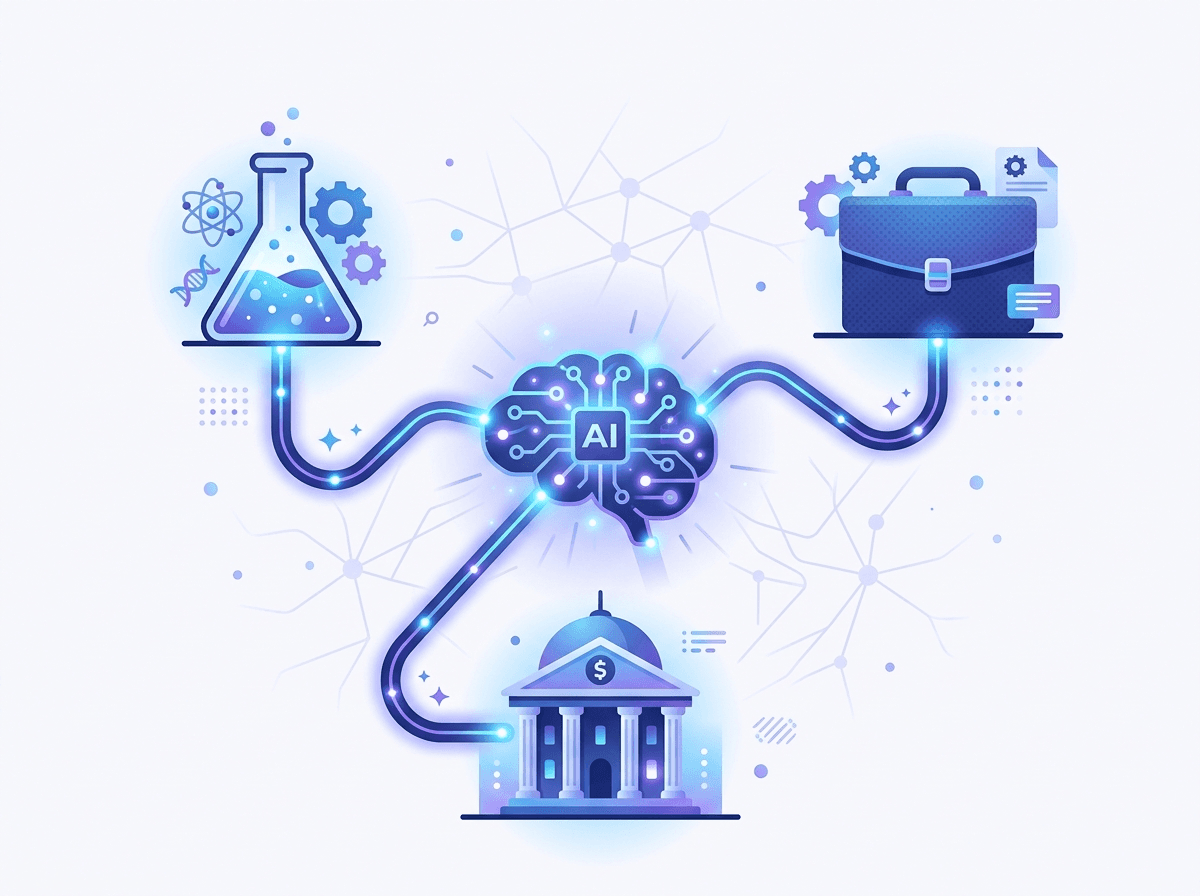
1. Pharmaceutical and biotech industries Companies like Sanofi and Pierre Fabre are already investing in digital twins of molecules and AI for clinical data analysis. The co-clinician model accelerates this dynamic: smaller research teams augmented with analytical capacity can process more clinical trials in parallel, reducing time-to-market.
2. Consulting firms and systems integrators A senior consultant spends on average 30% of their time producing documentary deliverables (reports, syntheses, benchmarks). An AI co-consultant, trained on in-house methodologies and sector data, can cut this time in half. The consultant gains high-value-added time: client relationships, creativity, strategic recommendations.
3. Banking and insurance sectors French regulations impose high levels of control and traceability. An AI co-analyst in a compliance department (KYC, anti-money laundering) can process thousands of alerts per day, prioritize those requiring human review, and automatically document each decision. This is precisely the co-clinician model: AI handles volume, humans handle complexity.
What DeepMind reveals about the next generation of AI models
Beyond immediate applications, DeepMind's work raises a strategic question for French CIOs and Chief Data Officers: what types of AI models should we invest in?
The co-clinician is built on several technical characteristics that foreshadow tomorrow's standards:
- Multi-step reasoning: the model doesn't just answer a question; it unfolds structured reasoning, as a human expert would.
- Uncertainty management: it knows how to say "I don't know" or "this situation requires human validation," which is crucial in high-stakes contexts.
- Integration of heterogeneous data: medical images, text, numerical data, histories — the model fuses different types of sources, exactly as future enterprise AI systems will.
- Auditability: every recommendation is traceable, a regulatory imperative in Europe with the AI Act.
For French companies, this means you must now evaluate AI suppliers not only on raw performance, but on their ability to provide explainable, auditable models capable of managing uncertainty transparently.
Training your teams for the human-AI collaboration model
Introducing a co-clinician into a hospital isn't decreed. It requires deep training of physicians: understanding what AI can and cannot do, learning to challenge its recommendations, developing new reflexes for active supervision. Hospitals that failed in their AI deployments often neglected this human dimension.
The same issue arises in your company. Introducing a co-analyst, co-writer, or co-advisor AI without supporting your teams risks superficial adoption — or worse, organizational resistance that blocks any return on investment.
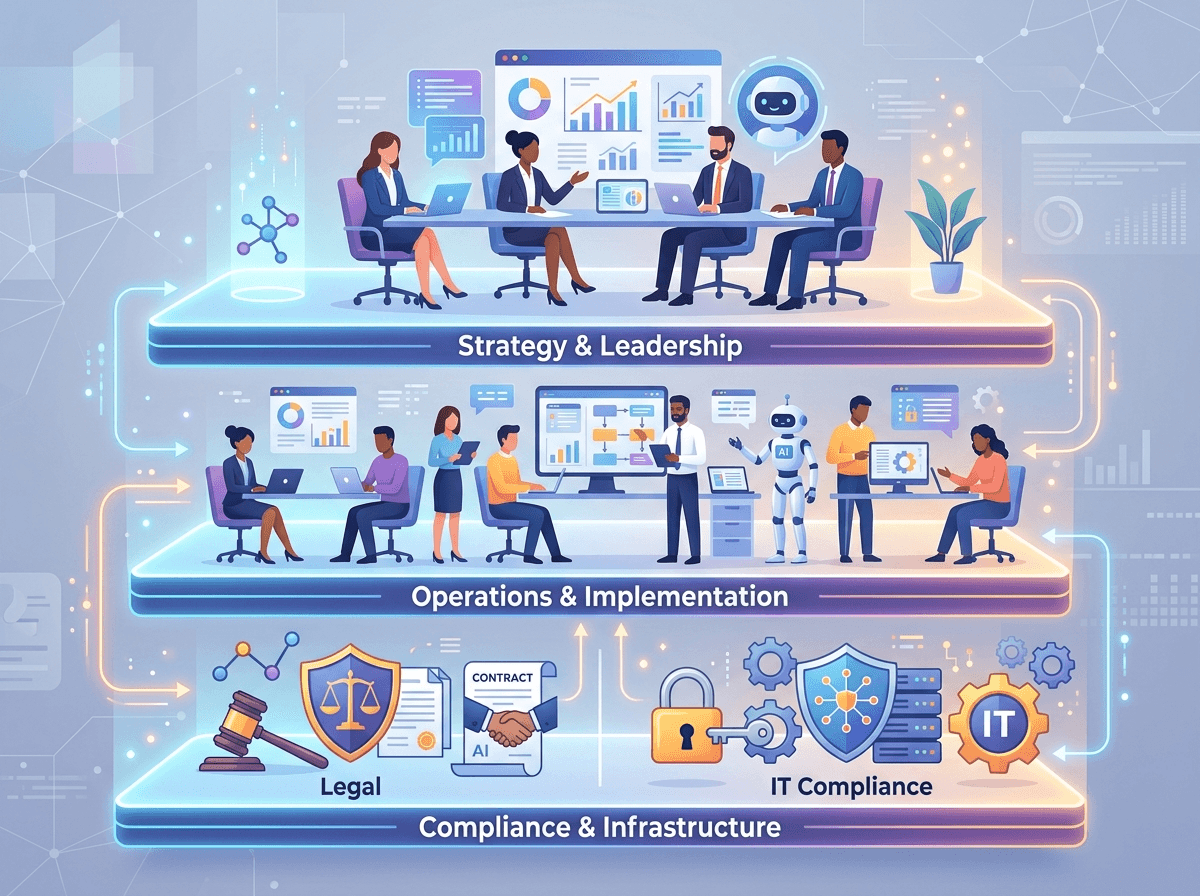
At Ikasia, we've developed training programs specifically designed for French organizations that want to go beyond demonstrations and anchor AI in real team practices. Our training covers three essential levels:
- AI culture for executives and managers: understanding stakes, asking the right questions, driving investment decisions.
- Tool mastery for operational teams: prompt engineering, using AI copilots, critically evaluating outputs.
- Governance and compliance for legal, HR, and IT functions: AI Act, data management, AI system audits.
This training-culture-governance triptych is exactly what the co-clinician model demands at scale: an entire organization learning to work with AI, not just a handful of isolated experts.
Take action before the gap widens
French companies have a major advantage: deep expertise culture, high quality standards, and a regulatory framework that, properly mastered, becomes a competitive advantage over less rigorous players. But this advantage will only translate to value if organizations invest now in building their teams' capabilities.
DeepMind's announcement isn't just another AI news item in a saturated information flow. It's a marker: human-AI collaboration models have reached sufficient maturity to transform high-value-added professions. Medicine today. Law, finance, consulting, engineering tomorrow.
Don't let your organization watch this transformation from the sidelines.
Visit ikasia.ai to discover our training programs and applied AI consulting missions. Our experts guide you from AI strategy to operational embedding, with an approach calibrated for French companies and their regulatory and cultural specificities. Schedule a meeting for a free assessment of your AI maturity — and start building your competitive advantage today.
Tags
Related courses
Related articles
Advanced AI Standardization: What French Enterprises Must Anticipate Now
Read
Agentic AI and Scientific Computing: What Laboratories Are Teaching French Companies
Read
Project Camellia: When OpenAI Builds Data Centers, French Businesses Must Rethink Their AI Strategy
ReadWant to go further?
Ikasia offers AI training designed for professionals. From strategy to hands-on technical workshops.