How AT&T is Revolutionizing Its Legal Department with AI: Lessons for French Businesses

Artificial intelligence is no longer just transforming factories or call centers. It is now reshaping the strategic core of enterprise operations: legal affairs. AT&T has just taken a decisive step by deploying an OpenAI-based solution to completely rethink the management of its internal legal operations. An initiative that deserves the attention of every French legal, HR, and finance executive.
AT&T and OpenAI: When corporate law becomes an AI matter
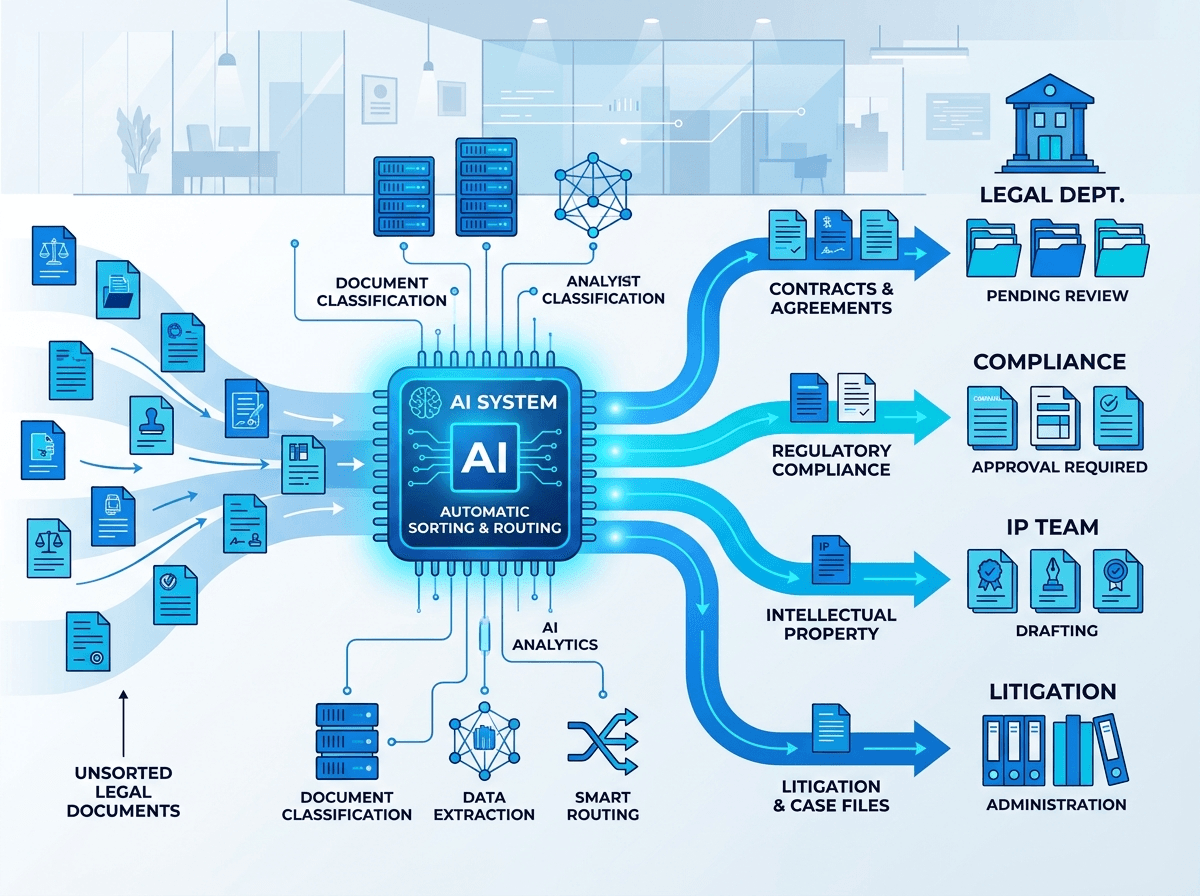
AT&T has developed with OpenAI a platform called LegalEdge, designed to tackle two critical challenges for every legal department: managing incoming requests (intake) and scaling legal judgment.
In concrete terms, before LegalEdge, AT&T's in-house lawyers spent significant time sorting, categorizing, and redirecting often repetitive requests—standard contracts, compliance questions, clause reviews. With AI, this sorting work is automated and structured: the platform analyzes the request, routes it to the right expert, and provides a first layer of contextual legal analysis.
The result? Lawyers can focus on what truly demands their human expertise: complex negotiations, litigation strategy, high-value-added advice. AI doesn't replace the lawyer; it gives them back time and clarity.
Three concrete applications applicable to France
AT&T's approach is not reserved for American telecom giants. It is perfectly transposable to French companies, regardless of size, as long as the approach is adapted to the French regulatory framework (GDPR, labor law, contract law from the Civil Code). Here are three use cases directly inspired by the LegalEdge model:
1. Automating supplier contract processing A French mid-market industrial company receives dozens of supplier contracts each week. With an AI assistant trained on its internal contract templates, it can automate initial review, identify risk clauses (penalties, exclusive agreements, GDPR issues), and submit to lawyers only points requiring arbitration. Estimated time savings: 40 to 60% on standard review tasks.
2. An intelligent legal knowledge base In large French enterprises, legal knowledge is often siloed: between HR, procurement, and commercial departments, the same questions recur without finding centralized answers. A RAG system (Retrieval-Augmented Generation) powered by internal documentation enables creation of an internal legal assistant, capable of answering routine questions by leveraging validated internal precedents.
3. Managing regulatory compliance alerts French and European regulations constantly evolve (NIS2, DORA, AI Act, DSA…). Legal monitoring AI can track these developments, cross-reference them with the company's activity scope, and generate contextualized alerts with action recommendations for affected teams.
Success factors: governance, data, and trust
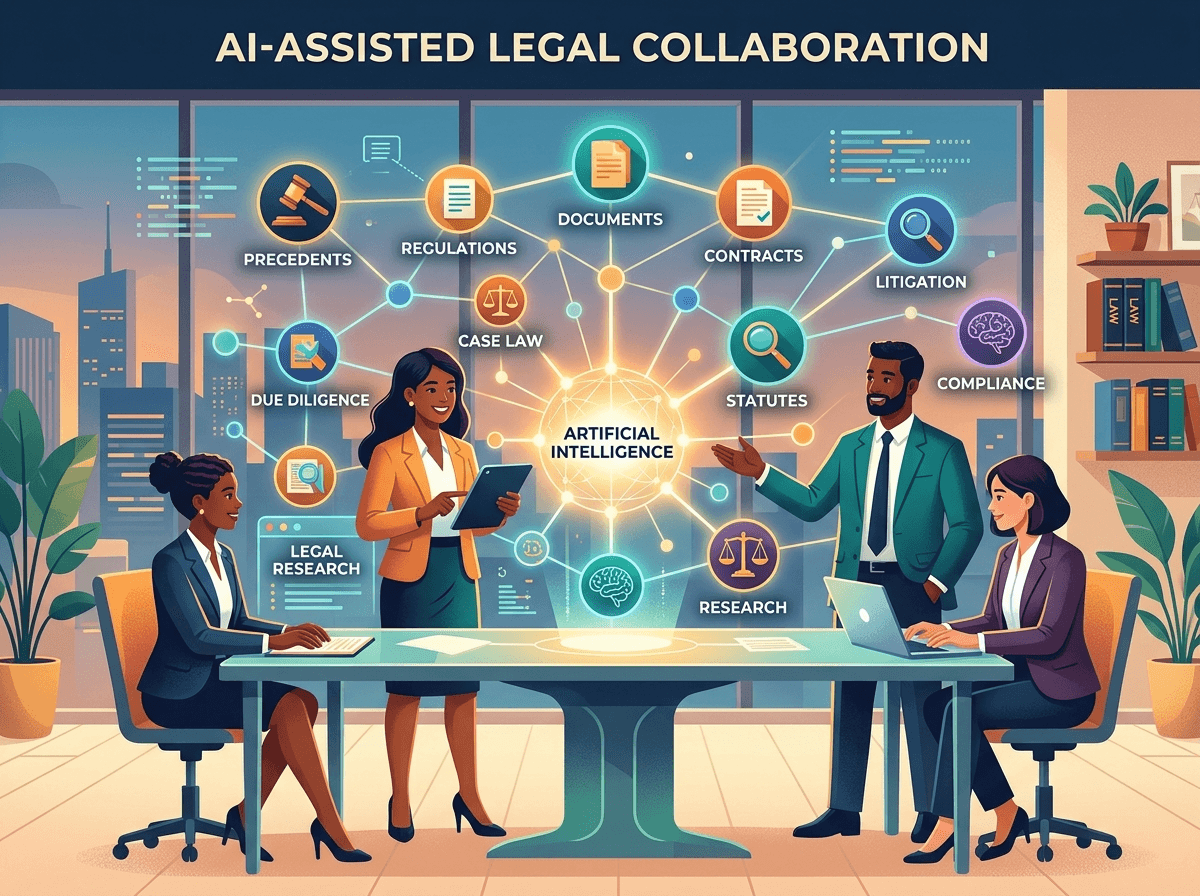
Adopting AI in legal functions requires careful planning. AT&T's experience highlights several key success factors that French companies must anticipate:
Input data quality is non-negotiable. Legal AI is only as reliable as the documents it is trained on. Before any deployment, an audit of contract data, internal procedures, and document repositories is essential. Poorly structured or incomplete data will produce erroneous analyses—with potentially serious consequences.
Governance must be explicit. Who validates AI recommendations? What level of confidence should be placed in its analyses? The company must clearly define the autonomy thresholds granted to the system and mandatory human control points. In France, legal responsibility remains human—and that won't change anytime soon.
Team trust is built, not decreed. Lawyers often fear that AI will replace them. Management's challenge is to demonstrate that the tool amplifies their expertise rather than threatening it. AT&T achieved this cultural shift by involving its lawyers from the design phase of LegalEdge. A valuable lesson for any similar transformation in France.
Training legal teams on AI: A strategic investment
Adopting AI in legal functions raises a central question: how do you train lawyers, often with limited exposure to advanced technology tools, to work effectively with artificial intelligence?
The answer does not lie in technical training on prompt engineering or machine learning. It lies in structured skill development around three pillars:
- AI literacy: Understanding what AI can and cannot do, identifying its blind spots, knowing how to assess output reliability.
- Workflow integration: Learning to integrate AI into daily processes seamlessly—how to formulate effective queries, how to verify analyses, how to escalate complex cases.
- Supervision mindset: Developing critical reflexes toward AI recommendations, especially on high-stakes responsibility matters.
These competencies are not acquired independently. They require structured support, rooted in the real-world realities of French legal teams—not generic training disconnected from practice.
AT&T's legal transformation is not an American curiosity. It is a signal of a wave coming to France. Legal departments that prepare for it today will gain a decisive advantage over their competitors.
At Ikasia, we support French companies in defining their business AI strategy and training their teams—including legal, compliance, and procurement functions. Our programs are designed to be operational from week one, anchored in your real use cases.
👉 Discover our training and consulting services at ikasia.ai and let's build your AI roadmap together.
Tags
Related articles

Beyond Code: How Amp's AI Agents Are Redefining Enterprise Automation
Read
Project Camellia: When OpenAI Builds Data Centers, French Businesses Must Rethink Their AI Strategy
Read
OpenAI Partner Network: $150 Million to Accelerate Enterprise AI Transformation — What Changes for You
ReadWant to go further?
Ikasia offers AI training designed for professionals. From strategy to hands-on technical workshops.