Autonomous Networks and Agentic AI: What NVIDIA's Telecom Revolution Means for Your Business
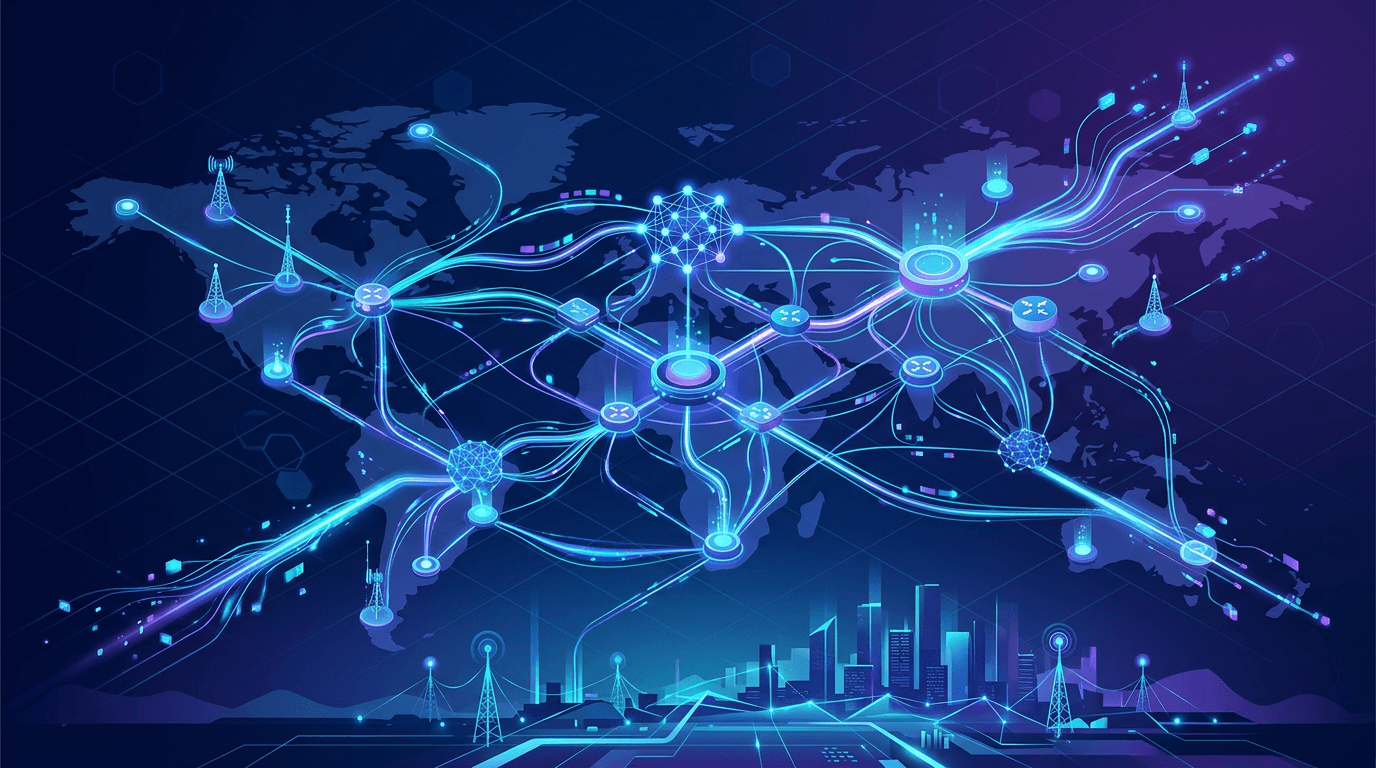
Artificial intelligence is no longer simply automating repetitive tasks — it is now learning, reasoning, and making decisions autonomously. This is precisely the threshold that NVIDIA has just crossed with its new Agentic AI Blueprints and its reasoning models purpose-built for telecommunications. While this announcement may appear relevant only to large network infrastructure players, its implications extend across the entire business landscape — from mid-sized industrial companies to large enterprises that depend on connectivity and automation to remain competitive.
According to NVIDIA's latest State of AI in Telecommunications report, network automation is now the top use case in terms of investment and return on investment in the telecom sector. However, it is important not to conflate automation with autonomy: where automation executes predefined workflows, autonomy implies the capacity to adapt, learn, and make decisions in real time. This is the qualitative leap that agentic AI makes possible — and it has implications for your organization well beyond the telecom sector.
From Automation to Autonomy: Understanding the Technological Leap
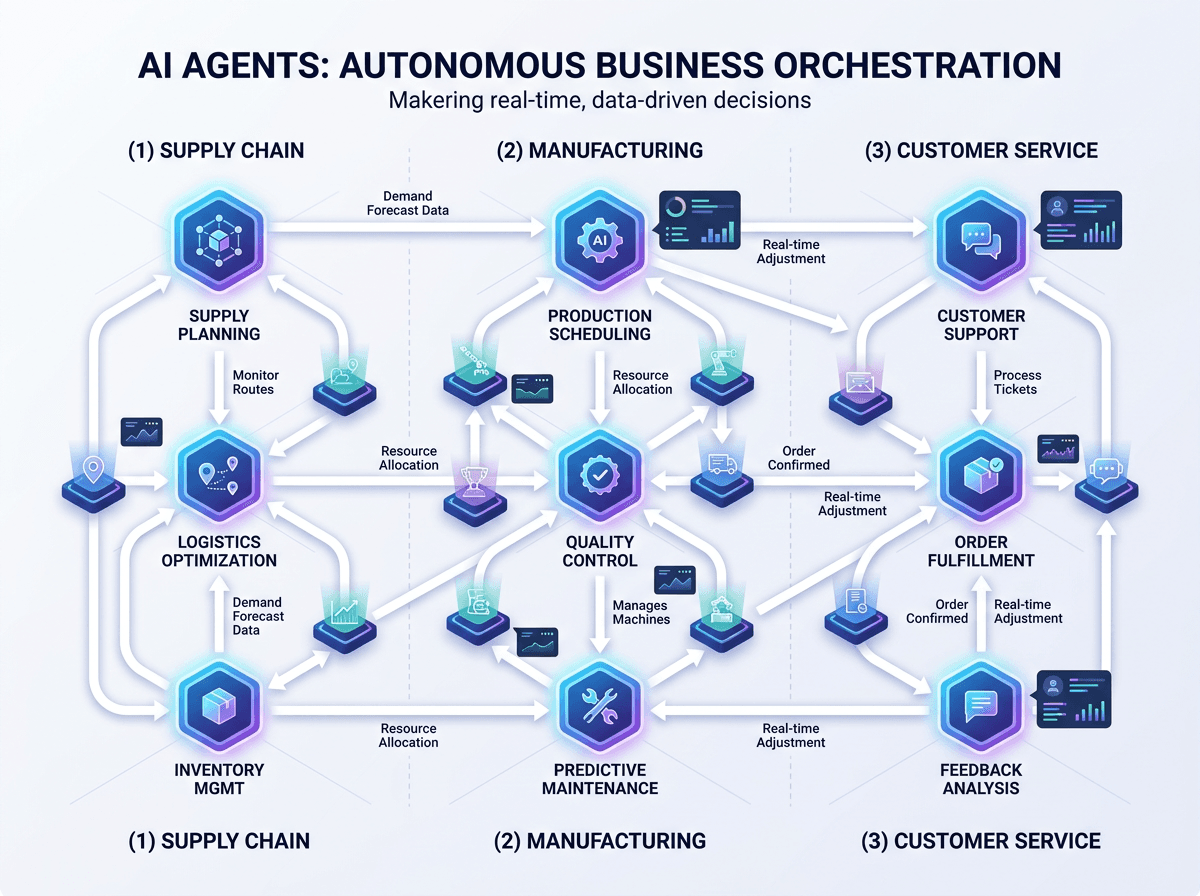
Agentic AI represents a fundamental break from previous approaches. An AI agent does not simply apply rules: it perceives its environment, plans actions, executes them, evaluates outcomes, and adapts accordingly. In the context of telecom networks, this translates into infrastructures capable of detecting an anomaly, diagnosing its root cause, dynamically reconfiguring resources, and optimizing service quality — all without human intervention.
The Blueprints published by NVIDIA provide reference architectures that enable operators to deploy these agents on their own infrastructure. The associated reasoning models — trained specifically on telecom data — demonstrate that a verticalized AI, trained on precise domain-specific data, significantly outperforms a generalist model.
This principle is directly transferable to your industry. Whether in supply chain, industrial maintenance, or customer relationship management, AI agents specialized on your business data can today make operational decisions that were previously reserved for experienced human teams.
Practical Applications for Businesses
NVIDIA's approach illustrates three major application areas that businesses can adopt right now:
1. Autonomous monitoring of critical operations In manufacturing — automotive, aerospace, chemicals — AI agents can continuously monitor production lines, anticipate equipment failures, and trigger maintenance interventions before any disruption occurs. Organizations like Michelin and Schneider Electric are already experimenting with this type of architecture. The key objective: reducing unplanned downtime, which represents an average of 5 to 20% of lost productive capacity depending on the sector.
2. Dynamic resource optimization Logistics and distribution operators face unpredictable load variations. An agentic system can reallocate warehouse capacity in real time, adjust delivery routes, and automatically negotiate with third-party service providers — without waiting for a management decision. The value chain becomes genuinely responsive.
3. Augmented reasoning for support functions Specialized reasoning models — such as those NVIDIA is developing for telecom — open the door to AI assistants capable of analyzing complex situations in areas such as contract law, regulatory compliance (GDPR, NIS2), and financial risk management. These agents do not replace the human expert: they provide a structured analysis in seconds where a manual review would take hours.
Specialized Reasoning Models: Why Verticalization Changes Everything
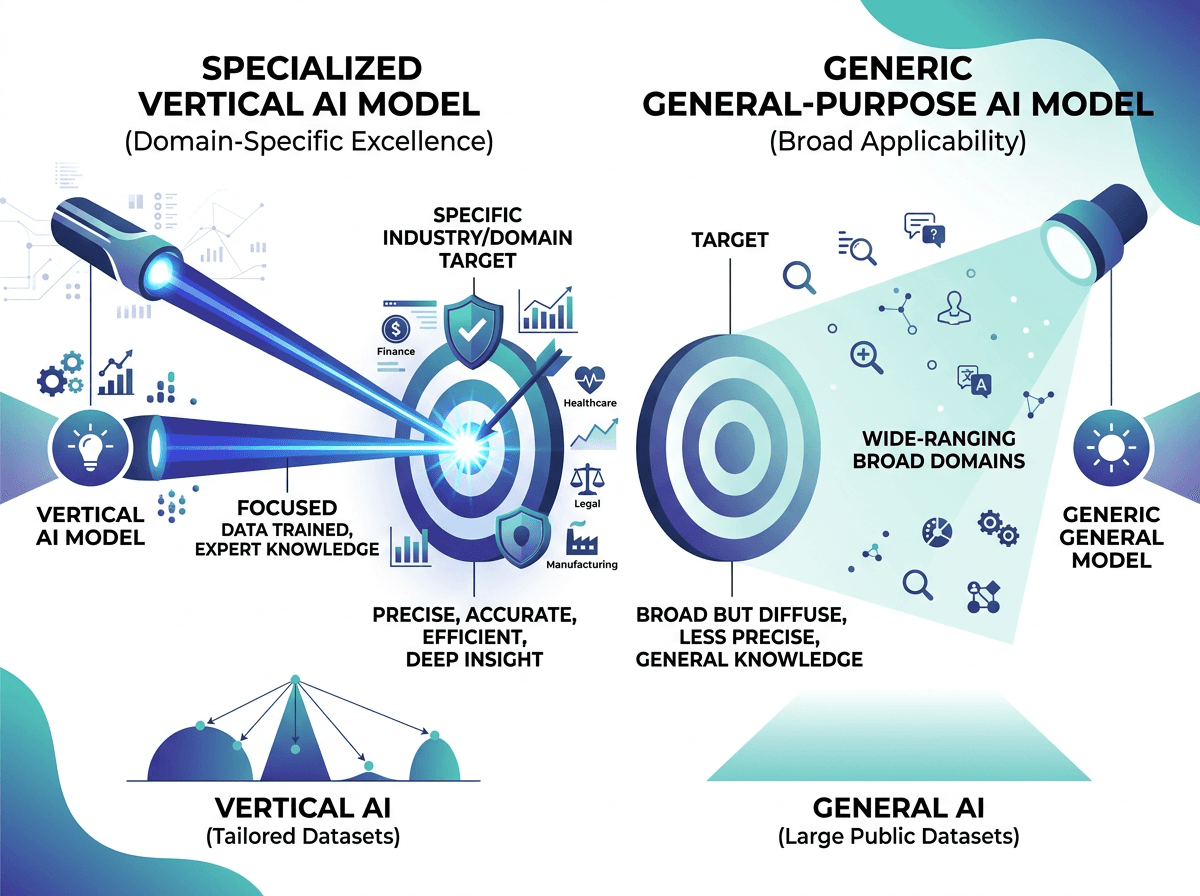
One of the most important takeaways from NVIDIA's announcement concerns the power of verticalized models. By training LLMs specifically on telecom data — network logs, incident tickets, infrastructure schemas — NVIDIA demonstrates that a mid-sized model, perfectly adapted to a given domain, outperforms a much larger generalist model.
For businesses, this finding carries a major strategic implication: your internal data is your most underutilized competitive advantage. Order histories, IoT sensor data, customer interactions, audit reports — all of this constitutes the raw material for a reasoning model that understands your business like no generalist tool ever will.
This approach is also more resource-efficient: a specialized model requires less computing power than a generalist model to achieve better performance on your specific use cases. This is a compelling argument for organizations concerned about their digital carbon footprint and cloud cost management.
Training Your Teams for the Age of Agentic AI: A Strategic Imperative
Adopting agentic AI is not simply a technology decision — it is, above all, a human challenge. Employees must understand how to work with AI agents — knowing when to trust them, how to verify their decisions, and how to reconfigure them when the context evolves.
This requires new skill profiles at every level of the organization:
- Operational managers must learn to define the decision-making boundaries delegated to agents and to monitor their performance through tailored dashboards.
- IT and data teams must master multi-agent orchestration, real-time data pipeline management, and RAG (Retrieval-Augmented Generation) architectures that allow models to access internal knowledge bases.
- Senior leaders must integrate AI governance into their strategy — particularly regarding accountability for automated decisions, a topic that the European AI Act will rapidly bring to the forefront.
At Ikasia, we observe that the organizations that succeed in their AI transformation are not necessarily those that invest the most in technology, but those that train their teams to think differently: to reason in terms of augmented processes, to identify the right insertion points for AI, and to maintain a critical perspective on automated outputs.
The trajectory set by NVIDIA with its autonomous networks sends a clear signal: agentic AI is no longer a laboratory promise — it is an operational reality being deployed today in the most demanding industries. Businesses that are able to harness it — by combining model verticalization, process redesign, and team upskilling — will build a lead that will be difficult to close.
Would you like to assess your organization's AI maturity and identify your first agentic use cases? The Ikasia team supports businesses through this transition, from team training to operational implementation. Explore our programs at ikasia.ai and turn AI's potential into measurable results for your business.
Tags
Related articles

How NVIDIA Reinvents Chip Design with AI: Concrete Impact for French Businesses
Read
From Weeks to Hours: How Agentic AI Transforms Software Delivery at Endava (And What French CIOs Must Learn)
Read
Cloudflare + OpenAI: The Era of Autonomous AI Agents is Coming to Enterprise — Are You Ready?
ReadWant to go further?
Ikasia offers AI training designed for professionals. From strategy to hands-on technical workshops.