AI and Regulatory Filing: How Artificial Intelligence Cuts Compliance Document Drafting Time by 15%
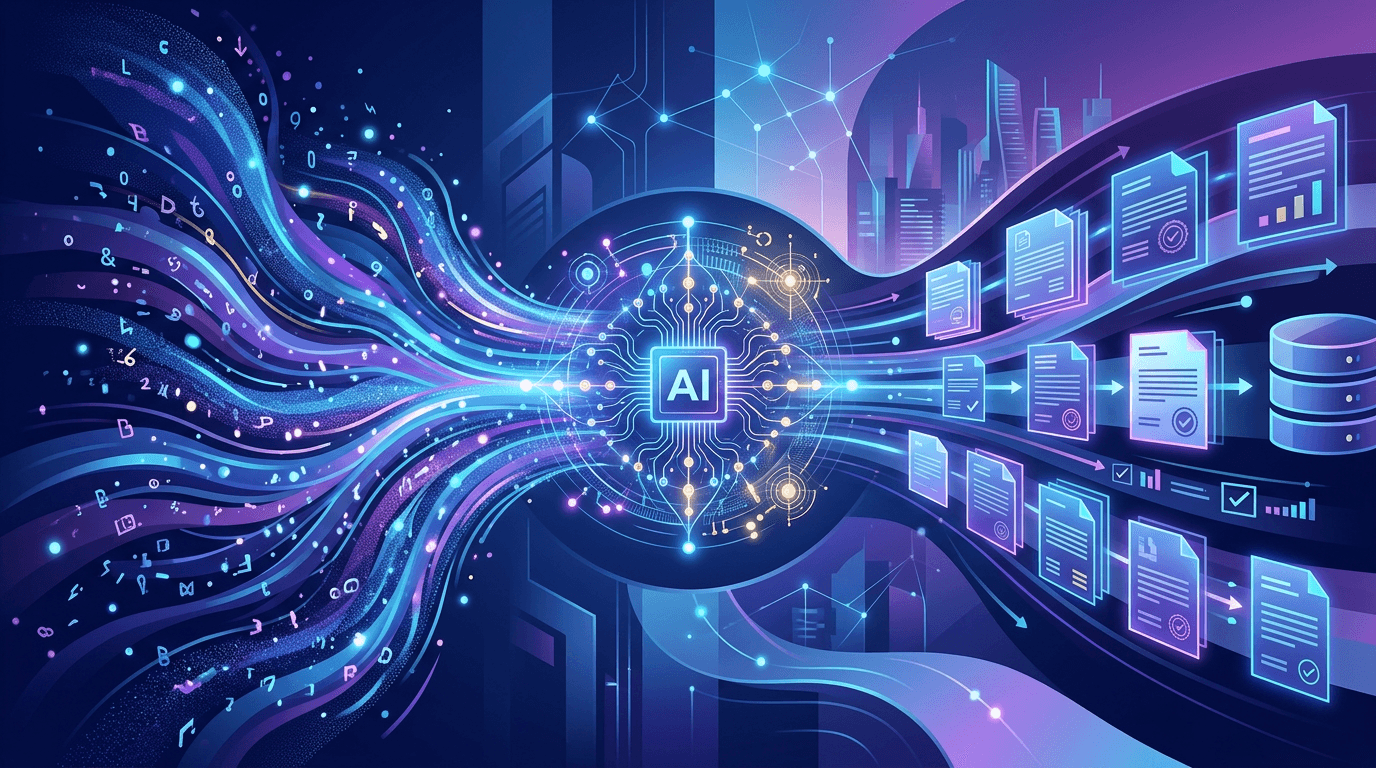
Key Takeaway: OpenAI and the Pacific Northwest National Laboratory have just demonstrated that an AI agent can reduce by up to 15% the time spent drafting complex regulatory documents. A breakthrough that should prompt serious reflection for any organization dealing with compliance filings, public procurement bids, or environmental impact assessments.
That figure may sound modest. In reality, it is remarkable. These are documents of extreme legal and technical complexity — involving hundreds of pages, cross-references to legislation, environmental data, and multi-stakeholder consultations. Scaled to a mid-sized company or a large enterprise, a 15% efficiency gain on this type of process translates to dozens of person-days saved per year — and a meaningful competitive edge in procurement processes.
DraftNEPABench: Understanding the Mechanics to Better Apply Them
The core innovation lies in the agent-based approach: rather than a simple language model generating text on demand, DraftNEPABench deploys an AI agent capable of multi-step reasoning. In practice, the agent:
- Analyzes the full set of source documents (technical studies, regulatory texts, prior documentation)
- Structures the document outline according to the specific requirements of the applicable legal framework
- Drafts coherent sections by automatically integrating mandatory references
- Reviews the document's internal compliance before submitting it for human revision
This pipeline is not theoretical: it was tested on real U.S. federal permitting files, with rigorous evaluation through a benchmark purpose-built for the study.
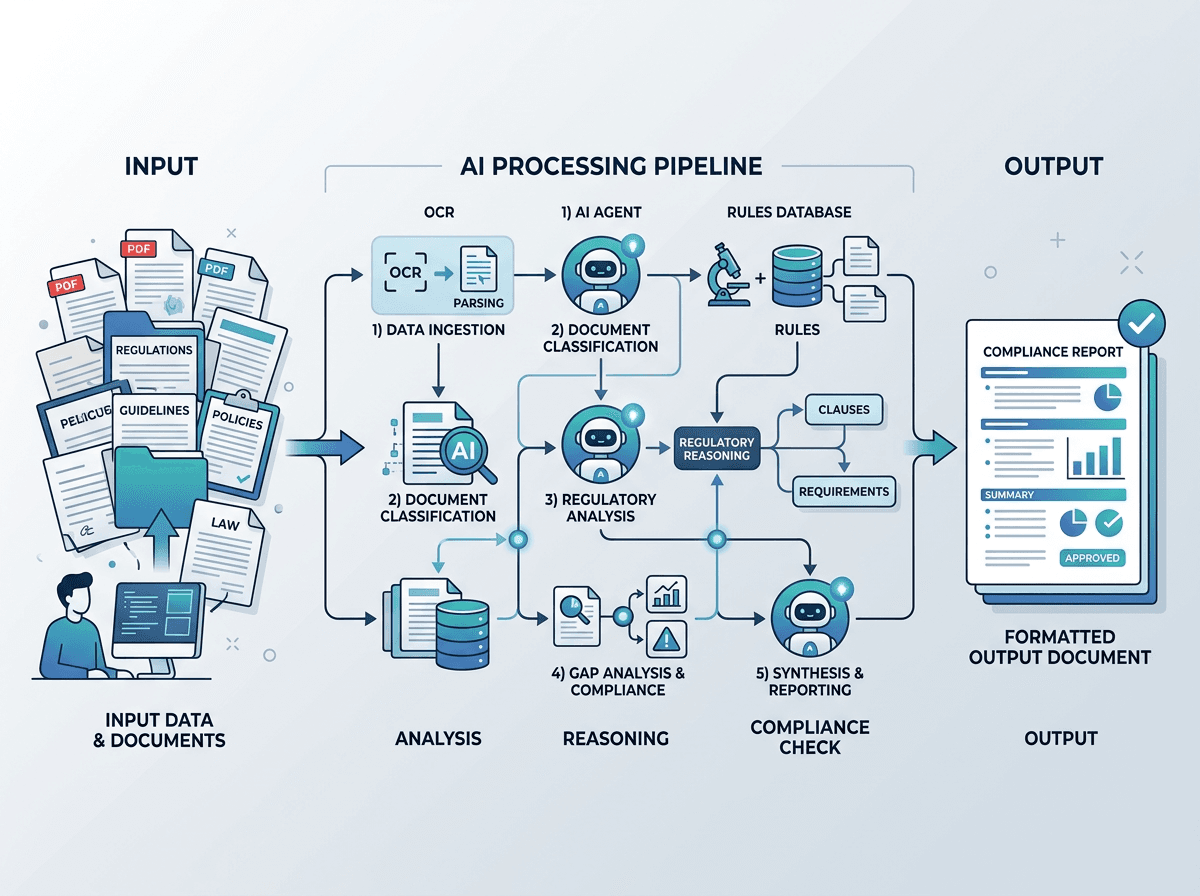
What this means for your organization: the same principles are transferable to any structured documentary process. An environmental permit application, a response to a public procurement tender, a GDPR compliance report, or a grant funding application all follow similar logic: a fixed regulatory framework, mandatory sections, technical data to integrate, and internal consistency to maintain. Agentic AI is precisely the right tool for this type of work.
Practical Applications: Three Immediately Actionable Use Cases
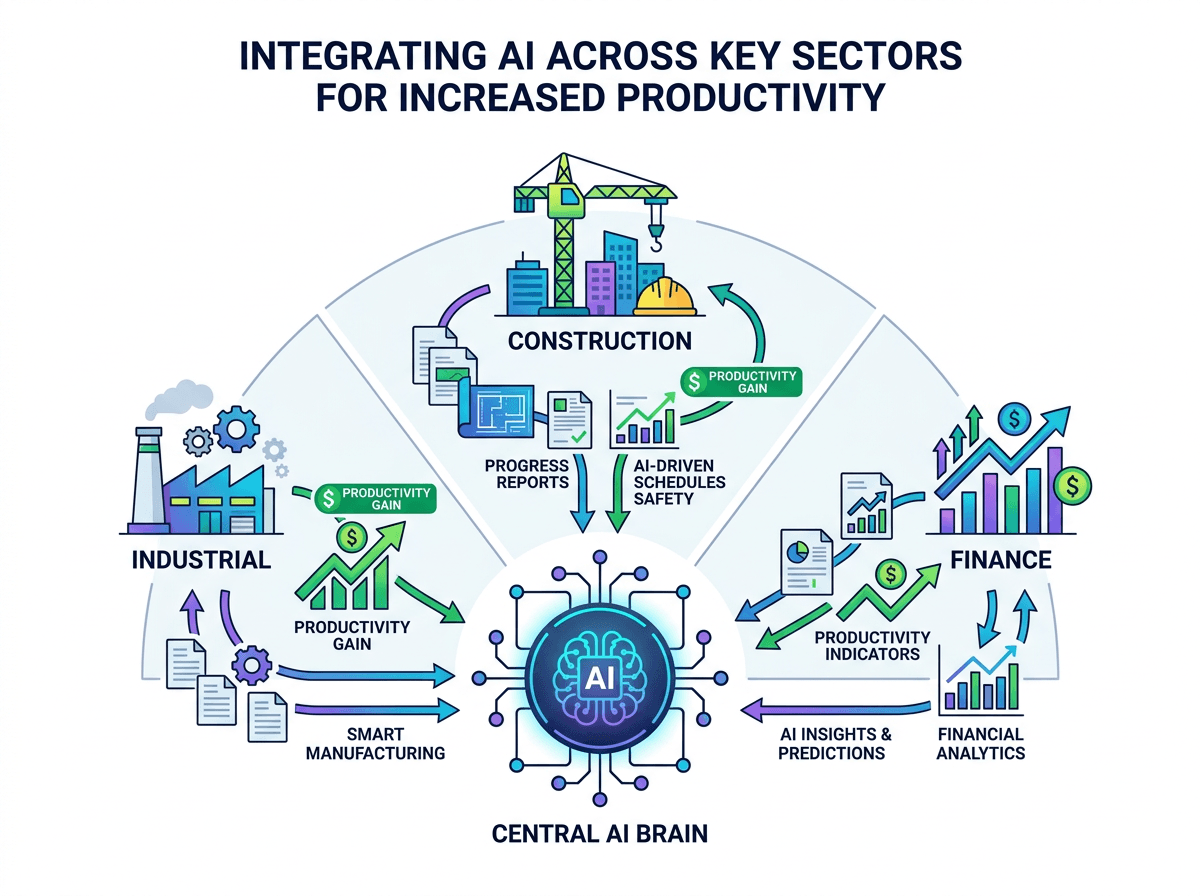
1. Industry and Environment: Accelerating Environmental Permits and Impact Assessments
Industrial companies in sectors such as chemicals, food processing, energy, and logistics know the weight of a full environmental permit application: months of work, significant consulting costs, and a constant risk of regulatory errors or omissions. An AI agent trained on the relevant regulatory framework — environmental codes, standard prefectural decrees, administrative case law — could generate first drafts of standardized sections, freeing experts to focus on the genuinely complex, site-specific elements.
Estimated gain: 20 to 30% of drafting time on reproducible sections — equivalent to several weeks of expert work redirected toward higher-value activities.
2. Construction and Development: Responding Faster to Public Procurement Tenders
In the construction and urban development sector, responding to public tenders is a dreaded exercise: technical memoranda, project references, product datasheets, compliance certificates, detailed cost breakdowns... Commercial teams spend entire nights assembling bids where 70% of the content is drawn from previously produced materials. An AI assistant capable of retrieving, adapting, and formatting these elements according to the specific technical and contractual requirements of each tender represents a direct competitive advantage.
Estimated gain: doubling the number of tenders a mid-sized company can respond to, without increasing headcount.
3. Finance and Insurance: Automating Recurring Regulatory Reports
Financial institutions subject to Solvency II, prudential authority reporting requirements, or ESG disclosure obligations under SFDR are devoting an ever-growing share of their resources to producing compliant documentation. Agentic AI, connected to internal databases and up-to-date regulatory repositories, can produce first drafts of these reports in a matter of hours — compared to several weeks today.
Training Your Teams: The Real Driver of Transformation
The OpenAI and PNNL experience highlights a reality that is too often overlooked: technology alone is not enough. The 15% gain was only achievable because teams learned to work with AI — to give it precise instructions, to critically evaluate its outputs, and to identify where human intervention remains essential.
This is where training becomes a strategic investment, not an optional expense.
In practice, teams handling regulatory documentation need to develop three new competencies:
- Document-focused prompt engineering: the ability to craft precise instructions for an AI agent in order to produce sections that comply with a specific regulatory framework
- Critical auditing of AI outputs: understanding model limitations, detecting factual hallucinations or erroneous references, and knowing when not to trust the AI
- Hybrid workflow orchestration: designing processes where AI handles reproducible tasks while human experts focus on high-value decisions
These skills cannot be improvised. They are acquired through structured training programs grounded in the sector-specific realities of each organization — not through theoretical presentations disconnected from day-to-day operations.
Take Action with Ikasia
At Ikasia (ikasia.ai), we support organizations in their AI transformation journey through an approach that combines strategic advisory and hands-on operational training. Our programs are designed for real teams, built around concrete use cases drawn from your industry — not generic audiences.
Whether you want to explore how agentic AI can accelerate your document-intensive processes, upskill your legal and technical teams on the latest tools, or build an AI roadmap tailored to your regulatory constraints, we are here to guide you.
👉 Discover our training programs and advisory services at ikasia.ai and schedule a free diagnostic session with one of our experts to identify your AI opportunities.
The competitive advantage that organizations are building today by training their teams in AI will be very difficult to close tomorrow. The question is no longer whether AI will transform your compliance and administrative processes — but whether you will be ready when it does.
Tags
Related articles

Agentic AI and Scientific Computing: What Laboratories Are Teaching French Companies
Read
The Era of AI Agents: How to Drive Your Investments for Measurable ROI
Read
From Weeks to Hours: How Agentic AI Transforms Software Delivery at Endava (And What French CIOs Must Learn)
ReadWant to go further?
Ikasia offers AI training designed for professionals. From strategy to hands-on technical workshops.