ChatGPT and Codex in Physical Engineering: How OpenAI's AI Accelerates Industrial Design

The French manufacturing industry — from Toulouse aeronautics to Lyon mechatronics to Breton electronics — is entering a new era. OpenAI has just revealed how its flagship tools, ChatGPT and Codex, are now being used to concretely accelerate engineering workflows in the physical world: CAD design, printed circuit board (PCB) design, mechanical and thermal simulations, and automation of calculation scripts. This is no longer speculation. It is operational deployment. And French companies that delay adopting these tools risk falling into a competitiveness gap that will be difficult to close.
From CAD to Simulation: AI Enters the Design Office
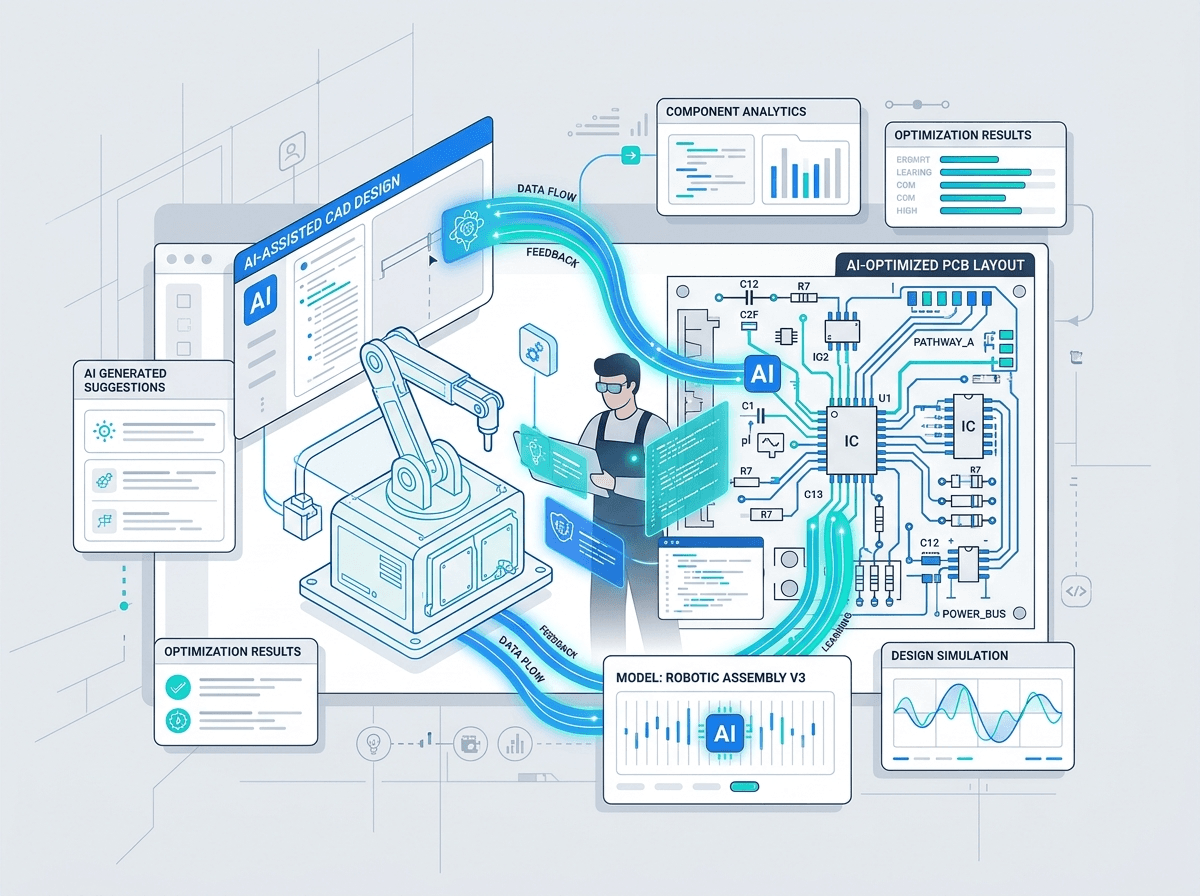
For decades, the design office has operated according to an almost immutable model: one engineer, one CAD software, hours of manual modeling, endless revision cycles. ChatGPT and Codex break this logic by acting as cognitive assistants capable of generating, explaining, and debugging script code directly usable in environments like CATIA, SolidWorks, Ansys, or Altium Designer.
In practice, an engineer can now describe in natural language what they want to automate — "generate me a Python script to automatically parameterize the fillets of a part based on its thickness" — and obtain in seconds functional code that would have taken them hours to write. On PCB projects, Codex helps generate custom routing rules, verify netlist consistency, or automate Design Rule Checks (DRC). For simulations, AI writes pre- and post-processing scripts that transform days of work into minutes.
The gains reported by early-adopter engineering teams internationally speak for themselves: 40 to 60% reduction in time spent on repetitive scripting tasks, significant decrease in configuration errors, and accelerated design iteration cycles.
Concrete Use Cases for French Industry
It would be tempting to view these advances as reserved for American tech giants. The reality is quite different. Here's how mid-sized French companies can — and are beginning to — deploy these capabilities:
Aerospace subcontractors (Tier 2 & 3): Automatic machining schedule generation from CAD models, coupled with Codex scripts for export to CAM (Computer-Aided Manufacturing), drastically reduces production preparation time. An Airbus supply chain equipment manufacturer can thus respond to tenders more quickly and with more complete technical files.
SMEs in embedded electronics: Designing PCBs for critical embedded systems (automotive, medical, defense) involves heavy regulatory constraints. ChatGPT, trained on technical documentation, becomes a compliance assistant capable of cross-referencing IPC, IEC, or DO-254 requirements with design choices in real-time.
Mechanical engineering design offices: Topology optimization and finite element analysis (FEA) generate considerable volumes of data. Codex scripts enable automation of critical result extraction, generation of standardized reports, and multi-scenario comparison — freeing engineers for high-value-added interpretation.
Deeptech startups: For a startup developing a medical device or industrial drone, each week gained in the development cycle can be decisive. AI compresses numerical prototyping phases and accelerates technical documentation required for certifications.
The Hidden Challenge: Prompt Quality and Integration into Existing Workflows
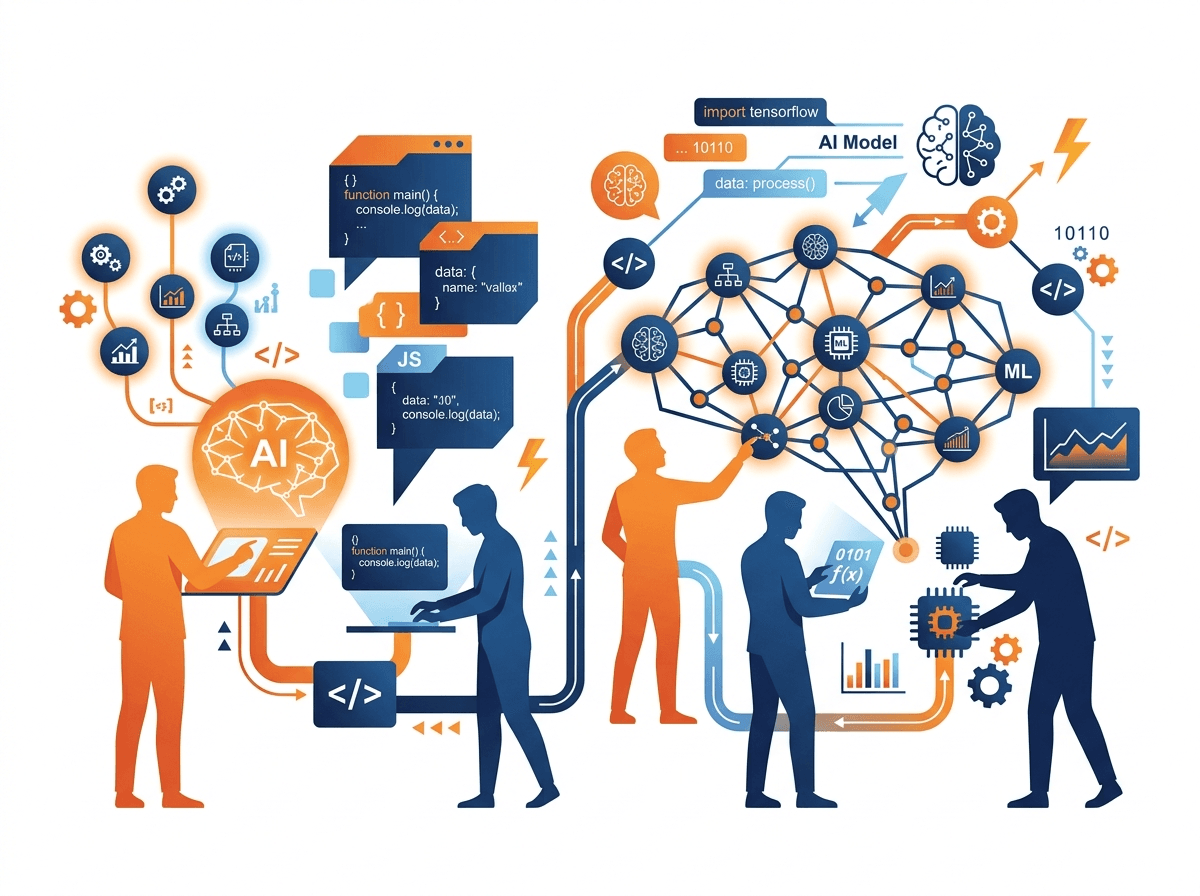
Adopting ChatGPT or Codex in a design office is not simply about opening an account and asking questions. The real value emerges when these tools are intelligently integrated into existing workflows and teams master the art of prompt engineering applied to engineering.
An engineer who knows how to formulate their need precisely — by including software context, applicable standard constraints, and expected output format — obtains immediately usable results. One who asks a vague question gets a vague answer. This skill of "communicating with AI" is not innate: it is learned, structured, and refined.
Moreover, API integration of these models directly into development environments (IDE, Python scripts in Ansys, macros in SolidWorks) opens even more powerful automation perspectives. But this requires upskilling in software architecture and data security aspects — particularly crucial in sectors with strong intellectual property like defense or medical.
Data governance is also a major point of concern for French companies subject to GDPR: what engineering data can be sent to cloud models? What on-premise or hybrid configurations are possible? These questions must be addressed before any large-scale deployment.
Training Engineering Teams in AI: A Strategic Investment, Not a Cost
The main barrier to adopting these technologies in French design offices is not technical — the tools are accessible, the APIs well documented. It is human and organizational. Teams need to be trained, reassured, and supported through the change in mindset that AI demands.
Training an engineer to use AI in their profession means teaching them to:
- Identify tasks with high automation potential in their daily workflow
- Write precise, structured technical prompts adapted to their field
- Validate and critique AI outputs with their professional expertise (AI can make mistakes — a trained engineer detects them)
- Integrate these tools into their processes without disrupting team collaboration
- Understand confidentiality issues related to their design data
This training is not a simple one-day awareness session. It requires a progressive approach, anchored in the company's real use cases, with practical exercises on the engineer's everyday tools. Companies that invest in this upskilling today create sustainable competitive advantage: more productive teams, more innovative and capable of absorbing future AI developments.
The acceleration of physical engineering by AI is no longer a distant trend to watch: it is an ongoing transformation redefining productivity standards across all industrial sectors. French companies have the talent, expertise, and markets to fully leverage it. What they often lack is the methodology and support to take the leap.
Ikasia supports industrial companies and design offices in their AI transformation: workflow audits, technical team training, deployment of concrete use cases. Discover our programs at ikasia.ai and let's discuss the opportunities specific to your sector.
Tags
Related courses
Related articles
Enterprise AI: OpenAI Accelerates Transformation and What It Means for Your Teams
Read
How Endava Reinvents Software Delivery with AI Agents: Lessons for French Businesses
Read
How Oracle Transforms Days of Work Into Minutes With AI: Lessons for International Companies
ReadWant to go further?
Ikasia offers AI training designed for professionals. From strategy to hands-on technical workshops.