Claude from Anthropic on Amazon Bedrock in India: What Global AI Expansion Means for Your French Teams

Generative artificial intelligence continues to expand its geographical boundaries at a remarkable pace. Amazon Web Services has just announced the availability of Anthropic's Claude models in India via Amazon Bedrock, thanks to a key feature: Global Cross-Region Inference. For technical leaders, CIOs, and digital transformation executives at French enterprises, this news deserves particular attention — not as a technological curiosity, but as a strong signal about the direction enterprise AI is heading on a global scale.
Cross-region inference: invisible infrastructure that changes everything
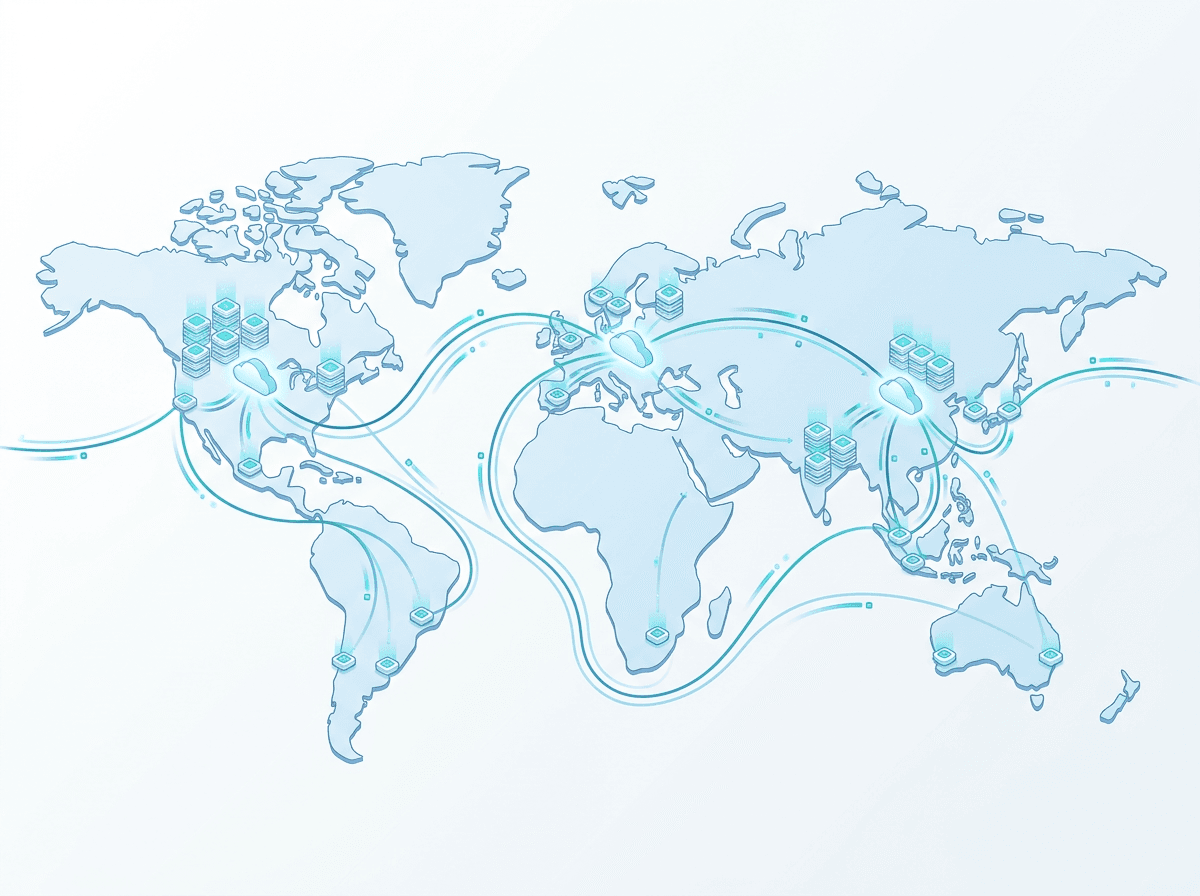
Behind the technical term "Global Cross-Region Inference" lies a concept with profound operational implications. Concretely, this Amazon Bedrock feature allows an application to automatically send its requests to the closest and most performant available cloud region — now including India — without the developer having to manually manage this routing logic.
For a French enterprise operating internationally, this means several very concrete things:
- Latency reduction for teams or clients based in South Asia, which directly improves the user experience of AI applications.
- Enhanced resilience: if one region is saturated or unavailable, traffic is automatically rerouted without service interruption.
- Simplified geographic compliance: enterprises with subsidiaries in India can now process certain data closer to its source, which can facilitate compliance with local data protection regulations.
This architecture reflects a broader trend: major cloud providers are transforming generative AI into standardized global infrastructure, as reliable and transparent as electricity. For French enterprises engaged in AI projects, this is confirmation that investing in established cloud platforms offers sustainable competitive advantage over isolated solutions.
Available Claude models: which variant for which business use case?
Anthropics's Claude family is not monolithic. Amazon Bedrock offers several variants, each optimized for distinct use cases. Understanding these nuances is essential to avoid over-provisioning (and over-spending) or under-provisioning your deployments.
Claude 3 Haiku is the ultra-fast and economical model, ideal for high-volume, low-complexity tasks: support ticket classification, automated customer FAQ responses, extracting structured data from documents. For a French bank processing thousands of requests daily, this variant represents an exceptional performance-to-cost ratio.
Claude 3 Sonnet occupies the intermediate positioning—the Swiss Army knife. It excels at synthesizing long documents (contracts, financial reports, meeting minutes), generating multilingual marketing content, or assisting in writing technical specifications. It's often the preferred choice for pilot projects in enterprises.
Claude 3 Opus represents the model's maximum power for the most demanding tasks: complex legal analysis, multi-step reasoning, advanced code generation, or research and synthesis on highly specialized subjects. Law firms, R&D departments, or data science teams will find their ideal match for high-value-added missions.
A concrete example: a French industrial group with a subsidiary in India can now deploy a unified AI assistant — based on Sonnet — that responds equally well to engineers in Lyon as to technicians in Pune, with the same answer quality and latency optimized for each location.
What this reveals about French enterprises' AI strategy

Amazon Bedrock's expansion to India is not inconsequential in the French context. It illustrates three dynamics that leaders must integrate into their AI roadmap.
First, the globalization of AI deployments is accelerating. CAC 40 companies or French mid-market enterprises operating internationally can no longer design their AI strategy in a purely hexagonal manner. The tools they deploy must function coherently across all their operating territories. Platforms like Amazon Bedrock, which natively integrate this global dimension, have a decisive head start.
Second, the Anthropic/AWS ecosystem is becoming a de facto standard. The fact that Anthropic chose AWS as its priority expansion vector in South Asia reinforces the positioning of this combination as the reference for serious enterprise AI. For French CIOs in the process of selecting their AI stack, this signal of sustainability and continuous investment carries significant weight.
Third, data sovereignty remains a central concern. While cross-region inference offers performance advantages, it also raises legitimate questions about the actual location of data processing. French enterprises subject to GDPR must ensure their Amazon Bedrock configuration respects their regulatory constraints, particularly by precisely defining the authorized regions for request routing.
Training your teams in global AI: the urgency of upskilling
AWS's technical announcement highlights a reality we observe daily in our support of French enterprises: the gap between AI tool availability and teams' capacity to exploit them continues to widen.
Deploying Claude on Amazon Bedrock with cross-region inference is relatively technically accessible for a development team. But answering the following questions requires specific upskilling:
- Which model to choose based on the use case and budget?
- How to structure prompts to maximize the quality of business outputs?
- How to integrate these APIs into existing workflows (ERP, CRM, collaboration tools)?
- How to measure the actual ROI of a generative AI deployment?
- How to train end users for sustainable adoption?
These competencies cannot be improvised. They require structured training, grounded in real use cases, and adapted to different profiles: decision-makers, project managers, developers, and business users. AI training is no longer an optional investment — it's a prerequisite for competitiveness.
At Ikasia, we support French enterprises in this upskilling journey, from board-level awareness to advanced technical workshops on platforms like Amazon Bedrock and Claude models. Our training programs are designed to be immediately operational, with practical cases drawn from your industry.
Ready to turn AI news into competitive advantage for your enterprise? Discover our training and consulting programs at ikasia.ai and let's discuss your specific challenges. AI evolves quickly — your strategy must evolve with it.
Tags
Related courses
Related articles

Want to go further?
Ikasia offers AI training designed for professionals. From strategy to hands-on technical workshops.