Google Translate Turns 20: What This Reveals About AI Maturity for French Businesses
Twenty years ago, Google quietly launched an automatic translation tool, the fruit of an artificial intelligence experiment. Few would have bet that this project would become one of the world's most-used digital services, now supporting nearly 250 languages and processing billions of requests every day. This twentieth anniversary is more than just a celebration of a technological product: it invites French leaders and managers to measure the progress made by AI applied to business operations, and to anticipate what the next decade holds in store.
For French companies — export-focused SMEs, multinational corporations, hypergrowth startups — machine translation is often the first gateway to operational AI. Understanding its evolution means understanding the trajectory of all the AI technologies transforming your processes today.
From 2006 Experimentation to Generative AI: A Lesson in Technological Maturity
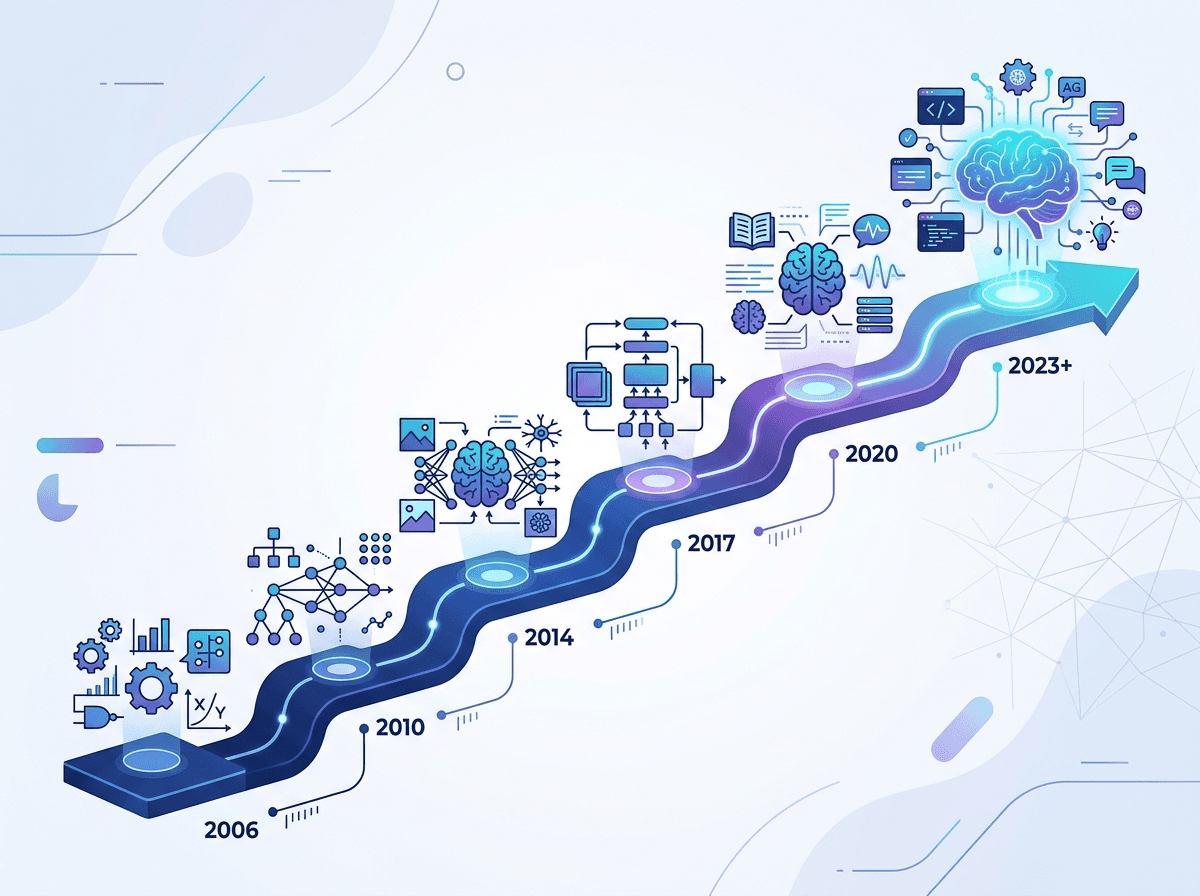
In 2006, Google Translate relied on rudimentary statistical approaches: the system learned to translate by analyzing bilingual text corpora, without truly "understanding" languages. Results were often approximate, sometimes comical. Yet the tool existed, it was accessible, and millions of users began adopting it despite its limitations.
This is precisely the pattern we see today with generative AI tools deployed in enterprises: ChatGPT, Copilot, Gemini, or specialized sector-specific solutions. They aren't perfect, they make mistakes, but they're already here, already being used—often outside any official framework—by your employees.
The business lesson is clear: waiting for technological perfection before adopting AI means repeating the mistake of those who ignored Google Translate in 2006, thinking that only human translators could produce quality work. Those companies lost a decade of competitive advantage.
The 250 languages supported by Google Translate today didn't appear out of nowhere: they're the result of twenty years of iterations, user feedback, research investments, and a long-term vision. Your internal AI projects will follow the same path — provided you start.
Machine Translation in the Enterprise: Concrete and Measurable Use Cases
Beyond the technological anecdote, French companies that intelligently integrated AI translation tools into their workflows achieved tangible results. Here are some representative examples:
Multilingual Customer Service: A Breton industrial SME exporting to 12 countries integrated Google Translate API into its CRM to pre-translate incoming tickets in English, Spanish, and German. Result: 40% reduction in international request processing time, with no additional hiring.
International Competitive Intelligence: A Paris-based consulting firm uses machine translation to daily ingest sector reports in Japanese, Korean, and Mandarin, directly feeding their strategic analyses. What previously required external service providers is now automated.
Foreign Employee Onboarding: A French retail group translated all its HR training materials into 8 languages through a combination of machine translation and targeted human review. Cost divided by five compared to traditional translation, deployment timeline reduced from six months to three weeks.
Negotiation and Contracts: Legal teams now use AI translation as a first filter to analyze foreign-language contracts, identifying sensitive clauses before mobilizing specialized jurists.
These use cases illustrate a fundamental principle: AI translation doesn't replace human expertise, it amplifies it by eliminating low-value tasks and concentrating human attention where it's truly needed.
Google Translate's New Features: A Signal for Your AI Strategy
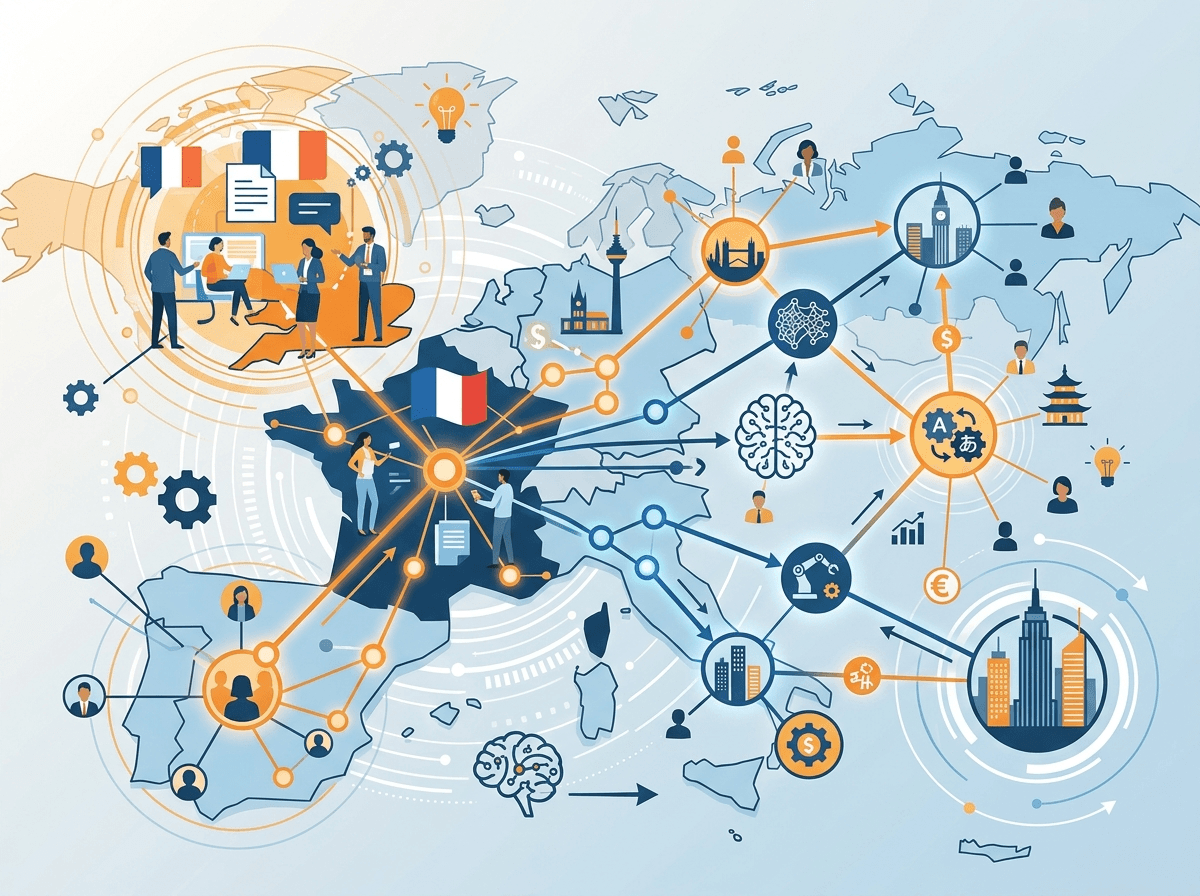
For its 20th anniversary, Google announced several significant updates to its translation tool. These announcements deserve to be read as strategic signals for any company building its AI roadmap.
First, continuous improvement in contextual translation — the ability to grasp a sentence's meaning based on its context — reflects the integration of large language models (LLMs) into previously purely statistical tools. Your current business tools will undergo the same transformation: your ERPs, CRMs, BI tools will gradually integrate generative AI layers. The question isn't "if," but "when" and "how you prepare for it."
Second, expansion to minority and regional languages — some spoken by fewer than a million people — demonstrates that AI is becoming a tool for inclusion and accessibility, not just productivity. For French companies operating in the overseas territories or working with Francophone communities in sub-Saharan Africa, this is a direct opportunity to improve customer relationships and communication relevance.
Third, real-time translation features (voice conversations, complex document translation with layout preserved) are progressively becoming standards. What was a premium feature becomes a commodity — exactly like cloud computing ten years ago.
Training Your Teams in the AI Era: Moving Beyond Simple Tool Adoption
The real challenge for French companies isn't technical — tools are accessible, often free or low-cost. The challenge is human and organizational.
Training your teams in AI doesn't mean transforming every employee into a data scientist. It means developing three fundamental competencies:
Critical Discernment: knowing how to evaluate the quality of machine translation, AI-generated text, or algorithm-produced analysis. A salesperson who sends an automatically translated client email without review risks producing the opposite effect of what was intended.
Prompt Engineering Applied to Your Field: learning to formulate precise instructions to obtain results directly usable in your professional context. This skill, transversal across all AI tools, represents an immediate productivity lever.
Data and Privacy Management: understanding which information can be submitted to external AI tools, and which must remain in secure environments. A crucial point for companies subject to GDPR or operating in regulated sectors.
At Ikasia, we observe that organizations progressing fastest aren't those that invested most in technology, but those that invested in upskilling their teams to use these technologies with discernment and efficiency.
Google Translate's 20 years remind us that technological revolutions unfold over time, through constant iteration and progressive adoption. The AI you integrate into your processes today will be unrecognizable in ten years — but companies that started now will have a decisive head start.
Want to build a concrete AI strategy and train your teams on the tools transforming your sector? The Ikasia team supports French companies in their AI transition, from operational training to strategic consulting. Discover our programs at ikasia.ai and let's engage together in a conversation about what AI can bring to your organization today.
Tags
Related articles
Project Camellia: When OpenAI Builds Data Centers, French Businesses Must Rethink Their AI Strategy
Read
Google Finance Exits Beta: What the AI-Powered Financial Analysis Revolution Means for French Businesses
Read
When AI Solves Quantum Physics Equations: What It Actually Means for Your Business
ReadWant to go further?
Ikasia offers AI training designed for professionals. From strategy to hands-on technical workshops.