Google Invests $1.5 Billion in AI: What It Means for French Businesses

The Silent Acceleration of Global AI Infrastructure: Why French Businesses Need to Pay Attention
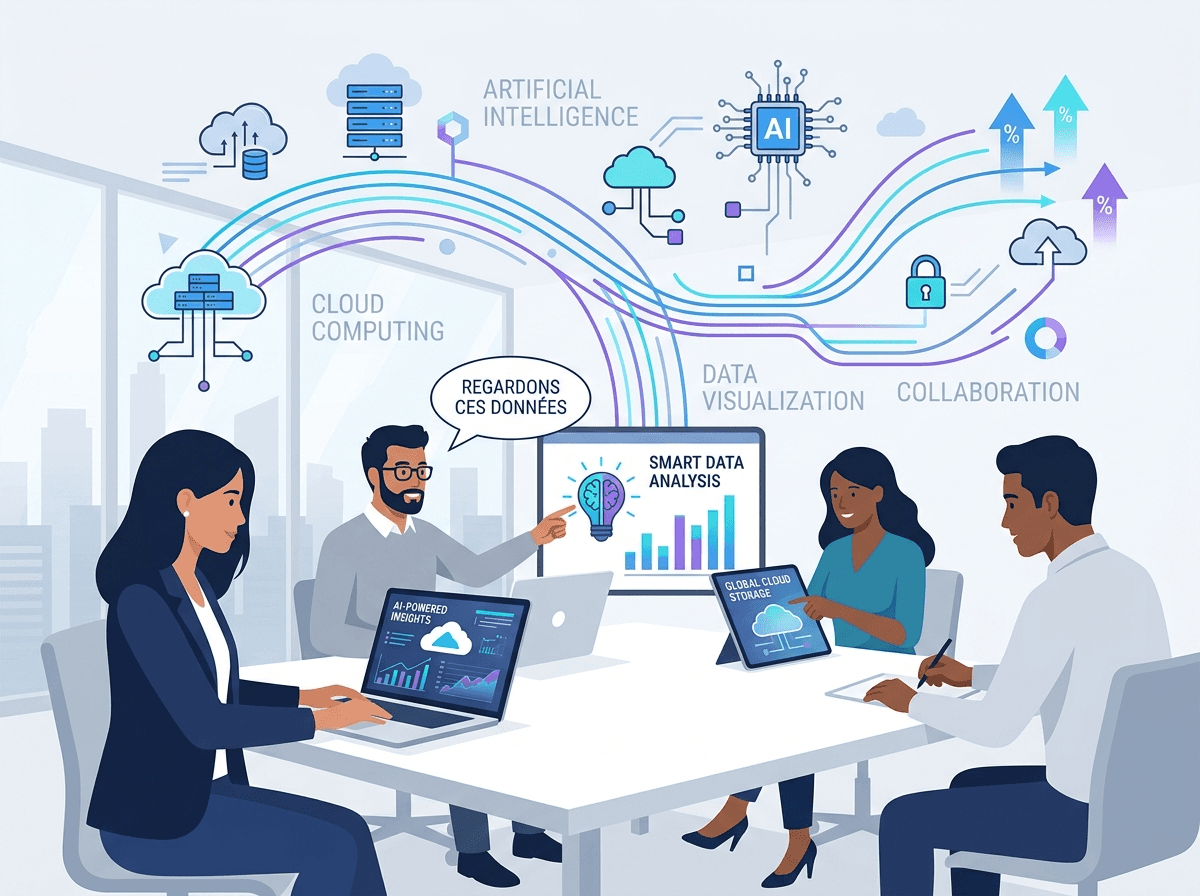
In June 2026, Google announced a $1.5 billion investment to expand its data center campus in Jackson County, Alabama — an operational infrastructure since 2019, built on a repurposed industrial site. While this news may seem geographically distant for an executive based in Lyon, Paris, or Bordeaux, it actually reflects a dynamic that directly impacts the competitiveness of French businesses: the global race for AI computing power is intensifying, and those who can leverage it will gain a decisive advantage.
Behind this massive investment lies a simple reality: to run next-generation AI models — whether Gemini, AI-enhanced Google Workspace tools, or APIs accessible through Google Cloud — you need colossal infrastructure. Every dollar invested in these data centers ultimately translates into new capabilities made available to companies worldwide, including French SMEs and mid-market companies already using Google solutions daily.
What This Infrastructure Means in Terms of Concrete AI Capabilities
The expansion of Google's data centers isn't just about raw computing power. It directly affects the availability, speed, and cost of AI services that organizations can deploy. Concretely, here's what changes for a French organization:
More Powerful Models Accessible Faster. The more computing capacity Google has, the more it can train and deploy improved versions of its models. For a company using Gemini in Google Workspace, this translates to more precise assisted writing, finer data analysis, and more relevant meeting summaries.
Progressive Reduction in Inference Costs. The economies of scale from data centers historically drive down API access costs. A mid-market company hesitant to integrate AI into its business processes for budget reasons will see this barrier progressively lower.
Increased Redundancy and Reliability. For companies deploying critical applications on Google Cloud — enhanced ERPs, customer chatbots, predictive analytics tools — the multiplication of infrastructure ensures enhanced service continuity.
Take the example of a Paris-based accounting firm with 80 employees using Google Workspace. Today, it's already leveraging Gemini to automate tax summary writing and analyze complex financial statements. Tomorrow, with more powerful infrastructure, that same firm could deploy AI agents capable of automatically cross-referencing accounting data, tax case law, and industry benchmarks — in seconds.
Business Use Cases to Seize Right Now
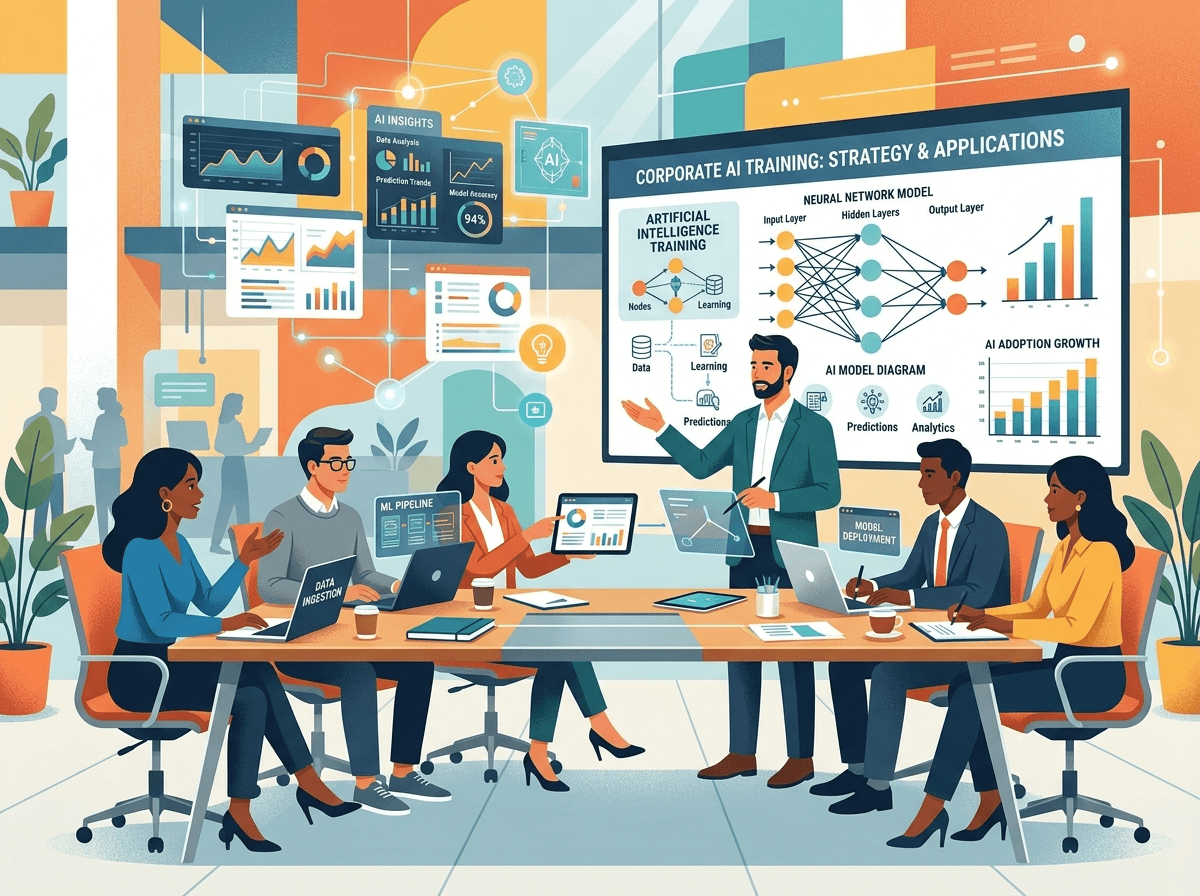
Google's investment shouldn't be viewed as abstract technology news, but as a strategic signal to accelerate your own AI transformation. Here are three French sectors where the implications are particularly tangible:
Industry and Manufacturing. Industrial companies — automotive subcontractors, component manufacturers, equipment suppliers — can leverage Google Cloud and its AI tools to optimize predictive maintenance, reduce production waste, and improve supply chain planning. A more robust infrastructure means more precise anomaly detection models, trained on larger data volumes.
Financial Services and Insurance. Fraud detection, enhanced credit scoring, and risk analysis are domains where computing power is directly correlated with model performance. French players relying on Google APIs will benefit from more refined models, capable of detecting weak signals that previous generations missed.
Retail and Distribution. Product recommendation personalization, demand forecasting, real-time inventory optimization: these AI uses require infrastructure capable of processing massive data flows. A mid-sized regional distributor can now access capabilities once reserved for e-commerce giants.
Healthcare and Clinical Research. Medical imaging analysis, natural language processing for patient records, and molecular research are domains where every gain in computing power translates to concrete advances. French medtech and biotech companies have every reason to closely monitor Google Cloud Healthcare developments.
Training Your Teams to Capitalize on This Wave: The Key Challenge for 2026
Global AI infrastructure is improving at a steady pace. But technology alone doesn't create value — trained teams and adapted processes make the difference. This is precisely where the risk lies for many French companies: they have access to the same tools as their international competitors, but haven't yet invested in the skills development needed to extract real value from them.
Training your teams on AI in 2026 is no longer simply learning to use ChatGPT or Gemini. It's about understanding how to orchestrate AI agents, design augmented workflows, evaluate output quality, and manage data and compliance issues (GDPR, European AI Act). It's also about identifying the right use cases for your sector, rather than deploying AI for its own sake.
Managers and executives, in particular, need to develop strategic AI literacy: understanding current models' capabilities and limitations, knowing how to ask the right questions of technology providers, and making informed investment decisions. While Google builds the highways of AI, it's up to you to prepare your teams to drive on these new roads.
At Ikasia, we support French companies in this skills development, from executive committee awareness to practical training for operational teams. Our programs are designed to be directly applicable to your sector and business challenges — not generic use cases.
👉 Discover our training and consulting programs at ikasia.ai and get ahead of your organization's AI transformation.
Tags
Related articles

Project Camellia: When OpenAI Builds Data Centers, French Businesses Must Rethink Their AI Strategy
Read
HP and OpenAI Partner to Transform Tomorrow's Enterprise: What Changes for You
Read
OpenAI Acquires TBPN: When the Battle for AI Narrative Becomes a Strategic Issue for Enterprises
ReadWant to go further?
Ikasia offers AI training designed for professionals. From strategy to hands-on technical workshops.