How NVIDIA Reinvents Chip Design with AI: Concrete Impact for French Businesses

Electronic chip design is one of the most complex engineering challenges in the world. Each new generation of processors mobilizes thousands of engineers, billions of transistors, and development timelines measured in years. NVIDIA has just reached a decisive milestone: the company now uses its own Vera CPU processor — combined with Cadence and Synopsys electronic design automation (EDA) tools — to accelerate the design of its future CPUs and GPUs. In short: AI designs the chips that will power tomorrow's AI. This virtuous circle is not just a technological feat reserved for Silicon Valley giants. It signals a profound transformation in R&D processes, engineering, and industrial production — including for French companies.
AI Applied to Engineering: Far More Than a Trend, a Structural Breakthrough
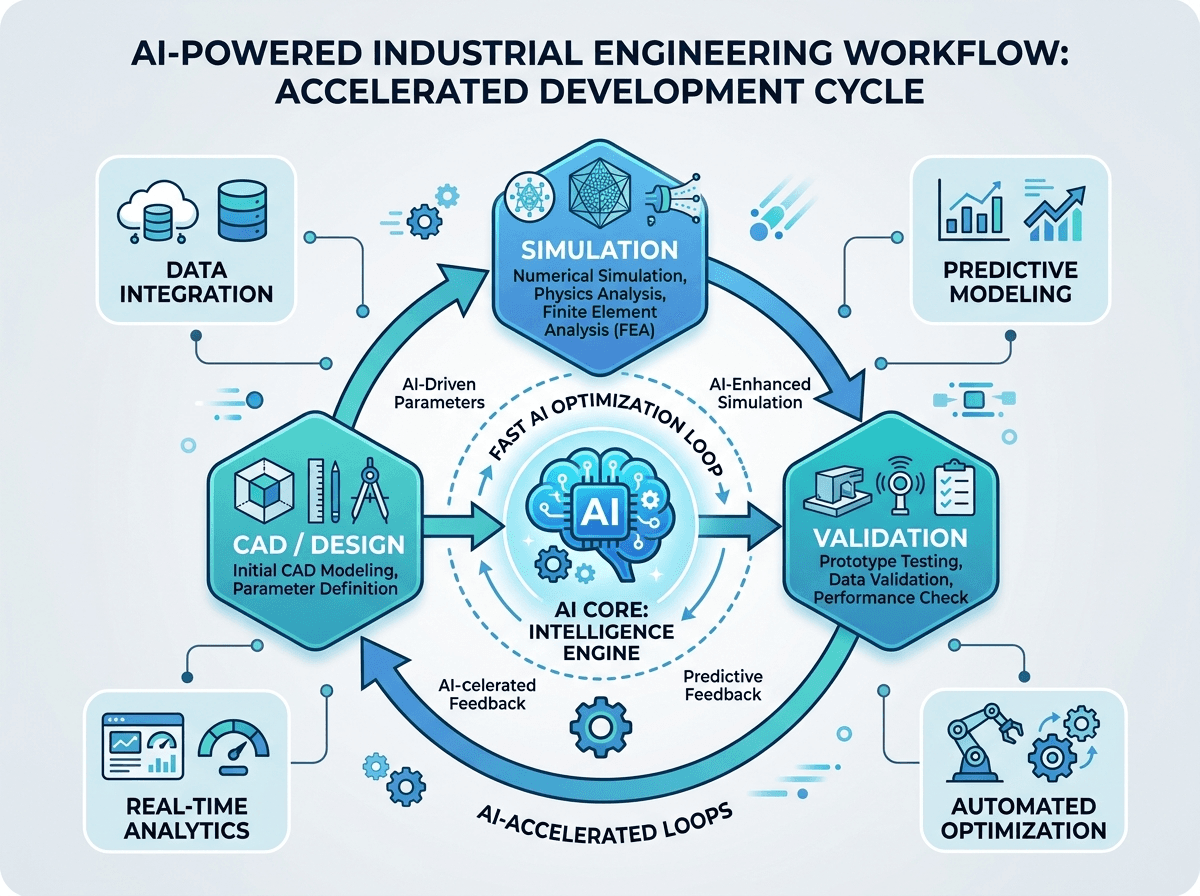
When NVIDIA deploys its Vera processor to optimize EDA (Electronic Design Automation) workflows, it's not simply about gaining computing speed. It's a complete reconfiguration of how complex systems are designed, tested, and validated. EDA tools are software that enable modeling, simulation, and verification of integrated circuits before their physical manufacturing — an extremely compute-intensive process.
By optimizing these tools for the Vera CPU, NVIDIA seeks to drastically reduce simulation cycles, detect errors earlier in the design process, and free engineers from repetitive, low-value-added tasks. The expected result: shortened time-to-market, reduced development costs, and the ability to design much more sophisticated architectures.
For French companies operating in technology-intensive sectors — aerospace, automotive, defense, electronics, telecommunications — this logic is directly applicable. AI is no longer just a tool for data analysis or content generation: it becomes a co-engineer capable of accelerating product development cycles.
Concrete Applications for French Companies: From R&D to Production
It would be reductive to limit the lessons from this news to the semiconductor sector alone. Here's how this logic of AI applied to complex engineering translates into distinctly French contexts:
In the aerospace and space industry, players like Airbus, Safran, or Thales already use digital simulation tools to design critical components. Integrating AI into these workflows — similar to what NVIDIA does with EDA — would reduce the number of simulation iterations, automatically identify optimal configurations, and strengthen validation testing reliability.
In the automotive sector, the design of embedded systems (ADAS, battery management for electric vehicles, centralized electronic architectures) follows a trajectory of complexity similar to NVIDIA chips. French mid-sized companies subcontracting for major manufacturers could benefit from AI tools to optimize their prototyping and validation processes.
In manufacturing, the simulation of industrial processes (thermal, fluid mechanics, material resistance) is a natural candidate for AI acceleration. Innovative SMEs and applied research laboratories could significantly reduce their R&D costs by adopting similar approaches.
In the software and deeptech sector, French publishers developing complex solutions — whether in cybersecurity, industrial simulation, or signal processing — can draw inspiration from NVIDIA's approach to integrate AI directly into their development and testing pipelines.
The common thread across all these use cases: AI doesn't replace the engineer; it amplifies their capacity to explore solutions that time or computing power previously made inaccessible.
AI Infrastructure and Technological Sovereignty: A Strategic Issue for France
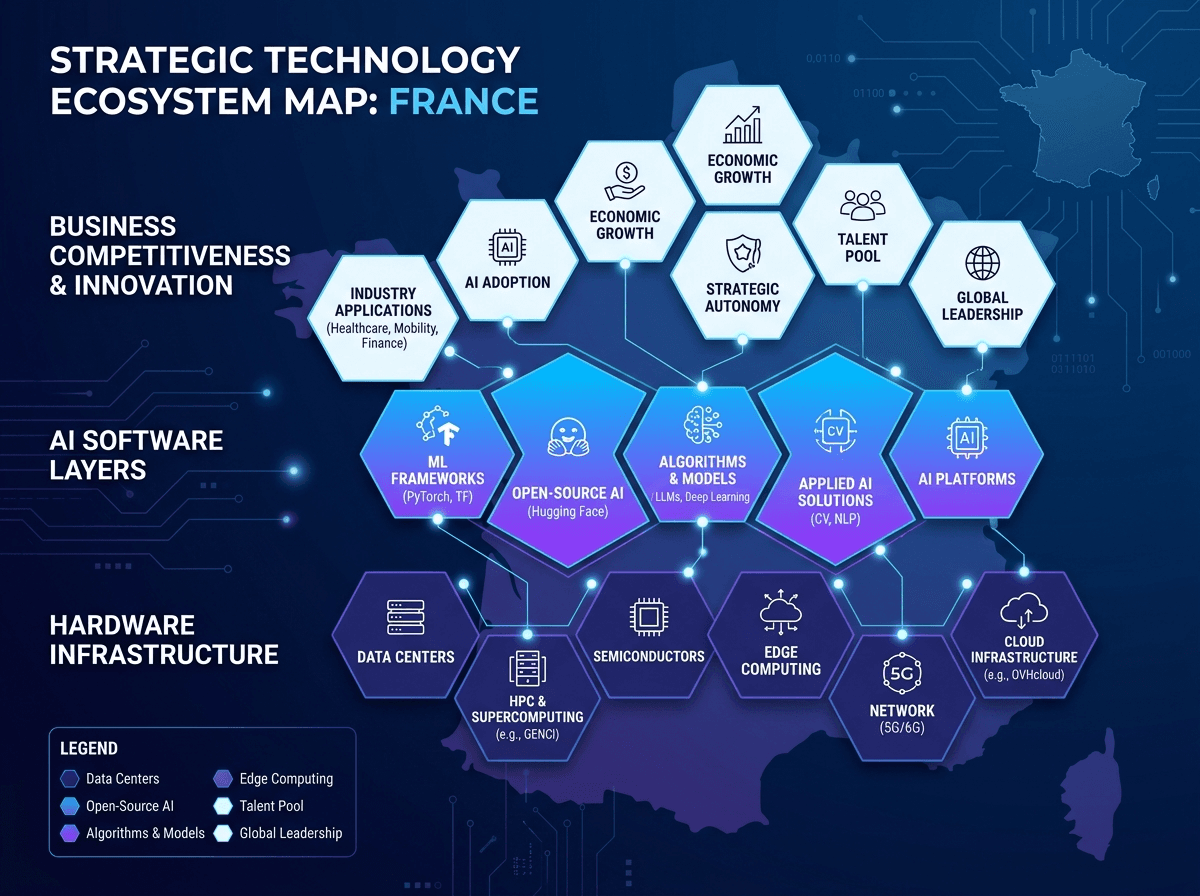
NVIDIA's decision to use its own Vera chips to design its future processors raises a strategic question that French decision-makers cannot ignore: whoever controls AI infrastructure controls innovation capabilities.
In France, France 2030 and the initiatives of the national AI program (PNIA2) demonstrate political awareness of this issue. But at the company level, reflection on AI infrastructure often remains confined to cloud computing questions, without integrating the hardware dimension — chips, computing architectures, low-level optimizations — that nonetheless conditions the actual performance of deployed models.
French mid-sized and large companies that invest today in AI infrastructures tailored to their business needs — rather than settling for generic APIs — give themselves a lasting competitive advantage. NVIDIA's lesson is clear: co-optimization between hardware and software is a major source of performance. For a French company, this translates into the need to choose technology partners who understand both business constraints and underlying technical architectures.
Furthermore, NVIDIA's collaboration with Cadence and Synopsys — two dominant American players in the EDA market — underscores the importance of developing solid technology partner ecosystems. In France, initiatives led by Bpifrance or competitiveness hubs like SystemX work toward this, but companies must actively structure their own AI partner networks to avoid subjective technological dependence.
Training Teams in the Age of Engineer AI: A Competitiveness Imperative
NVIDIA's announcement highlights a reality that many French companies still struggle to integrate: upskilling technical teams in AI is no longer optional. When AI becomes an engineering design tool — and not just a data analysis instrument — the required skills profile evolves substantially.
Engineers and technicians must now understand how to integrate AI models into their existing workflows, how to evaluate the relevance of an AI tool for a given engineering problem, and how to interpret the results produced by these systems. It's not about knowing everything about AI; it's about AI literacy applied to your profession.
Concretely, this means training R&D teams to use AI-augmented simulation tools, raising awareness among technical managers about opportunities to automate low-value-added tasks, and supporting technical leaders in defining an AI strategy consistent with product development objectives.
At Ikasia, we support French companies in this transformation through customized training programs and operational consulting missions. Our approach always starts with the business realities of our clients — their processes, constraints, and objectives — to build skills development that generates measurable impact, not theoretical knowledge disconnected from the field.
The era where AI designs the chips that will power tomorrow's AI is already here. The question isn't whether your sector will be transformed by this dynamic, but at what pace and with what preparation. Get ahead: contact our experts at ikasia.ai to explore how to integrate AI into your engineering processes and prepare your teams for tomorrow's challenges.
Tags
Related articles

Autonomous Networks and Agentic AI: What NVIDIA's Telecom Revolution Means for Your Business
Read
Real-Time Voice AI: How GPT-Live Redefines Customer Relations and Business Applications in Enterprise
Read
GPT-5: How Two Simple Settings Tripled AI Performance — What This Means for Your Business
ReadWant to go further?
Ikasia offers AI training designed for professionals. From strategy to hands-on technical workshops.