OpenAI Acquires Pierre Computer Company: What Codex's Breakthrough Means for Your Development Teams
The AI sector is advancing at a pace that leaves little room for companies to catch their breath. The announcement of OpenAI's acquisition of Pierre Computer Company is not just another strategic move in the great game of American tech acquisitions. For technical leaders, CIOs, and French development teams, it's a strong signal: the battle for the developer's workspace has begun, and the tools that emerge from it will redefine how code is written, reviewed, and maintained in the enterprise.
Let's put this in context. French companies — from industrial SMEs to major banks, and deeptech startups — are investing heavily in modernizing their information systems. In this context, the evolution of Codex, OpenAI's code generation tool, directly impacts their operational competitiveness.
What Does Pierre Computer Company Really Bring to Codex?
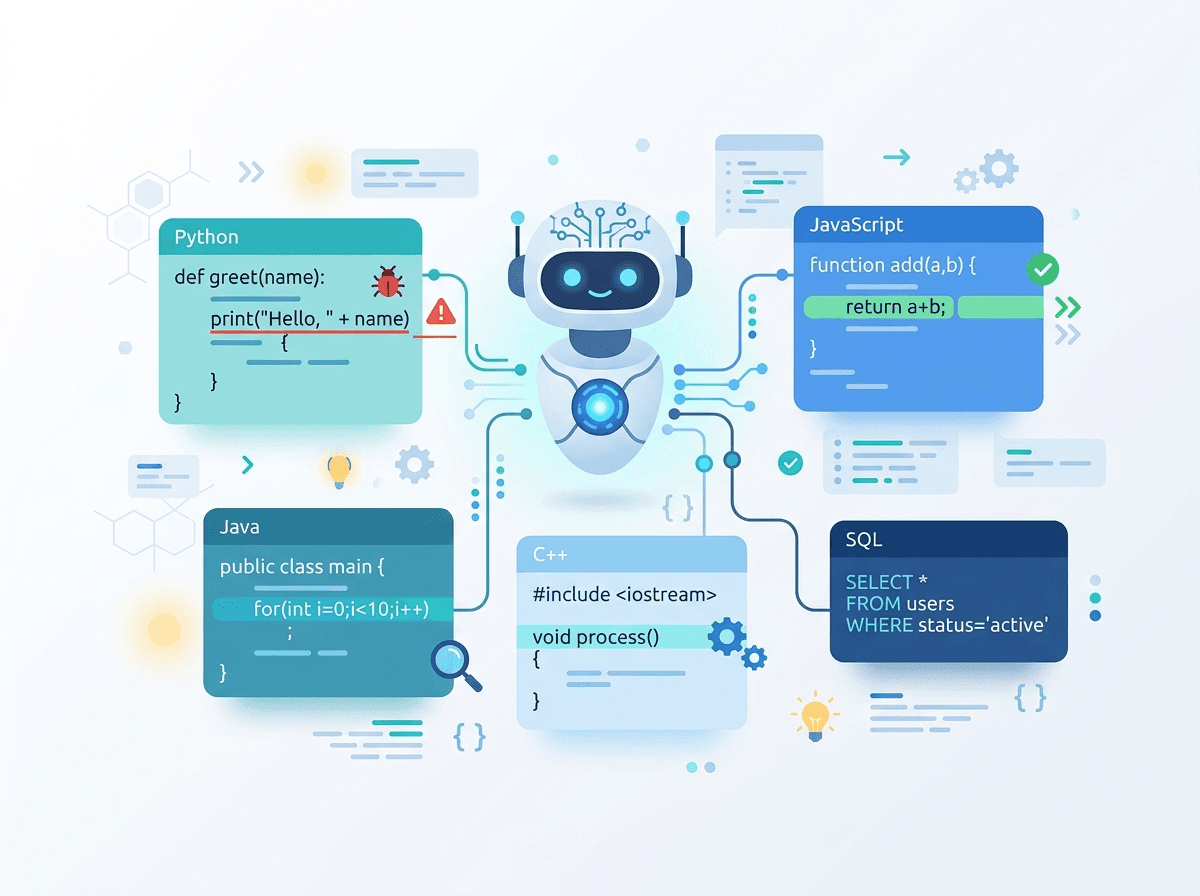
Pierre Computer Company is a company specialized in code analysis, comprehension, and review tools. Its acquisition by OpenAI is not trivial: it reveals a precise ambition, that of making Codex much more than just a simple on-demand code generator.
Until now, Codex has excelled at generating code from natural language prompts. But generating code is one thing; understanding an existing codebase, identifying its flaws, proposing relevant reviews, and supporting complex development cycles is another. This is precisely what Pierre's technologies bring to the equation.
Concretely, we can anticipate enhanced capabilities across three axes:
- Contextual understanding of code: Codex will be able to better navigate large and heterogeneous codebases, typical of legacy systems found in large French enterprises.
- Automated code review: identification of bugs, security vulnerabilities, and bad practices, without systematic human intervention.
- Documentation assistance: automatic generation of technical documentation from existing code, a pain point for many teams.
Concrete Use Cases for French Enterprises
It would be tempting to confine this news to the world of large tech companies. That would be a mistake. The implications are cross-cutting and affect a wide variety of sectors.
In the banking and financial sector, teams often maintain millions of lines of COBOL, Java, or Python code accumulated over several decades. A Codex enriched with Pierre's capabilities could significantly accelerate application modernization projects, helping developers quickly understand opaque modules before rewriting or migrating them to the cloud.
In industry and supply chain, custom ERPs and MES (Manufacturing Execution Systems) systems are often black boxes. AI applied to code review and comprehension would help reduce risk during critical updates and make system integrations more reliable.
For French digital agencies and ESNs, the promise is one of productivity: less time spent on repetitive review tasks, more added value on architecture and technical strategy. Productivity gains of 20 to 40% on certain development tasks are already documented with current AI tools — next versions of Codex could push these ceilings even higher.
DevSecOps teams will also find a powerful ally: integrating AI code review into CI/CD pipelines will detect vulnerabilities earlier in the development cycle, reducing the cost of fixing flaws.
The Issues of Sovereignty and Governance Not to Overlook
Enthusiasm for these new capabilities must be accompanied by rigorous reflection on the governance of AI tools in the enterprise. This is especially true in the European regulatory context.
First point: source code confidentiality. Submitting portions of proprietary code to an American cloud service raises legitimate questions regarding GDPR and the requirements of certain regulated sectors (banking, healthcare, defense). It is imperative that French enterprises clearly define which portions of their codebase can be processed by external tools, and which must remain in an isolated environment.
Second point: technological dependency. Relying on a single vendor for functions as critical as code review or software component generation creates a concentration risk. A multi-vendor strategy and regular evaluation of open source alternatives (Mistral Code, CodeLlama, StarCoder) remain sound practices.
Third point: the European AI Act, which came into force in 2024, imposes transparency and traceability requirements on AI systems for professional use. Code generation and review tools fall within its scope, and companies will need to document their usage to remain compliant.
Training Your Teams: The Human Challenge Behind the Technical Revolution
OpenAI's acquisition of Pierre Computer Company illustrates a reality we observe daily among our clients: tools evolve faster than human skills to exploit them. Having next-generation Codex in your development environment is not enough. Teams must still know how to use it effectively, critically, and responsibly.
Training developers in AI goes beyond learning to write prompts. It encompasses:
- Understanding the limitations and hallucinations of code models, to avoid integrating generated code without rigorous validation.
- Reassessing review processes, to integrate AI as a first filter without abdicating developer responsibility.
- Developing critical thinking about AI suggestions, a skill that becomes as fundamental as knowing how to debug.
- Acculturating managers and architects so they can define clear usage policies adapted to their specific business contexts.
At Ikasia, we support French technical teams in this transition with customized training programs, grounded in real use cases and adapted to specific sectoral constraints. Because a technology is only valuable if the people using it are able to get the best from it — while maintaining control.
Is your enterprise ready to integrate Codex's new capabilities into your development processes? Our consultants specialized in AI applied to software development can help you assess your maturity, define your adoption strategy, and train your teams. Contact us at ikasia.ai for an initial conversation with no commitment.
Tags
Related articles
Beyond Code: How Amp's AI Agents Are Redefining Enterprise Automation
Read
Project Camellia: When OpenAI Builds Data Centers, French Businesses Must Rethink Their AI Strategy
Read
OpenAI Partner Network: $150 Million to Accelerate Enterprise AI Transformation — What Changes for You
ReadWant to go further?
Ikasia offers AI training designed for professionals. From strategy to hands-on technical workshops.