From Weeks to Hours: How Agentic AI Transforms Software Delivery at Endava (And What French CIOs Must Learn)
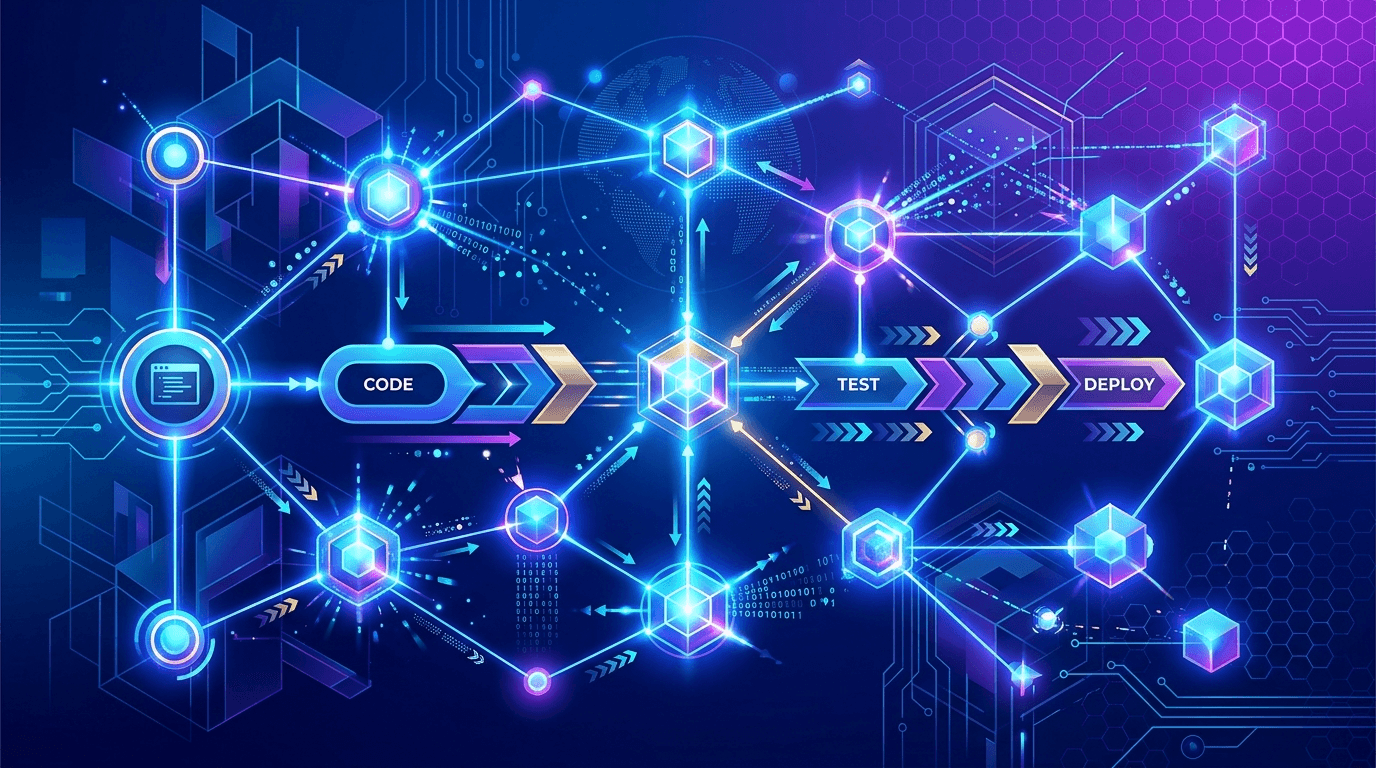
Endava's announcement — a publicly traded digital services company operating in over 25 countries — about integrating OpenAI's Codex into the heart of its software development processes is not just another tech news story. It's a strategic wake-up call for all French IT and business leaders who are still hesitating to embrace agentic AI. When a global technology consulting player reduces its requirements analysis cycle from weeks to just hours, the question is no longer "should we adopt this?" but "how much longer can we wait?"
Agentic AI: Far More Than a Simple Code Copilot
Many French companies have already experimented with generative AI assistants — GitHub Copilot, ChatGPT, Gemini — as tools for writing code or generating snippets. That's a useful first step, but it falls far short of what Endava is implementing with Codex.
An AI agent doesn't just respond to a request: it plans, executes complex multi-step tasks, interacts with external tools (code repositories, APIs, ticketing systems), and self-corrects based on results. In Endava's case, Codex handles entire missions: analyzing functional specifications, generating architecture plans, writing and reviewing code, and producing automated test cases.
Concretely, work that once required a team of consultants two to three weeks to scope a project's requirements can now be delivered in hours as structured, ready-to-use documents for development teams. For a French IT services company or corporate IT department managing dozens of projects in parallel, the impact on delivery capacity is enormous.
Three Concrete Use Cases for French Organizations
Endava's approach offers a directly applicable model. Here's how French organizations — whether large industrial groups, banks, or technology mid-market companies — can draw inspiration:
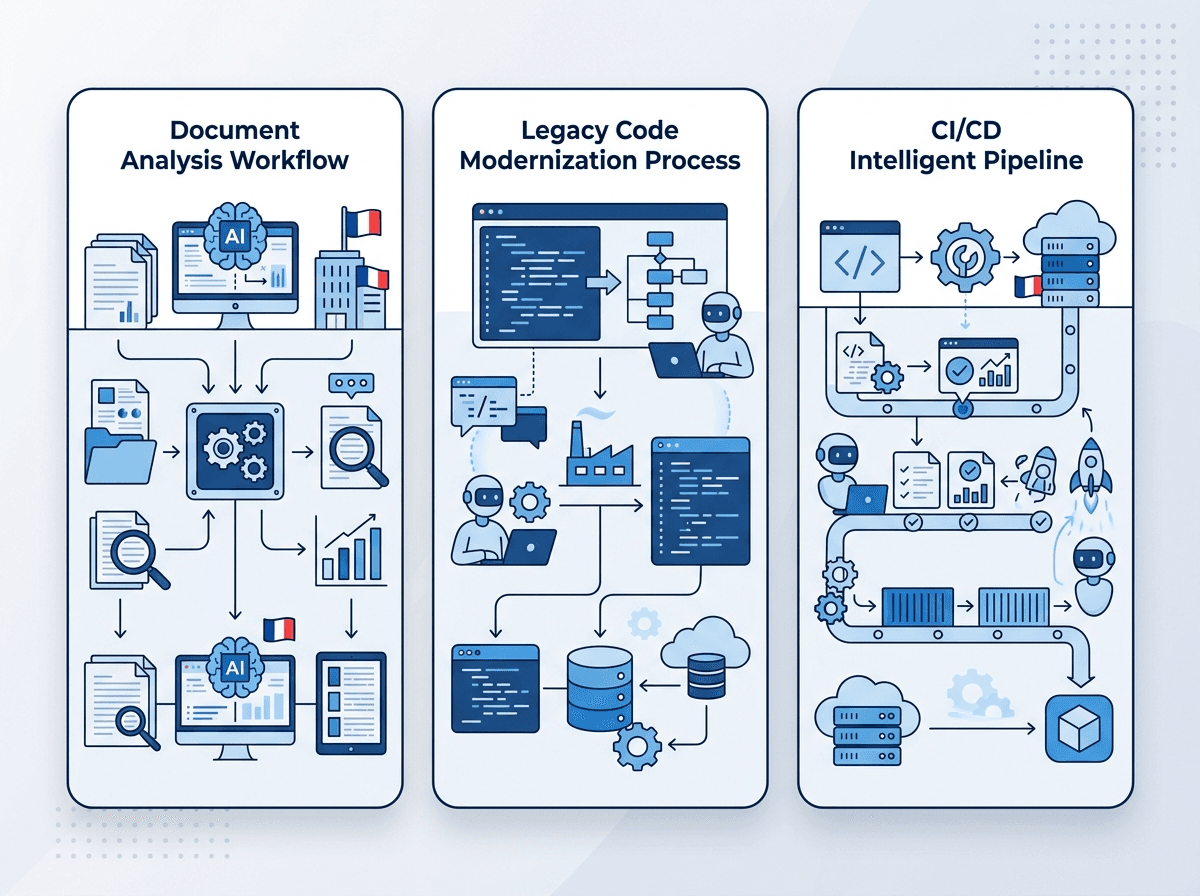
1. Accelerating Project Scoping in IT Services Companies and Consulting Firms A French IT services firm handling complex tenders can deploy a Codex agent to analyze client specifications, identify ambiguities, structure user stories, and estimate development effort. This work, which currently mobilizes senior profiles for several days, becomes partially automatable — freeing these experts for higher-value tasks.
2. Modernizing Legacy Systems in Large Enterprises Many French companies in banking, insurance, or industrial sectors maintain critical applications built in COBOL, PL/SQL, or legacy Java. An AI agent can be tasked with analyzing these codebases, documenting the current state, identifying dependencies, and proposing migration strategies — work previously reserved for expensive specialized consultants.
3. Intelligent Continuous Integration in Product Teams French scale-ups or digital divisions of CAC 40 companies can integrate agents into their CI/CD pipelines: automated code review focused on security and performance, technical documentation generation synchronized with code changes, proactive regression detection. The result: shorter release cycles and better-managed technical debt.
In each scenario, the logic is the same: the agent handles repetitive, structured, time-consuming work while human teams focus on design, client relationships, and complex trade-offs.
Building an Agentic Organization: The Real Transformation is Organizational
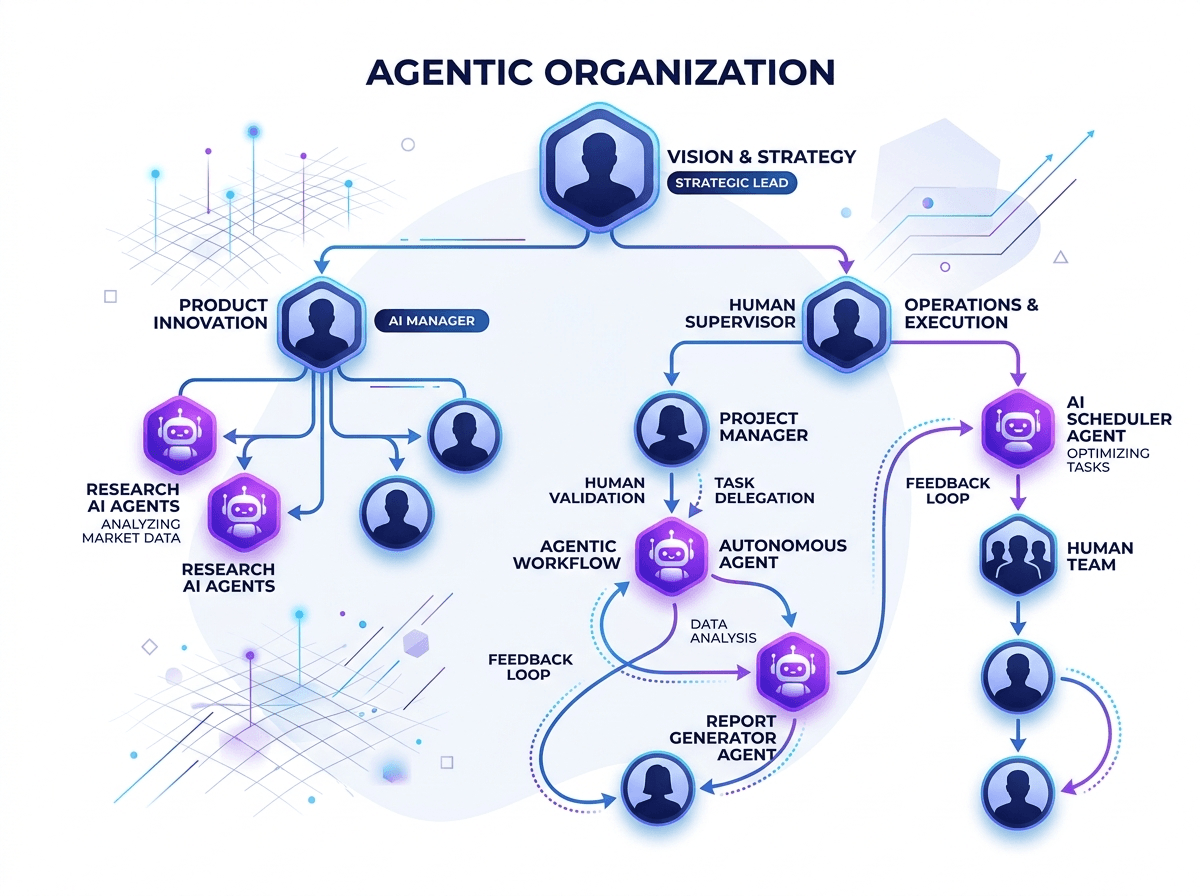
The most important word in Endava's case study title isn't "Codex" — it's "agentic organization." Endava isn't talking about deploying a tool. It's talking about reconfiguring its teams, processes, and culture around human-agent collaboration.
This involves several organizational shifts that French enterprises must anticipate:
- Redefining roles: the senior developer becomes an agent orchestrator, an AI deliverable validator, an expert in advanced prompt engineering. Their scope expands, but their daily activities change radically.
- Reviewing governance processes: who validates an agent's outputs? How do you trace AI decisions in a French regulatory context (GDPR, European AI Act)? These questions must be resolved before scaling.
- Creating a culture of rapid iteration: agentic AI produces quickly, but imperfectly on first pass. Organizations that derive the most value are those capable of rapidly iterating on outputs, correcting, refining — which requires tolerance for intermediate imperfection that many French enterprises haven't yet developed.
Endava understands that technology alone isn't enough: it's the alignment between tools, working methods, and human skills that creates sustainable competitive advantage.
Training Teams for the Agentic Era: A Non-Negotiable Strategic Investment
The main barrier to agentic transformation in French enterprises isn't budget or technology: it's the skills gap. Knowing how to use Codex or an AI agent in production requires new capabilities that can't be acquired by watching a 20-minute demo.
Teams need to understand:
- How to decompose complex problems to delegate them effectively to an agent (structured prompt engineering, constraint definition, hallucination management)
- How to evaluate and validate AI-produced deliverables — a critical skill to maintain quality without manually recreating everything the agent produced
- How to integrate agents into existing workflows without creating organizational debt or invisible failure points
- How to address ethical and regulatory challenges specific to the European context, especially in regulated sectors
These skills are acquired through hands-on practice, experience feedback, and mentoring from experts who have already navigated these transformations. That's exactly Ikasia's positioning: training French technical and management teams in applied AI, with programs rooted in the operational reality of enterprises — not in theoretical cases disconnected from the field.
Is Your Organization Ready to Embrace Agentic AI?
The Endava case demonstrates that the window for competitive differentiation is open — but it won't stay open forever. Companies that train their teams and structure their approach now will build an advantage that's difficult to catch up with.
Ikasia supports French enterprises in this transition: AI maturity audits, customized training programs for technical teams and managers, and strategic consulting to define your agentic roadmap.
👉 Discover our training and consulting programs at ikasia.ai — and make AI a true performance driver for your teams.
Tags
Related articles
OpenAI's Codex: How an Asian Tech Giant is Reinventing Software Development with Agentic AI — and What French Companies Must Learn
Read
OpenAI's Codex on Windows: When AI Agent Security Becomes a Competitive Advantage for Enterprises
Read
OpenAI + Dell + Codex: AI-Powered Software Development Comes to Your Servers — What Changes for French Enterprises
ReadWant to go further?
Ikasia offers AI training designed for professionals. From strategy to hands-on technical workshops.