OpenAI + Dell + Codex: AI-Powered Software Development Comes to Your Servers — What Changes for French Enterprises
The announcement received little attention in mainstream media, but it could fundamentally change how IT departments and development teams work in France: OpenAI and Dell Technologies are partnering to enable the deployment of Codex — the AI agent specialized in software development — directly in hybrid and on-premise environments. In other words, in your own infrastructure, behind your own firewalls. For French enterprises subject to GDPR, data sovereignty requirements, or simply keen to maintain control over their source code, this development represents a major turning point.
Codex, the AI agent that codes: a recap of capabilities
Before going further, let's establish the basics. Codex is not just a simple code autocomplete tool like GitHub Copilot. It's an AI agent capable of executing development tasks autonomously: writing code from natural language instructions, fixing bugs, generating unit tests, documenting functions, and even orchestrating complex workflows across multiple files or services.
Concretely, a developer can ask Codex: "Create a REST API in Python that queries our PostgreSQL database and returns customer orders from the last 30 days", and receive functional, tested, and documented code in seconds. Productivity gains measured by OpenAI on pilot teams regularly exceed 40 to 60% on repetitive coding tasks.
Until now, Codex was primarily accessible via OpenAI's cloud, which raised legitimate questions for many French enterprises: where does my data go? Is my source code used to train the models? Can I meet my contractual obligations to my customers?
The Dell partnership: AI cloud arrives in your data center
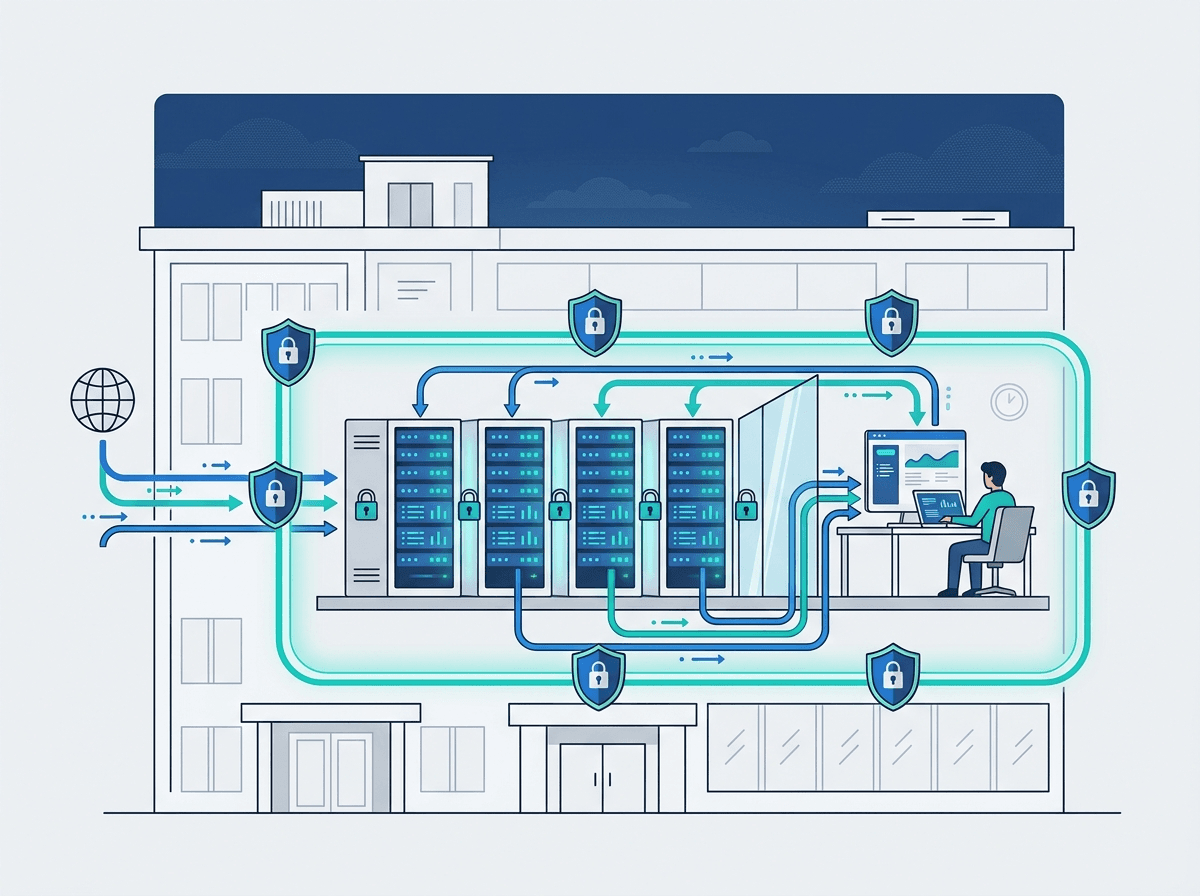
This is precisely the barrier that the Dell partnership removes. Through integration with Dell PowerEdge and Dell AI Factory infrastructure, enterprises can now deploy Codex in their own data centers or in a hybrid cloud environment, according to their existing architecture.
What this means in practice:
- Data stays on-site. Source code, queries sent to the model, and generated responses never leave the enterprise's infrastructure. This is a decisive argument for banking institutions, healthcare providers, public administrations, or any organization handling sensitive data.
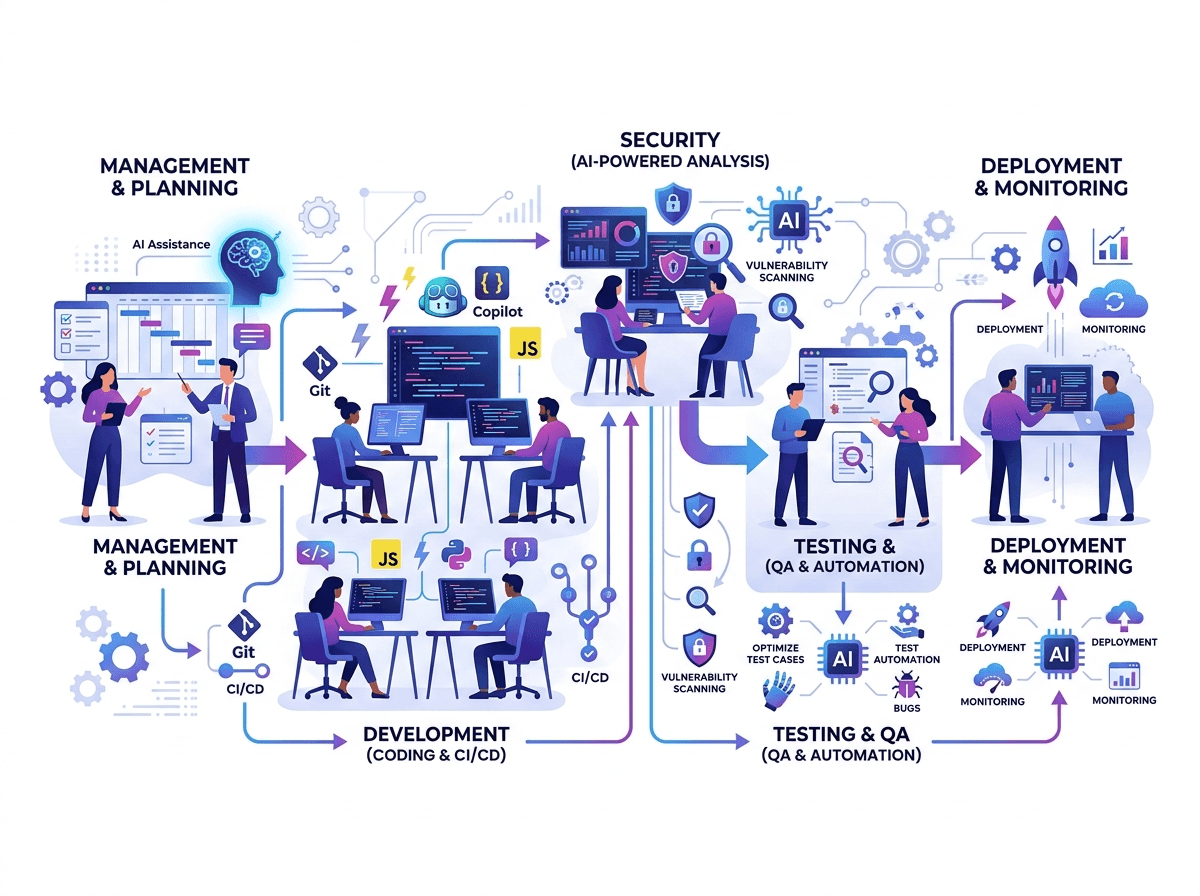
- Native integration into existing workflows. Codex can be connected to CI/CD pipelines, version control tools (Git, GitLab, Azure DevOps), and development environments already in place.
- Complete control over model versions. The enterprise chooses which version of Codex it uses, when to update it, and how to configure it — without depending on external SaaS update cycles.
- Controlled scalability. GPU resources required for the model are sized according to the organization's actual needs, with no surprises on billing.
For French CISOs and IT directors, this is a direct response to traditional barriers to adopting generative AI in production.
Concrete applications for French enterprises
Imagine concretely what this enables across different sectors:
In a banking or insurance group: Development teams work daily on critical applications, with strict regulatory constraints (DORA, NIS2, GDPR). On-premise Codex can accelerate the modernization of legacy COBOL or Java applications without sensitive business specifications transiting through a public cloud. A project manager can ask the agent to refactor a risk calculation module, generate its technical documentation and regression tests — all internally.
In a French software publisher (ISV): Intellectual property is the central asset. With on-premise deployment, the enterprise can use Codex to accelerate its release cycles without risking exposure of proprietary source code. R&D teams gain velocity while preserving their competitive advantage.
In a local authority or administration: Digital sovereignty constraints are particularly strong in the public sector. Deployment on qualified infrastructure (SecNumCloud, HDS) allows enterprises to consider using Codex for digital transformation projects without exemptions from security policies.
In manufacturing: OT (Operational Technology) systems and production environments are often on closed networks. Codex can assist IT teams in developing monitoring tools, automation, or MES/ERP integration without ever requiring external connectivity.
In all these cases, the common denominator is the same: developer productivity increases measurably, without compromising security.
Team training: the human challenge behind technical performance
Deploying Codex on-premise is one thing. Extracting real and sustainable value from it is another. Experience shows that enterprises achieving the best ROI with generative AI tools are those that have invested in upskilling their teams before, during, and after deployment.
This involves multiple levels of training:
For developers: Learning to formulate effective prompts for coding tasks, understanding model limitations (hallucinations, logical errors, security issues in generated code), and integrating Codex into daily development loops without compromising quality.
For architects and tech leads: Defining usage policies, selecting relevant pilot projects, measuring productivity KPIs (development time, bug rates, test coverage), and managing change within their team.
For managers and business leaders: Understanding what Codex can and cannot do, adjusting code review and validation processes, and realistically integrating AI into product roadmaps.
For security teams (CISO, DevSecOps): Assessing risks related to AI-generated code (injection, secret exposure, vulnerable dependencies), defining mandatory review rules, and training developers in best practices.
At Ikasia, we support French enterprises on exactly these challenges: from awareness-raising on generative AI for executive committees to hands-on prompt engineering workshops for developers, through the development of responsible AI usage policies. We've worked with teams of all sizes, across sectors as varied as finance, healthcare, manufacturing, and the public sector.
The OpenAI–Dell partnership around Codex is not just another technology announcement. It's a signal that AI-powered software development is entering its industrial deployment phase, including for organizations with the most demanding security and sovereignty requirements. French enterprises that can intelligently integrate these tools — with the right infrastructure, processes, and skills — will gain significant competitive advantage in the coming months.
Would you like to evaluate how Codex or other AI agents could integrate into your environment and train your teams to maximize their value? Contact our experts at ikasia.ai for a free assessment and a customized action plan.
Tags
Related courses
Related articles

How Rakuten Reduced Incident Resolution Time by 50% with AI: Lessons for French IT Directors
Read
From Weeks to Hours: How Agentic AI Transforms Software Delivery at Endava (And What French CIOs Must Learn)
Read
HP and OpenAI Partner to Transform Tomorrow's Enterprise: What Changes for You
ReadWant to go further?
Ikasia offers AI training designed for professionals. From strategy to hands-on technical workshops.