OpenAI's Codex: How an Asian Tech Giant is Reinventing Software Development with Agentic AI — and What French Companies Must Learn
Sea Limited, the technology conglomerate behind Shopee, Garena, and SeaMoney, has just unveiled its strategy for deploying Codex, OpenAI's software development agent, across its engineering teams in Asia. In a remarkable address, David Chen, Chief Product Officer of the group, describes a profound transformation: AI is no longer a simple code assistant, but rather an autonomous actor in the software development cycle. A strong signal that French companies — innovative SMEs, tech mid-market firms, CIOs of large corporations — would be wrong to ignore.
Agentic AI: Far More Than a Copilot, an Autonomous Developer
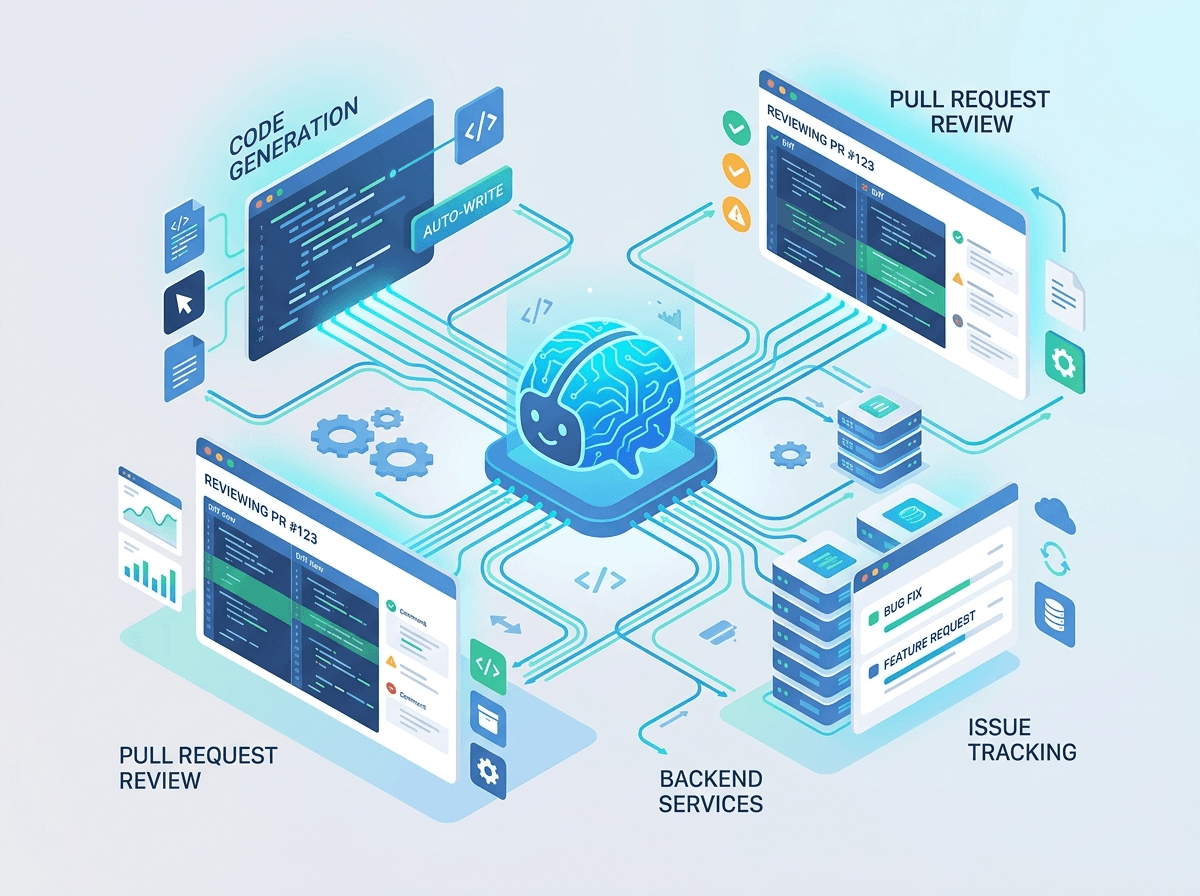
The distinction is fundamental and often misunderstood. The code assistance tools that many companies use today — GitHub Copilot, ChatGPT suggestions — operate in reactive mode: the human asks a question, the AI responds. Agentic AI, embodied by Codex in its latest version, operates differently.
Concretely, Codex can receive a complex task — "Implement this deferred payment feature while respecting our microservices architecture and security standards" — and execute it autonomously: analyze existing code, write new functions, create unit tests, identify potential conflicts, and submit a documented pull request. The human engineer intervenes downstream to validate, refine, and decide.
For Sea Limited, the result is striking: engineering teams don't gain 20% productivity, they fundamentally restructure their relationship with work. Senior developers focus on architecture, strategic technical decisions, and quality, while Codex absorbs a large share of repetitive implementation work. It's a paradigm shift, not a marginal improvement.
In France, where the shortage of qualified developers is well documented — over 80,000 unfilled positions according to industry estimates — this ability to amplify the productivity of each existing engineer represents an immediate competitive advantage.
Concrete Applications for French Companies
Let's transpose Sea Limited's strategy into the French context. Here are three directly relevant application scenarios:
1. Software publishers and SaaS startups A Lyon-based startup developing an HR solution in SaaS mode can entrust Codex with generating API connectors to major HRIS platforms on the market (Sage, Silae, ADP). This integration work — tedious, time-consuming, undifferentiated — can be delegated to the agent, while the product team focuses on value-added features.
2. CIOs of industrial corporations A CAC 40 industrial group managing complex legacy applications can use Codex to accelerate the progressive modernization of its systems: rewriting obsolete modules, automatically documenting existing code, migrating to cloud-native architectures. Projects that took years can be compressed significantly.
3. Consulting firms and IT service providers French IT service companies face increasing pricing pressure. Deploying agents like Codex on standard development phases allows them to reallocate their consultants to high-expertise missions — architecture consulting, cybersecurity, change management — with far superior margins.
In all three cases, the common point is identical: agentic AI doesn't replace teams, it radically changes what they spend their time on.
Conditions for Success: Governance, Trust, and Integration
Sea Limited didn't simply give developers access to Codex. David Chen insists on one crucial point: large-scale deployment of agentic AI requires a robust infrastructure of trust and governance.
This translates into several operational imperatives that French companies must anticipate:
-
Clear technical guardrails: which parts of the code can the agent modify autonomously? What levels of access to production systems are granted to it? These rules must be defined before deployment, not after.
-
Complete traceability: every action of the agent must be logged, auditable, reversible. In a European regulatory context (GDPR, NIS2, AI Act), this requirement is not optional.
-
Adapted review processes: if Codex can generate 500 lines of code in minutes, code review processes designed for human teams become bottlenecks. Validation workflows need to be rethought.
-
A culture of structured feedback: agents improve with feedback. Implementing mechanisms that allow developers to report errors and refine instructions is an investment that pays dividends over time.
Companies that treat Codex as a simple "plugin" to install will miss the point. Those who integrate it into a thoughtful transformation strategy will reap lasting benefits.
Training Your Teams: The Key Challenge Nobody Should Underestimate
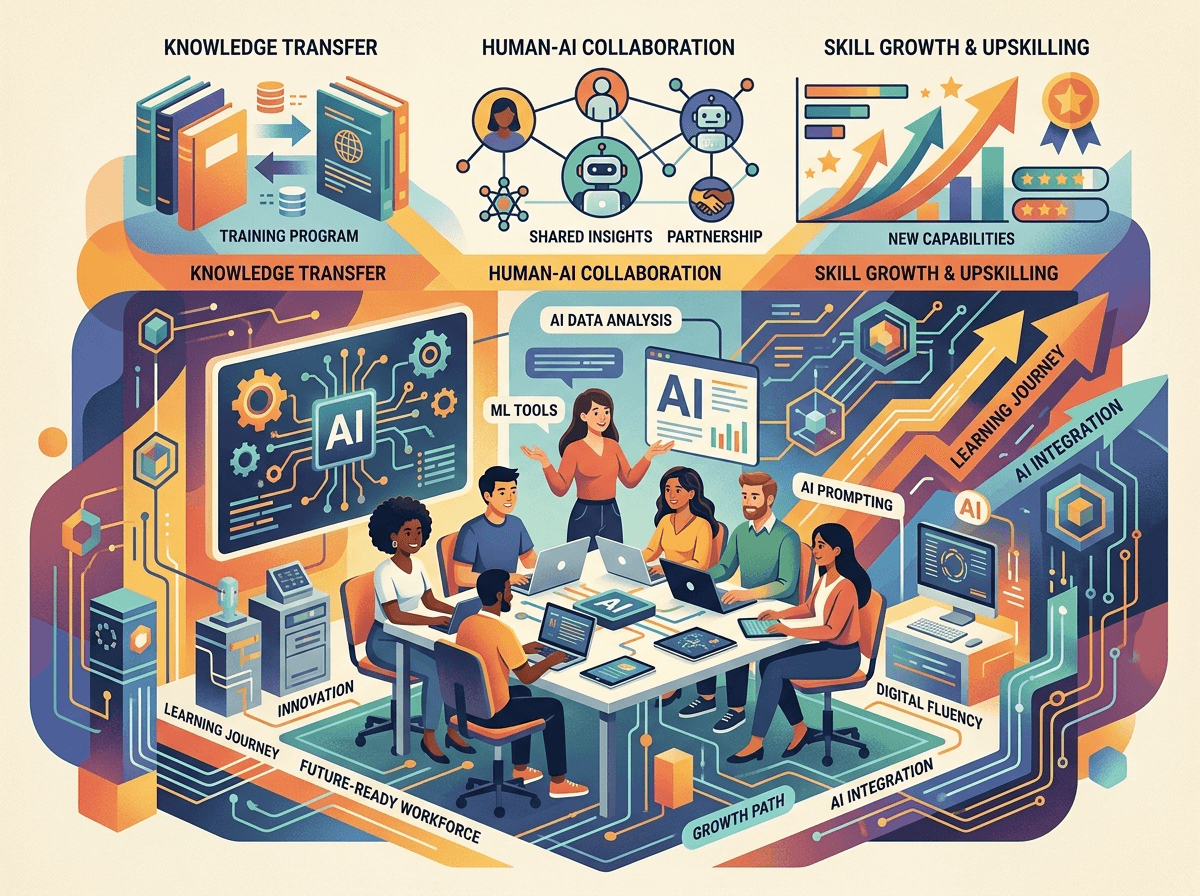
Sea Limited's experience reveals an uncomfortable truth: the technology is available, the human skills to exploit it are the real limiting factor. Deploying Codex without training your teams is like buying a Ferrari to drive it at 50 km/h.
Training concerns more than just developers. It touches the entire tech value chain:
-
Developers and engineers must learn how to formulate complex tasks for agents (prompt engineering applied to code), evaluate the quality of generated code, and maintain expertise in a world where they supervise more than they write.
-
Product managers and project leads must understand what is now feasible — and at what speed — to properly calibrate roadmaps and customer commitments.
-
Managers and CIOs must rethink organizations, performance metrics (do we still measure lines of code written?), and career trajectories in this new context.
-
Security and compliance teams must master risks specific to agentic AI: malicious code injection, hallucinations in critical contexts, secrets management and access control.
At Ikasia, we precisely support French companies in this dual transformation: mastering agentic AI tools and upskilling teams. Our customized training programs — from executive awareness to intensive technical workshops — are designed to anchor sustainable practices, not check compliance boxes.
The question is no longer whether agentic AI will transform software development in France. Sea Limited, like many tech companies worldwide, shows us that this transformation is already underway. The real question is: will your organization be among those who gain a competitive advantage from it, or among those who simply endure it?
Schedule a meeting with our experts at ikasia.ai for a free assessment of your teams' AI maturity and build your roadmap toward augmented software development.
Tags
Related articles
From Weeks to Hours: How Agentic AI Transforms Software Delivery at Endava (And What French CIOs Must Learn)
Read
OpenAI's Codex on Windows: When AI Agent Security Becomes a Competitive Advantage for Enterprises
Read
OpenAI + Dell + Codex: AI-Powered Software Development Comes to Your Servers — What Changes for French Enterprises
ReadWant to go further?
Ikasia offers AI training designed for professionals. From strategy to hands-on technical workshops.