AI and Creativity in Business: What the Dialogue Between LL Cool J and Google Teaches Us About the Future of Work

The conversation between LL Cool J and James Manyika, Senior Vice President of Google in charge of technology and society, as part of the Dialogues on Technology and Society series, has sent shockwaves through innovation circles. Two seemingly opposing worlds — hip-hop and artificial intelligence — come together to pose a fundamental question: Can AI coexist with human creativity, or even amplify it? For French leaders and managers, this discussion goes far beyond cultural context. It raises concrete strategic challenges for any organization seeking to remain competitive in a rapidly changing world.
AI and Creativity: Enemies or Allies?
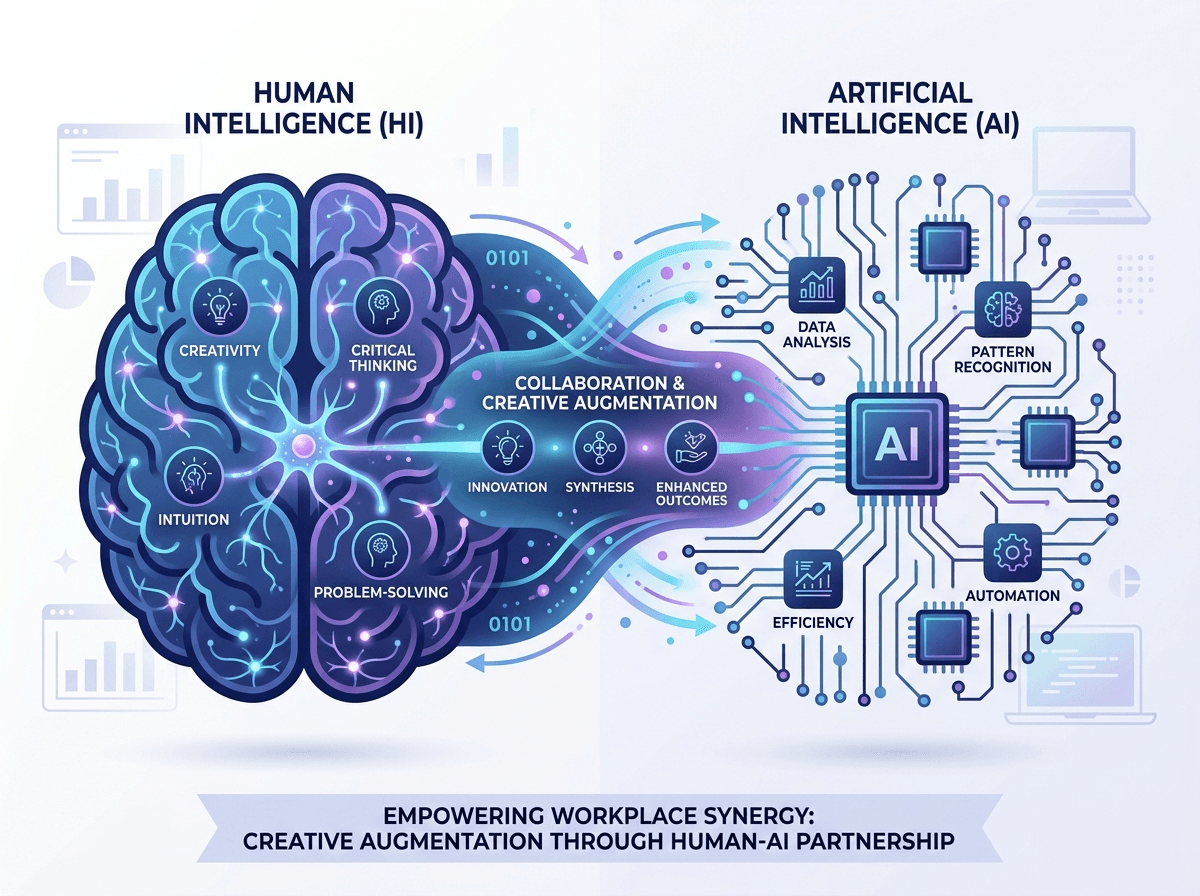
One of the great myths still hindering AI adoption in business is the fear that it will replace the human dimension of work — particularly everything related to creation, intuition, and emotion. LL Cool J, as both an artist and entrepreneur, embodies this tension perfectly. His question to James Manyika is far from trivial: can one be authentically creative in a world where machines generate content?
Manyika's response is instructive for every French business leader: AI is not a competitor to human creativity, but rather an amplifier of capabilities. It frees up cognitive time from repetitive and analytical tasks, enabling employees to focus on what machines cannot yet do — vision, empathy, understanding of cultural context, and creative risk-taking.
For a French SME in communication, design, or marketing, this translates very concretely: using tools like Midjourney to generate preliminary mockups does not replace the art director — it allows them to test ten creative directions where they would have previously explored only one. Human added value increases in quality, it does not disappear.
What French Companies Can Learn From This Dialogue
Google's Dialogues on Technology and Society series is not merely a communications exercise. It reflects growing awareness within major tech organizations: AI adoption will not succeed without open dialogue with civil society, artists, workers, and citizens.
For French companies, this lesson is particularly relevant. France has a strong culture of social dialogue, heightened sensitivity to ethical questions, and a humanist tradition that can — and must — be integrated into digital transformation. Organizations that will succeed in their AI transition are not those that impose tools from above, but rather those that co-construct their AI strategy with their teams.
Concrete examples of application:
- Retail & e-commerce sector: use generative AI to personalize product descriptions while leaving editorial teams responsible for validating brand tone.
- Consulting and audit firms: automate summarization of large documents so consultants can focus on strategic analysis and client relationships.
- Creative agencies: integrate AI tools into the brainstorming process to multiply proposals without multiplying production costs.
- Manufacturing industry: leverage AI for predictive maintenance while valuing field technicians' expertise in interpreting alerts.
In each of these cases, human creativity and judgment remain at the heart of the process. AI shifts the frontier of what is possible; it does not redefine what is desirable — that remains a human prerogative.
Rethinking the Role of Humans in an AI-Augmented Organization
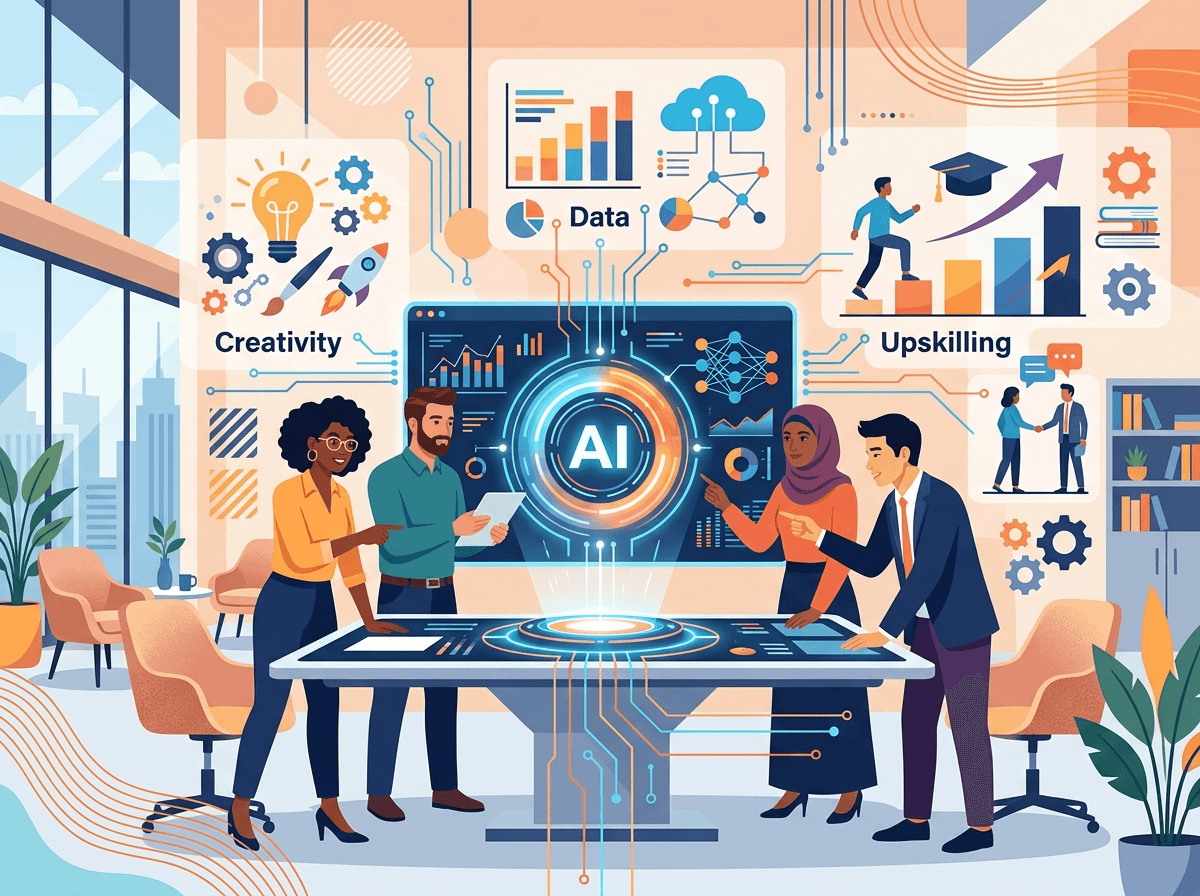
James Manyika emphasizes in this exchange a central notion: AI must be designed and deployed to augment human capabilities, not marginalize them. This is an ethical position, but also a strategic one. Companies that treat their employees as mere executors in an automated system will expose themselves to massive disengagement — and a loss of the collective intelligence that represents their true value.
This vision aligns with the work of many management science researchers: in an uncertain and complex environment, the capacity for adaptation, collaboration, and innovation remains profoundly human. AI can process millions of data points in seconds, but it cannot negotiate a relationship of trust, sense a team's morale, or make decisions in situations of complete ambiguity.
For French leaders, this implies a shift in management approach: moving from managing efficiency to managing augmented collective intelligence. The best results will come from organizations capable of making their human talent and AI tools collaborate closely — in a logic of complementarity rather than substitution.
Training Your Teams in the Age of Creative AI: A Strategic Imperative
The dialogue between LL Cool J and James Manyika points to an obvious truth that too many French companies are still slow to integrate: training is the number one lever for AI transformation. Deploying tools without supporting teams in understanding and adopting them exposes you to resistance, misuse, and a net loss in productivity.
Training collaborators in AI does not mean making them machine learning engineers. It means:
- Developing AI literacy: understanding what AI does well, what it does poorly, and how to interact with it effectively (prompt engineering, output verification, bias management).
- Cultivating new professional reflexes: knowing how to integrate a generative AI tool into an existing workflow without losing quality or critical thinking.
- Strengthening distinctly human skills: critical thinking, creativity, communication, leadership — capabilities that increase in value as AI automates routine tasks.
- Creating a culture of experimentation: encouraging teams to test, learn from mistakes, and share discoveries internally.
At Ikasia, we support French companies through this transition with custom training programs, adapted to your industries, challenges, and AI maturity levels. Because real transformation does not come from the tool — it comes from the women and men who know how to use it intelligently.
Is your organization ready to enter the age of augmented intelligence? Discover our training and AI consulting programs at ikasia.ai and turn AI into a sustainable competitive advantage — not a source of concern.
Tags
Related articles
Project Camellia: When OpenAI Builds Data Centers, French Businesses Must Rethink Their AI Strategy
Read
Google Finance Exits Beta: What the AI-Powered Financial Analysis Revolution Means for French Businesses
Read
Google Translate Turns 20: What This Reveals About AI Maturity for French Businesses
ReadWant to go further?
Ikasia offers AI training designed for professionals. From strategy to hands-on technical workshops.