AI and Remote Healthcare: What French Companies Can Learn from Google's Rural Australia Initiative

Artificial intelligence has just crossed a new symbolic milestone in the healthcare sector. Google has launched an ambitious initiative in rural Australia to improve cardiac health outcomes in remote communities, often underserved by traditional medical infrastructure. While this project may seem geographically distant, its strategic implications are actually of immediate relevance to leaders and decision-makers in French businesses. Because behind this news lies a universal lesson: AI now makes it possible to deliver high-quality expertise where it is needed most, whether it's medical care in the Australian bush or specialized skills in an SME in rural France.
AI as a Bridge Between Expertise and the Field: A Silent Revolution
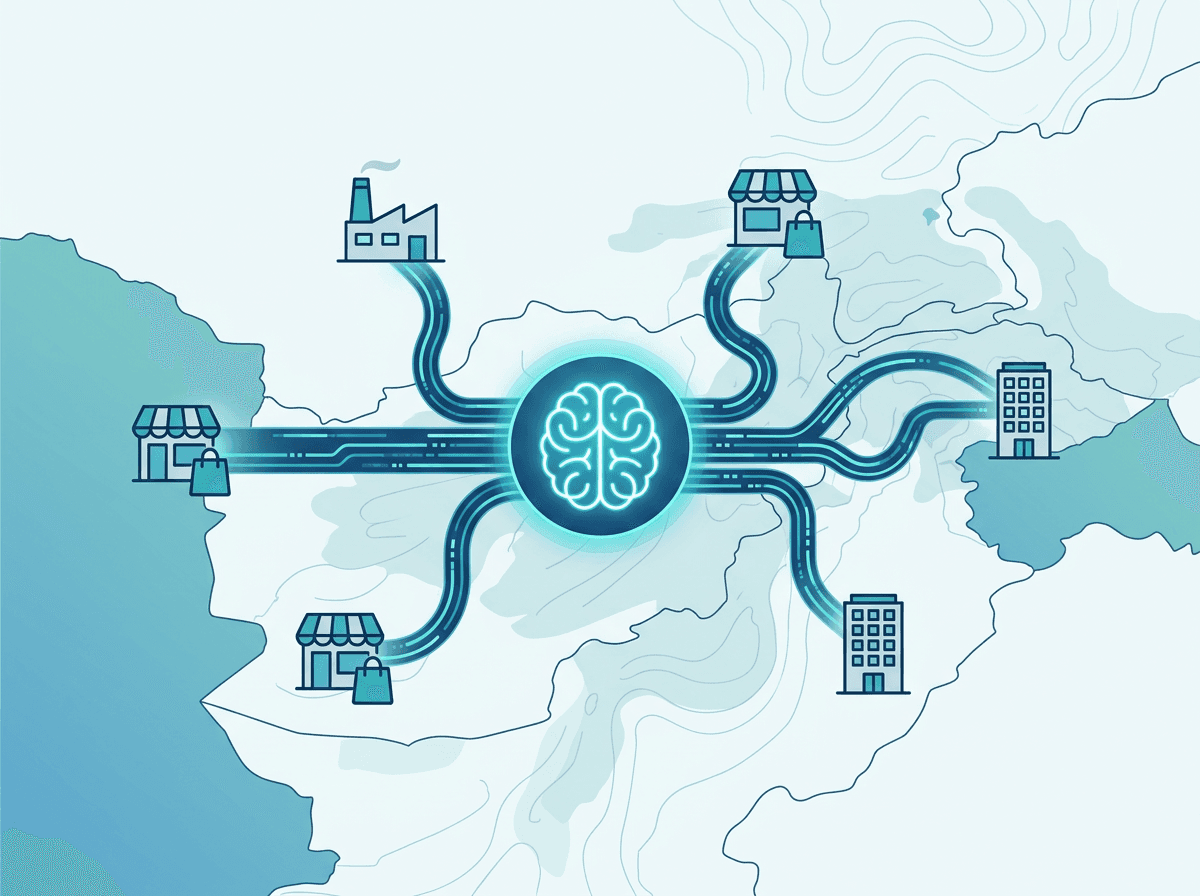
Google's initiative in Australia relies on AI models capable of analyzing complex health data — electrocardiograms, medical imaging, patient histories — to detect cardiac pathologies early in isolated populations without immediate access to specialized cardiologists. The model is simple in principle, but revolutionary in its impact: expertise travels through data, not through people.
This logic is directly transposable to the business world. How many French micro and small enterprises lack access to quality legal, accounting, HR or commercial expertise simply because they cannot afford to hire the right profiles or are geographically distant from major economic centers? Generative AI and expert systems now make it possible to bridge exactly this type of gap. A craft bakery in Brittany can benefit from an AI assistant capable of analyzing its margins, optimizing supplier orders and writing job descriptions with the same rigor as a senior Paris-based consultant — at a fraction of the cost.
The Australian lesson also reminds us that AI adoption does not require a complete transformation of the existing organization. Rural doctors were not replaced; they were augmented. Their diagnostic capabilities were multiplied by tools that analyze where the human eye has its limitations. This is precisely the philosophy of augmentation — not substitution — that French companies must integrate into their strategy.
Concrete Applications for French Companies: Three Sectors on the Front Line
The Australian example illustrates three major application axes that we regularly observe in our support of French companies at Ikasia.
1. Early diagnosis applied to business processes. Just as AI detects a cardiac anomaly before it becomes critical, AI tools can monitor in real-time the performance indicators of a supply chain, weak signals of customer dissatisfaction in CRM data, or budget overruns in projects. French companies in the industrial sector, particularly in food processing and mechanics, are already using this type of predictive monitoring to reduce their maintenance costs by 15 to 30%.
2. Democratizing access to expertise. In the legal and HR sectors, AI solutions allow non-specialized teams to draft compliant contracts, analyze collective agreements or structure recruitment processes with a level of quality previously reserved for large organizations with internal legal departments. This is the exact equivalent of the virtual cardiologist deployed in Australian medical deserts.
3. Personalization at scale. Google uses AI to adapt health recommendations to the individual profiles of rural patients. In business, this same logic enables personalization of customer experience, internal training journeys or marketing campaigns — no longer in bulk, but one-to-one — without multiplying dedicated human resources. French retailers who have adopted this approach report conversion increases of 20 to 40% on their digital channels.
The Human Factor: When AI Reveals the Limits of Our Organizations
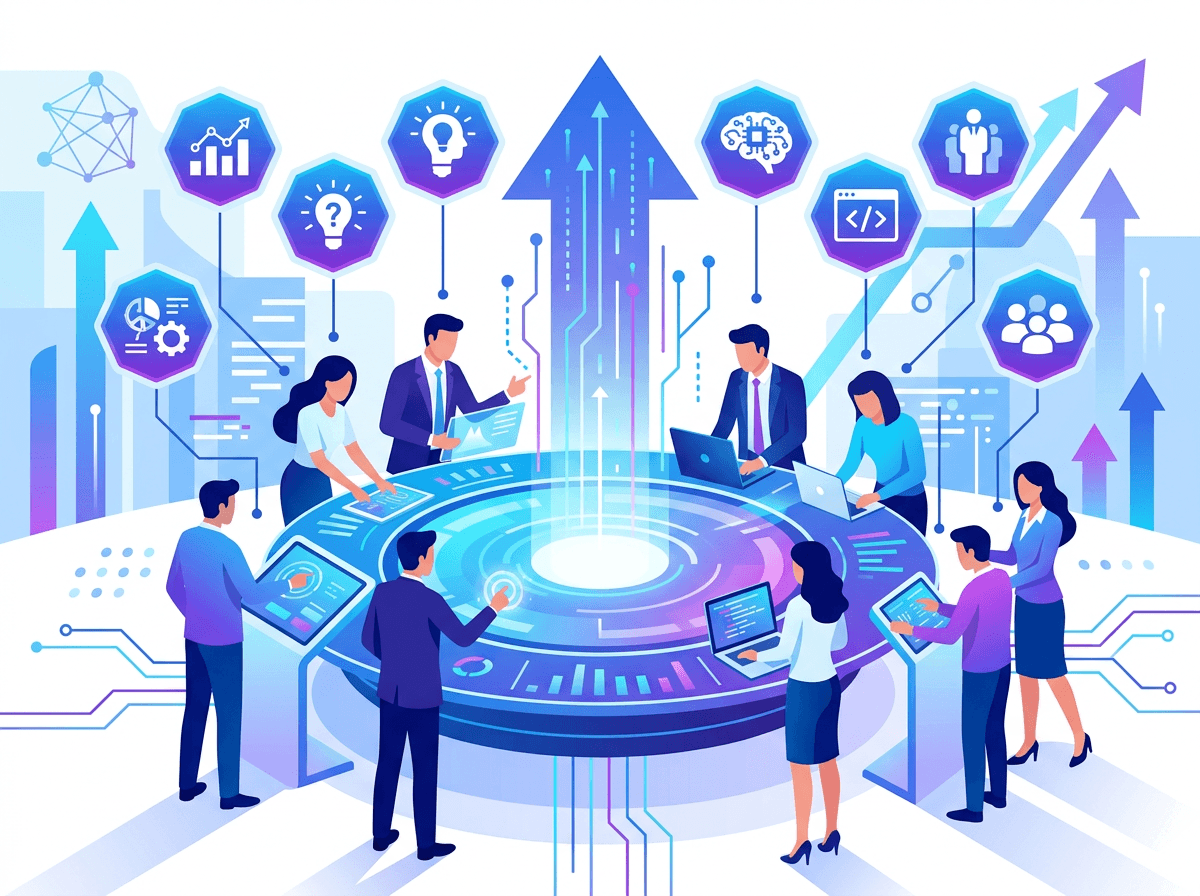
One of the most profound lessons from the Australian initiative is this: the deployment of AI shed light on pre-existing organizational dysfunctions that medical teams had no way to identify on their own. Patients who never consulted, data never collected, protocols never followed. The technical tool acted as an organizational revealer.
French companies launching into AI often make the same discovery. Implementing an AI assistant on the customer service team suddenly reveals that 40% of requests concern the same recurring unresolved problem. An HR data analysis tool uncovers abnormally high turnover in certain teams. AI doesn't create these problems — it makes them visible and actionable.
This is why at Ikasia, we consistently emphasize that AI adoption is first and foremost a management transformation project. Companies that fail in their AI projects don't fail on the technology — they fail on change management, data governance and the ability to question their processes in light of what the tool reveals.
Training Your Teams in the Age of AI: A Non-Negotiable Strategic Investment
Google's Australian initiative would have had no impact if rural doctors had not been trained to use the tools made available to them, to interpret the recommendations generated by AI and to keep their clinical judgment as the ultimate arbiter. This equation of training-tool-confidence is strictly identical in business.
Training your teams on AI in 2025 does not mean transforming every employee into a data scientist. It means developing three fundamental competencies: AI literacy (understanding what AI can and cannot do), prompt engineering applied to your business (knowing how to query tools to get useful results), and critical thinking about outputs (never delegate final decision-making to a machine).
French companies that invest in this training see rapid productivity gains — often from the first few weeks — but especially a significant reduction in resistance to change. An employee who understands the tool no longer fears it; they adopt it and improve it. This is the virtuous dynamic that we support daily in our training programs at Ikasia, adapted to all sectors and all company sizes.
The Australian story ends well: lives saved, communities strengthened, technology in service of humanity. Your story with AI can also end well — provided you start with the right foundations. Discover how Ikasia can support your company in its AI transformation, from training your teams to deploying customized solutions, on ikasia.ai.
Tags
Related articles

AI and Creativity in Business: What the Dialogue Between LL Cool J and Google Teaches Us About the Future of Work
Read
Project Camellia: When OpenAI Builds Data Centers, French Businesses Must Rethink Their AI Strategy
Read
Google Finance Exits Beta: What the AI-Powered Financial Analysis Revolution Means for French Businesses
ReadWant to go further?
Ikasia offers AI training designed for professionals. From strategy to hands-on technical workshops.