AI Text Watermarking: What European Regulation Actually Changes for Your Business

The European Union is progressively tightening the regulatory framework around artificial intelligence, and major AI platforms are adapting accordingly. OpenAI has just published its roadmap concerning provenance marking of AI-generated texts (text watermarking), in direct response to the requirements of the European AI Act. For French companies using tools like ChatGPT in their daily operations, this evolution is significant: it reshapes the rules of transparency, accountability, and traceability of automatically generated content.
In this article, we break down what this approach means in concrete terms, what it implies for your professional uses, and how to anticipate the changes coming your way.
What is AI text watermarking and why is Europe imposing it?
Watermarking — or digital marking — is a technique that consists of integrating, imperceptibly to the human reader, an invisible signature in texts generated by an AI. This signature allows, through technical analysis, detection that content was indeed produced by an artificial intelligence system and to identify its source.
The European AI Act, which has been gradually coming into effect since 2024, requires providers of generative AI systems to implement mechanisms allowing users and third parties to know if content has been automatically generated. The objective is twofold: combating misinformation and textual deepfakes, while also strengthening trust in digital content.
OpenAI clarifies in its publication that watermarking initially applies to accredited researchers, who will have access to detection tools before a broader rollout. This gradual approach aims to test the system's robustness before it is generalized to businesses and the general public.
For French companies, this means that ultimately, each text produced via OpenAI's APIs or ChatGPT Enterprise could bear an identifiable mark — with all the legal and reputational consequences that entails.
Professional use cases directly affected
Concretely, which business uses will be impacted by this evolution? The list is longer than you might think.
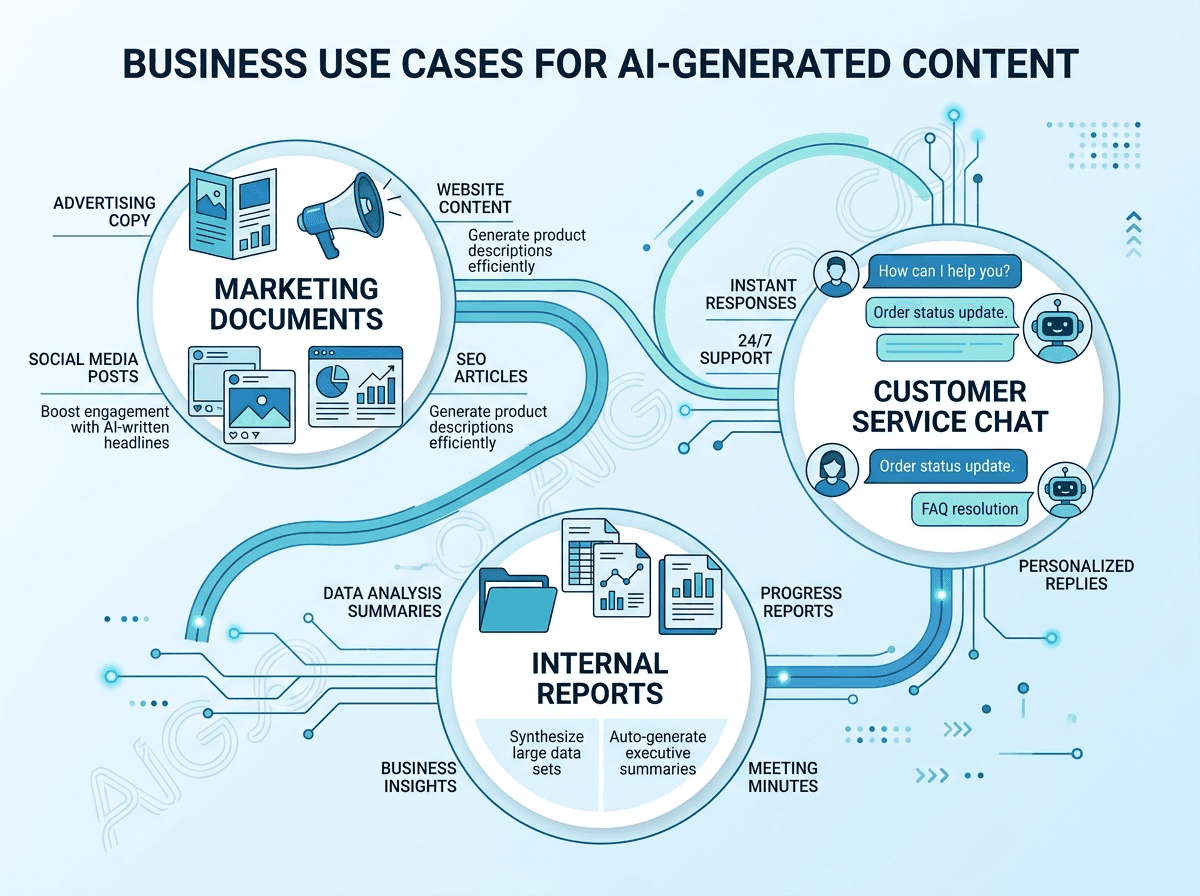
Marketing and editorial content production is on the front line. Blog articles, newsletters, product descriptions, social media posts: if these contents are generated or heavily assisted by AI, they could be identifiable as such. For communications teams, the question of disclosure to readers will become unavoidable.
Internal report and document writing is also affected. Meeting summaries, brief notes, market analyses produced with AI assistance: in a context where traceability is required (legal, financial, healthcare sectors), watermarking adds an extra layer of verifiability, potentially useful in case of dispute.
Automated customer service is another area to monitor. Chatbots and virtual assistants that generate real-time responses could be subject to marking obligations, particularly when interacting with consumers in sensitive contexts (banking, insurance, e-commerce).
Finally, companies that outsource writing to providers who themselves use AI tools will need to integrate this dimension into their contracts and validation processes. Responsibility for the content production chain becomes a governance issue in its own right.
What this means for governance and compliance
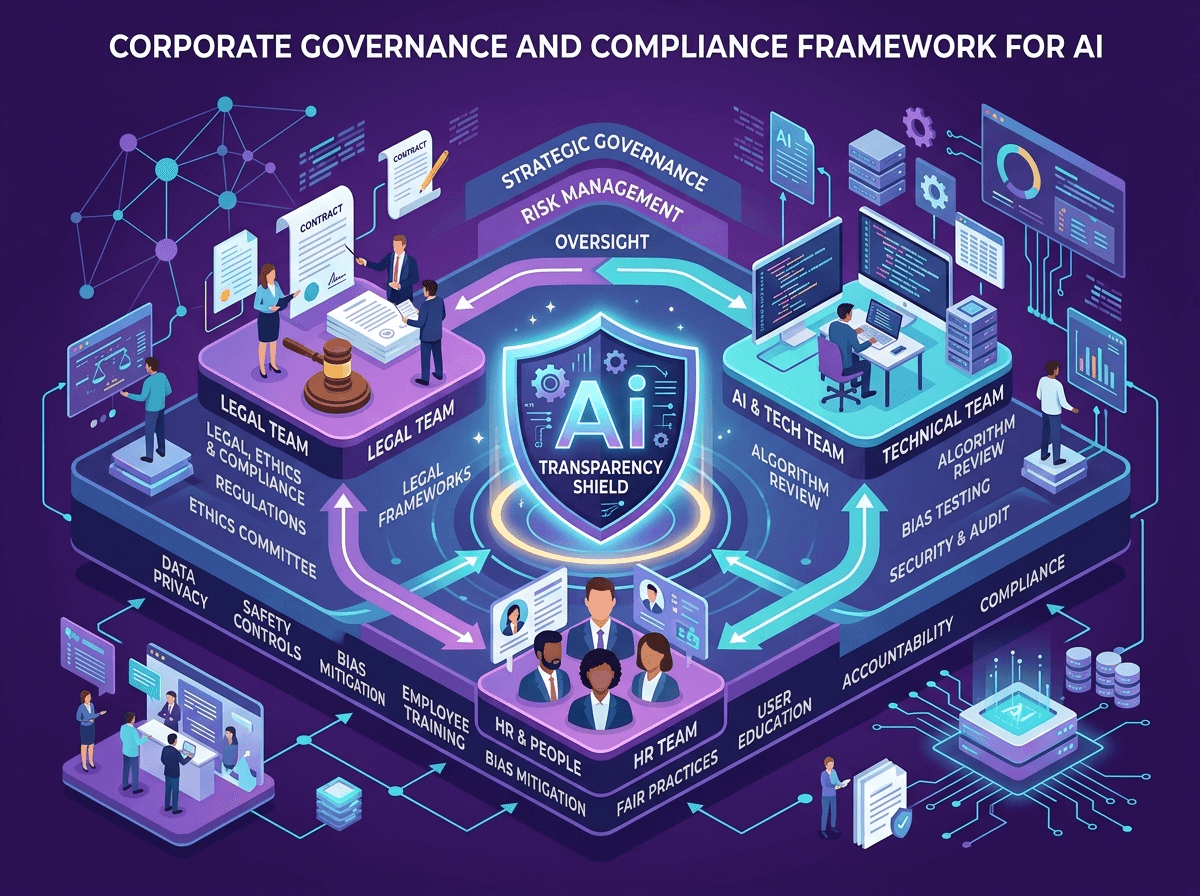
OpenAI's introduction of watermarking, in response to European requirements, marks a turning point in AI governance in the enterprise. It's no longer just about knowing whether you use AI, but being able to prove it, trace it, and document it.
For legal departments and DPOs (Data Protection Officers), new questions emerge: Who is responsible for watermarked content? What legal notice must be added to a document if its watermark can be detected? What happens if watermarked content is published without explicit mention of its artificial nature?
For IT departments, the challenge is technical: how to integrate detection tools into existing workflows? How to audit content produced in-house? Companies that have deployed generative AI solutions in production will need to quickly implement systematic verification processes.
A pragmatic approach is to start by mapping all points in the organization where generative AI is used to produce text, then to assess, case by case, the transparency obligations that apply. This mapping work is exactly what we support at Ikasia in our consulting missions.
Training your teams: the key to transforming constraint into competitive advantage
Faced with these regulatory changes, the temptation is to see watermarking as an additional constraint. But the most mature organizations on AI issues see it instead as an opportunity to differentiate themselves.
An organization that trains its teams to understand watermarking, to integrate it into its editorial processes, and to communicate transparently about its use of AI gains credibility with customers, partners, and regulators. Transparency becomes a trust argument, not an admission of weakness.
Concretely, this requires several levels of training:
- Raising awareness among managers of regulatory issues related to the AI Act and transparency obligations;
- Training content and marketing teams on best practices for disclosure and human validation processes for AI-generated texts;
- Building IT and legal teams' capabilities on detection tools and the contractual implications of watermarking;
- Integrating responsible AI into corporate culture, beyond mere productivity tool.
At Ikasia, we support French companies in this transformation with customized training programs, adapted to your industries and level of AI maturity. From executives wanting to understand strategic challenges to operational teams that must integrate these tools into their daily work, we build concrete and actionable learning paths.
AI text watermarking is not a distant trend: it's a reality unfolding now, directly driven by European regulation. French companies that anticipate today — by training their teams, structuring their AI governance, and integrating transparency into their processes — will be best positioned to transform this constraint into lasting competitive advantage.
Do you want to understand how these regulatory changes impact your organization and train your teams accordingly? Discover our training and consulting programs at ikasia.ai and let's discuss your specific challenges together.
Tags
Related courses
Related articles

AI and National Security: What OpenAI's Strategic Shift Really Means for French Businesses
Read
OpenAI FedRAMP Certified: How AI Security for the US Government Changes the Game for French Enterprises
Read
OpenAI Safety Fellowship: What AI Safety Means in Practice for French Businesses
ReadWant to go further?
Ikasia offers AI training designed for professionals. From strategy to hands-on technical workshops.