AI and Young Users: What OpenAI's Strategy for Teens Reveals About AI Governance in the Enterprise

OpenAI has just announced a comprehensive set of measures to make ChatGPT safer and more suited to teenagers: default protections, parental controls, partnerships with child development experts, and dedicated educational tools. At first glance, this initiative seems to target only the general public and families. But for HR directors, training managers, and CIOs at French companies, this strong signal from OpenAI deserves a far more strategic reading. Because behind the protection of minors lies a universal question: how do we deploy AI responsibly to populations with specific needs and vulnerabilities? A question every organization must ask itself today.
Governance by usage: a lesson companies must learn
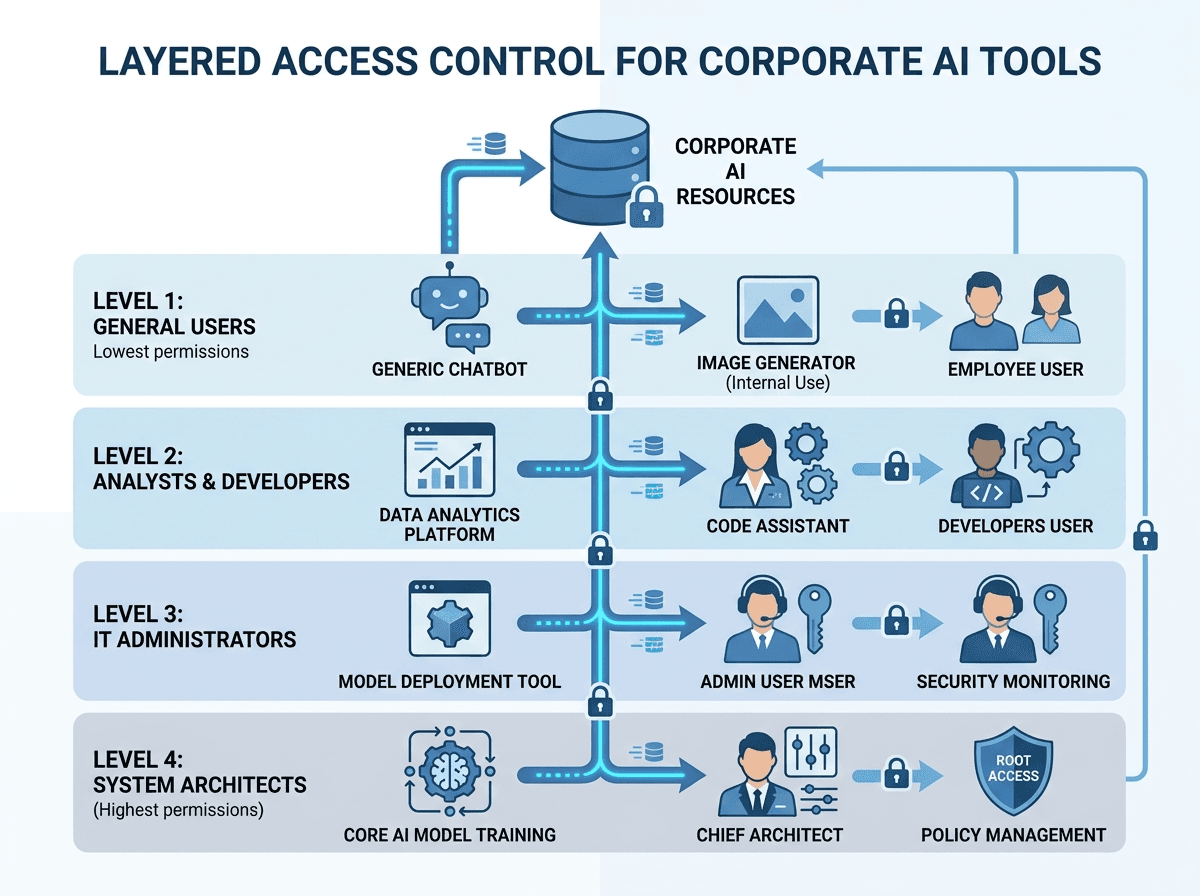
What stands out in OpenAI's approach is the granularity of the strategy. Rather than applying a universal rule, the American company segments its users, adapts protections by profile, and involves third-party experts to validate its choices. This is exactly what French companies are still struggling to do with their own AI deployments.
In most organizations, generative AI is deployed uniformly: a single access point, identical rights for all employees, with no distinction based on role, digital maturity, or sensitivity of data handled. Yet a marketing intern, a senior lawyer handling confidential contracts, and a factory operator do not have the same needs, nor the same usage risks.
The business lesson is clear: effective AI governance relies on fine-grained segmentation of access rights, authorized uses, and safeguards activated by profile. What OpenAI does for teens, your IT and HR teams must do for your employees. This is called a differentiated AI policy — and it's now a prerequisite for any company seriously deploying these technologies.
Parental controls vs. managerial controls: same logic, same urgency
OpenAI is introducing parental controls that allow adults to supervise and guide how minors use ChatGPT. Transposed to a professional context, this feature immediately echoes the challenges of managerial oversight and regulatory compliance.
In France, the legal framework is tightening. The European AI Regulation (AI Act), whose first obligations apply from 2025 onwards, requires companies using high-risk AI systems to document their usage, train their users, and maintain effective human supervision. French companies that have not yet put controls in place for their AI tools — whether ChatGPT, Copilot, or other solutions — face growing legal and reputational risks.
Concretely, what should you implement?
- Formalized AI usage policies, signed by employees
- Dashboards to monitor sensitive interactions
- Escalation procedures when usage exceeds the defined framework
- Periodic reviews of access rights to AI tools, just like standard IT access reviews
These mechanisms are not bureaucratic constraints. They form the foundation of sustainable and defensible AI usage within your organization.
Expert partnerships and training: the investment companies still underestimate
To build protections dedicated to adolescents, OpenAI didn't rely solely on its own engineers. The company collaborated with psychologists, educators, and organizations specializing in child protection. This choice says something essential: technical mastery of AI is not enough. You need experts in human usage to design responsible deployments.
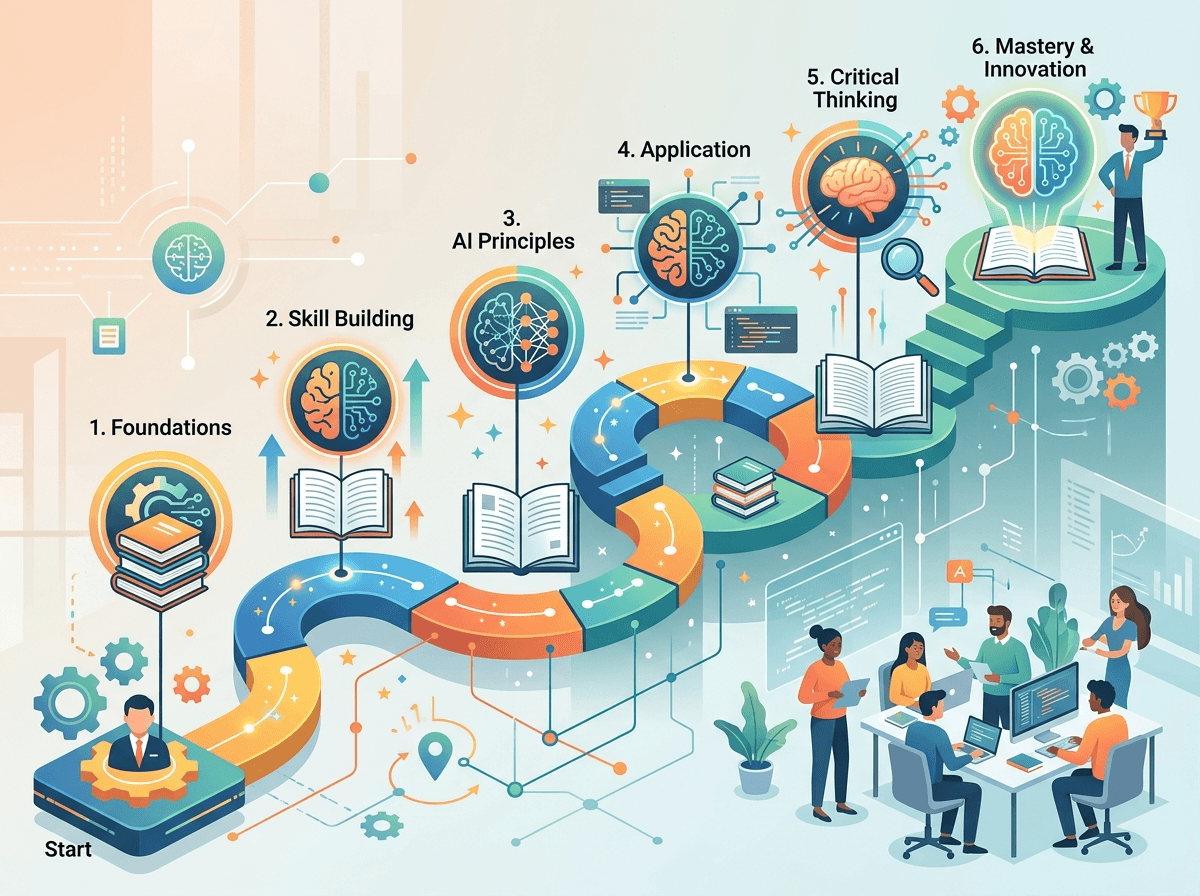
This is precisely where French companies have the most to gain — and the most to lose if they neglect this aspect. Too often, AI training in companies boils down to a tool demonstration, a few sample prompts, and an online tutorial. This is largely insufficient.
Effective training must cover:
- Fundamentals of generative AI: how it works, what its real limitations are (hallucinations, bias, confidentiality)
- Business-specific uses: how to integrate AI into workflows specific to each department
- Ethics and compliance: GDPR, AI Act, protection of customer and employee data
- Critical thinking development: learning to verify, challenge, and complement AI outputs
Companies that invest in this structured training see productivity gains two to three times higher than those relying on spontaneous adoption. Most importantly, they avoid incidents — data leaks, factual errors shared with customers, biased decisions — that can cost far more than the cost of training.
What this concretely changes for your teams starting now
OpenAI's initiative for adolescents is not a marginal development. It marks a broader trend: major AI publishers will gradually segment their offerings, tighten usage conditions, and impose more demanding deployment standards. Companies that anticipate this evolution will have a head start.
Here are three concrete actions to take without delay:
1. Audit your current AI usage. Do you know precisely which AI tools are used in your organization, by whom, for what purpose, and with what data? Many companies are surprised to discover the extent of AI shadow IT within their teams.
2. Map risks by employee profile. Not all your employees have the same exposure level. Identify sensitive functions (finance, legal, HR, customer relations) and prioritize governance and training actions on these populations.
3. Launch a structured AI training program. Not a single session, but a progressive learning path that supports your teams over time, with regular updates in line with technological and regulatory developments.
At Ikasia, we support French companies in this transformation with an approach that combines technical expertise, training tailored to business realities, and continuous regulatory monitoring. Whether you're just beginning your reflection on AI or already in an advanced deployment phase, our consultants help you build a responsible, high-performing, and compliant AI strategy.
Ready to move to the next level? Discover our training and consulting programs at ikasia.ai and let's discuss your specific challenges. Because well-deployed AI is first and foremost a matter of method — not chance.
Tags
Related courses
Related articles

OpenAI Faces Accountability: What the Australian Incident Reveals About AI Governance in Enterprise
Read
AI and National Security: What OpenAI's Strategic Shift Really Means for French Businesses
Read
Advanced AI Standardization: What French Enterprises Must Anticipate Now
ReadWant to go further?
Ikasia offers AI training designed for professionals. From strategy to hands-on technical workshops.