Australian Universities and AI-Native Skills: What French Companies Must Learn to Train Tomorrow's Talent
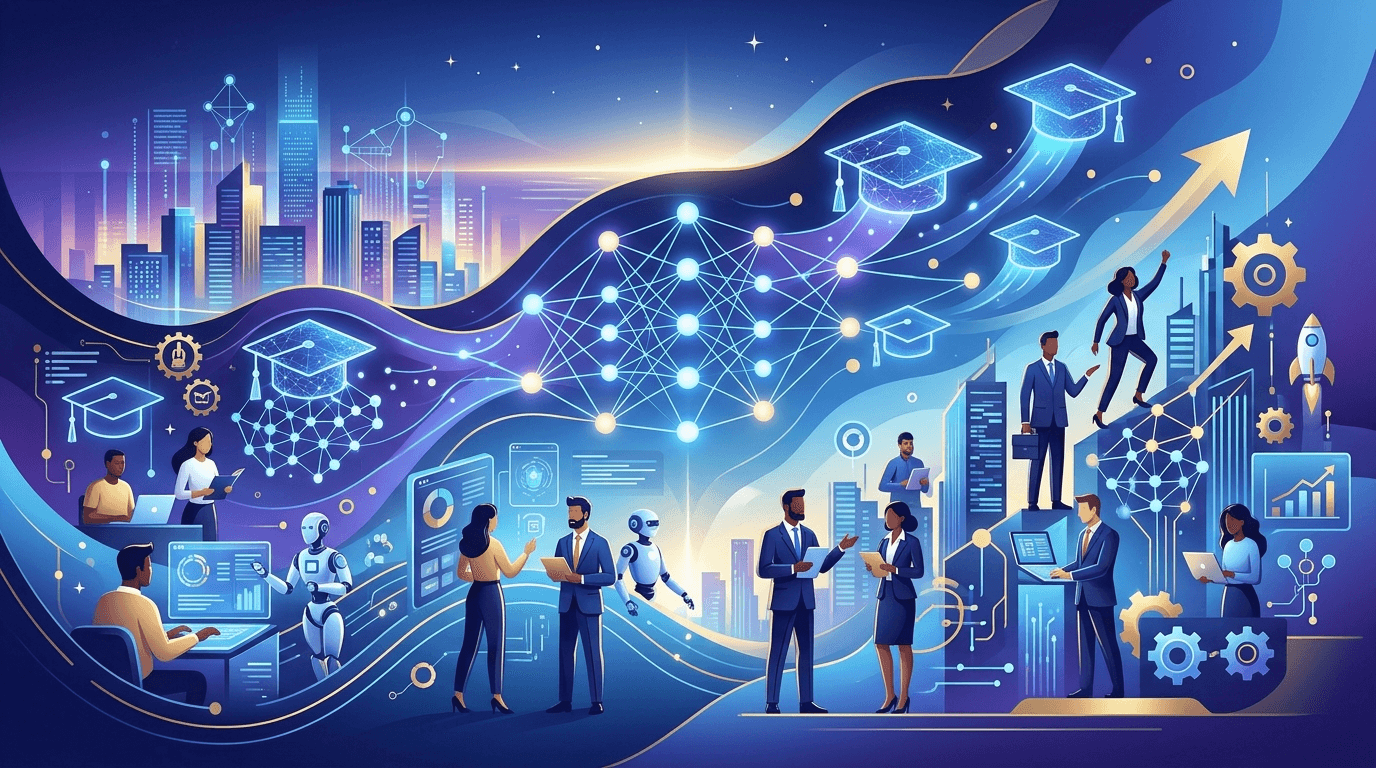
Australian universities have just crossed a critical threshold: they are no longer simply teaching about artificial intelligence, they are training graduates who work with AI as a natural reflex. ChatGPT is now integrated into curricula, pedagogical methods, and the daily practices of students. This movement, driven by a strategic partnership with OpenAI, is giving birth to a new generation of professionals: "AI-native graduates".
For French companies, this signal cannot be ignored. While some are still debating whether AI should be adopted in the workplace and what risks it poses, other countries are actively training a workforce capable of leveraging these technologies from day one. The question is no longer "should we adopt AI?" but rather "how do we avoid a skills deficit when competing against candidates and competitors trained differently?"
What is an "AI-native" graduate and why does it change everything?
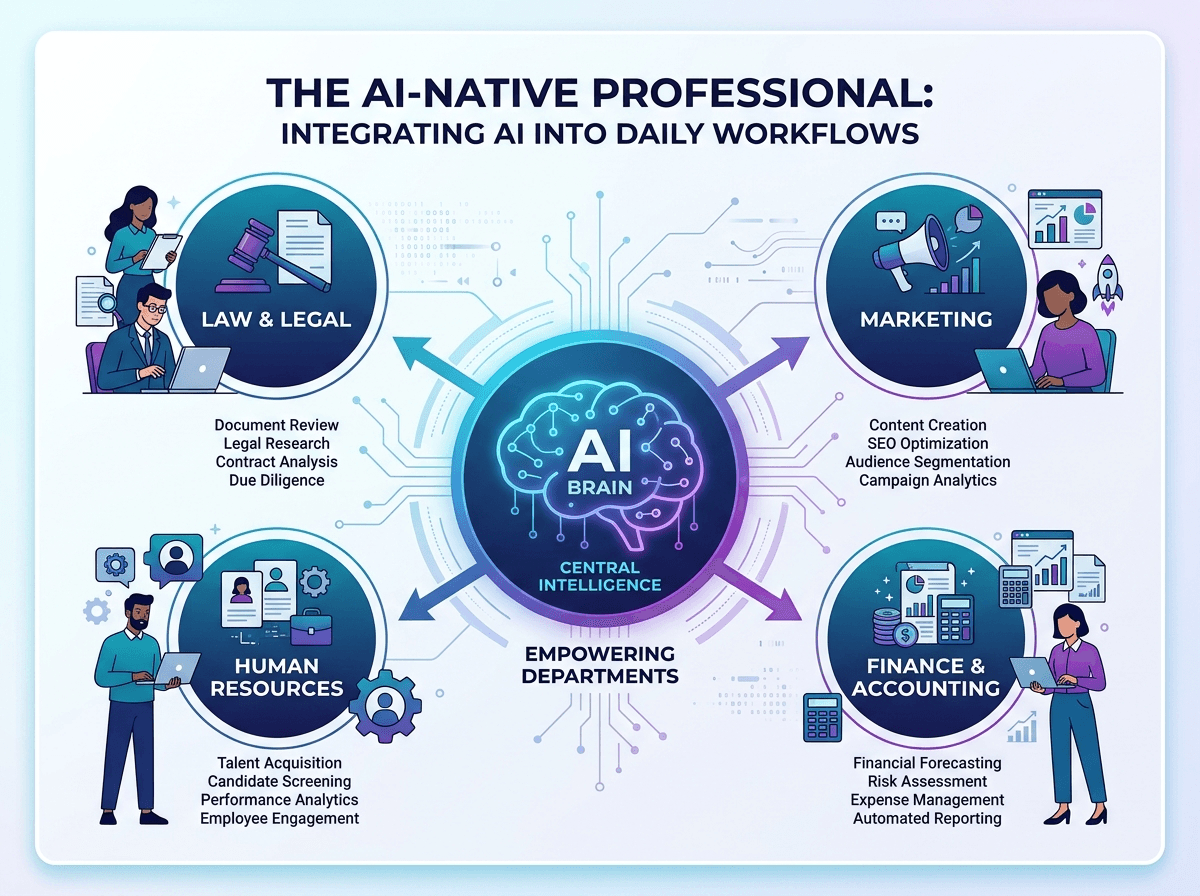
An AI-native graduate is not simply someone who took an introductory machine learning course. This is a professional who has learned to integrate AI into their way of thinking, solving problems, and producing results throughout their education.
In practice, at pioneering Australian universities, students use ChatGPT to:
- Accelerate research and document synthesis from complex sources
- Write, iterate, and improve their work through AI-assisted feedback cycles
- Simulate practical cases across disciplines as varied as law, medicine, engineering, and management
- Develop critical thinking by learning to question, verify, and enrich AI outputs
What distinguishes this approach is the underlying philosophy: AI is not cheating to be banned, it is a professional tool to master. Companies that hire these graduates in two or three years will benefit from immediate operational advantage — collaborators capable of being productive with AI without additional training.
Concrete implications for French companies starting today
It would be tempting to view this development as distant, both geographically and temporally. That would be a strategic mistake. Here's why.
First, the job market evolves faster than recruitment cycles. Global platforms like LinkedIn, tech companies operating in France, and hypergrowth startups are already recruiting based on AI proficiency criteria. Mid-sized companies and large French groups are beginning to integrate these criteria into job descriptions.
Second, your European competitors are acting. The United Kingdom, the Netherlands, and Scandinavian countries have launched similar programs integrating AI into higher education. France is not irredeemably behind, but the window of opportunity is narrowing.
Third, productivity is at stake right now. A recent McKinsey study estimates that companies actively training their teams in generative AI gain an average of 20 to 40% productivity improvement on related tasks. Waiting for new generations to enter the job market means leaving this value on the table for years.
Concrete examples of enterprise application:
- Law firms and legal services: using AI for contract review, regulatory monitoring, and drafting initial versions of documents
- Marketing and communications: multi-channel content production, sentiment analysis, personalization at scale
- HR functions: resume screening, interview grid generation, employee feedback analysis
- Management control and finance: reporting automation, anomaly detection, complex data synthesis
Rethinking internal training through the lens of the Australian model
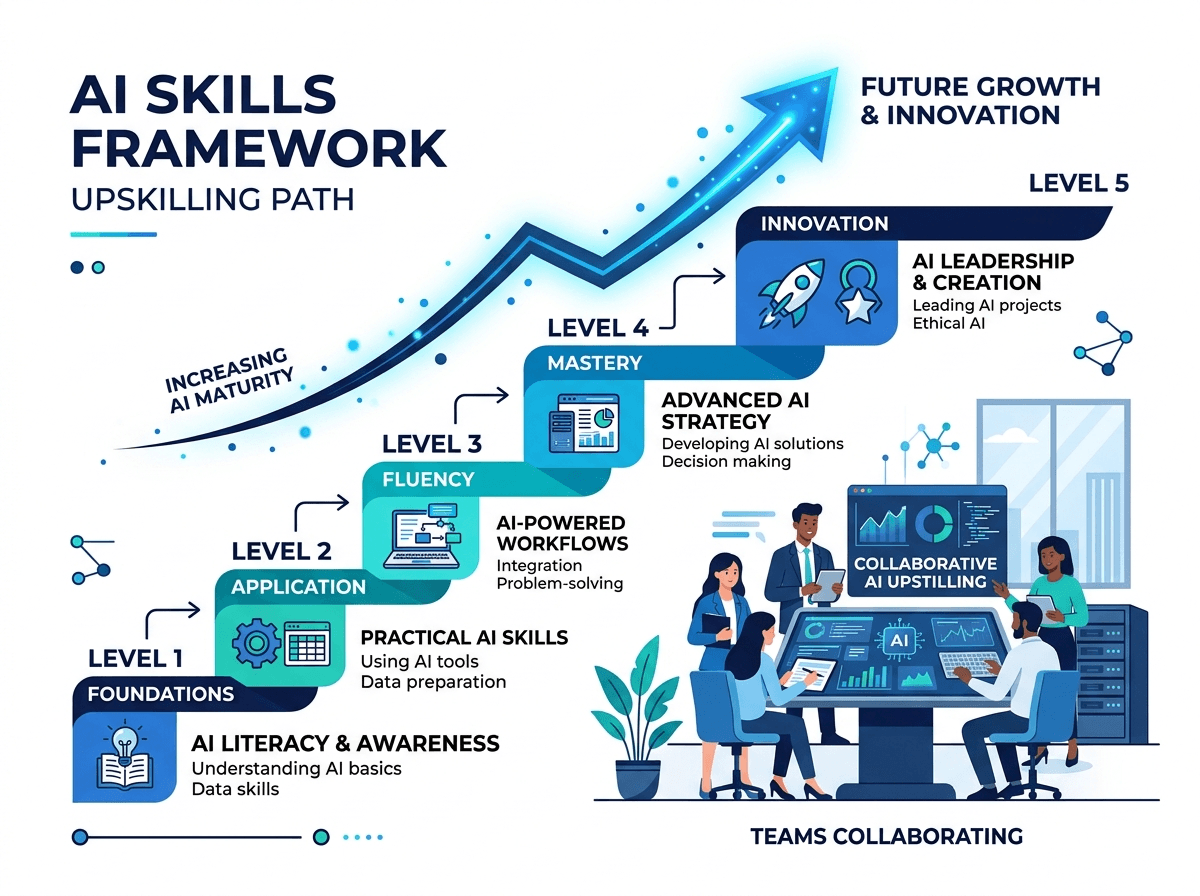
The Australian model is built on a powerful principle: learning through use, anchored in real professional situations. It's not a lecture on "what is AI", it's daily practice integrated into existing workflows.
For HR managers, digital transformation directors, and French operational managers, this requires rethinking skills development in AI across three dimensions:
1. Abandon the one-off training model. A single day of AI awareness training produces little lasting effect. What works is a progressive journey with exercises rooted in your teams' actual job functions.
2. Differentiate expected proficiency levels. Not all your employees need the same level of AI competence. A sales representative, an accountant, and a developer will not use the same tools with the same depth. Training must be modular and role-adapted.
3. Create a culture of safe experimentation. Australian students learn to use AI because they are encouraged, guided, and evaluated on their ability to do so critically. In a company context, this means managers create a space where testing AI is not risky, but valued.
France has the assets to make this turn — provided it acts now
France has a solid industrial base, a culture of academic excellence, and recognized innovation capacity. Several national initiatives — such as France 2030 or the work of the National AI Committee — are laying favorable political foundations.
But real transformation happens at the organizational level. It is companies that decide whether their teams upskill on AI or wait. It is HR directors who choose between traditional training and new hybrid programs. It is leaders who send — or do not send — the signal that AI is a strategic priority and not a topic reserved for IT.
The Australian model teaches us a simple and powerful lesson: tomorrow's competitive advantage is built in today's training practices. Companies that integrate AI into their learning processes now will have significantly more effective teams in 18 to 24 months than competitors who wait.
Ikasia supports French companies in their AI transformation, from executive awareness to operational team training. Our programs are designed on the same principle as the world's best universities: learning by doing, with real use cases from your industry.
Want to assess your organization's AI maturity level and build a tailored training plan? Discover our offerings at ikasia.ai and let's discuss your context.
Tags
Related courses
Related articles
OpenAI + ServiceNow: When Generative AI Finally Automates End-to-End Enterprise Workflows
Read
GPT-5.6 Sol, Terra and Luna on Amazon Bedrock: What French Businesses Need to Know Now
Read
HP and OpenAI Partner to Transform Tomorrow's Enterprise: What Changes for You
ReadWant to go further?
Ikasia offers AI training designed for professionals. From strategy to hands-on technical workshops.