OpenAI + ServiceNow: When Generative AI Finally Automates End-to-End Enterprise Workflows
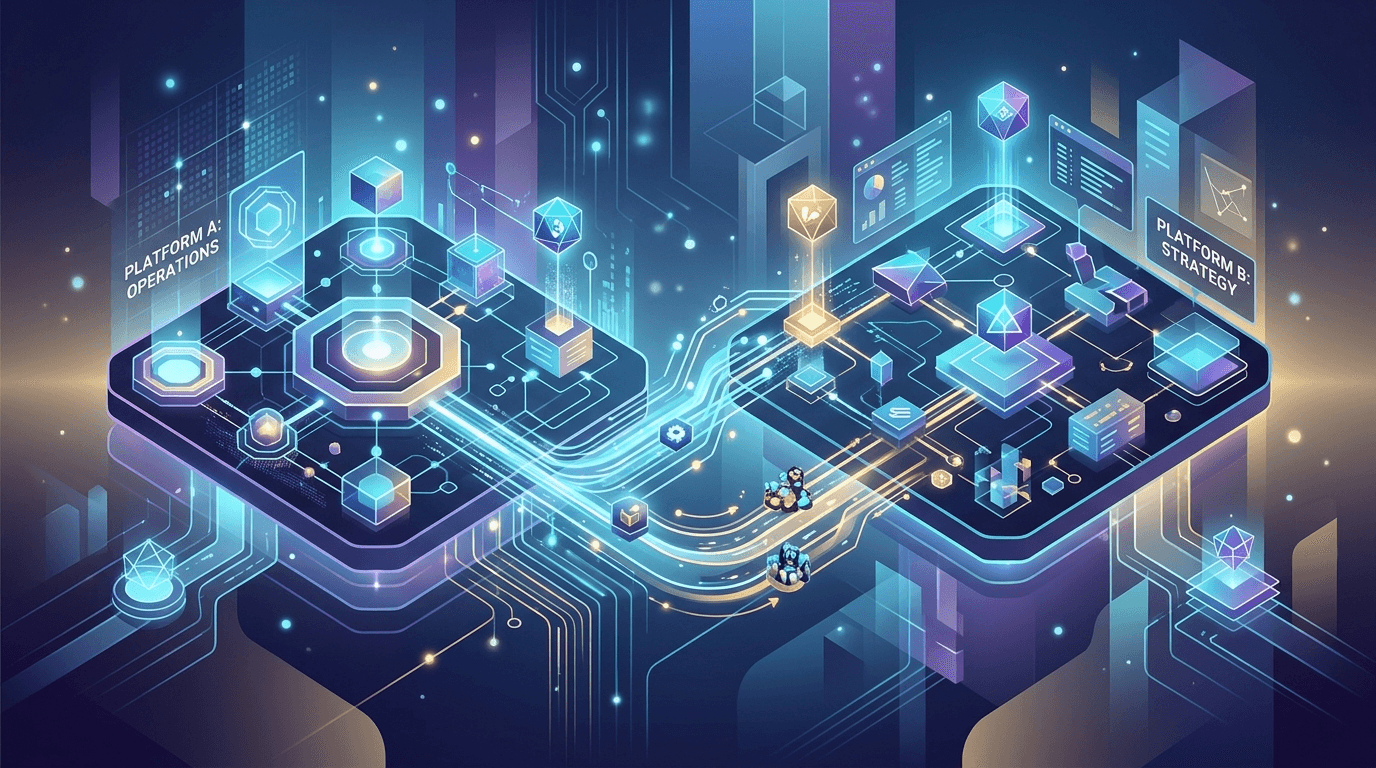
The announcement of the strengthened partnership between OpenAI and ServiceNow marks a decisive turning point for IT and business leaders in large enterprises. While many French organizations are still figuring out how to concretely integrate generative AI into their daily processes, this alliance opens a royal road: connecting the power of GPT models directly to the heart of the systems that run the modern enterprise. For CIOs, CHROs, and digital transformation leaders, it's no longer a question of "if," but "how" and "when."
A partnership that changes the game for ServiceNow users
ServiceNow is today one of the most widely deployed enterprise workflow management platforms in the world, present in thousands of French organizations—from CAC 40 companies to industrial SMEs, to major public administrations. It centralizes IT management (ITSM), human resources (HRSD), customer service, finance, and many other domains.
The expansion of the partnership with OpenAI concretely means two major things:
- OpenAI models integrate natively into ServiceNow, allowing AI agents to understand, process, and resolve tickets or complex requests without systematic human intervention.
- ServiceNow workflows become accessible from ChatGPT and Codex, opening the possibility for employees to trigger business processes simply by conversing with a familiar AI interface.
Concretely, an employee could ask ChatGPT to "create a leave request for next week," and the system would automatically integrate it into the ServiceNow HR workflow, send appropriate notifications, and update the team schedule—all without opening a single application interface.
Concrete use cases that transform team daily operations
For French enterprises, the practical applications are numerous and affect all sectors:
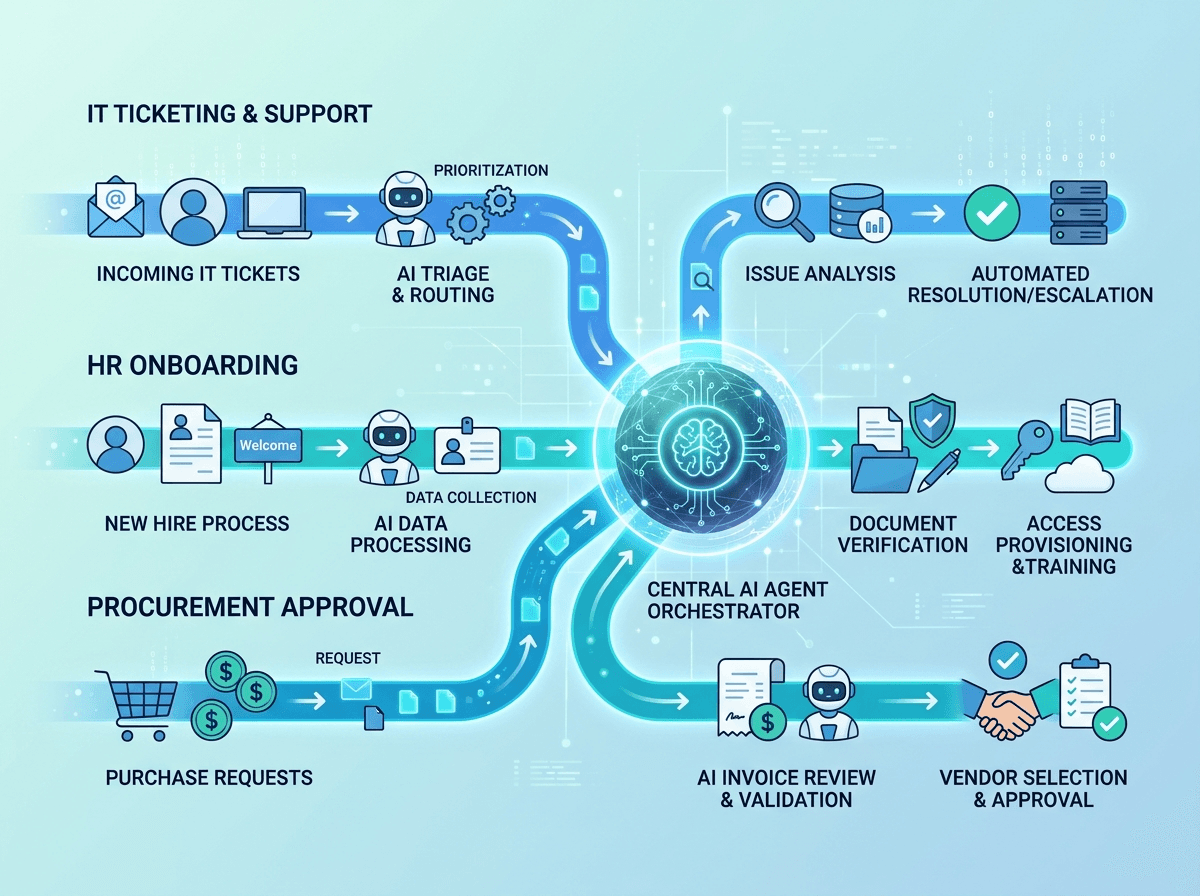
In IT services and support: A GPT-4o-based AI agent can analyze an incident ticket, automatically consult the knowledge base, diagnose the probable cause, and propose—or even apply—the resolution without escalating to a human technician. Sector studies estimate that 40 to 60% of level 1 tickets could be handled this way. For a CIO managing 10,000 tickets per month, this represents tens of thousands of hours saved annually.
In human resources: Onboarding processes, often fragmented across multiple tools, can be orchestrated by an AI agent that guides the new hire, triggers account creation, schedules mandatory training, and sends documents to sign—in natural language, without complex forms.
In procurement and compliance management: Contract validation workflows or purchase request approvals, usually slow and prone to oversights, can be automated with agents capable of verifying regulatory compliance (GDPR, industry standards) and automatically following up with approvers.
In the industrial sector and maintenance: Field teams can submit anomaly reports in natural language via a mobile interface connected to ChatGPT, which automatically creates the work order in ServiceNow, prioritizes the intervention based on machine history, and orders necessary parts.
These examples illustrate a paradigm shift: AI no longer simply "helps" an existing process—it becomes a full actor, capable of acting autonomously within complex information systems.
The strategic challenge of multi-agent orchestration for CIOs
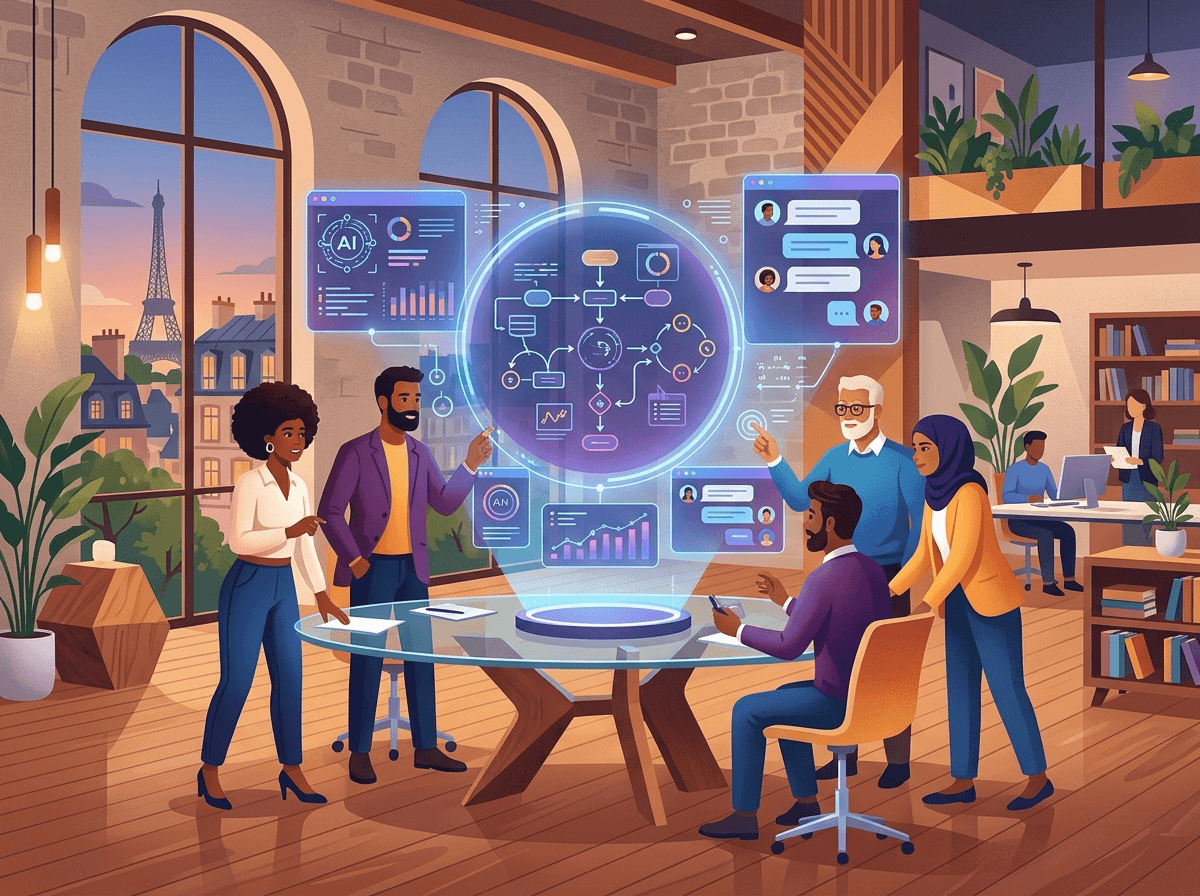
Behind this integration lies a fundamental trend that IT leaders must anticipate now: the era of autonomous and interconnected AI agents. OpenAI is actively pushing its agent framework, and ServiceNow becomes one of the first enterprise environments to host them natively.
For French CIOs, this raises several immediate strategic questions:
AI agent governance becomes critical. Who decides which actions an agent can perform without human validation? What safeguards should be put in place to remain compliant with the upcoming European AI Act, whose first obligations take effect in 2025? Will traceability of automated decisions be sufficient for audits?
Integration with existing systems represents both a technical and organizational challenge. Enterprises with older ServiceNow versions or highly customized configurations will need to plan updates. The coexistence between existing RPA automations (UiPath, Automation Anywhere) and new AI agents must be carefully managed to avoid redundancies and conflicts.
Data management remains a sensitive subject. Passing sensitive HR or financial data through OpenAI models requires rigorous analysis of contractual conditions, pseudonymization mechanisms, and data localization—concerns that are particularly salient for organizations subject to strict sectoral regulations (banking, healthcare, defense).
The most advanced organizations are already beginning to map their priority workflows, identify sensitive data involved, and define their acceptable use policies for AI agents.
Training your teams: the human factor, key to success in these transformations
Integrating AI into platforms like ServiceNow doesn't happen by decree. It succeeds or fails largely on the ability of teams to adopt these new tools and evolve their work practices.
Several profiles must be trained as a priority:
- IT teams and ServiceNow administrators must understand AI agent architectures, know how to configure OpenAI integrations, and master the mechanisms for supervising and auditing automated actions.
- Managers and business leaders must learn to rethink their processes from an "AI-first" logic: which tasks to delegate to an agent, how to define decision rules, how to manage exceptions.
- Day-to-day employees need upskilling in prompt engineering applied to their business context, to effectively interact with conversational interfaces connected to their enterprise systems.
- Legal and compliance teams must integrate AI Act specifics, liability issues related to automated decisions, and documentation obligations.
Without this investment in training, even the best technological integrations remain underutilized, or even generate distrust and rejection. AI transformation is above all a human transformation.
Do you want to prepare your organization to take advantage of these new capabilities? At Ikasia, we support French enterprises in their AI transformation: from strategy definition to operational training of your IT, HR, and business teams. Our experts help you identify priority workflows to automate, secure your usage according to the European regulatory framework, and build the internal skills necessary to remain in control of your transformation.
Contact us on ikasia.ai for a personalized assessment of your AI maturity and discover our training programs adapted to the realities of French enterprises.
Tags
Related courses
Related articles

HP and OpenAI Partner to Transform Tomorrow's Enterprise: What Changes for You
Read
OpenAI + Dell + Codex: AI-Powered Software Development Comes to Your Servers — What Changes for French Enterprises
Read
GPT-5.4 mini and nano: what ultrafast AI models concretely change for your business
ReadWant to go further?
Ikasia offers AI training designed for professionals. From strategy to hands-on technical workshops.