ChatGPT for Teens: What OpenAI's Youth Strategy Reveals About the Future of AI in Business

OpenAI has just crossed a major strategic milestone: launching ChatGPT for Teens, a tailored version of its assistant for adolescents, accompanied by a college planning tool, flashcards, personalized quizzes, and—notably—a Teen AI Council, an advisory board composed of young users invited to co-build the product's future. Behind this consumer-facing initiative lie powerful signals for HR directors, training managers, and decision-makers at French companies. Because today's teenagers are tomorrow's employees. And they will enter the job market with a fundamentally different relationship to AI than their predecessors.
Pedagogical AI: A Booming Market Redefining Training Standards
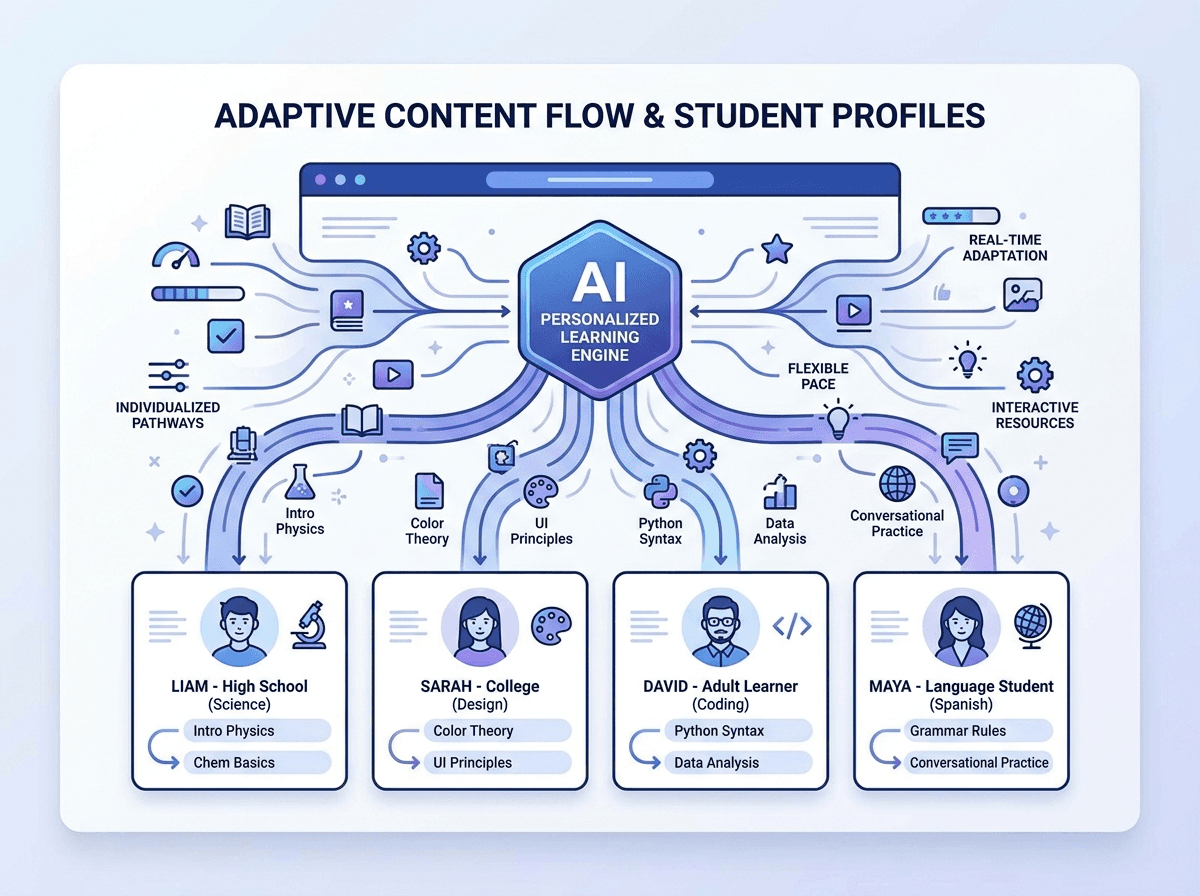
OpenAI's decision to create purpose-built learning tools—adaptive flashcards, on-the-fly generated quizzes, personalized guidance in university applications—is far from trivial. It reflects a core conviction: the most powerful AI is the one that adapts to each individual's level, pace, and objectives.
This logic translates directly to enterprise settings. Professional training platforms like LMS (Learning Management Systems) already integrate AI modules, but most remain generic tools. The real breakthrough—the one OpenAI is experimenting with teenagers—is radical personalization: content that adjusts in real-time, detects knowledge gaps, reformulates until understanding is achieved.
For a manufacturing SME in Lyon or a consulting firm in Paris, this means concretely: custom onboarding paths, compliance training (GDPR, workplace safety, compliance) made more engaging, and continuous assessments that replace traditional annual multiple-choice tests. French companies investing in these approaches now will gain decisive competitive advantages in talent retention and skills development.
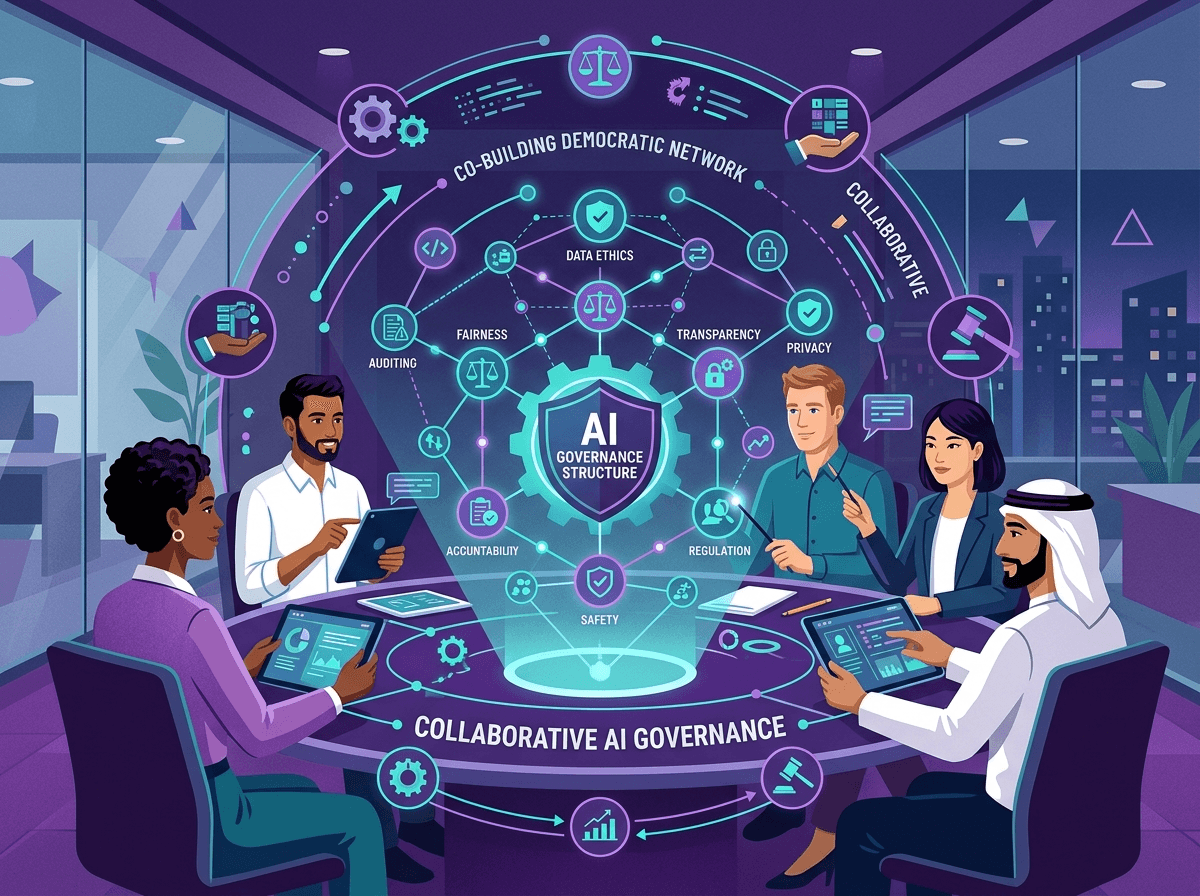
The Teen AI Council: When Co-Construction Becomes an AI Governance Method
One of the most interesting elements of OpenAI's announcement is the creation of an adolescent advisory council. Young users are invited to test features, share feedback, and actively participate in the product roadmap. This isn't marketing: it's a governance method.
In business, this approach directly echoes what are called internal AI committees or participatory innovation circles. Major French companies like Michelin, Decathlon, and La Poste have already experimented with similar formats: groups of employees—not necessarily technical experts—invited to test AI tools, report pain points, and suggest use cases. Results consistently outperform top-down deployments where tools are imposed without consultation.
Concrete benefits of such an approach:
- Better adoption of deployed tools
- Early detection of biases or errors in AI outputs
- Strengthened sense of belonging and engagement
- Identification of business use cases unforeseen by management
The lesson is clear: AI isn't deployed, it's co-constructed. Companies that involve their teams in governing their AI tools achieve better results, faster, with less resistance to change.
Generation Z is Arriving in the Workplace with Its Own AI Standards—Are You Ready?
Adolescents using ChatGPT for Teens today to prepare their university applications will be on your teams in two to five years. And they'll have very specific expectations regarding the digital tools at their disposal.
For them, an AI assistant that doesn't understand context, that doesn't personalize responses, that requires three days of training before being usable... will seem as archaic as a fax machine. This generation was trained in AI in an intuitive, continuous, immersive way. They won't tolerate obsolete interfaces or manual processes where automation is possible.
For French HR directors and IT leaders, this means a double urgency:
- Modernize the digital work environment before the massive arrival of these profiles
- Train current managers to understand and support employees whose relationship with AI will be fundamentally different from theirs
A 45-year-old sales rep and a 20-year-old intern won't use the same prompts, won't have the same reflexes, won't trust the same outputs. Managing this generational coexistence around AI is one of the major HR challenges of the next five years in France.
Train Your Teams Today to Avoid Being Overwhelmed by the Transition Tomorrow
OpenAI's initiative toward teenagers sends an indirect but powerful message to companies: those who learn AI young, in context, with concrete objectives, become expert users. Training through use, progressive and grounded in reality, is infinitely more effective than theoretical training disconnected from daily professional life.
This is exactly the philosophy Ikasia defends in its training and support programs. Our interventions go beyond explaining what an LLM is or listing ChatGPT's features. We work with your teams on their real use cases: drafting commercial proposals, analyzing HR data, automating reports, generating marketing content, enhanced customer support.
Our formats are designed to fit into the constrained schedules of French professionals: two-hour workshops, two-day experimentation sprints, ongoing support for internal AI champions. The goal isn't to train machine learning experts, but to create augmented employees, capable of using AI as a daily lever for productivity and added value.
OpenAI's announcement about ChatGPT for Teens isn't merely consumer news. It's a strategic signal about where AI is headed: personalized, participatory, pedagogical, and now integrated from a young age into cognitive habits. French companies that anticipate this evolution—by training their teams, modernizing their tools, and establishing inclusive AI governance—will be those that benefit from the next generation of talent rather than suffer the gap.
Want to prepare your teams for the AI era? Discover our training and consulting programs at ikasia.ai and let's discuss your specific challenges.
Tags
Related courses
Related articles
How Oracle Transforms Days of Work Into Minutes With AI: Lessons for International Companies
Read
DeepMind's AI Co-Clinician: What the Medical Revolution Means for Every French Company
Read
Enterprise AI: OpenAI Accelerates Transformation and What It Means for Your Teams
ReadWant to go further?
Ikasia offers AI training designed for professionals. From strategy to hands-on technical workshops.