GPT-Rosalind: How OpenAI's AI is Revolutionizing Life Sciences Research — What French Enterprises Need to Know
Artificial intelligence has just reached a new milestone in the field of life sciences. OpenAI has announced the launch of the Rosalind academic plan, offering eligible research laboratories sponsored access to GPT-Rosalind, a model specifically designed to accelerate research in biology, pharmacology, and biotechnology. This announcement, which might seem reserved for the academic world, actually sends a strong signal to all French companies operating in healthcare, agribusiness, cosmetics, and fine chemistry sectors. Here's a breakdown of the stakes and opportunities.
GPT-Rosalind: An AI Model Tailored for Life Sciences
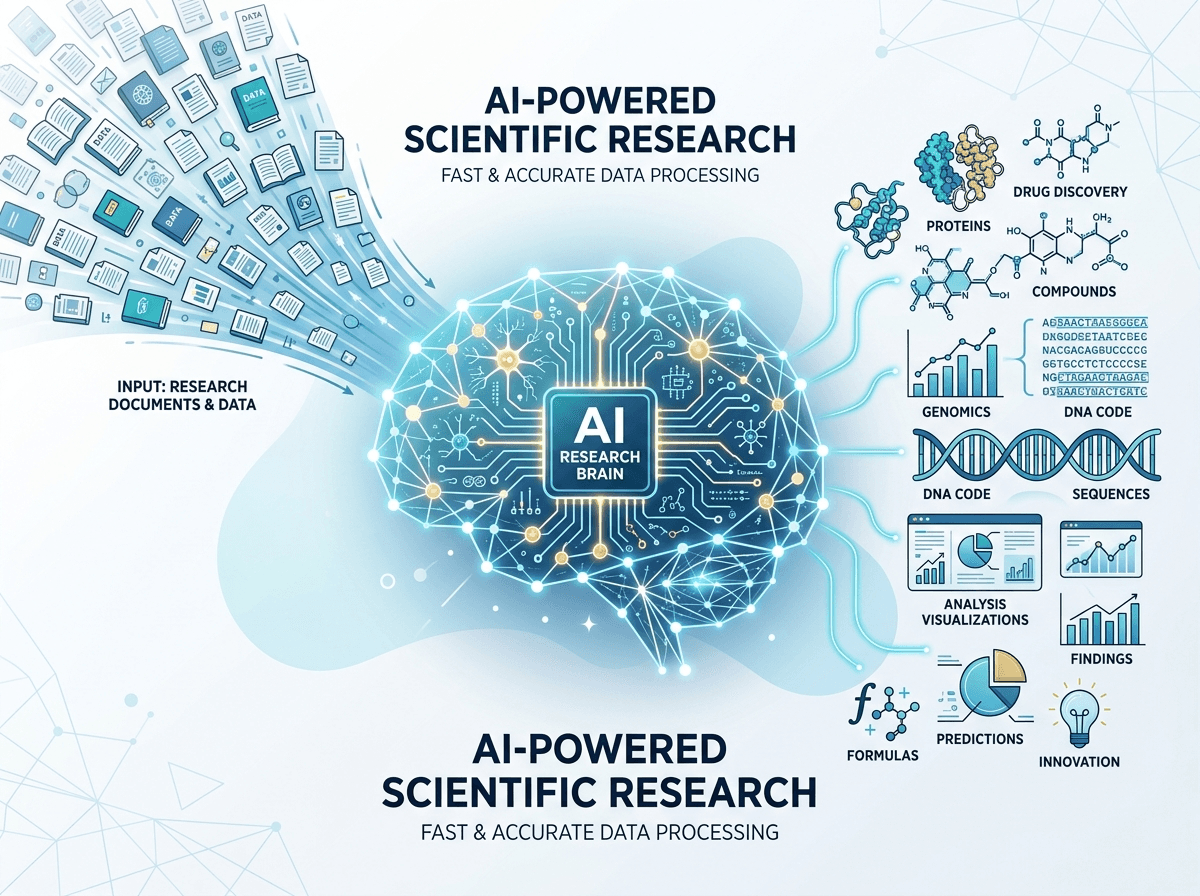
Unlike generalist versions of GPT, GPT-Rosalind is optimized for complex data specific to life sciences: genomic sequences, proteomics data, dense scientific literature, clinical trial results, and biomolecular models. The Rosalind academic plan allows university laboratories to access this tool within a structured framework, with tools dedicated to translational research.
Why this name? As a tribute to Rosalind Franklin, the British crystallographer whose work was fundamental to the discovery of DNA structure — a figure symbolizing scientific rigor and the power of data in service of biology.
For French companies, the question is not whether this technology will transform their sector, but how quickly they will integrate it into their processes. Because what academic laboratories are exploring today with GPT-Rosalind are the foundations for tomorrow's industrial innovations.
Concrete Applications for French Healthcare and Biotech Companies
GPT-Rosalind's use cases in a business context are already numerous and tangible:
1. Accelerating Scientific Literature Review An R&D team in a French pharmaceutical SME typically spends several weeks analyzing existing publications before launching a project. With a model like GPT-Rosalind, this phase can be reduced to a few days, or even hours, by synthesizing thousands of relevant articles with high scientific accuracy.
2. Assistance with Regulatory Dossier Drafting In the medical device or pharmaceutical sectors, preparing dossiers for ANSM or EMA is a time-consuming process. Specialized models can assist regulatory affairs teams in structuring and verifying these complex documents.
3. Analysis of Biological and Genomic Data French biotech startups, particularly in clusters like Paris-Saclay, Lyon Biopôle, or Bordeaux, generate massive volumes of biological data. GPT-Rosalind can become a co-pilot for data scientists, helping them interpret results, formulate hypotheses, or identify anomalies in datasets.
4. Competitive Intelligence and Scientific Monitoring For scientific departments of major groups like Sanofi, L'Oréal, or Michelin (in its bio-sourced materials divisions), having an AI capable of continuously analyzing global scientific output represents a decisive competitive advantage.
The Strategic Signal Not to Miss: AI is Specializing, Companies Must Follow
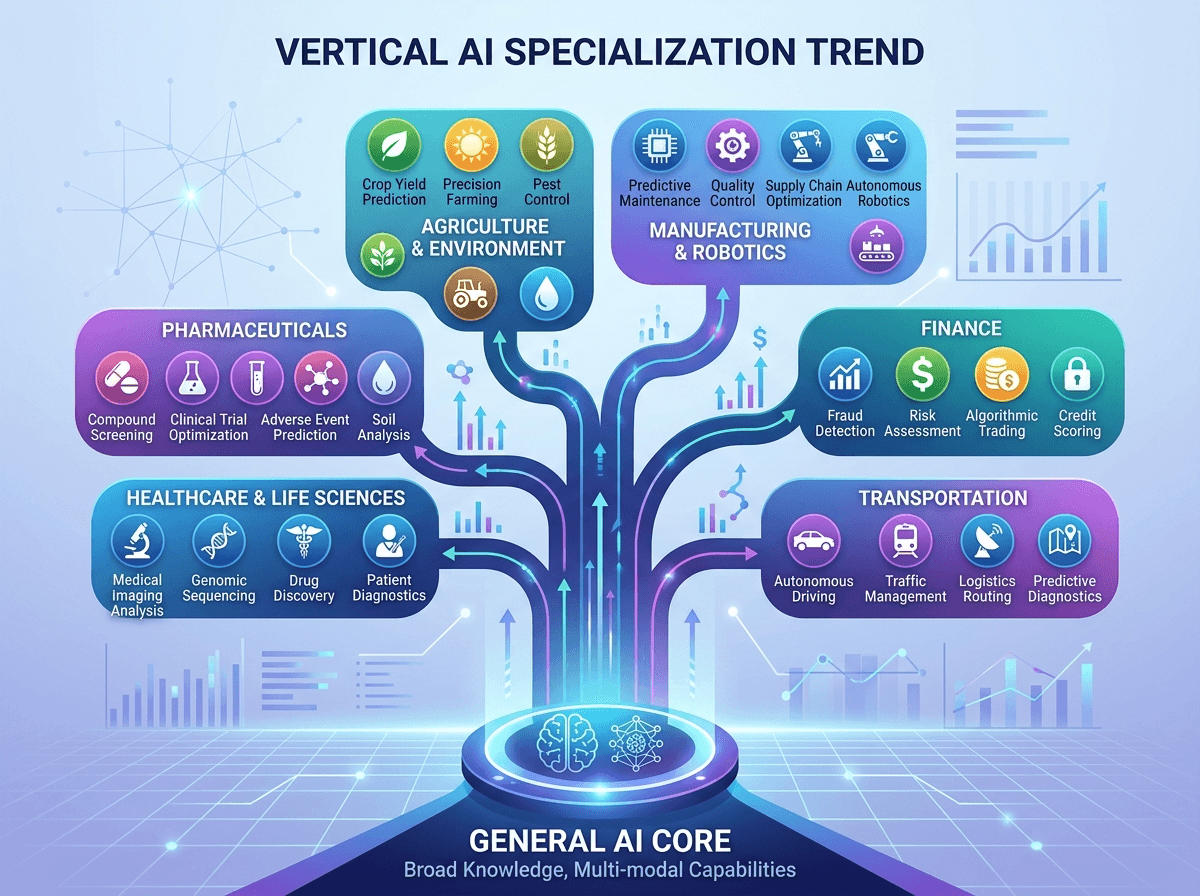
The announcement of GPT-Rosalind illustrates an underlying trend that all executive teams must integrate into their roadmap: generalist AI is gradually giving way to vertical models, ultra-specialized by sector or field of knowledge.
We're already observing this dynamic with models dedicated to law, finance, engineering, or cybersecurity. Life sciences is joining this wave with GPT-Rosalind. Tomorrow, it will be energy, precision agriculture, or sustainable construction sectors.
For French companies, this shift implies several strategic imperatives:
- Identify vertical models relevant to their core business and don't wait for competitors to adopt them first.
- Build partnerships with academic laboratories that now benefit from access to these tools through the Rosalind plan. Public-private collaboration in R&D takes on a new dimension in the era of specialized AI.
- Adapt data infrastructure: an AI model only performs well if the data feeding it is structured, clean, and accessible. This is often the most underestimated challenge.
- Anticipate ethical and regulatory questions, particularly within the European AI Act framework, which imposes specific obligations for high-risk AI systems used in medical fields.
Training Teams: The Human Challenge at the Heart of Transformation
Access to a tool like GPT-Rosalind only creates value if teams know how to use it intelligently. And that's precisely where many French organizations still struggle. Training is not a luxury — it's the most underexploited lever for differentiation.
Concretely, training teams on AI in a scientific or medical context isn't simply about learning to write prompts. It's about developing a new professional mindset, founded on three pillars:
- Augmented critical thinking: knowing how to evaluate AI model outputs with subject matter expertise, identify hallucinations or biases, and never delegate scientific judgment to the machine.
- Human-machine collaboration: learning to work in tandem with AI to multiply productivity, particularly in exploration, synthesis, and writing phases.
- Data culture: understanding how models work, what data they consume, and how to structure your own data to get the best from it.
At Ikasia, we support R&D teams, scientific leadership, and support functions in companies in healthcare, biotech, and industrial sectors to develop exactly these competencies. Our training combines theoretical insights, real-world business case simulations, and post-training support to sustainably anchor best practices.
Ready to Integrate Specialized AI Into Your Strategy?
The emergence of GPT-Rosalind is just the beginning of a new era where every sector will have its own cutting-edge AI models. French companies that gain an edge today will be those that have invested in upskilling their teams and developing a coherent AI strategy.
Ikasia accompanies you in this transformation: AI maturity audit, roadmap definition, tailored training, and operational coaching. Whether you're a biotech startup, pharmaceutical laboratory, or manufacturer looking to integrate AI into your R&D processes, we have an approach suited to your challenges.
👉 Discover our training and consulting programs at ikasia.ai and let's take time for an initial conversation to assess together how AI can transform your organization.
Tags
Related articles
HP and OpenAI Partner to Transform Tomorrow's Enterprise: What Changes for You
Read
GPT-Rosalind: How AI Is Revolutionizing Life Sciences and Opening New Opportunities for French Companies
Read
GPT-5.5 Cyber: How AI Becomes the Digital Shield for French Enterprises
ReadWant to go further?
Ikasia offers AI training designed for professionals. From strategy to hands-on technical workshops.