NVIDIA Cosmos 3: How Physical AI is Redefining Industry and Robotics for French Enterprises
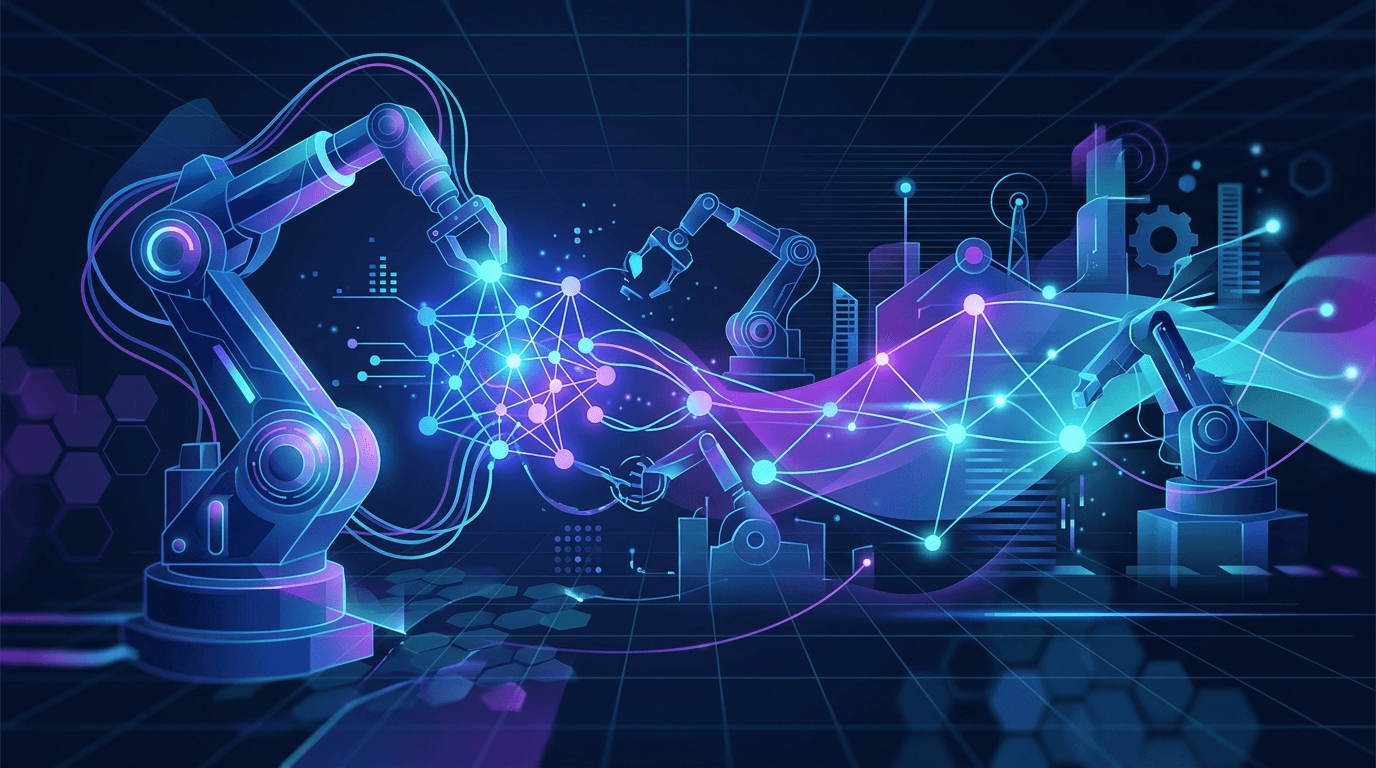
Artificial intelligence is reaching a decisive turning point. With the launch of NVIDIA Cosmos 3, we are witnessing the emergence of the first open-source omni model designed specifically for reasoning and action in the physical world. For French companies engaged in industrial transformation, robotics, or logistics, this is not just a simple technological advancement: it's a paradigm shift that deserves immediate strategic attention.
What is NVIDIA Cosmos 3 and why does it change everything?
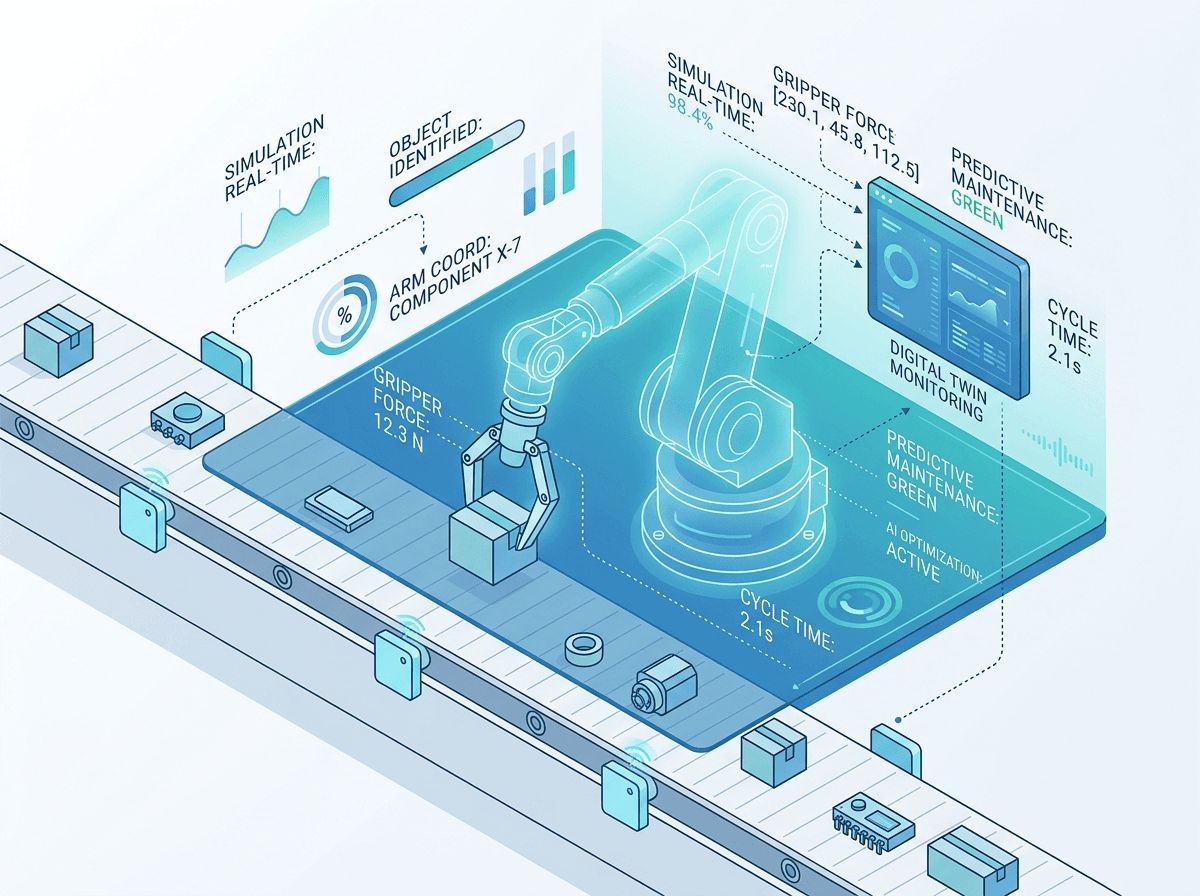
Cosmos 3 is what researchers call an omni model for physical AI: a system capable of simultaneously perceiving images, videos, text, and sensor data, then reasoning about this information to produce concrete actions in a real or simulated environment. Where large language models (LLMs) like GPT or Mistral excel at text processing, Cosmos 3 is designed to understand the physics of the real world — movements, spatial constraints, interactions between objects.
What distinguishes this announcement is its open-source nature. Available via Hugging Face, Cosmos 3 can be downloaded, modified, and deployed by any organization without dependence on a proprietary cloud service. For French companies concerned about their digital sovereignty and the confidentiality of their industrial data, this is a compelling argument.
Concretely, the model excels in three key areas:
- Simulation of physical scenarios to test robots or automated systems before their real deployment
- Spatial and temporal reasoning, enabling the planning of complex action sequences
- Generation of realistic synthetic data to train other industrial AI systems
Concrete applications for French industry and logistics
The use cases for Cosmos 3 are particularly relevant for the French economic landscape, notably its industrial champions, manufacturing SMEs, and logistics sector in full transformation.
In manufacturing, an automotive equipment supplier or tier-1 or tier-2 subcontractor can use Cosmos 3 to simulate and optimize the work of robotic arms on an assembly line without disrupting actual production. The model can generate thousands of movement scenarios, identify collision risks, and refine trajectories — all in a virtual environment before any physical deployment.
In logistics and warehousing, automated warehouses — a rapidly growing sector in France with players like Geodis or FM Logistic — can leverage Cosmos 3 to train picking robots to recognize and handle a wide variety of products. The model's ability to reason about shape, estimated weight, and object fragility opens unprecedented perspectives for collaborative robotics.
In precision agriculture, a strategic sector for France, Cosmos 3 can power autonomous systems capable of analyzing crop condition through drone imagery, planning interventions, and operating autonomous agricultural machinery with fine terrain understanding.
In construction and civil engineering, planning of complex projects can benefit from an AI capable of simulating work sequences, anticipating spatial conflicts between teams, and optimizing the use of heavy equipment.
A strategic lever for competitiveness: between opportunity and integration challenges
Enthusiasm around Cosmos 3 is legitimate, but French executive leadership and IT directors must approach this technology with a structured approach. Several real challenges deserve to be anticipated.
The computing power required remains significant. Running a model of this scale locally requires robust GPU infrastructure, which means either a hardware investment or recourse to sovereign cloud solutions such as those offered by OVHcloud or Scaleway.
Integration with existing systems constitutes the second major challenge. French companies often have heterogeneous machine parks, PLCs and SCADA systems that communicate via standardized industrial protocols. Connecting Cosmos 3 to these ecosystems requires expertise in data engineering and hybrid architectures.
Management of training data is also critical: for a model like Cosmos 3 to be truly performant on a specific use case, it must be fine-tuned on proprietary data. This raises important questions about data governance, GDPR, and protection of industrial intellectual property.
Despite these challenges, organizations that invest now in mastering these technologies will gain a sustained competitive advantage over competitors who wait for the technology to be "more mature."
Training your teams in Physical AI: an essential investment
The advent of models like Cosmos 3 redefines the skills required within French industrial companies. Technical teams can no longer rely solely on mastering classical programming tools or even the basics of machine learning applied to structured data.
Capability building must be structured around several priority areas:
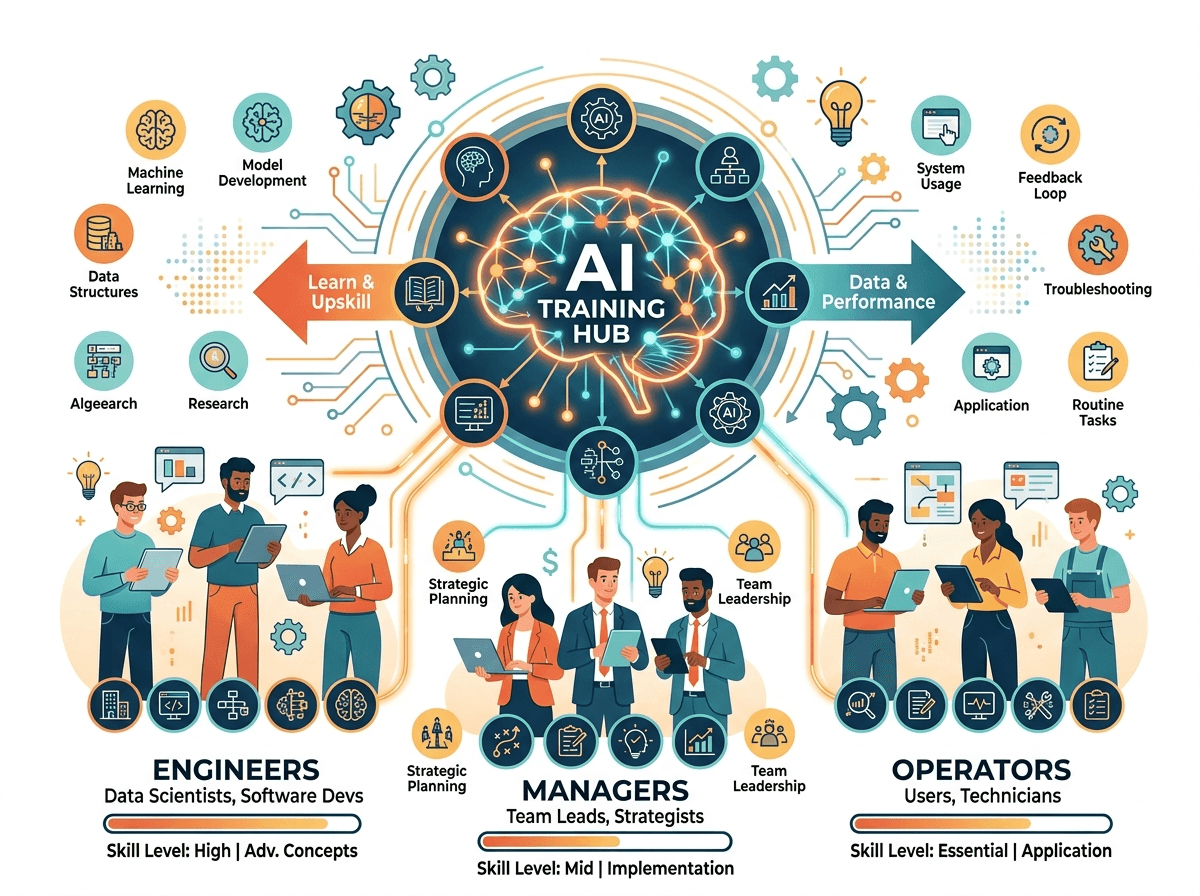
For technical teams and data scientists, understanding multimodal architectures, mastery of fine-tuning large models, and expertise in physical simulation become differentiating skills. Frameworks like PyTorch, combined with simulation tools like NVIDIA's Isaac Sim, form a technological foundation to grasp.
For managers and decision-makers, the ability to assess the maturity of a physical AI use case, build a solid business case including infrastructure costs, and pilot complex integration projects is now essential. Understanding possibilities without necessarily coding remains a first-order strategic skill.
For field operators and technicians, who will be in direct contact with automated systems, training in human-machine collaboration, AI supervision, and preventive maintenance of robotic systems is essential to ensure both performance and safety.
At Ikasia, we support French companies in this capability building with customized training programs, grounded in real use cases and adapted to each level of technological maturity.
Is your company ready for the physical AI era?
Don't let your competitors gain a head start on one of the most important technological transitions of the decade. Ikasia's team of experts helps you evaluate your opportunities, train your teams, and define your AI roadmap — from strategy to deployment.
Discover our training and consulting programs at ikasia.ai and contact our experts for an initial discussion with no obligation.
Tags
Related articles
Agentic AI and Scientific Computing: What Laboratories Are Teaching French Companies
Read
Project Camellia: When OpenAI Builds Data Centers, French Businesses Must Rethink Their AI Strategy
Read
The Era of AI Agents: How to Drive Your Investments for Measurable ROI
ReadWant to go further?
Ikasia offers AI training designed for professionals. From strategy to hands-on technical workshops.