Robotic Surgery and Generative AI: NVIDIA Cosmos Redefines Real-Time Simulation
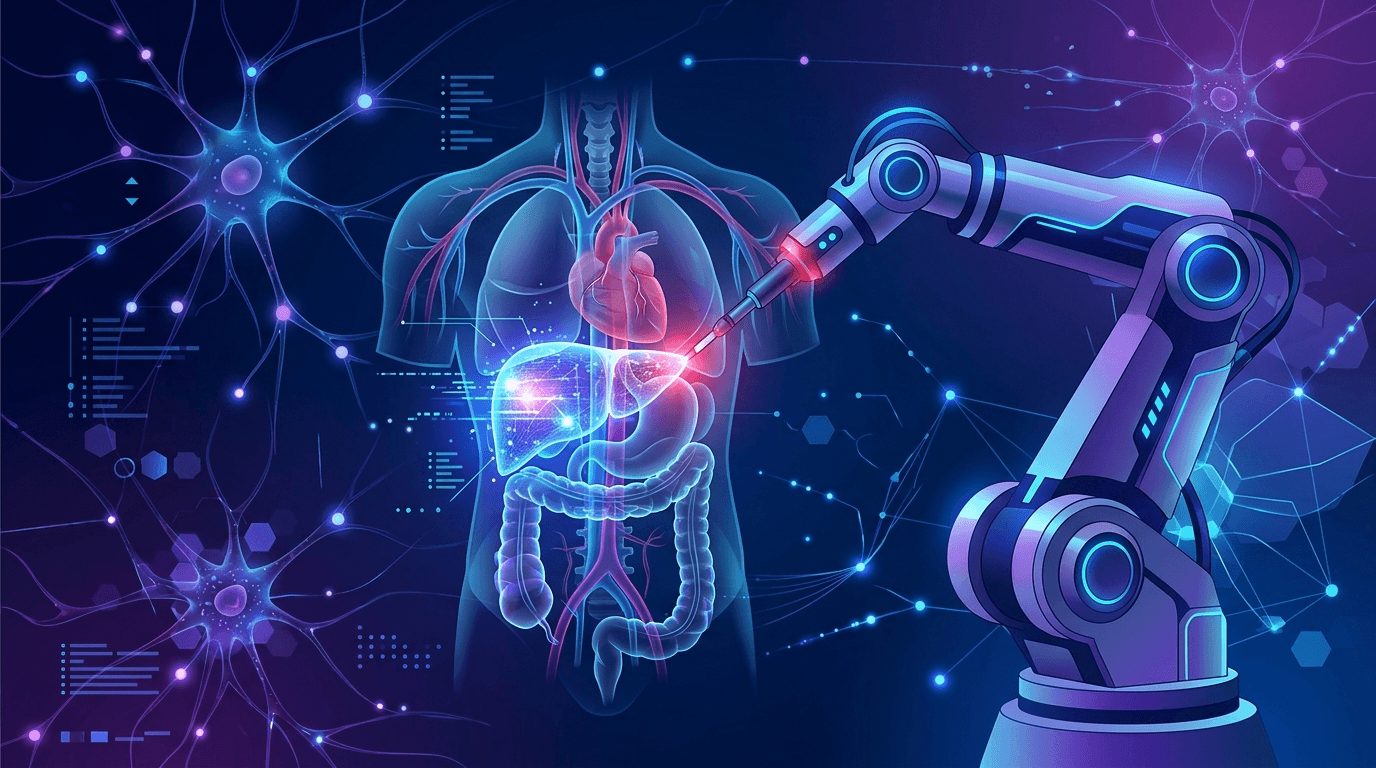
The convergence between generative artificial intelligence and surgical robotics has reached a new milestone. NVIDIA has just unveiled Cosmos-H-Dreams, a real-time generative simulation model capable of reproducing surgical environments with unprecedented realism. For French companies in the MedTech, industrial robotics, and digital health sectors, this announcement is far from anecdotal: it foreshadows a profound transformation in how intelligent robotic systems are designed, trained, and deployed.
France, with its industry leaders like Stryker France, Collin Medical, and numerous startups from the French Tech Santé ecosystem, is directly affected by this technological shift. Understanding what Cosmos-H-Dreams represents — and above all what it strategically implies — has become essential for executives and technical teams.
Generative Simulation: A Technological Breakthrough for Surgical Robotics
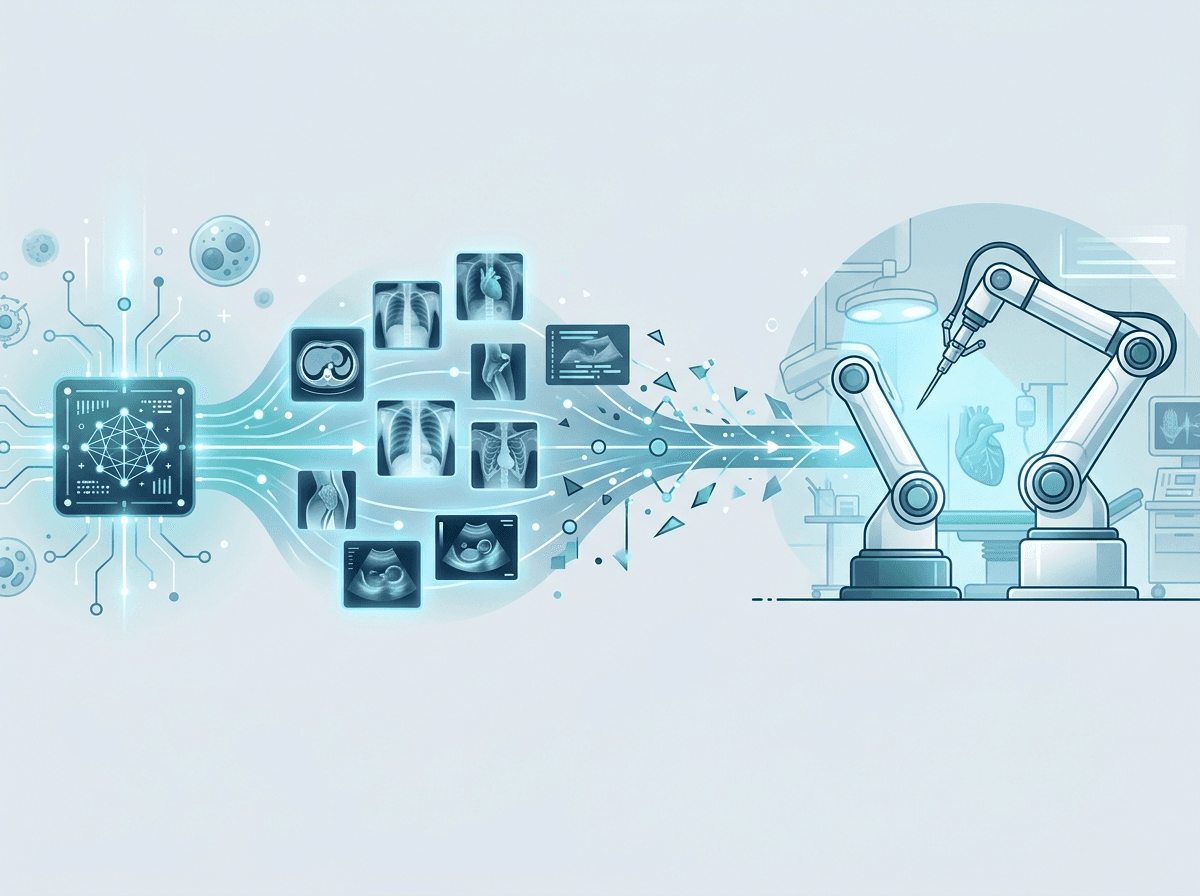
Traditionally, training a surgical robot requires thousands of hours of real data collected in operating rooms, manually annotated, in strict compliance with regulatory constraints (GDPR, HDS in France). This process is costly, time-consuming, and subject to numerous ethical and legal barriers.
Cosmos-H-Dreams changes the game by generating photorealistic and dynamic simulations of surgical environments directly from text or video data. Concretely, the model is capable of:
- Simulating varied surgical scenarios (different anatomies, unforeseen complications, changing lighting conditions) without exposing real patients
- Producing high-quality synthetic training data to feed AI models embedded in robots
- Operating in real time, which opens the door to continuous adaptive training loops
For companies developing robotic solutions or connected medical devices, this means a drastic reduction in time-to-market and validation costs — two critical parameters in a sector where the regulatory cycle (CE marking class III, FDA) can span several years.
Concrete Applications for French Companies
Beyond pure surgical robotics, the implications of Cosmos-H-Dreams radiate across multiple sectors present in France.
In MedTech and medical devices, manufacturers can now envision creating ultra-realistic surgical digital twins to test their instruments before any clinical validation. A company like Surgiqual Institute or a university hospital laboratory (Lyon University Hospital, AP-HP) could use this type of technology to simulate thousands of interventions and identify failure points in a robot before its first use on a patient.
In medical and paramedical training, surgery schools and nursing training institutes (IFSI - Instituts de Formation en Soins Infirmiers) could integrate generative learning environments where each student faces unique clinical cases, generated on-the-fly, impossible to memorize. This marks the end of static simulators and mannequins with fixed scenarios.
In manufacturing and logistics, the underlying technology — real-time generative simulation to guide robotic arms in complex environments — is directly transferable. French industrial groups like Michelin, Safran, or Faurecia, who are increasingly integrating cobots into their production lines, could draw inspiration from these approaches to accelerate training of their robotic systems in simulated environments before real deployment.
For health software publishers (SaaS MedTech), Cosmos opens the possibility of offering simulation modules integrated directly into operating room management platforms, thus creating new revenue streams and new differentiation arguments on a consolidating European market.
Strategic and Regulatory Challenges to Anticipate
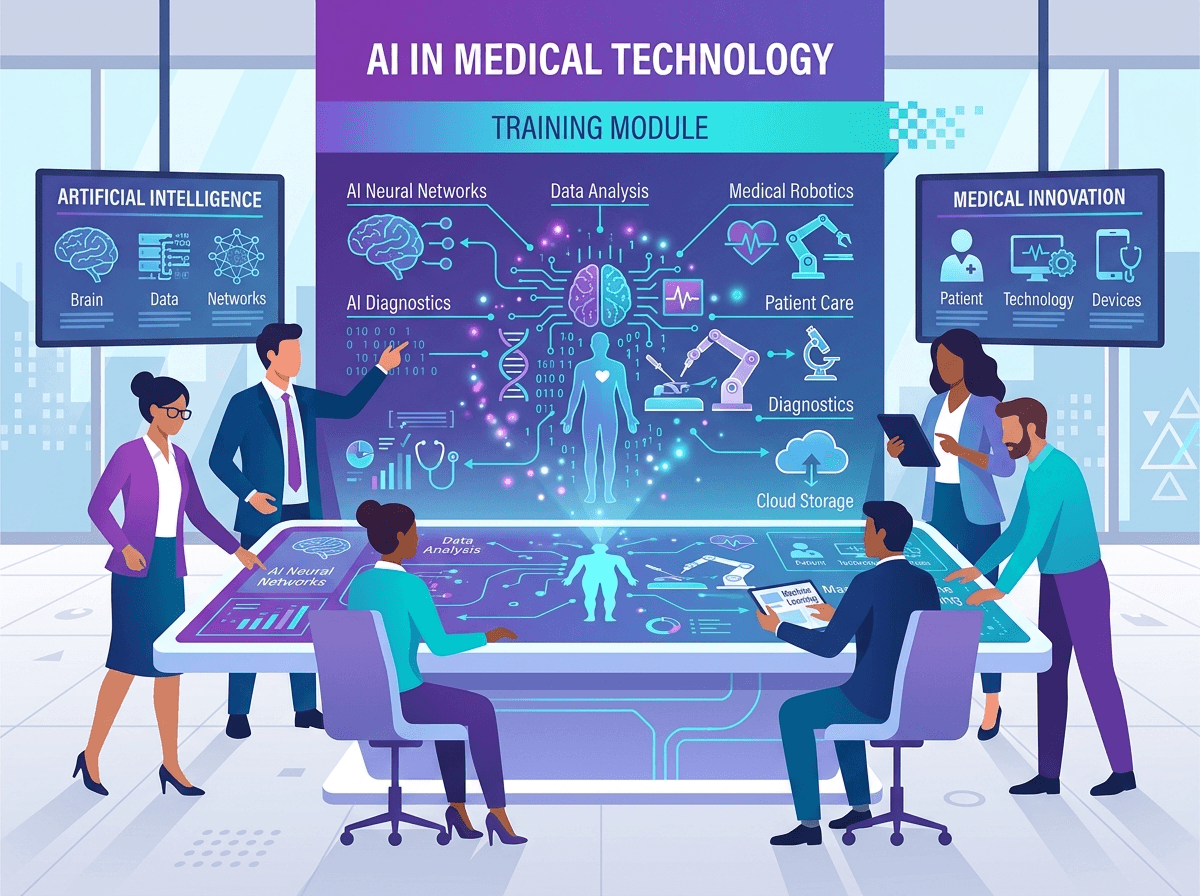
Technological enthusiasm must not obscure the operational realities facing French companies. Several points merit careful attention.
Regulatory compliance remains an absolute imperative. In Europe, data used to train AIs applied to medical devices are subject to MDR Regulation 2017/745, but also to the European AI Act, whose provisions for high-risk systems (of which surgical robotics is part) will come into full force by 2025-2026. Even synthetic data generated by AI must be documented, traceable, and clinically validated before feeding a certified system.
GPU infrastructure remains a barrier for SMEs. Cosmos-H-Dreams relies on NVIDIA H100/H200 architectures, whose access remains costly for mid-sized structures. Cloud solutions (Azure, AWS, OVHcloud in France) are beginning to democratize this access, but managing inference and training costs must be integrated from the business case phase.
Practitioner trust is a non-negotiable human factor. Introducing generative AI into the surgical decision loop — even for simulation purposes — requires rigorous change management. Surgeons, operating room managers, and medical directors must be involved from the upstream design phases.
Training Teams to Leverage These Technologies
The emergence of models like Cosmos-H-Dreams reveals a widening skills gap in French companies. Professionals capable of bridging generative model capabilities, medical sector business constraints, and European regulatory requirements are extremely rare.
For HR departments and training managers, this means structuring competency development pathways across multiple levels:
- Awareness level: understanding what generative AI is, its capabilities and limitations in a regulated context (for business teams, medical directors, procurement managers)
- Operational level: prompt engineering, evaluating generative outputs, integrating APIs into existing workflows (for technical and product teams)
- Strategic level: building AI roadmaps consistent with MDR/AI Act certifications, identifying use cases with measurable ROI, managing AI projects in regulated environments (for directors and innovation project managers)
Training can no longer be a one-time event. It must become a continuous process, anchored in the ground realities of each organization, with concrete simulations and regular feedback.
Would you like to understand how technologies like NVIDIA Cosmos can be applied to your industry, and how to train your teams to leverage them? The Ikasia team supports French companies in their AI transformation: from strategic awareness to operational deployment. Discover our training programs and consulting offerings at ikasia.ai and let's start the conversation together.
Tags
Related courses
Related articles

GPT-5.6 Sol, Terra and Luna on Amazon Bedrock: What French Businesses Need to Know Now
Read
HP and OpenAI Partner to Transform Tomorrow's Enterprise: What Changes for You
Read
OpenAI + Dell + Codex: AI-Powered Software Development Comes to Your Servers — What Changes for French Enterprises
ReadWant to go further?
Ikasia offers AI training designed for professionals. From strategy to hands-on technical workshops.