OpenAI Faces Accountability: What the Australian Incident Reveals About AI Governance in Enterprise

The incident went relatively unnoticed in Europe, but it deserves the full attention of French CEOs and CISOs: OpenAI has issued an official apology to the Australian government following incidents involving government websites, and has committed to strengthening its security and cyber defense measures. Behind this mea culpa from an AI giant lie considerable stakes for all organizations deploying or considering deploying artificial intelligence solutions in their digital environment.
For French companies, this episode is not just a geopolitical anecdote: it's a strong signal about the real maturity of AI systems, the operational risks they carry, and the urgency of building robust governance before generalizing their use.
When AI Apologizes: Anatomy of a Revealing Incident
The Australian incident illustrates a reality that many companies discover too late: even the most sophisticated AI systems can generate unexpected behaviors with very real consequences. In this specific case, interactions involving government platforms triggered an official public response from OpenAI, with concrete commitments to strengthen safeguards and support national cybersecurity.
What's remarkable here is less the incident itself than the response provided. OpenAI publicly acknowledged its shortcomings, proposed corrective measures, and engaged in structured dialogue with authorities. This is exactly the type of behavior expected from a responsible technology provider—and it's also the level of rigor that French companies must apply to their own AI partners.
In France, the regulatory framework is tightening. The European AI Act now imposes risk classification, transparency obligations, and human control mechanisms. Companies that fail to anticipate these requirements risk sanctions, but more importantly, operational incidents whose consequences can be far more costly than a simple fine.
The Three Risks This Episode Highlights for CISOs and CEOs
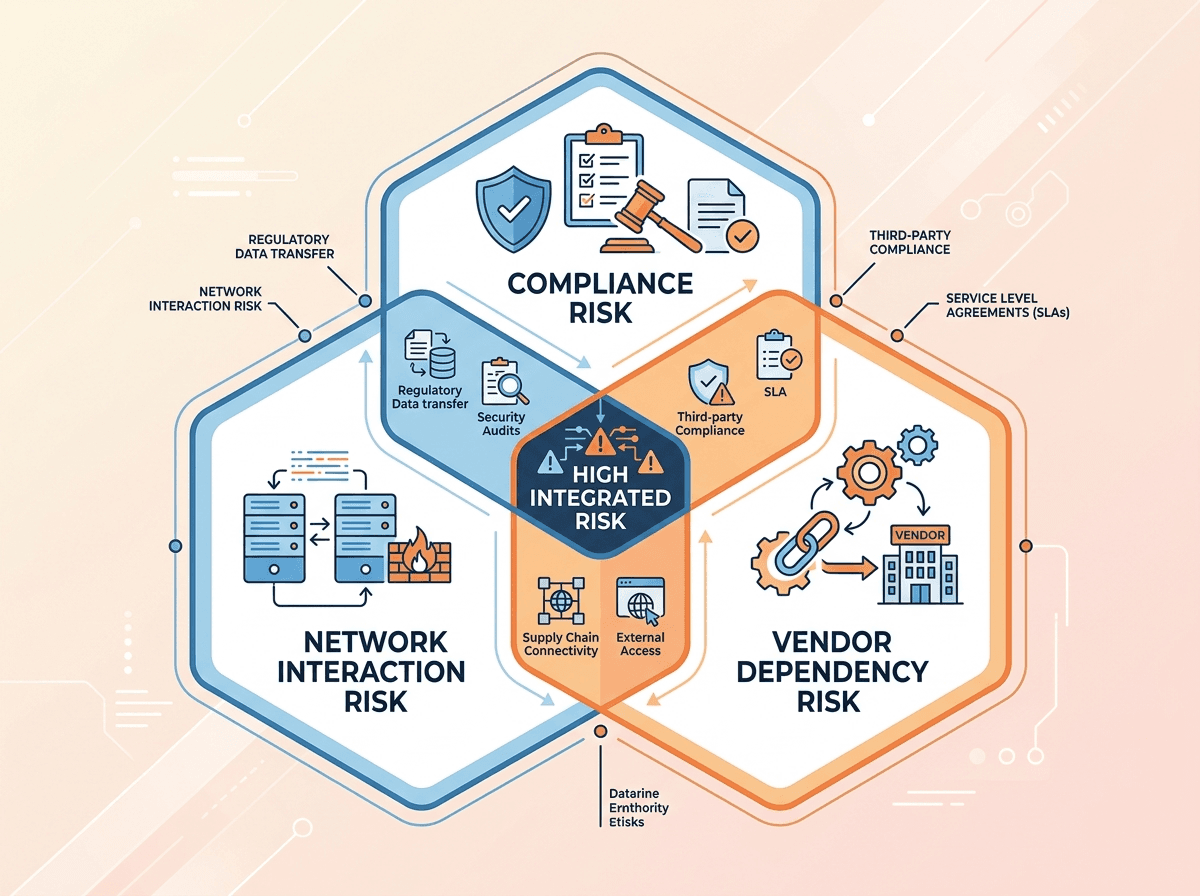
The Australian incident helps identify three categories of risks that any organization deploying AI must take seriously.
The Risk of Uncontrolled Interaction: conversational or automated AI systems can interact with external digital environments in unforeseen ways. In a business context, this can mean unauthorized API calls, access to sensitive data, or actions triggered in third-party systems. An AI assistant integrated into your CRM or ERP without strict compartmentalization protocols is a potential exposure surface.
The Risk of Reputation and Compliance: when an AI system is associated with your brand, its errors become yours. The question is no longer whether your AI will make a mistake—it will—but how you detect it, how you correct it, and how you account for it to your stakeholders. French companies subject to GDPR and soon to the AI Act must imperatively define these processes beforehand.
The Risk of Vendor Dependency: relying entirely on a vendor's safeguards, however reputable, without an internal control layer, amounts to outsourcing your governance. Australia learned at its expense that even OpenAI can have blind spots. Your teams must be able to audit, question, and if necessary quickly disconnect any AI system deployed.
Building Solid AI Governance: Best Practices to Adopt Now
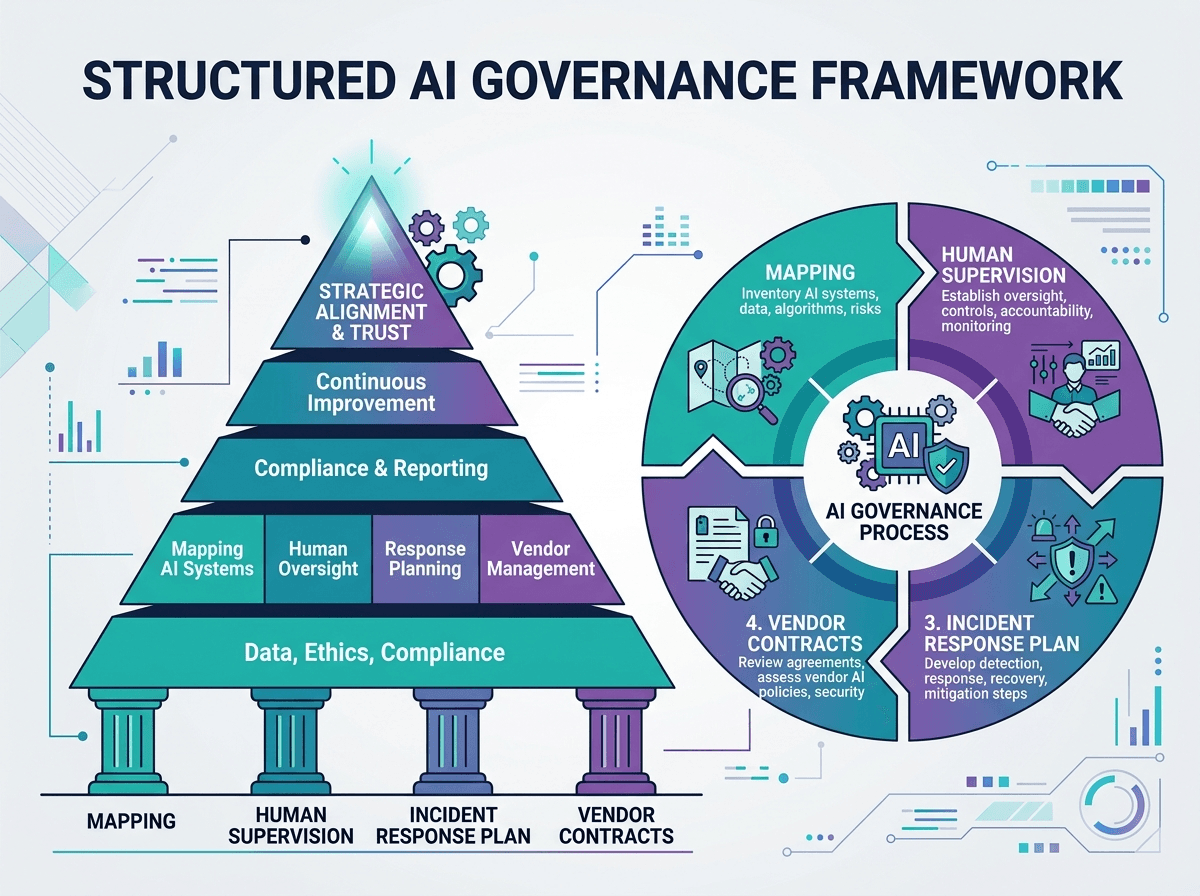
The good news is that these risks are largely manageable provided you act methodically. Here are the pillars of effective AI governance that we recommend to our clients at Ikasia.
Map AI Uses Before Deploying Them: before integrating an AI tool into a business process, precisely document its interactions with your systems, data, and users. Who has access to it? What data does it process? Can it trigger automatic actions? This mapping is the starting point for any control mechanism.
Implement Human Supervision Mechanisms: AI should augment your teams, not replace them in high-stakes decisions. For any critical action—sending customer communications, modifying sensitive data, interacting with external systems—a human validation circuit must be in place. This is an AI Act requirement for high-risk systems, but it's also good operational practice.
Define an AI Incident Response Plan: like a business continuity plan, your organization must have a clear protocol in case of abnormal AI system behavior: who alerts, who decides, who communicates? The Australian incident shows that OpenAI was able to respond—your company must be capable of doing the same.
Contractualize Vendor Commitments: your contracts with AI vendors must explicitly mention security SLAs, incident notification obligations, regulatory compliance commitments, and audit modalities. What isn't contractualized doesn't exist.
Train Your Teams: The Essential Link in a Responsible AI Strategy
No AI governance holds without trained and aware teams. The Australian incident illustrates this perfectly: it wasn't algorithms that were lacking safeguards first and foremost, it was understanding the risks of interaction that was deficient.
Training your employees in responsible AI isn't about teaching them to use ChatGPT. It's about giving them the tools to identify a risk, ask the right questions to a vendor, understand the implications of a deployment, and actively participate in their organization's governance. This concerns business leaders as much as technical teams.
At Ikasia, we support French companies with customized training programs: AI risk awareness for executive committees, governance workshops for IT and legal teams, and practical training for business users. Our approach is anchored in French and European regulatory realities, with pedagogy oriented toward concrete cases and immediate implementation.
AI is an extraordinary opportunity for your team's competitiveness. But like any powerful technology, it demands a culture of responsibility. Don't let an incident dictate your priorities.
Would you like to assess the maturity of your AI governance or train your teams on responsible AI challenges? Discover our programs at ikasia.ai and let's discuss your specific needs.
Tags
Related courses
Related articles

AI and Young Users: What OpenAI's Strategy for Teens Reveals About AI Governance in the Enterprise
Read
AI and National Security: What OpenAI's Strategic Shift Really Means for French Businesses
Read
Advanced AI Standardization: What French Enterprises Must Anticipate Now
ReadWant to go further?
Ikasia offers AI training designed for professionals. From strategy to hands-on technical workshops.