OpenAI's Codex Revolutionizes Corporate Finance: Automating Reports, Variance Analysis & Budget Scenarios
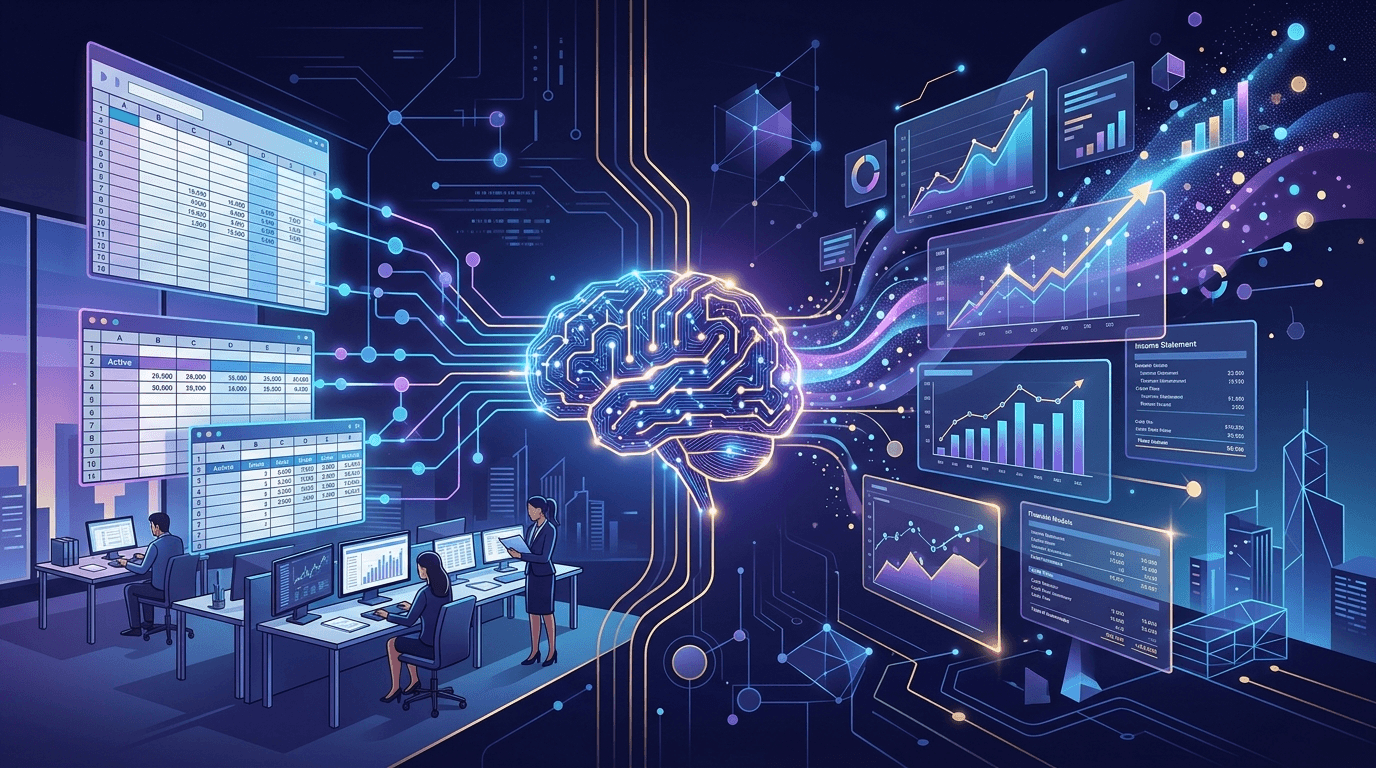
Finance departments remain one of the last bastions where Excel still reigns supreme in French companies. Hours spent consolidating spreadsheets, building variance bridges, preparing Monthly Business Reviews… This precious time could be devoted to strategic analysis. OpenAI has just published a detailed guide showing how its teams use Codex to radically transform these processes. A silent but profound revolution that directly affects CFOs, management controllers, and financial analysts across France.
Codex: Far More Than a Code Tool—An Operational Financial Copilot
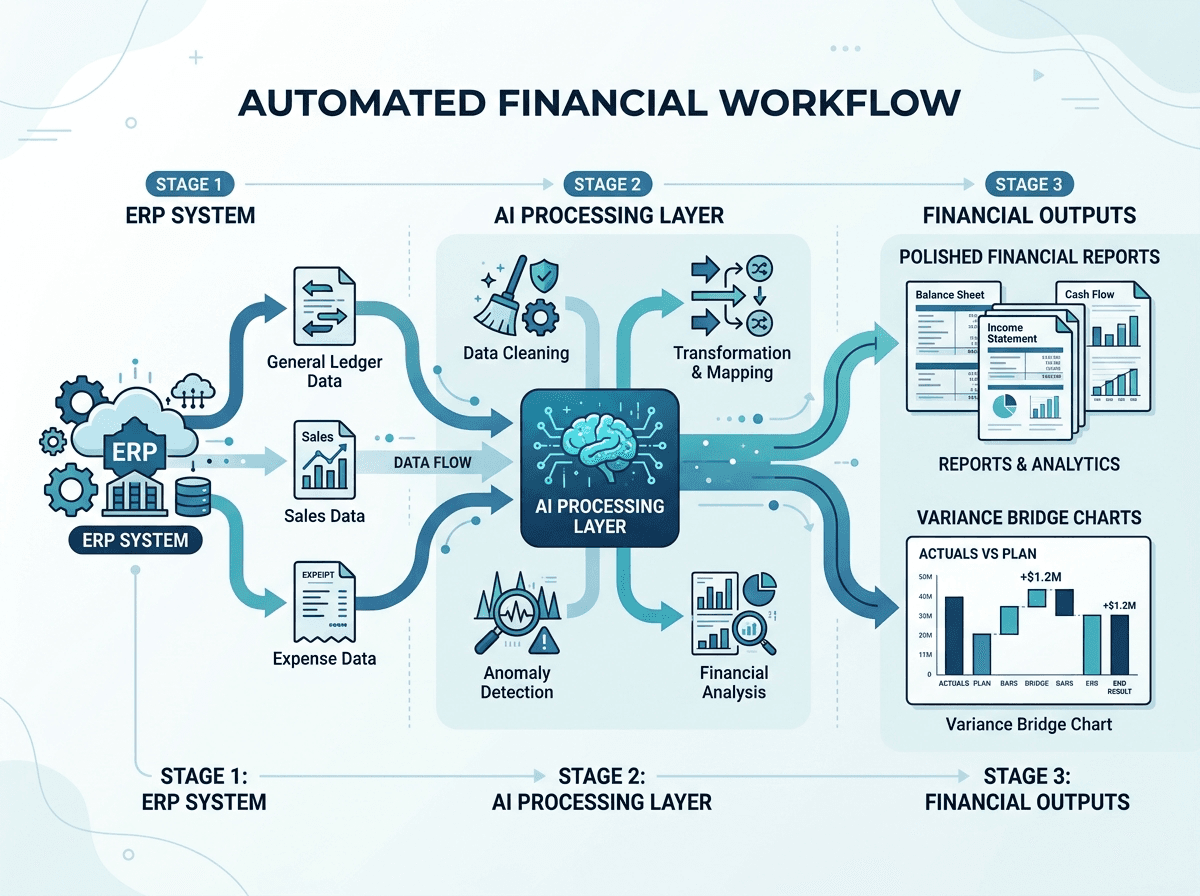
Many still associate Codex with code generation for developers. That's too narrow a view. In its new dimension, Codex acts as an autonomous agent capable of interpreting real financial data, producing structured analyses, and building ready-to-use deliverables—without users needing to write a single line of Python.
Concretely, OpenAI's finance teams use Codex to:
- Build Monthly Business Reviews (MBR) from raw data exported from their ERP or BI tools
- Generate consolidated reporting packs with automated narrative commentary
- Produce variance bridges (budget vs. actual variance analysis) with visuals and figures in minutes
- Verify the integrity of complex financial models by detecting formula or assumption errors
- Simulate planning scenarios (optimistic, base case, pessimistic) by varying key parameters
For a growth-stage French SME or an industrial group with multiple business units, these use cases represent dozens of hours saved each month.
Concrete Applications for French Enterprises
Picture the daily routine of a management controller at a mid-sized manufacturing company in the Lyon region. Each month-end, they export data from their ERP (SAP, Sage, Cegid…), paste it into Excel, manually build their results bridge, write variance commentary, prepare slides for the executive committee. Two to three days of repetitive work.
With Codex integrated into their workflow:
Step 1 — Data Ingestion: They import their CSV or Excel files into the interface. Codex understands the structure without prior configuration.
Step 2 — Variance Bridge Generation: In natural language, they ask "Build me a variance bridge between budget and actual results, by cost driver and by business unit." Codex generates the calculation, visualization, and associated narrative.
Step 3 — Closing Scenarios: "If sales grow 5% in Q4, what's the impact on EBITDA given our fixed cost structure?" The answer arrives in under a minute, with assumptions documented.
Step 4 — Finalized Reporting Pack: A structured document ready for presentation to the CFO or board, with contextualized commentary.
In banking and insurance—major sectors in France (BNP, AXA, Crédit Agricole and their multiple subsidiaries)—these capabilities take on additional dimensions: regulatory compliance, stress testing, CSRD reporting. Codex can verify provisioning model consistency or alert on anomalies in risk data.
The Real Issue: Redirecting Finance Talent Toward Value-Added Work
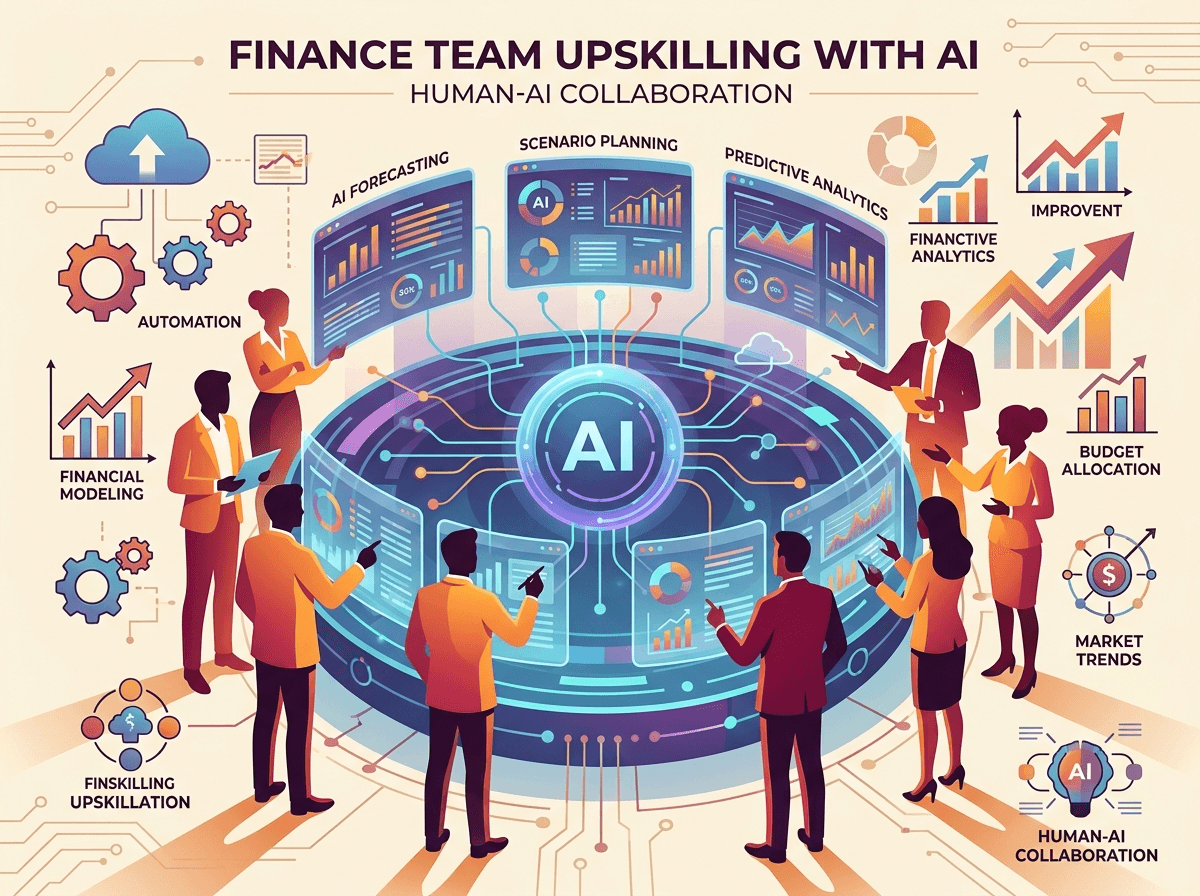
The challenge isn't technological—it's managerial and strategic. When a financial analyst spends 70% of their time consolidating data and 30% analyzing it, something is fundamentally inverted. Generative AI like Codex makes it possible to reverse that ratio.
But beware of a common pitfall observed in French companies deploying these tools too quickly: automation without understanding. Delegating MBR production to Codex without ensuring the team understands the underlying logic, encoded assumptions, and model limitations—that's a serious reputational and decision-making risk.
The most mature finance departments adopt a three-step approach:
- Train teams to understand how Codex reasons and processes data
- Define priority use cases with guardrails (systematic human validation on strategic deliverables)
- Industrialize progressively by documenting validated prompts and workflows
This is exactly the approach we champion at Ikasia: AI is not a magic wand—it's a performance lever that demands structured skills development.
Training Finance Teams on AI: An Immediate Strategic Investment
French companies that train their finance teams on AI now are building a durable competitive advantage. This isn't prophecy—it's what we observe on the ground, case after case.
Effective training for finance teams on tools like Codex must cover several dimensions:
Technical (without being IT-focused): Understanding what an AI agent is, how to formulate precise instructions (financial prompt engineering), how to validate outputs.
Business-focused: Identifying high-automation-potential processes (closings, budgets, forecasts, due diligence), distinguishing what AI can handle from what requires human judgment.
Governance and Risk: Financial data confidentiality, hallucination risks with figures, output accountability, GDPR compliance in using cloud tools.
Practical Application: Workshops on real company cases, building reproducible workflows, peer knowledge-sharing.
At Ikasia, we've designed training programs specifically tailored to finance departments and management control functions, accounting for tools already in place at French companies (ERP, BI tools, Office suites) and regulatory constraints specific to our context.
Financial transformation through AI is no longer a five-year vision. It's rolling out now, across mid-market firms, industrial groups, consulting practices, and financial institutions in France. The question is no longer if your finance teams will work with AI, but how—reactively or with mastery.
Ready to take action? Discover our training programs and support initiatives at ikasia.ai and contact us for a personalized assessment of your AI transformation needs.
Tags
Related articles

From Weeks to Hours: How Agentic AI Transforms Software Delivery at Endava (And What French CIOs Must Learn)
Read
OpenAI + Dell + Codex: AI-Powered Software Development Comes to Your Servers — What Changes for French Enterprises
Read
OpenAI's Codex: How an Asian Tech Giant is Reinventing Software Development with Agentic AI — and What French Companies Must Learn
ReadWant to go further?
Ikasia offers AI training designed for professionals. From strategy to hands-on technical workshops.