OpenAI's New Model Spec: What French Businesses Need to Know About Tomorrow's AI

Artificial intelligence is no longer just a race for raw performance. With the release of its updated Model Spec, OpenAI takes a decisive step: equipping its models with an explicit, structured, and binding framework of values. For French companies deploying or considering AI solutions, this document is not just a technical note — it's a major strategic signal that redefines the rules of the game.
As European AI regulation (AI Act) gradually enters into force, this OpenAI initiative comes at just the right moment. It illustrates an unprecedented convergence between regulatory requirements, societal expectations, and the technological ambitions of major industry players.
Five Core Values for Trustworthy AI
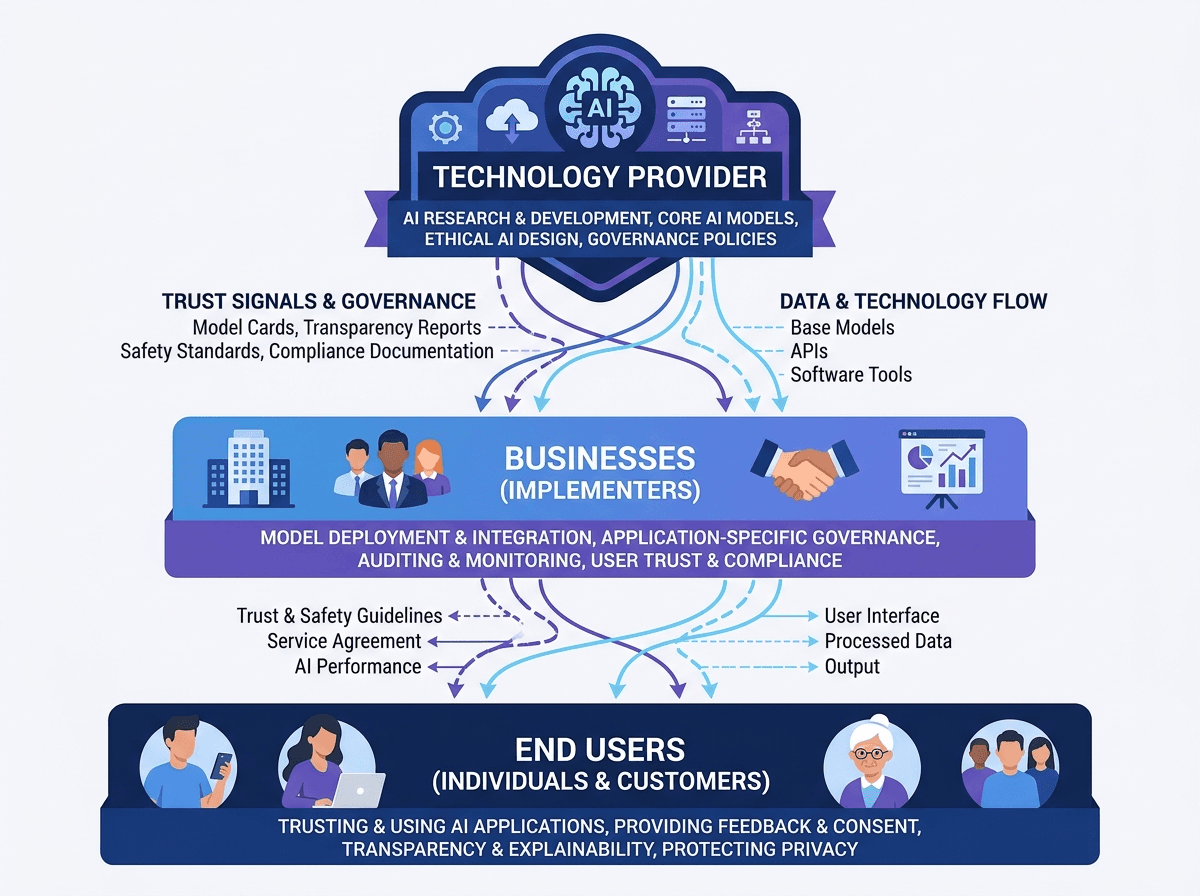
OpenAI's new Model Spec revolves around five fundamental values designed to guide the behavior of the most capable models: utility, safety, honesty, fidelity to human intentions, and respect for user autonomy.
What's remarkable here is the stated ambition to optimize not just for performance, but for what we might call sound judgment. AI must now be capable of navigating ambiguous situations, refusing requests that conflict with ethics, while remaining deeply useful and relevant in its responses.
For French CEOs and IT directors, this translates concretely into an evolution of the guarantees offered by tools based on these models:
- Reduced hallucinations through reinforced grounding in honesty
- Better management of edge cases in sensitive business applications (HR, legal, finance)
- Increased alignment between operator intentions (your companies) and the model's actual behavior
- Enhanced transparency on system limitations and uncertainties
These developments are far from trivial: they constitute genuine arguments for large-scale deployment in demanding professional environments.
Concrete Implications for Your Business Processes
Imagine a legal assistant based on GPT-4 that, when faced with an ambiguous question about GDPR compliance of data processing, explicitly acknowledges areas of uncertainty rather than providing an assured but potentially incorrect answer. Or a customer support tool that refuses to circumvent internal company policies, even if the user formulates their request indirectly.
These scenarios, made possible by the new Model Spec, represent concrete progress for several key sectors of the French economy:
In financial services, AI-augmented advisors can rely on models that proactively flag potential conflicts of interest and scrupulously respect MiFID II regulatory obligations.
In manufacturing and supply chain, decision-support tools will refuse to recommend optimizations that, while efficient in the short term, would violate the company's CSR commitments.
In human resources, recruitment assistance tools will natively integrate safeguards against discriminatory bias, reducing legal risk and strengthening employer branding.
In customer relations, chatbots and conversational agents will adopt more predictable behavior consistent with editorial guidelines and brand values — a critical issue for companies concerned with their image.
The challenge is no longer just whether AI can accomplish a task, but how it accomplishes it, and with what behavioral guarantees.
AI Governance in the Enterprise: A New Paradigm
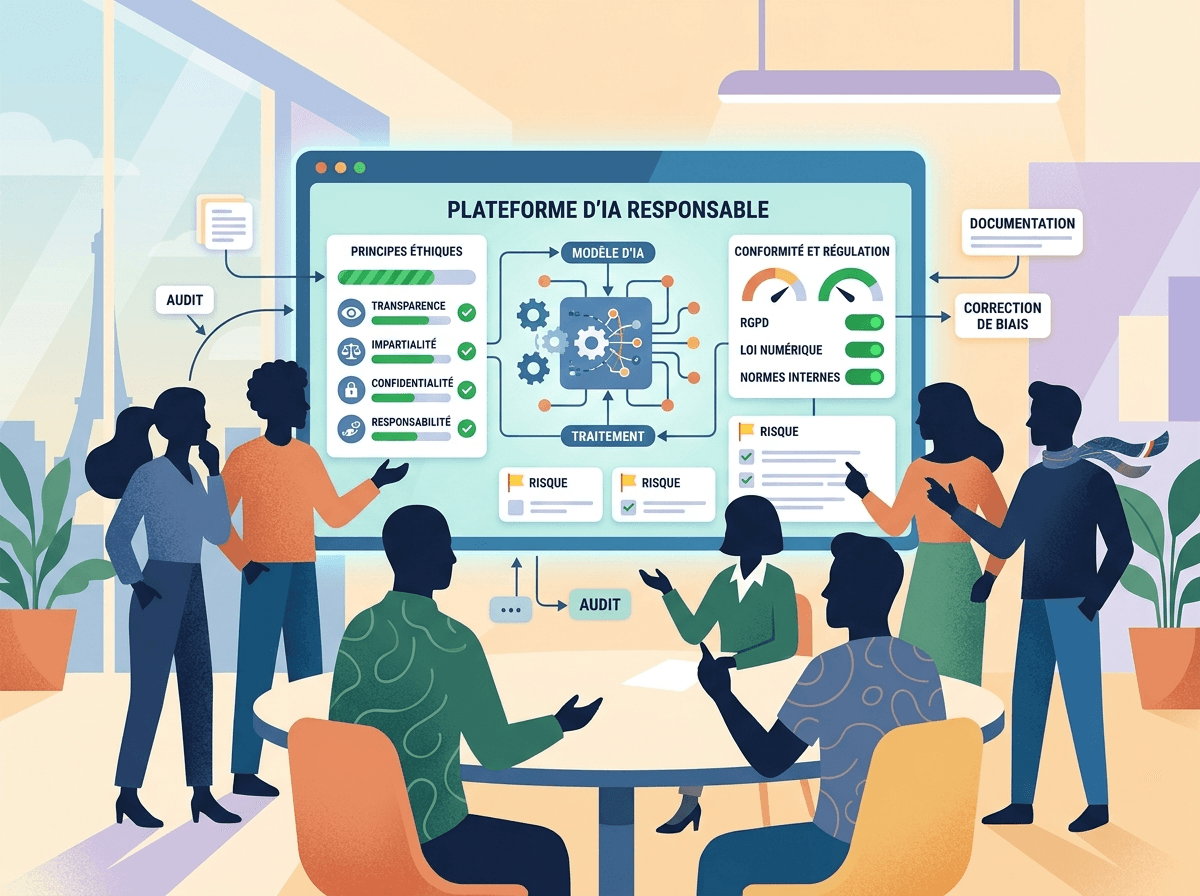
The Model Spec introduces a particularly structuring concept for enterprises: the hierarchy of principals. OpenAI clearly distinguishes three levels of authority — OpenAI itself, operators (companies deploying the APIs), and end users. Each level has specific rights and responsibilities over the model's behavior.
This architecture has direct implications for the AI governance that French companies must implement:
-
Define your system instructions explicitly: as an operator, your company now has an active role in configuring AI behavior. System prompts are no longer mere technical parameters — they are full-fledged governance documents.
-
Document your use cases and their limitations: the model will respect the restrictions you impose, but you're responsible for defining them clearly and keeping them updated.
-
Implement a regular review process: as models evolve, expected behaviors may change. Active monitoring and regular testing become essential.
This reality fundamentally transforms the role of IT teams and business units in the AI value chain within enterprises. AI is no longer a plug-and-play tool — it's a sociotechnical system that requires active and informed governance.
Training Your Teams: The Imperative of Responsible AI
Faced with these developments, the question of employee training becomes strategic. Understanding how a Model Spec works, knowing how to configure effective system instructions, being able to evaluate an AI model's behavior in a specific business context — these skills don't come naturally.
French companies that emerge as winners from the AI transition will be those that have invested in three types of training:
- AI literacy for all: enabling every employee to understand what AI can and cannot do, its biases, its limitations, and the responsibilities that follow
- Operational skills for business teams: learning to formulate effective prompts, evaluate outputs, integrate AI into existing workflows
- AI governance expertise for decision-makers: mastering regulatory issues (AI Act, GDPR), responsible deployment architectures, and risk assessment frameworks
OpenAI's new Model Spec is, in this sense, an excellent educational opportunity: it makes visible what was previously implicit, and offers a concrete entry point to engage your teams in reflecting on responsible AI use.
Want to prepare your teams for responsible AI challenges and make the most of developments like OpenAI's Model Spec? At Ikasia, we support French companies with custom training and operational AI consulting. From executive awareness to upskilling technical teams, we build with you a sustainable AI strategy aligned with your values.
👉 Discover our programs on ikasia.ai and let's together make AI a real and responsible competitive advantage for your organization.
Tags
Related articles

AI and National Security: What OpenAI's Strategic Shift Really Means for French Businesses
Read
OpenAI FedRAMP Certified: How AI Security for the US Government Changes the Game for French Enterprises
Read
OpenAI Faces Accountability: What the Australian Incident Reveals About AI Governance in Enterprise
ReadWant to go further?
Ikasia offers AI training designed for professionals. From strategy to hands-on technical workshops.